Petrified Creators on the New Season of their Irish Audio Horror Anthology with David Dastmalchian and Dylan Baker
Writer-director Peter Dunne and producer Liam Geraghty talk their latest batch of chilling audio stories, using scary movies as a safe space, and their favourite Irish horror films
by Lana Thorn 15 February 2026
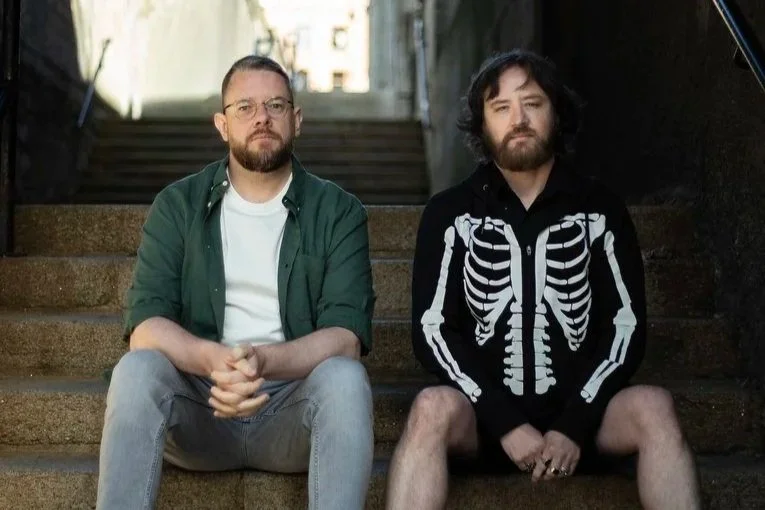
Liam Geraghty (left) and Peter Dunne
As “Ireland’s scariest podcast” returns with a whole new host of horror stories, we sat down over Zoom with co-creators Peter Dunne and Liam Geraghty to discuss all things Petrified. Previewing Series 4, the pair discuss enlisting Hollywood stars David Dastmalchian and Dylan Baker, the value of authentic sound effects, and how they see the relationship between queerness and horror as queer creatives.
Phantasmag: Can you both tell me about your relationship to horror growing up, and how that led you to make a horror podcast?
Peter Dunne: When I was really young, I used to watch all the old Hammer Horror films with my grandad. We would pull the curtains and make tea, and it became a safe space. When he passed away, to remember him, I would watch horror films. So it became the opposite: I would get comforted watching horror. I also remember seeing The Innocents when I was seven or eight on television on Christmas Eve or something. It just struck me, and there was this sense that the genre was this bigger world with so much to learn. That was the combination that led me to making horror: seeing it as a safe space, but also seeing it as as this big world where we don’t know all the answers.
Liam Geraghty: Well, Peter’s the horror head. I love horror, but Peter really loves horror. My friends and I used to make these little radio plays on a stereo when we were kids. We would use sound effects from video games; we’d hold a stereo up to the TV and press record to get the effect. I hadn’t made that connection until recently this year, because audio drama’s not really my background—documentary radio is. But I think audio is such a great medium for horror. Most people cover their eyes, but when I go to the cinema, I always cover my ears because I get frightened by the sound. So it’s weird that I’d be editing an audio horror podcast because that’s literally what scares me the most.
P: Oh, you two are going to love undertone.
LG: I’ve seen the trailer.
PD: It looks amazing.
P: How did you both meet? I understand your first project was an audio tour called Eerie.
PD: I liked the idea of creating a hoax. When tourists go on holiday, they’ll put on their headphones, and they’ll hear an audio tour of the city that they’re walking around. So I go, ‘What if there was an audio tour that was fake?’ You could be telling people all this stuff, and then they might go back to their home country with all these stories that weren’t true, and you could try to spread urban legends. I used to run an underground horror cinema night called Morb. And Liam had interviewed me for…
L: RTE, the national broadcaster here.
PD: And so Liam turned up and interviewed me, and literally that was the only person I’d ever known who had anything to do with audio ever. So I contacted Liam and asked him out for coffee, and I was going, ‘I’d like to know more about how podcasts work, the world of radio…’ — with full intentions of tricking him. So we were chatting away, and I started talking about this idea that I had. I said, ‘I don’t know anyone who does any audio.’ Then Liam, of course, says, ‘I could do it!’ That was Eerie, the first thing we did, where you listen to the files of a psychic investigator who tells you the histories of the city, but none of them was true, of course. At the end, when you finished the tour, it was explained that if you looked from above with Google Maps, you had walked the shape of an ancient rune, and you’d cursed yourself. We did another thing for the Bram Stoker festival called “Bram”. It was another audio tour, but the punchline was that Bram Stoker was still alive—he had been kidnapped by vampires and transformed into this beast. If you came to the last location of the audio tour, Bram was going to come out from, like, behind a hedge in Trinity College and kill you [laughs]. Then Liam and I had very similar taste in TV—we loved anthology shows like Inside No. 9—and we started wondering, ‘Is this an area to go into?’
LG: It all seemed organic. We worked really well together, probably better than anyone else I’d ever worked with before. We started Petrified around 2017, and it seems like a really long time ago because we take these big breaks between seasons.
P: Can you tell me more about your roles in the podcast and what your collaboration is like?
LG: It’s kind of amazing to me that we do a million roles just between the two of us. Once Peter writes it, I record it, edit it, and do the sound design for it. My background is in radio documentaries, so I was used to going out and interviewing, say, someone in a factory, but then I would also collect all the sounds of the factory. I was used to collecting those kinds of sounds to paint a picture, and that actually worked really well for audio drama, even though I’d never done one before I’d worked with Peter. If a person runs and bangs on a door, I’m doing all that myself in my house. I’m sure the neighbours are like, ‘What is going on in there?’ because, frequently, I’ll be screaming or something. I try to record as much as possible myself, unless it’s a car crash. I think it adds to the authenticity of the story, not overdoing the sound design but making it sound real—almost like I was recording a documentary.
PD: Before, I wrote mainly for theatre. In theatre, because of budgets and things like that, you’re confined to what you can put on stage. But all of a sudden, making something with Liam, I’m going ‘Oh my god, I could have a helicopter land.’ Audio opened up a whole new world that I didn’t know anything about. When we started doing Petrified, I was thinking in a bit of a tricksy way, wondering, ‘What would you hear?’ The story could be somebody who works at a radio show, or it could be tapes… I got super focused on the audio of it, but as time went by, I was able to relax out of it and just ask myself, ‘What’s the story?’
The very first day, there was a sign that made me know this was going to be a good relationship. I had directed the actors to do a bit of an accent, and then when Liam got home he sent me the files. I realised the accent didn’t work, so I was thinking, ‘He’s gonna kill me.’ I have to tell him we’ll need to redo today’s recording, and I didn’t really know Liam too well at that time… I said, ‘I’m so sorry, I think we’re going to have to record that,’ and Liam just went, ‘Okay!’ I was coming from the theatre, where you’ll be having actual arguments with the director. That’s the good thing about our collaboration: there’s no ego. We both just want it to be good—we’ve never had an argument about work ever. And I’m lucky enough just because I came from the world of the theatre, so I know a lot of actors. In the early days, I was basically just asking my friends because they’re all theatre actors. That’s the lovely thing about Petrified. We’ve met bigger actors, like David [Dastmalchian] and Dylan [Baker], but also it’s a great opportunity to meet new actors in Ireland. I was on a Zoom call before, and there was an actress just talking, and I thought, ‘Oh gosh, her voice is beautiful. So I actually sent her a message saying, ‘This is going to sound really weird but I was just listening to your voice, I wonder if you’d be interested in being in a podcast.’ But as Liam said, our working relationship has been really organic.
P: Speaking of your theatre background, Peter, how does that inform your approach to scripted audio drama, especially when it comes to constructing scares? I recently saw the new Paranormal Activity play, and it’s so reliant on sound.
PD: It’s more difficult to scare people in theatre because it’s expensive. If you think of the Paranormal Activity show, the budget for that must have been colossal. I also saw Ghost Stories in the West End, and all these shows are big-budget. So it was tough because we wouldn’t have access to those kinds of budgets in the theatre that I was making, so it became more about trying to unsettle people through dialogue and performance. You couldn’t do the bells and whistles; you couldn’t have the explosions, so how am I going to frighten you? I’m going do it with my language. That tied in with Petrified, the question was: ‘What can I write and what way can the actors perform to give you the chills?’ And with the effects that Liam does—for example, there’s a certain episode where somebody knocks on a car window, and the particular tone of that knock, for some reason, is scary.
P: What is your favourite episode so far from the previous three series? And do you have a favourite that you can tease from Series 4?
PD: “Grove Network Solutions”. It was just the way it came about. I’m kind of notorious for leaving everything to the last minute—I’m doing a show on Friday, and I’m still writing. We record all the episodes in my house around the dining table just downstairs, so there were people coming over to my house at 11 in the morning on Sunday, and it was 10 o’clock on Saturday, and I had no script. I was like, ‘What am I doing?’ So I sat down and wrote a first draft in one go and then went over it. I was finishing it up as the actors were coming into my house. It was almost like automatic writing. It’s not an experience I recommend, but that’s one that stuck out because I finished writing it, and 10 minutes later, we were recording it. But it’s also because something we try to do with Petrified is incorporate humour as well, and that one in particular was quite funny. Then my favourite episode in the new series, the one that has David Dastmalchian in it, is cool because of the way the story is constructed. It’s just a series of phone calls, and each call reveals a little bit more. We had David and an actress called Anna Sheils-McNamee, who we had worked with before, and then there were two other new actresses—Gene Rooney and the episode’s lead, Áine Ní Laoghaire—and it’s always exciting to bring in new talent. When we’re recording, I’m just looking at the floor because all I need to do is hear it. I don’t want to be distracted by their performances. I’m just looking at the floor, going, ‘Oh my god’ or ‘That was great’ to myself.
LG: One of my favourite episodes from before is ‘He’s Behind You’ from Season 2. It’s set in a theatre, and it’s a pantomime dame telling some of the actors about a theatre ghost. It’s one of those ones that really pulls the rug from underneath you at the end—it did for me. And it’s funny, like Peter was saying, a lot of the scripts are written so late… most of the time I haven’t read the scripts when I sit down to record them! And I’ll end up giving something away if I say a new episode from the new season, so I’m not going to say anything.
P: That’s fair.
L: Well, I should say, actually, that we are doing one episode that’s different from anything we’ve done before. I can’t say anything else about it except that it’s totally different. I’m really interested to see what people think of it.
P: What distinguishes the new series from the previous ones? What kinds of stories were you excited to tell?
L: We’ve always been looking at the Irish experience and Irish culture, but often now we’re looking at it from an international perspective. Is that fair to say, Peter?
PD: Yeah, like the diaspora. For a long time, Ireland’s biggest export was its people [laughs]. There’s one episode, I had a friend who had a dream to move to LA and take on the world of acting. I was inspired by her story, and she actually is in the episode playing the lead character. But seeing Irish people abroad… If we’re going around the world, there’s a lot more trouble we can get into. More horror.
P: Series 4 features two huge guest stars in Dylan Baker and David Dastmalchian. What was it like collaborating with them?
PD: It was amazing. Like I said, when I’m directing, all I need to do is hear what the actors sound like. But one day, when we were recording with Dylan, something I’ll remember till the end of my days, he was doing this monologue and asked if he could do it again, even though the first take was so good. And I looked at him. To see Dylan Baker performing your monologue—there was spit flying, wild hand gestures—I was sitting there stunned, going, ‘Oh my god, this is a dream come true.’ Working with David, it was the same thing. David was really, really sweet.
L: Just chatting to him, it turns out that David had loads of Irish connections. His great-grandfather and great-grandmother used to self-publish their own books, and his great-grandfather wrote a play about the Irish Civil War that was on off-Broadway. And it was like, ‘What? This is so crazy.’ Then he was telling us about his Irish best friend and all the Irish literature he was interested in. We didn’t know any of this beforehand, but he had so many connections to Ireland, and it made the experience even nicer.
P: Do you have a dream actor to star in Petrified?
LG: [Laughs] I know Peter’s answer for this.
PD: Yes, Liam would be able to answer for me. I am obsessed with Nicole Kidman. I am an insanely obsessed fan. Well, obsessed doesn’t sound nice, so just in case she’s listening, I’m not obsessed. For me, it would definitely be Nicole.
LG: I wanna say Nicole as well, so Peter’s dream can come true. Yeah, there are loads of people—we were really happy getting David and Dylan. Like Peter said, we’re really big fans of Inside No. 9, so we would love Reece [Shearsmith] or Steve [Pemberton]. If they’re reading—call us!
P: As queer horror creatives, how do you each see the unique connection between queerness and horror?
PD: It’s really interesting because so many people find a safe space in horror when, weirdly, for a time, queer people were the villain in the genre. If you look at Sleepaway Camp or Dressed to Kill, they were demonised. It’s an unusual one, because a lot of queer men associate with the final girl, but then they also sometimes associate with the killer. Growing up and not seeing a lot of healthy representations of myself on screen, when you did find something even a little bit queer-coded, you would lap it up. Especially being younger in Catholic Ireland, you got the sense that you were wrong or bad. It was like a horror film: there’s something evil and wicked about you, and you can’t tell anyone, so your experience is mirrored in the movies you watch. For me, it was really about associating with the final girl, because it was the kind of genre where it wasn’t about who was the big tough guy. The final girl was usually someone who was more cerebral, who could outthink the killer. Someone who wasn’t the coolest or the strongest and was usually a bit of an outcast. It was seeing myself reflected in a way.
LG: I don’t know if I can give a better answer than that [laughs].
P: With directors like Damian McCarthy, Irish horror cinema is really thriving right now. Do you have a favourite Irish horror film?
LG: The Outcast. The Irish film industry is relatively small, and horror’s only a relatively recent thing. So it’s this Irish folk horror from 1982, it’s from the writer of Blood on Satan’s Claw, and it’s about this young woman who everybody thinks is a witch. It was a revelation for me to see it because I love 70s and 80s horror, and I love folk horror in particular. Then there’s this actor called Mick Lally who’s in it—he was a big soap star—so it’s got all these elements that I love. I’d recommend that one because not a lot of people know about it.
PD: There’s one that went under the radar—it’s about 10 years old—called The Hallow, directed by Corin Hardy. I thought Evil Dead Rise was brilliant, but even with an Irish filmmaker, it’s set in America, so I was trying to think of one set in Ireland. And I thought The Hallow was really classy. For a creature feature, it was great, it was genuinely creepy, and it deserved more attention.
P: Beyond the new series, what can we expect from you next?
LG: For me, I want to go back a little to my audio documentary roots. I’m looking forward to getting back into that.
PD: I also run a storytelling night called “The Ghost Story Gathering”, where I commission little 15-minute ghost stories which are then performed by actors in front of an audience. We’re performing on Friday the 13th fittingly, so that’s what I’m writing right now. Also, I want to do more horror theatre for children. I did a research project, interviewing children and child psychologists, about how children can use the genre as a form of catharsis. It’s what I used to do with my granddad.
Petrified Series 4 releases February 18th