How Faces of Death Writer Isa Mazzei Made a Horror Anti-Remake for TikTok Doomscrollers
The Cam screenwriter unpacks how she rebooted the 1978 cult classic of the same name for a digital era drowning in violent content
by Lana Thorn 9 April 2026
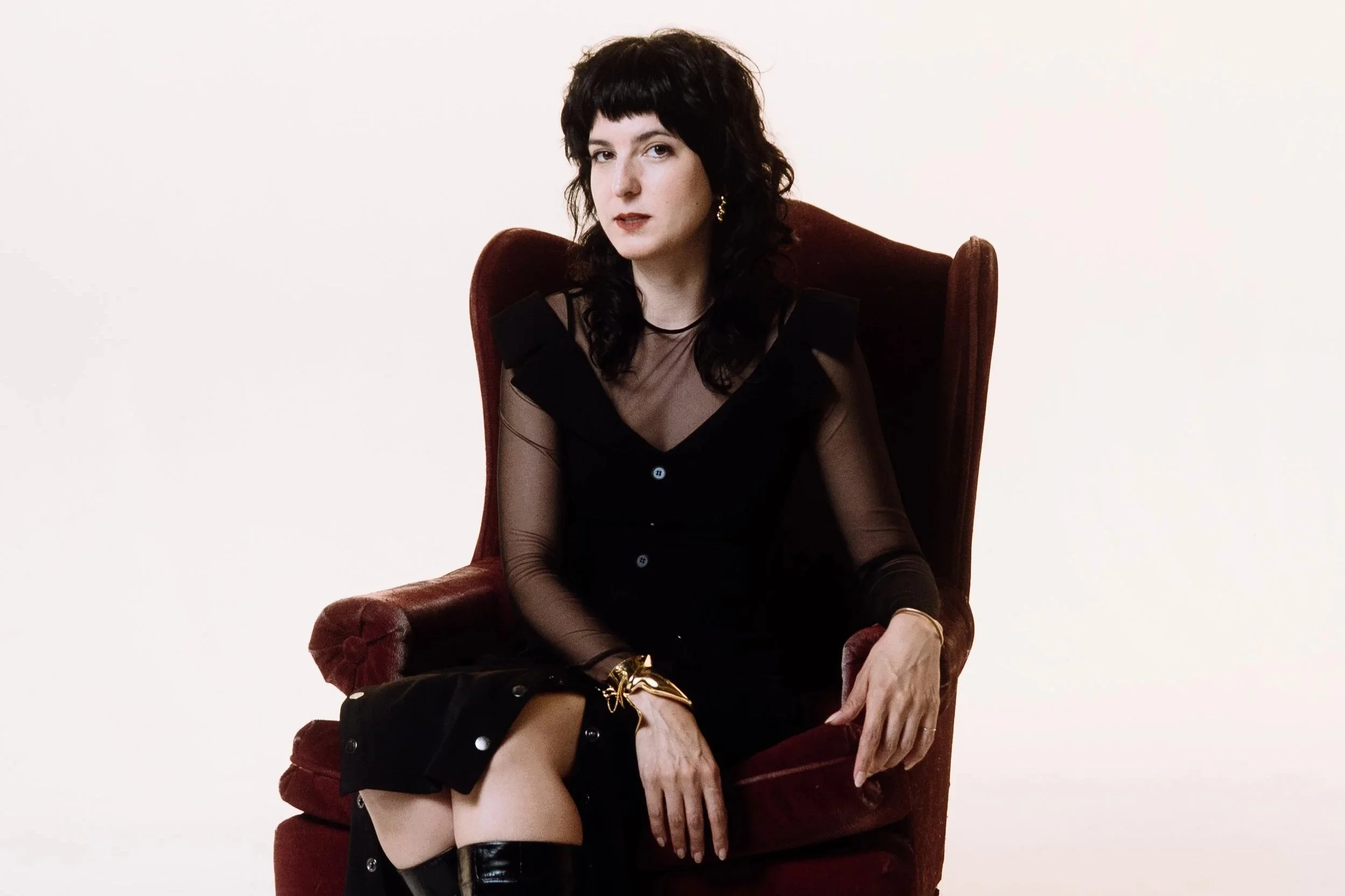
Photo: Sarah Eiseman
From Tarantino and Scorsese favouring period pieces in recent years to Robert Eggers declaring that “the idea of photographing a cellphone is just death,” Hollywood is undeniably reluctant to depict characters interacting with the internet—at least not in proportion with our increasing dependence on it. The result is a gap in media grappling with a fundamental part of contemporary culture, but if there is a filmmaker ready to make up for that deficit, to capture the attention economy in all its addictive, gory glory, it is Isa Mazzei.
“Oftentimes people ask, ‘Why are you making movies about the internet?’”, the 35-year-old writer and producer tells me from an Uber. She’s making the journey between the Beyond Fest and LA premieres of Faces of Death, her remake of the controversial 1978 faux snuff film compilation, and it’s fair to say the question isn’t unprovoked. All three of Mazzei’s films, psychological horror Cam (2018), eco thriller How to Blow Up a Pipeline (2022), and now Faces of Death, have ended with climactic scenes in which a character posts a video online. Yet the pattern isn’t deliberate. “I don’t actually see myself as a filmmaker who makes movies about the internet. I see myself as a filmmaker who makes movies about real life in the modern day, and it would be disingenuous not to include the internet. That's what we're all experiencing.”
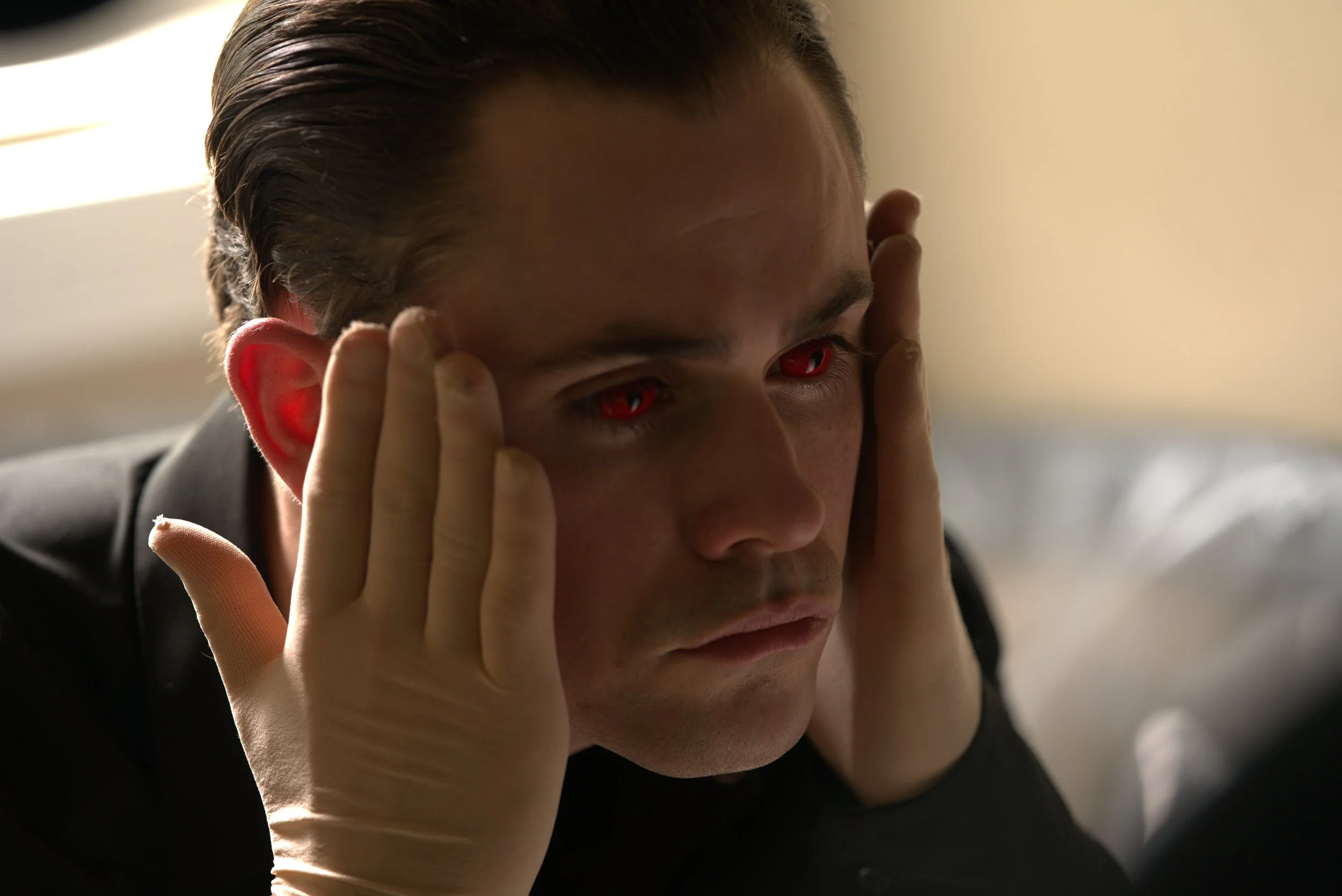
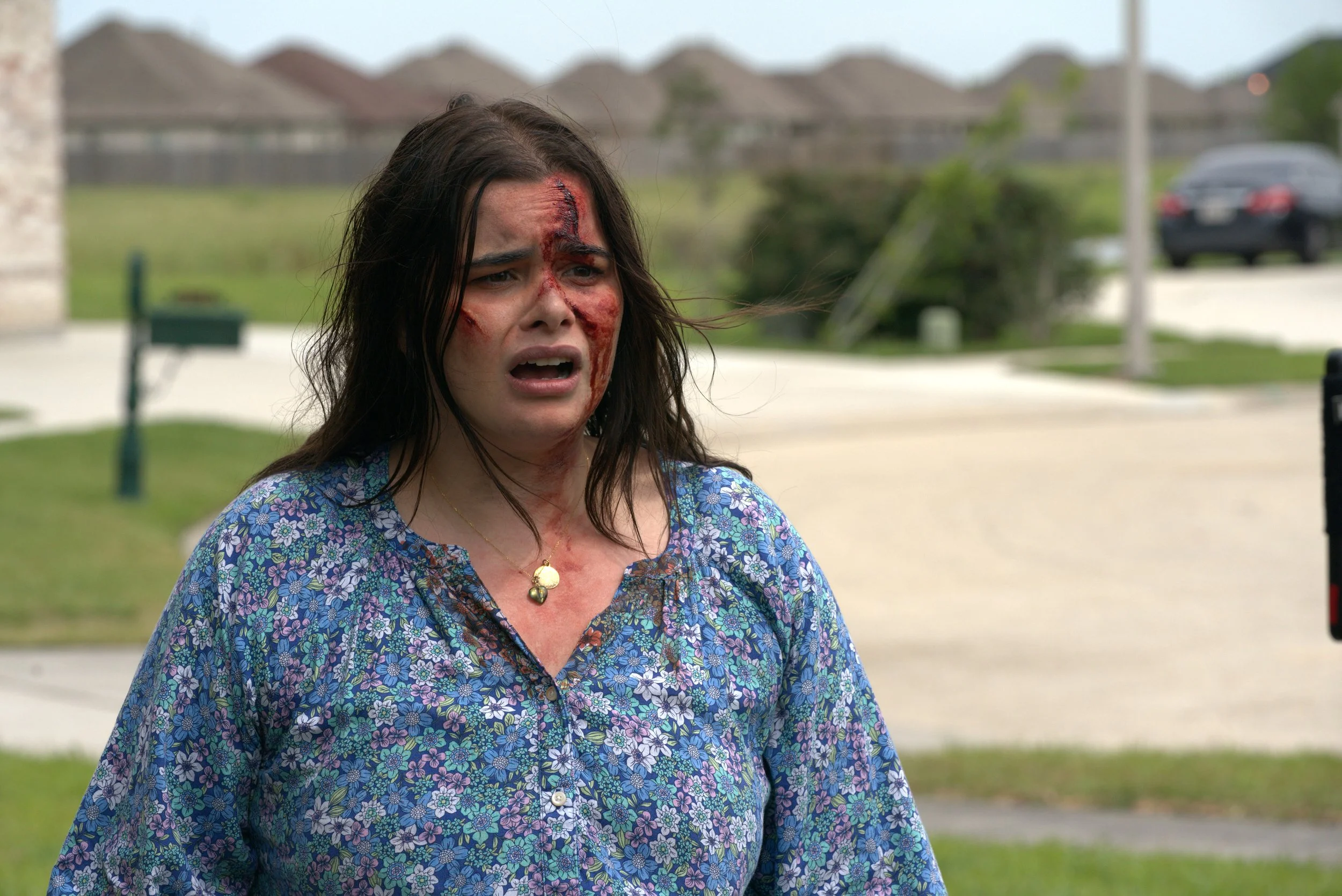
That universal experience forms the backbone of Mazzei’s latest feature with director and co-writer Daniel Goldhaber. The pair were approached by Legendary Pictures about a Faces of Death reboot in 2019, where they soon devised an exciting meta framework that could recreate the “Is it real or not?” conceit of the original: a content moderator (Euphoria’s Barbie Ferreira) for a TikTok-like platform goes down a sinister rabbit hole when she discovers a series of seemingly real videos of a deranged digital creator (Dacre Montgomery) remaking the deaths from the 1978 film. Seven years later, after Covid, the Hollywood labour strikes, and distribution difficulties, the film has been picked up by IFC and Shudder and hits theatres this Friday.
IFC and Shudder
Faces of Death is the culmination so far of an eclectic career for Mazzei across multiple mediums. After graduating from UC Berkeley with a degree in Comparative Literature, she began a successful career as a sex worker, first as a sugar baby and then as a camgirl. When she went into the film industry in the mid-2010s, she didn’t see it as a big departure. “There’s the throughline of the fact I’ve always been an artist,” she says. “I’ve always been engaging with the world through not only writing but also through performance and filmmaking.” As Mazzei found herself lighting, framing, and designing the sets for her videos, her work as a camgirl ultimately became a sort of DIY film school. “Camming for me laid the foundation for being a filmmaker. It was an expression of ideas I found artistically and culturally interesting in the same way as filmmaking or writing. So much of that work is deciding the story. There’s improv, but then there’s planning what you’re wearing and how you’re editing… A lot of those skills transfer over pretty clearly, actually.”
Mazzei’s experiences as a sex worker informed both her 2019 memoir, Camgirl, and 2018 film Cam, an indie horror hit later acquired by Netflix about a camgirl (Madeleine Brewer) whose account is stolen by a deepfake doppelgänger. Winning the Cheval Noir Award for Best Screenplay at Fantasia Fest, it was the feature debut for both her and longtime collaborator Daniel Goldhaber.
The screenwriter and producer first met Goldhaber in high school in Boulder, Colorado, where they dated for a year. While they would go on to make their names in the horror genre, their early relationship was defined by Mazzei pestering him to watch scary movies with her. “I was always like, ‘Hey… Can we watch Saw? Can we go see the new The Ring or whatever?’ He would try to make me watch really obscure foreign films, and I would try to make him watch horror.” When the pair broke up and decided they were better off as friends and creative partners, they started working in theatre and on short films together. “We immediately saw in each other ambition, creativity, and a drive that we both respected a lot.”

Photo: Sarah Eiseman
Mazzei and Goldhaber don’t share a typical writer/director relationship. Cam and Faces of Death both feature the credit “A Film by Isa Mazzei & Daniel Goldhaber”, a conscious decision to challenge traditional film authorship but also an accurate reflection of their roles in their uniquely close collaboration. Together, the pair cast the film, hire crew, give notes to performers, choose costumes, devise the shot list, and more. “We like to say that it’s 100% his film and 100% my film,” she explains. “It is our vision together that we built. The technical craft of directing he’s usually more responsible for, and the technical craft of writing or producing, I tend to be more responsible for. But ultimately, we are co-authoring these films together.”
When Legendary brought Faces of Death to the duo in 2019, neither had ever seen the original. Yet when Mazzei went to watch it, the fake snuff films looked familiar. “It only took a few minutes to realise, ‘Oh, I actually have seen this’—but broken up into little clips and memes on the internet over the years. I remember in particular the monkey [whose head is hammered at a dinner table and brains consumed as a delicacy], and to recognise they were all from the same source and to witness this cultural object in a totally different medium than the VHS felt very profound.” Her meaningful viewing experience became the basis of the new film’s narrative, taking a fabled video nasty, banned in 48 countries, as the VHS slipcover proudly states, and putting copycat clips in the framework of a social media platform.
As Mazzei points out, the hook of their reboot lies in its ability to connect to an existing IP without risking repetition. “We don’t view this as a remake of Faces of Death—or even an adaptation,” she reasons. “It’s a movie about the original. The two films inform each other and hold a mirror up to a culture’s relationship to violent imagery from the 1970s until now. In that way, it’s really exciting because it invites viewers to go and engage with the original in whatever capacity they're interested in. Hopefully, we’re able to broaden and deepen the conversations for a new generation of viewers.”
IFC and Shudder
Complementing the intriguing gimmick of the in-narrative remakes, Mazzei drew on her own relationship with the dark side of the internet to inform the film’s underlying psychological horror. “My first relationship to digital violent imagery—I was very young, I was in elementary school. I remember watching the jumpers from the World Trade Centre on 9/11 and thinking, ‘Wow, those are people. Those are human beings.’ That image has stuck with me my entire life.” She was increasingly exposed to violent images throughout middle school and high school, citing videos on rotten.com and even Facebook. “They were these whispered-about taboo clips, very similar to the original Faces of Death VHS, where people would have to seek them out.” Funnelling those memories into the film, Mazzei contrasts that raw power of a forbidden image discussed in hushed tones with the fact that, today, such images are inescapable. “We’ve entered an era where this kind of content is pushed to us daily on social media, whether we seek it out or not. I think there's an interesting progression because the internet came of age as I came of age, and I wanted to explore that with this film.”
Given her co-authorship with Goldhaber, Mazzei was able to choose the actors who would bring the characters she had written to life. They specifically sought out Barbie Ferreira and Dacre Montgomery as the duelling content moderator and content creator at the heart of the film. “I love Barbie,” Mazzei gushes. “She's an incredible performer, but more than that, she really brought a lot of herself to the material. I think her words were, ‘I'm a weird internet kid, too.’ Being in the limelight, she also saw a lot of herself in Margot in some of the loss of agency that we all feel when we’re exposed online or put too much of ourselves online.” She pauses to discuss the film’s final scene without spoiling it, and laughs at the memory (“I’ve never seen anyone go for it harder than Barbie”) before teasing a crucial moment with a concealed lipstick knife. “Films like The Silence of the Lambs were huge [inspirations], but a reference that was really fun was Legally Blonde. With the lipstick knife, I love when something is dismissed because it’s traditionally female-coded and then ultimately helps a character triumph.”
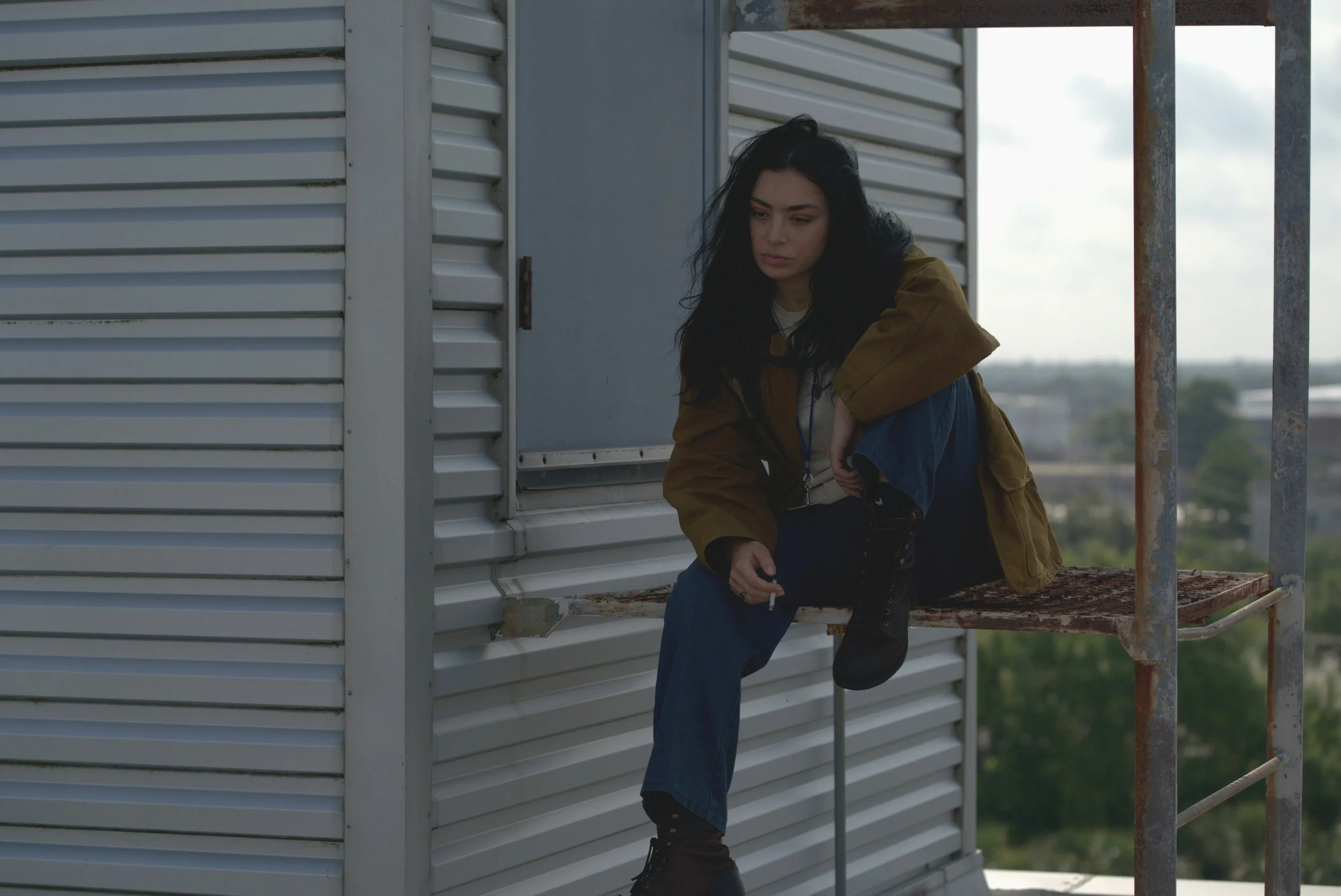
As for Montgomery’s camera-wielding villain, Arthur, Mazzei drew from the Lars Von Trier film The House That Jack Built in designing a character who regarded his crimes as a transcendent work of art. “Arthur similarly was a deep collaboration with Dacre. A lot of the costumes were his ideas: the stockings and that shirt he wears—there’s this tactile obsession that Arthur has, and Dacre brought so much of that to the character.” The cast is rounded out by Josie Totah, Jermaine Fowler, Kurt Yue, and pop superstar Charli xcx. Because of the distribution delays, this was the Brat singer’s first film role, a part she personally requested after reading a press release.
IFC and Shudder
Another key character is Aaron Holliday’s Ryan, Margot’s horror-loving roommate and best friend. While romantic relationships aren’t centred in the film, both Margot and Ryan are queer, and it was important to Mazzei to have a natural, straightforward kind of representation. “Including queer characters in my movies is something that I always do, pretty much,” she says. “I think in constructing Margot and Ryan, I just wanted to build out a really authentic friendship between two people who love each other. Their queerness isn't central to the story, but that's exactly the type of representation that I like. I don't necessarily think every story with queer characters needs to be about queerness—that’s not how it is in the real world, right? There just are people who are queer, myself included.”
With everything from Reddit to real snuff films appearing in the film, Mazzei also strived for authenticity in how Faces of Death shows its characters using the internet. “It’s something we started developing a language for with our first film,” she recalls. “If someone were to watch someone cam or watch someone on their phone or computer, it would be incredibly boring. But the experience of using my phone or computer is incredibly stimulating. We try to frame these shots in the same way, to put you in the character’s POV.” Mazzei has enhanced that visual language with a meticulous attention to detail: Cam had an additional 98-page script expressly dedicated to online chats, while Faces of Death’s Reddit threads are filled with believable, humorous comments. “A lot of why the internet might feel uncinematic on screen is because it's not actually representing how the internet feels. If you just fill a screen with filler text, audiences aren’t going to feel immersed in the experience of what it actually is like to be on Reddit.”
While Faces of Death doesn’t shy from mocking the jaded indifference of its characters to violence—or even the pleasure they take in it (see Charli xcx’s gorehound Gabby)—Mazzei unequivocally feels empathy towards such internet users. “I mean, I’m one of those people,” she laughs. “I don't think the film is trying to indict anyone for the content we are consuming. I think the film is pointing a finger at this ecosystem we've created, where we are controlled by these algorithms that want us to constantly engage in content. And the most addictive content is content that is violent or controversial, or makes you angry. I would encourage people to think about who's actually profiting from our doomscrolling, because I don't think it's us.” Where she did want to confront viewers was with the film’s use of licensed graphic content, put on screen after a series of long-winded legal work to get clearance. “We’re recontextualising this imagery. We’re taking the imagery that you're used to seeing on your phone, putting it in a movie theatre, and asking you, ‘Does this feel uncomfortable? Does this feel wrong?’”
Photo: Sarah Eiseman
After shooting in 2023, a finished cut of Faces of Death was ready to go two years ago, but was pulled from SXSW shortly before the festival. Like its source material, the reboot has faced its fair share of hurdles in getting in front of audiences. The worry for Mazzei became whether the film would still hold relevance, but with the foresight to centre the film on a TikTok-like app back when she started on the project in 2019—only shortly after the platform had changed its name from music.ly—she didn’t need to be concerned. “What's so crazy is it absolutely feels more resonant today,” she says. “For me, I was never trying to tap into the internet exactly as it is in one moment, but I wanted to evoke how the internet feels and help make some of these ideas a little more timeless.” Looking back, Mazzei feels a degree of gratitude for the distribution struggles. “We’re essentially pointing the finger at massive tech corporations that are profiting off violence. That’s a thorny thought to present to the world. So finding the right distributor who was excited that it was risky and dangerous was so important. I feel like the movie is coming out at the exact right time with the exact right partners.”
With so much of Faces of Death focusing on today’s fascination with imitation, trends, and remakes, Mazzei and Goldhaber’s film, like the original, seems to be just the sort of movie that would lend itself to a sequel—and the screenwriter and producer is intrigued. “I’m always open to exploring that,” she says. “There’s something very interesting about remake culture, and there’s something very interesting about sequel culture. I’m absolutely happy to engage with the culture of the time I live in.”
Faces of Death hits US theatres April 10th.