Mārama Director Taratoa Stappard on Making the First Māori Gothic Horror Film
The writer-director unpacks his critically-acclaimed debut feature, blending the horror genre with disturbing real-life histories, and developing a “Māori Cinematic Universe”
by Lana Thorn 19 April 2026
Watermelon Pictures / Dark Sky Films
When Taratoa Stappard started working on his debut feature film, he didn’t realise he’d end up creating a new genre. The London-based writer-director, who has spent most of his life in the UK, set out to make a period film connecting to his ancestry through his Māori mother. But as he learned about a host of real-life atrocities, he came to a realisation: he wasn’t making a sombre costume drama, but rather a Māori Gothic horror movie.
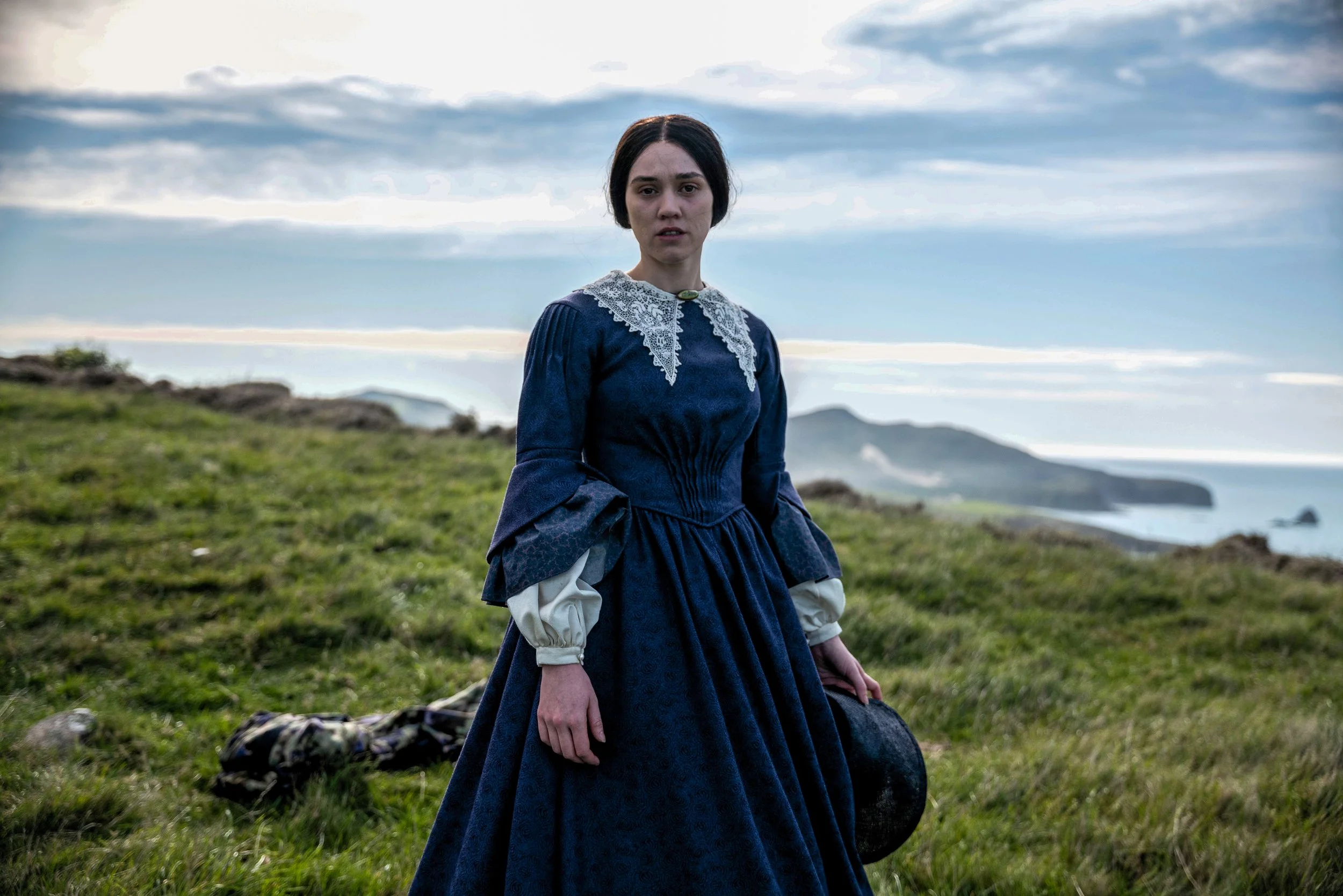
The resulting film, Mārama, has just won the Scariest Feature Award at the Overlook Film Festival. It follows the titular Māori woman (Ariāna Osborne) as she travels to a Yorkshire manor in Victorian England to learn about her ancestors. When she starts seeing unsettling visions — and learns more about her hosts’ disturbing fascination with her culture — Mārama begins to untangle a web of horrific secrets. Calling Phantasmag from New York, Stappard discusses how he confronted difficult histories, reconnected with his Māori heritage, and found catharsis by making a revenge horror film.
Phantasmag: What attracted you to telling this Māori Gothic horror story as your first feature film?
Taratoa Stappard: At a very late time in my life, I came to realise the best chance you have at directing a first feature is by writing the script. I remember exactly when I finally found the self-confidence to have a go. I went to Māoriland, which is a film festival in Aotearoa [New Zealand] that celebrates Indigenous cinema — I went there with a short film I'd made in Southern Africa in 2018. It takes place in Ōtaki, which is the small town where my mother grew up. I hadn’t been before, so visiting there and meeting people who knew my mother was awesome. Between looking at photos and speaking with relatives I was meeting for the first time, ideas started coming to me — I thought back to stories my mother had told me growing up.
My great-grandmother, Rangiriri — which means “angry sky” — had always been particularly interesting to me. She was born in 1880 and had an identical twin sister. At the age of sixteen, the twins were disowned by their English father after they were expelled from their third boarding school. They were expelled for wanting to speak their language and perform the dances they had grown up with, because their culture was being suppressed massively. The Māori were being written off as a dying race in the 1880s and 90s by colonisers.
Watermelon Pictures / Dark Sky Films
They were disowned, and they went off, took on identical, traditional moko kauae facial tattoos, and became very popular guides. Then, in the 1910s, my great-grandmother took a concert party, called Princess Rangiriri and Her Nine Māori Maids, and they travelled from New Zealand to Australia, America, and England, performing. I remember being struck and thinking, ‘What must that have been like for a staunch Māori woman with a well-defined facial tattoo to sing and dance and entertain countries that had been colonising her people for a hundred years?’ I realised I could tell a story about identity. I didn't feel I could speak about a story in Aotearoa, certainly not a contemporary one, because I have no lived experience of that. I've learnt a lot about the Māori culture researching Mārama and working closely with many consultants—including one amazing woman who was a matakite, meaning a seer. I wanted to make sure the script felt ‘tika’ and ‘pono’, these two four-letter Māori words that mean ‘honest’ and ‘authentic’. I'm considering getting them tattooed on my knuckles [laughs], like ‘love’ and ‘hate’.
As I researched the colonisation of Aotearoa, I thought that Mārama was going to be a heavy period drama. But the more I wrote and the more I learned, it became clear to me that this was a horror film. It was Māori horror. I wanted to own that and be specific. Some people have said, ‘It’s kind of like folk horror’, but it’s not. It’s not The Wicker Man, you know? I’m speaking about the horror of a culture being colonised and appropriated. And it’s about a colonised character not fighting the battle against the colonisers on her home turf. I was also determined to make the character a wāhine Māori, a female Māori character, to honour my mother and my sister.
P: What was the most interesting thing you learned during the research process?
TS: There was one figure that came up pretty quickly — a man called H.G. Robley. He was an Englishman who specialised in the art of Māori tattooing. He wrote a book with illustrations, which was good as ethnographic research, but the text was pretty useless. And disgustingly, he was obsessed with collecting preserved heads. There’s an infamous photo you can find online of him sitting in his Victorian parlour, and on the wall behind him are twenty or thirty preserved Māori heads. That shocking photograph was one of the things that pivoted me to thinking this is a horror film, actually. It isn’t a drama. For context, the Māori culture has always revered the head, and tribes would preserve the heads of chiefs and warriors. Of course, when colonisers arrived in New Zealand, they wanted one. There was a period called the Musket Wars when the first Māori tribes got their hands on guns and started taking out other Māori tribes who only knew hand-to-hand combat. It meant that every tribe needed to have guns ASAP, and some were reduced to literally trading one head — this ultimate, sacred item — for one musket. In the film, I’m trying to touch on these elements without making a documentary. In early drafts, I kept getting the note, ‘We don’t really need to know that background. Trust your audience.’ That was important to learn, trying to find that balance of ‘entertainment’ and informing the audience about horrific history without giving them a lecture.
Watermelon Pictures / Dark Sky Films
P: Despite the film taking place in Yorkshire, you shot Mārama in New Zealand with a Māori cast and crew. What did they bring to the production?
TS: It was everything. All of Mārama was shot in Aotearoa because of the financing, and it worked out as a massive positive for the production. My initial worry was that there were no Gothic mansions in New Zealand, but my production designer built an incredible interior set. Working with New Zealanders, whether Pākehā or Māori, all the crew had way more experience than me. And what they had to say meant a lot to me. Two guys said, ‘This is an interesting story, I've never seen this before. Don’t fuck it up.’ [Laughs] There was a certain amount of pressure to get it right, but they rallied to help me do that.
On a cultural level, the power of it all was overwhelmingly emotional. Many times, I would cry listening to the karakia, the prayers that were said at the beginning and end of the day by the crew. I speak French, German, and English, but I don’t speak Māori—it’s ridiculous—but I was recognising something in the language. We got into a rhythm of holding hands and saying a quick karakia whenever we shifted scenes or set-ups. It was nice to fold it into the production process, and it was a good way to acknowledge the Indigenous culture of the land upon which we were shooting. Not as a tick-box, but as a way to empower us. It certainly empowered me as a director, having that security and energy on the shoot.
P: As a period film, the costumes in this are a real highlight. How was it collaborating with Sarah Voon, and how did you decide on some of the most important wardrobe elements, from traditional Māori clothes to Mārama’s bright red dress?
TS: Sarah, like Stef Knight, for makeup and prosthetics, Nick Williams for production design, Karl Steven for the score — these were all top of their game heads of departments. I need to acknowledge my Māori lead producer, Sharlene George, for connecting me with them. I’d worked with Karl before, but if I’d looked the others up on IMDb, I would’ve thought, ‘I’m never gonna work with them because they’ve done 15 features.’ I took meetings with all of them to get them on board, and I remember in Sarah’s meeting, she told me she was really interested in Mārama because she’s actually written a Gothic vampire script. She’s a very smart artist, and she brought a bible of references.
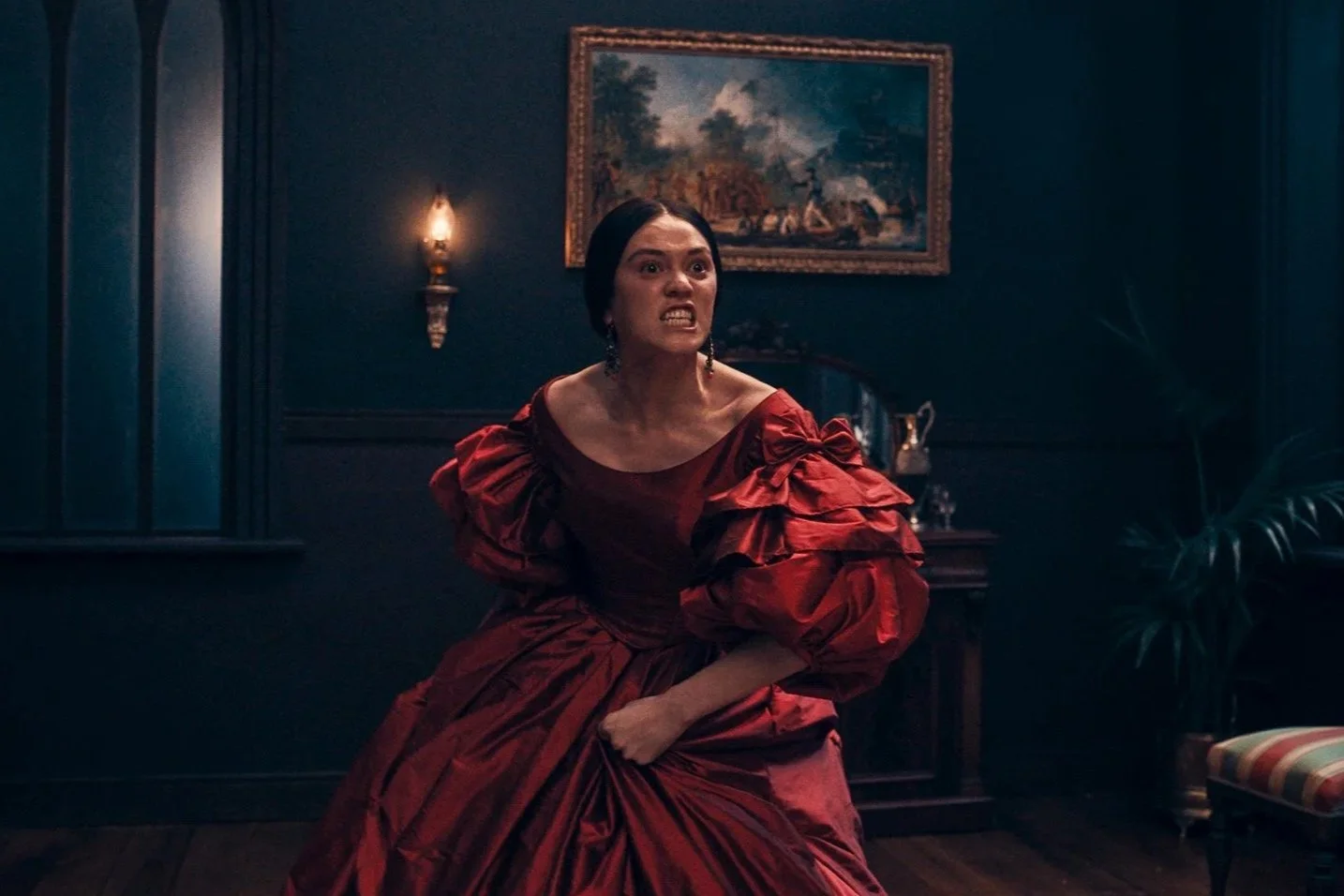
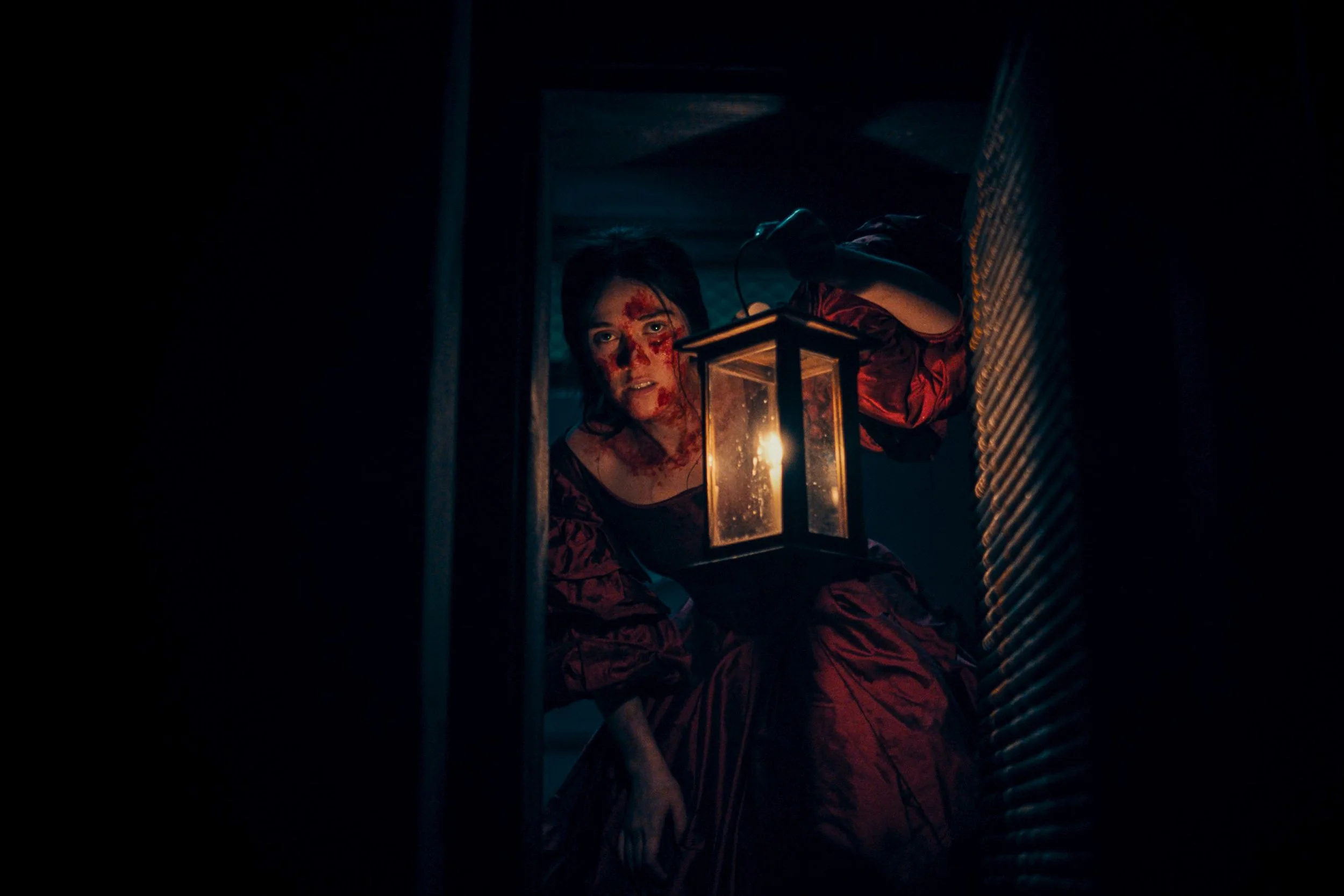
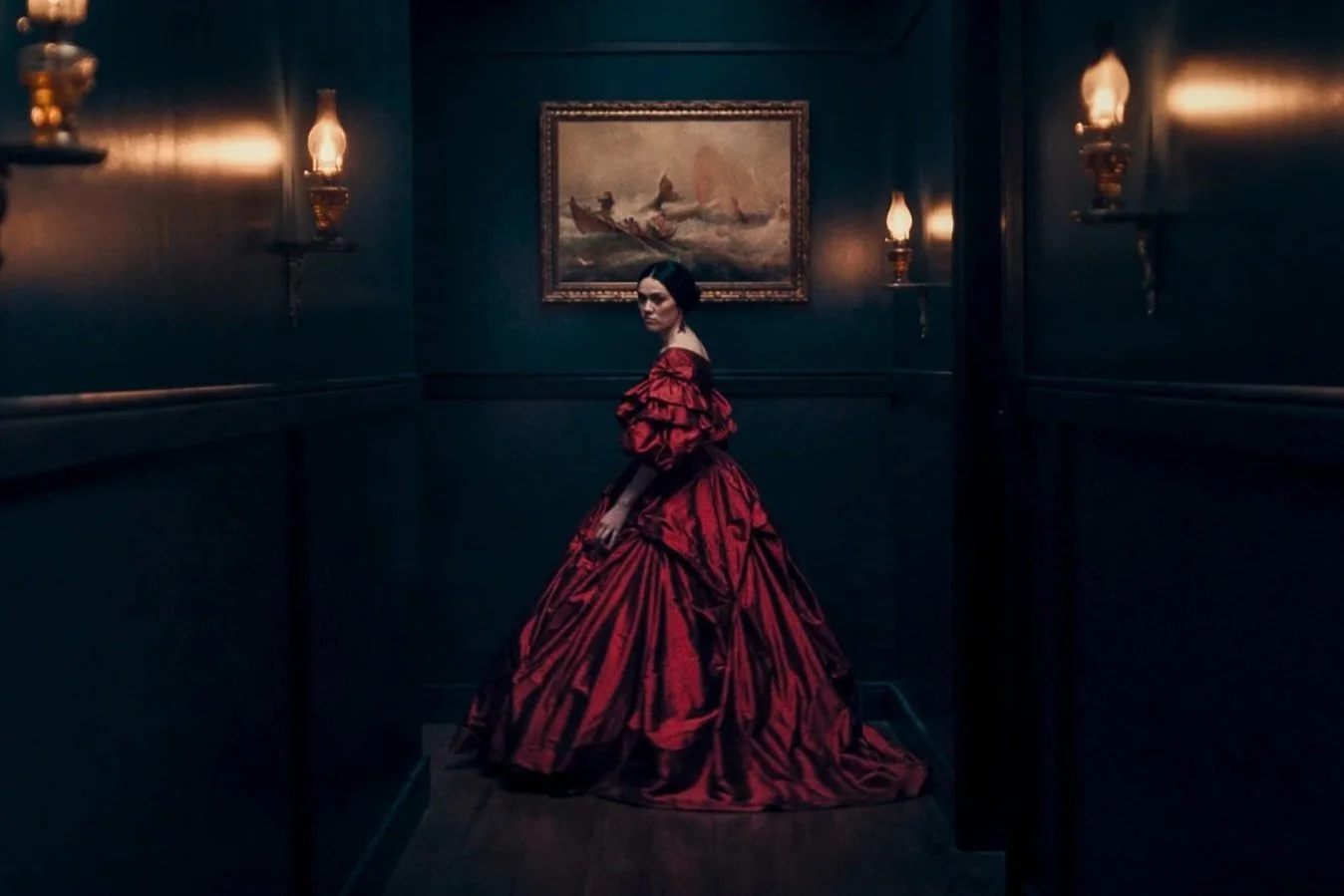
As for the dress, I had written it to be red — the Māori flag has three colours: black, white, and red. Black, the male colour, relates to Ranginui, the sky father; white is Te Ao Mārama, the world of reality; and red is the feminine colour because it relates to Papatūānuku, the earth goddess. So that sumptuous red ball gown that Nathaniel Cole [Toby Stephens] makes her wear at his party, when Sarah first showed it to me, I knew it was the one. It had the sleeves; it was voluminous — she was working with 27 meters of red Chinese silk. She also offered a great solution when I was wondering where Mārama would hide the cut throat razor. She explained that dresses had pockets until the late 1800s, and I was like, ‘If it’s historically accurate, hell yeah, let’s have a pocket.’
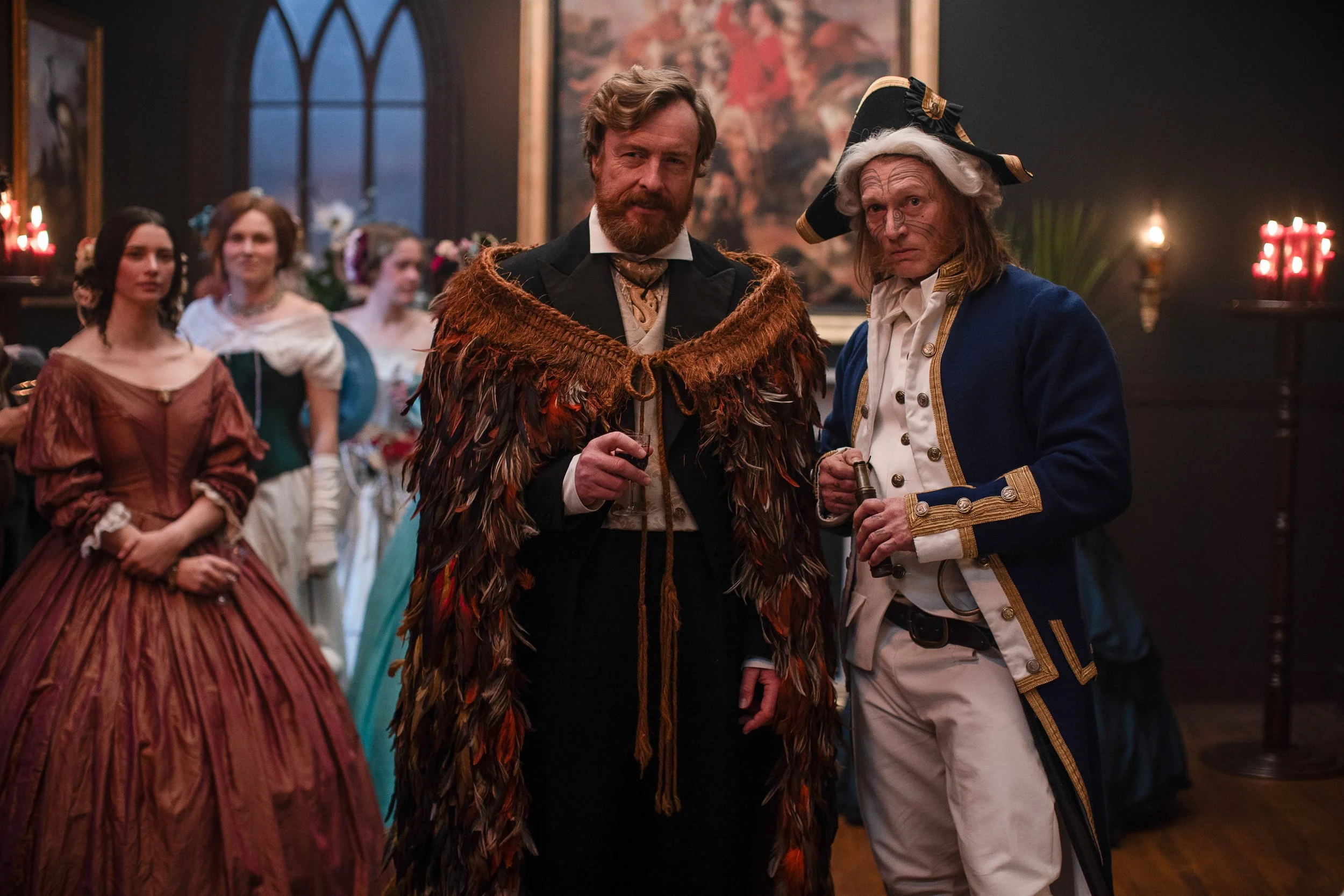
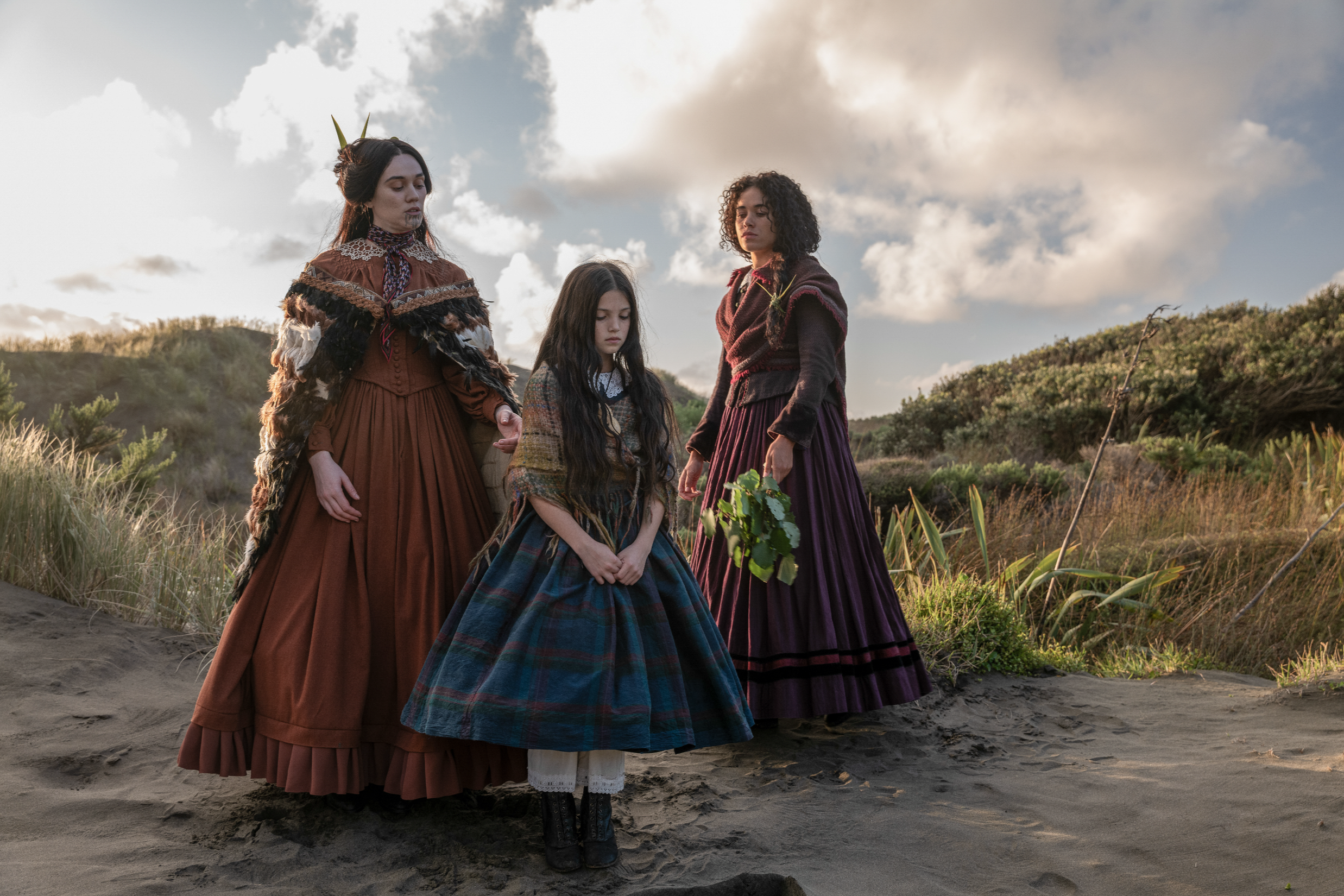
With regards to the Māori clothing, or kākahu as it’s called, a lot of it was genuine. Sarah worked in consultation with Māori specialists. For example, the korowai, the cloak of feathers, was a very precious cloak on loan from a family we had connections to. It needed to be blessed when received, used with care, and then blessed again after the shoot. All of the items had to be handled with respect.
Watermelon Pictures / Dark Sky Films
P: You’ve said that Jordan Peele served as an inspiration. What is it about his work that you wanted to channel when making this film?
TS: When I saw Get Out, I knew that that was something special. We needed comps at the financing stage — when they ask for an A meets B — and I zeroed it down to Get Out meets Lady Macbeth. Being strategically shameless, it's good to use a comp that's incredibly successful [laughs]. It’s one of the more powerful social satires: Jordan Peele's talking about the deepest cultural appropriation you can imagine, and he's doing it within this framework of an entertaining horror film. Then Lady Macbeth was more for the tone, the beautiful costumes, and the strong central female character. I wanted it to reference Florence Pugh, who I thought was amazing in Lady Macbeth.
P: I read that the big haka scene drew applause from crowds at some film festivals, to the point that you were asking yourself whether they were cheering for the right reasons. What did you learn from that audience reaction in relation to the themes of the film?
TS: That happened twice. Both festivals were genre festivals where the crowds can be quite involved, as I now know. I didn't know because all my films had been dramas. But certainly Sitges Film Festival has crowds that are known for audience participation — they clap every time someone's killed. Of course, spoiler alert, there’s no real killing in my film until the final third. Mārama is a bit more of a slow burn, so when the haka happened, they shouted, and they screamed. But as you know, when the film then cuts to this horrific audience of colonisers dressed up in blackface, for example, who start to clap, the real-world clapping in the Sitges theatre just went silent [laughs]. Afterwards, two different people came up to me, and they were like, ‘I'm so sorry, I feel so terrible. It was disrespectful that I clapped.’ I said, ‘Mate, don't worry. I'm sure you were clapping for the right reasons.’
There was an awkward silence when the actual clapping in the film happened. And the same thing happened again at BIFFF [Brussels International Fantastic Film Festival]. The audience participation is next level. They have all these traditions: for example, if someone lights a cigarette in the film, everyone in the cinema starts to cough. When there's a shot of the moon, everyone starts howling like wolves. I saw all this happen in the opening night film, Ready or Not 2. It was a crowd-pleaser, and the theatre was a thousand-seater—I was with my son, and I looked at him like, ‘My God, I don't know if I'm gonna be able to watch my film in this crowd.’ Anyway, I came to watch Mārama the next afternoon, and it was silence. No one said anything. There was silence until the haka, and then this explosion of, ‘Yeah!’ until the turnaround in the film itself… Then sudden silence again.
Watermelon Pictures / Dark Sky Films
P: In a time when Indigenous voices are being threatened and multiple genocides are happening across the globe, what does it mean to you to release this film in 2026?
TS: People have said to me after some screenings, ‘This is a very timely film, unfortunately.’ Just last night, we screened here in New York at the IFC Centre, and a woman said to me afterwards, ‘This film is tragically timely with what's happening with the Epstein files.’ These horrible times that we live in, of increasing revelations of barbarity, whether genocidal or the horrific, misogynistic abuse of women by entitled patriarchal men.
The Nathaniel Cole [Toby Stephens] character genuinely thinks he is respecting, protecting, and curating Māori culture. He's obviously fetishising it. He even says to her — when she asks, ‘Why do you have a carved wooden Māori house in your garden?’ — ‘Why shouldn't I? I look after her. I'm like a museum curator; she’s very beautiful.’ It's a classic response of a coloniser. There’s a lot of repatriation, thankfully, occurring, but still a lot more to go. Occasionally, I do read of museums or even private collectors that are like, ‘No, no, I've been looking after this piece for years, and it's in the family or whatever…’
P: I mean, the British Museum… [laughs]
TS: ‘We've spent years and years keeping these things polished. We're gonna hang on to them, thank you!’
P: There was a piece on display at the British Museum, part of this exhibition called ‘Hew Locke: what have we here?’ It was these burned brass ornamental discs looted by British troops, where you could see marks of the violent force with which the British took them.
TS: Was it made clear in the display? Was the story told well?
P: Yeah, it was. The curator was exploring British imperialism and colonisation through the objects at the British Museum. It was very upsetting, but very well done. The fact that they are still not willing to give the objects back — that’s another conversation.
TS: Of course. It feels like small steps, right? I did see one exhibition at the Royal Academy called ‘Oceania’ in 2018. I saw that because there were two pieces that inspired Taumanu, the short film that became a proof of concept for Mārama. That was my first opportunity working with the Māori producers, Sharlene [George] and RickyLee [Waipuka-Russell], and with Gian Loane as DP. But it was partly inspired by two pieces that I saw. One was an amazing lacquer red grand piano that had been intricately carved with Māori carvings. So it was this physical juxtaposition of traditional Māori carving and one of the ultimate colonial statement pieces. And, in bright lacquer red — again, this important colour to the Māori culture.
Watermelon Pictures / Dark Sky Films
The other piece was like the spine of the exhibition. It was by a Māori artist called Lisa Reihana. The piece, called “in Pursuit of Venus [infected]”, was this moving animated wallpaper inspired by Captain Cook’s voyage. She said she was referencing a particular type of French colonial wallpapering, which had small vignettes of different colonial outposts and small moments of Cook's voyage, and it just made a deep impression on me. I planted the idea of Cook in Taumanu, and of course, he's still in Mārama. I ended up working with a costume designer called Barbara Darragh, on Taumanu, and she had done all the costumes for Lisa Reihana's various scenes.
P: You mentioned you have a twelve-year plan to make four movies. Is there any more horror on the horizon?
TS: Well, there are parts two and three of a Mārama trilogy, so definitely. That’s what I'm thinking of as my Gothic Māori reclamation horror. Someone was saying, ‘Oh, it's like your Māori Cinematic Universe,’ and I was like, ‘Oh yeah, I guess so. Will that help me get funding? Sure, it's a Māori Cinematic Universe!’ [laughs] The second part is still not scripted, but I'm working on it. It picks up with [spoiler alert] the three characters we're left with at the end of Mārama. Mārama and Peggy [Umi Myers] — who I've always thought of as being a couple — and Anahera [Evelyn Towersey], as she is now known. The film will be called Anahera and set in the then-French outpost, but not yet the colony, of Tahiti. I’m excited about making something that maybe hasn’t been done yet. You can think of it perhaps as a Moana Gothic horror.
There's a deep connection between Māori culture and the Tahitians. In particular, Raiatea is the island off Tahiti where many of the original waka, or large canoes, have been carbon-dated and identified as coming from. I’m really looking forward to digging into that in the same way that I dug into the colonisation of New Zealand. I wanna know more about the origins of the Māori culture.
There are three key Māori words that appear on the New Zealand posters. The first one is whakapapa, which means lineage; the second is whānau, which means family; and the third is utu, which means vengeance. Mārama is all about whakapapa, and Anahera will be about whānau because it's about family. The third concluding film, I'm calling it Taumanu again, like my short film, is about vengeance. That's probably gonna bring it into the Edwardian England period. Taumanu is a really interesting Māori word because, like many Māori words, it has two completely different meanings. Taumanu means both to colonise or take possession of, and it also means to take back or reclaim. That was actually kind of the perfect title for the short, and I think it would be the perfect title for the third film in the trilogy of my Māori Cinematic Universe [laughs].
I’ve got another one ready to go, which I'm hoping to shoot in February or March next year. If all goes to plan, I'm shooting that in the Kingdom of Eswatini and Mozambique, where I made the short film that inspires it. That's called Emkatini, which is the siSwati word for “Between”. I hope it doesn't take as long as it took me to make Mārama. That’s why I’ve decided on a 12-year plan. Twelve years, four films, one every three years. I think that's doable.
P: What do you hope that audiences will take away from Mārama?
TS: I hope they feel a sense of well-earned and well-deserved cathartic release. Sometimes screenings are very quiet, but last night there were some definite shouts of like, ‘Yes!’ One woman shouted out, ‘Yes, death to all colonisers!’ That's been the funnest thing: eliciting those emotions. It's as they say — filmmaking is a drug.
People tell me they cried when she did the haka, and I'm like, ‘I cry when she does the haka still!’ It's an incredibly powerful moment for me. There's a certain look on her face. There's a way she holds her hand. It makes me cry; I can't help myself. So I want to do that again.
Mārama is now playing in select US theatres.