Exclusive: Backrooms VFX Supervisor Edward J. Douglas on Bringing Kane Parsons’ Liminal Horrors to Life
In this spoiler-free deep dive, Douglas breaks down the visual effects in A24’s big-screen adaptation of the viral YouTube series
by Lana Thorn 29 May 2026
A24
Edward J. Douglas is no stranger to genre films. As Osgood Perkins’ resident VFX supervisor, he’s the mind behind the Looney Tunes-style live-action violence of The Monkey and the unforgettably uncanny creatures in Keeper. When not visualising hibachi-induced decapitations, he writes and directs Black Mirror-esque shorts like Swiped and U·Run, the latter of which won the Best Sci-Fi/Fantasy Short at the Orlando Film Festival, and has an extensive career shaping visual effects in video games. Among many titles, he contributed to the celebrated sci-fi role-playing game Mass Effect 2.
With Perkins producing Douglas’ latest project, the American VFX supervisor found himself tasked with fleshing out the world that Kane Parsons had created in The Backrooms, a viral web series of found footage videos exploring an endless maze of nightmarish office space. Only 20 years old, Parsons directed the highly anticipated A24 film, adapting his series — which was in turn inspired by a Creepypasta posted to 4chan — into the story of a furniture showroom owner (Chiwetel Ejiofor) who discovers a gateway to a vast liminal space in the basement of his store. With a huge existing fanbase and predictions of a domestic opening upwards of $50 million, Backrooms is set to become a horror phenomenon and a massive summer hit.
Speaking with Phantasmag over Zoom, Douglas discusses the importance of sticking to Parsons’ vision, how he and his team enhanced 30,000 square feet of practical sets, and developing surreal imagery that blurs the line between real and CG visuals.
Phantasmag: Before Backrooms, you've been a part of a trilogy of Osgood Perkins films: Longlegs, The Monkey, and Keeper. What keeps attracting you to working in the horror genre?
Edward J. Douglas: What keeps me attracted to working in the horror genre is the people. Developing a relationship with Osgood Perkins, and with the crew he keeps around, has been amazing. If you look at the credits on Backrooms, it's a lot of the same folks. So it was really wonderful to welcome Kane Parsons into our filmmaking family and use all the experience we have in the genre to help him tell his stories. But if Oz Perkins said, ‘Hey, Ed, we're gonna go do a sci-fi. We're gonna go do a rom-com,’ I'm right there with him. It's the people for me. And whether it’s Oz or Kane, one of the fun challenges of any genre film is creating things that we've never seen before and how to make them fresh.
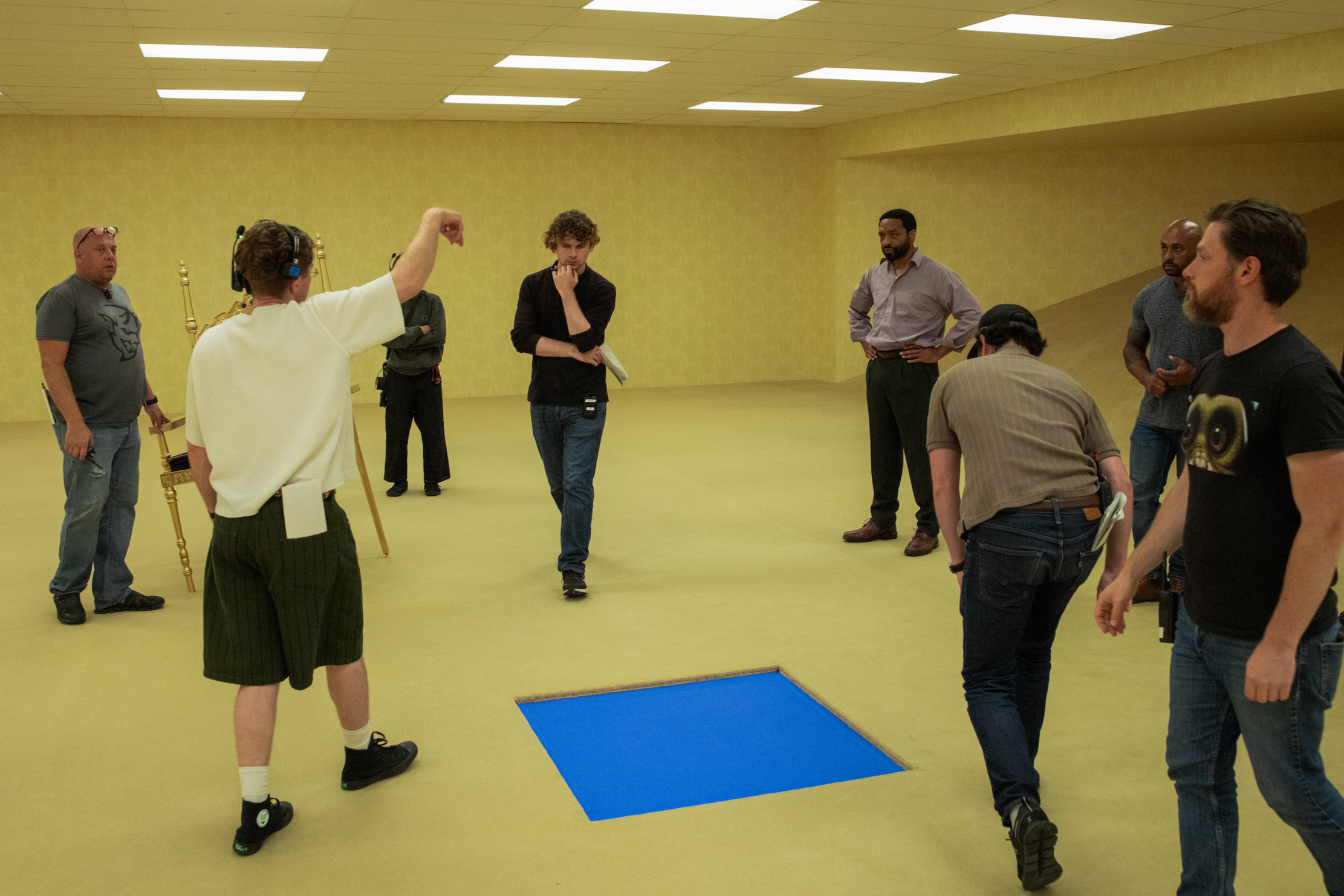
Douglas (right) on set. Courtesy of A24.
P: Because Backrooms has such a layered history on the internet, were you aware of this world beforehand? What were your initial conversations when boarding the project?
EJD: I had not heard of Backrooms when I first got the call. We were finishing Keeper, and my producer called me up and said, ‘Hey, have you heard of this YouTube series called Backrooms?’And I was so busy trying to deliver the previous movie, it took me a while to actually get back into it and check out the YouTube series. Then he set up a meeting with Kane, and we started talking about the world and the VFX of it. What struck me immediately was the taste that Kane had, which made those YouTube videos really hard to tell if it was live action or not. The way he created everything in CG, but then processed it through an actual VHS tape on an old VCR, created this atmosphere of the 1990s or late 80s. My first reaction was: ‘How did he get something with the tools he had to strike that perfect balance?’ I was excited to learn about his process and his world.
P: Expanding on that, because Kane obviously comes from a VFX background himself and designed the original videos with Blender and After Effects, what differentiated your collaboration with him compared to other directors?
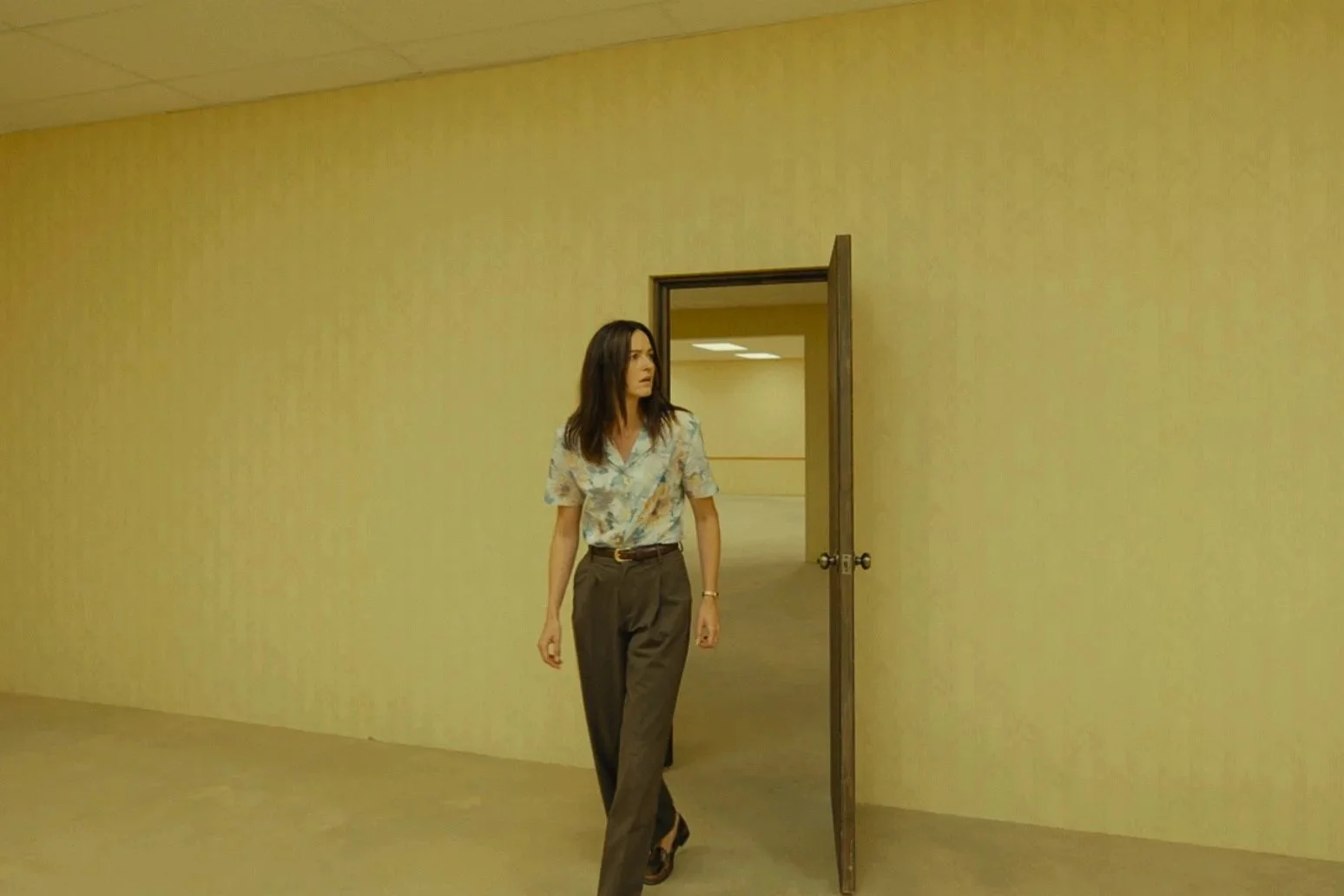
EJD: The collaboration with Kane was quite different from a lot of directors in the sense that he had always built the world with his own two hands at a keyboard. He was accustomed to exploring, sculpting, and moulding to see: Does this feel right? That personal exploration process, with the scope and scale of production, wasn’t necessarily possible, but we created processes and pipelines where we could do some of that. So some of the film is very much traditional VFX pipelines. Other parts are replicating in every way possible the way he would make his sequences. When we’re in the found footage VHS world, he's laying the groundwork for all those scenes. He's blocking them out. He’s building the structure in Blender the same way he did with the sets on the production design. He would build it all out and hand it off to the production designer and say, ‘Hey, can we build this? This is my vision.’ Of course, he would have to run off to editing or set or mix or all the other responsibilities a director has. He couldn't bring it to final. So we would then bring everything up to a certain production quality: polish the cameras, polish the animation, and then we followed the exact same pipeline he would on his videos. We’d put it through a VHS tape and dial the look in. It worked on YouTube. There was no reason to change that core functionality, and we didn't try to.
A24
P: Something that really struck me with the opening sequence was it was hard for me to tell if it was real or not. How much of that was enhanced with VFX?
EJD: I don't want to spoil too much yet. I will say there's a significant amount of VFX there. I'll also say one of my key collaborators in all the Blender sequences was my associate VFX supervisor, Calvin Romeyn. So he took key. He's worked on some of the biggest movies out there, but he also does incredible personal project short films in Blender, in Unreal Engine, and he was a perfect partner to own the Kane pipeline to build our enhanced version of what he did in his bedroom when he was 16 and work in that language. When you get into big visual effect studios, the instinct to just pile on overhead and so much technology can bloat things, and we wanted to keep those scenes just as lean as what Kane would have done himself. So Calvin was an amazing partner in working in that kind of methodology, being able to create amazing sequences that were going from live action into Blender, back to live action. Hopefully, you don't know where one starts, where one ends.
P: I certainly didn’t.
EJD: Great. I’m very excited for later on in the summer when we’re able to show the breakdowns of all the magic behind that. I’m very proud of all that work.
P: Can you walk me through your standard workflow for Backrooms? How did you divide the work amongst your team, and what did a regular day look like?
EJD: The work all starts in prep. So I'm sitting with all the other department heads, and we're trying to figure out in every scene which department is [taking lead on] bringing something to life. It might be the production designer and the director and I talking about the sets and saying, ‘Okay how big does the set need to be? How much do we have to build, and when does VFX help extend it?’ So often it's about the performance. Where is the actor gonna go? What do they touch? What do they interact with? Then, if there's a place where we want to expand and we know we can never put a giant hallway down because we've run out of set, that's a great candidate for where VFX will take over. Same thing with stunts, same thing with special effects. If we have moments where we can only go so far in practical, I'm always the first one to say, ‘Let's do everything we possibly can on camera, and then we'll continue in VFX if we need to.’ In the early days, it's weeks and weeks of those conversations. We're talking about the scale of scenes. There are a few big spaces in the movie that are just absolutely immense that we could have never built. So those are fun conversations: ‘Do we go to a location and then add walls and ceilings? Do we build a little piece of set, then add a bunch of VFX?’
A24
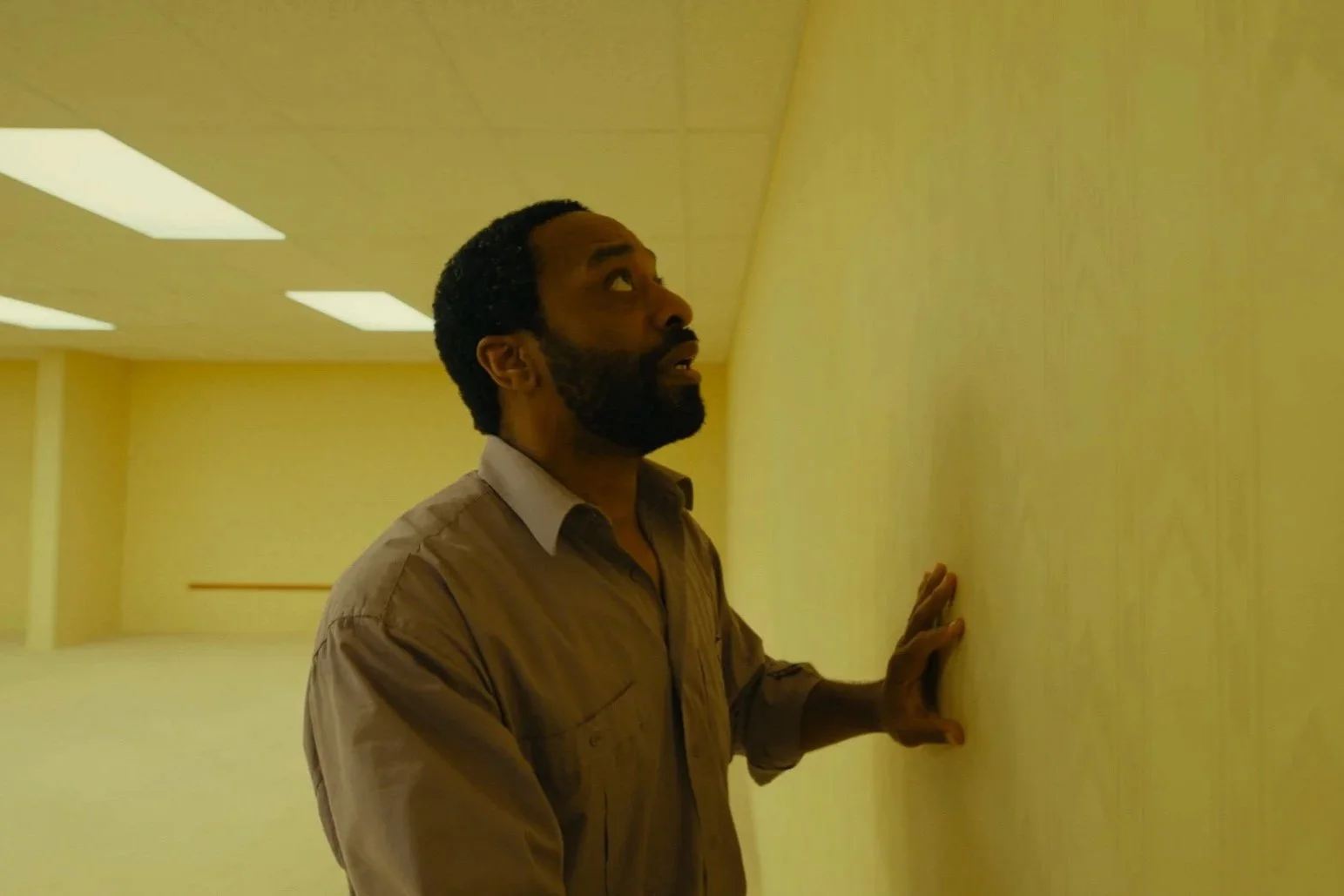
When we're filming the movie, it's myself and Calvin, and we’re working with the team day to day on how to shoot everything to make sure we can enhance the world later. Some of the big moments, whenever anyone was passing through a wall, those were big challenges, but really fun scenes. We built sets next to each other. We built the Backrooms and the basement next to each other, so actors could freely walk between them, and then we would put the walls back in. We had witness cameras that could see exactly where these actors were gonna clip through the wall and reanimate them just enough that we could project the shadows on the walls and then seamlessly blend it all together. In post-production, that was quite a challenge because if it's a fantasy movie and somebody's putting their hands through a portal, you can have blurs and distortions and all these effects. But the core of this effect was literally two CG objects sliding through each other. There's nowhere to hide. So, looking at it, even if it's done perfectly, it looks so surreal that your brain almost breaks trying to think, ‘Is this right?’
When it comes to post-production, it starts in the early days. Kane and the editor [Greg Ng] are exploring all the footage and seeing what the best version of the movie is. But the more they go along, the more they knock on my door and say, ‘Hey, we have this idea. Can we do this?’ Some of the long VHS sequences and the big set extensions, we can start that work early. Once we get late in post, new ideas emerge, and you start exploring what we can add. Maybe we didn't film it, but the footage is begging us and demanding these new ideas, and we see how we can integrate them.
P: How do you go about blending VFX and practical sets fluidly?
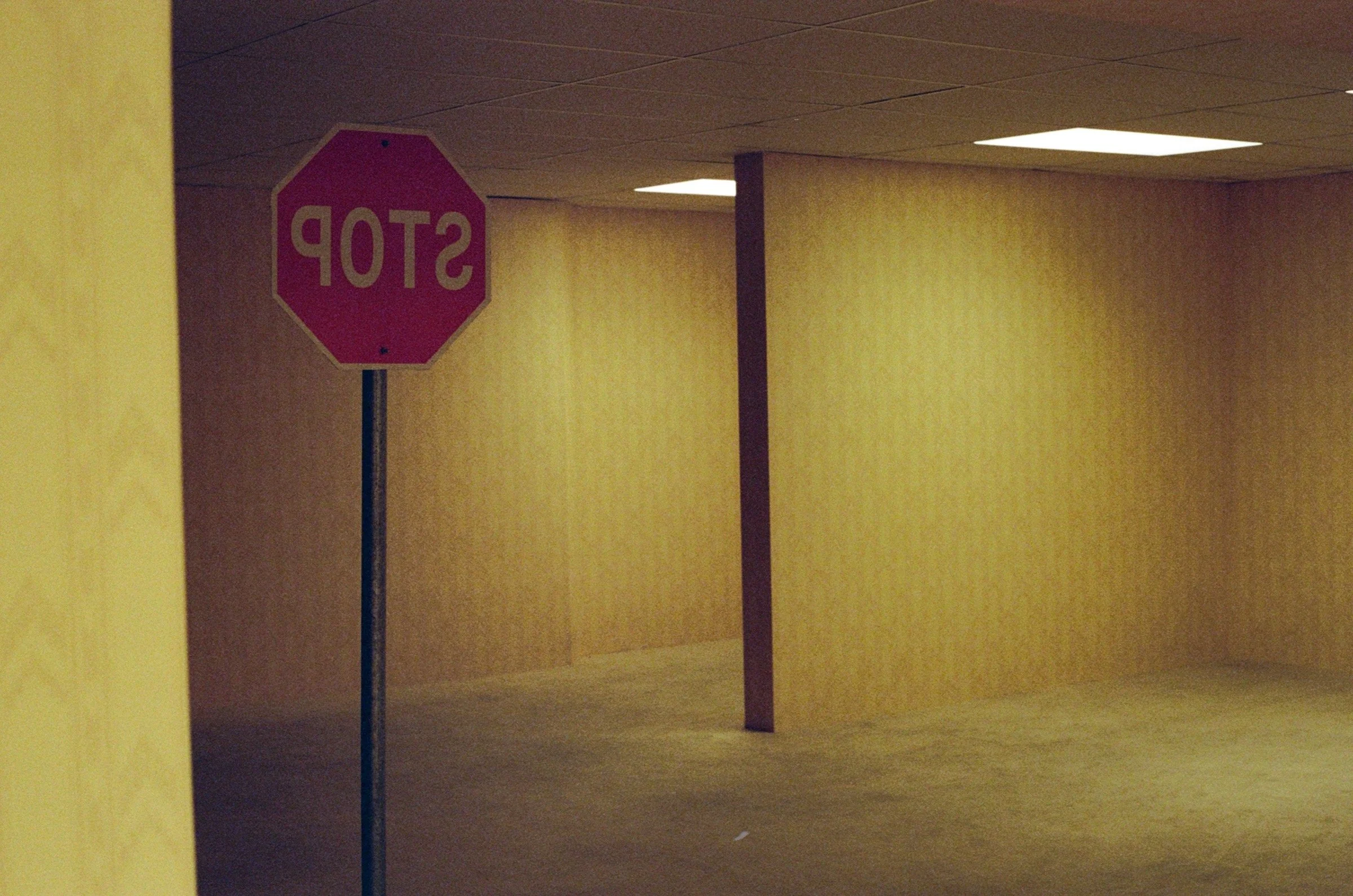
EJD: One of the early things that we did was to make sure we could perfectly replicate Backrooms environments in CG and VFX. We took the original 4chan Backrooms image, reverse engineered it, match moved it, and figured out what lens it was on. Then we built a one-to-one match and showed Kane and asked, ‘Can you tell which is ours and which is the original?’ In that first version, there was one tiny, tiny giveaway, and it was the shape of a glow around a fluorescent light. The glow was a little bit wider than the real one would've been, but it was so, so, close. Once we hit that, we knew we were in a pretty good place. So everything in Blender came out of that, all those tests.
We were able to test out both the original Backrooms look as well as match the on-set carpets and wallpaper, which were a little different. The original Backrooms image looks yellow, but that was colour-balanced. The walls were more of a white, a beige originally. But of course, in the Kane Parsons lore, it is more yellow. It is a certain colour of carpet. So Danny Vermette, the production designer, and Kane tested so many different types of wallpaper so that they had that yellow feeling and the right carpets, but the actors looked great, and the skin tones looked great in that world.
A24
Calvin did a lot of look [development] on the authentic original Backrooms look as well as the on-set look. When we ramped up with other VFX vendors who were doing set extensions, we could hand off that work to them and say, ‘This is exactly how you replicate this wallpaper. This is the scaling for these textures, for our chevrons, for our floral wallpaper.’ Then we could roll that out really consistently 'cause we had that reference locked in. When I look at breakdowns, sometimes I'm surprised there's some VFX carpet that I didn't realise was VFX.
One of the really fun things was when one of the first trailers came out, there was a comment on Reddit that said, ‘This shot looks like too much CG. I don't know why they're using so much CG.’ And it was one of the only shots in the whole trailer with no VFX at all [laughs]. Because of the wallpaper and how the shape of the light fell together, some of these spaces looked CG. They looked totally unreal to my eye. So integrating CG or VFX into these shots was a really interesting challenge because everything looked so surreal. So, sometimes if we had a note that said, ‘Hmm, I don't know if we've done this shot yet, it still looks a little bit CG,’ we'd say, ‘Well, the other corner of the frame looks CG—but it’s totally real.’
P: Having worked so much on that wallpaper, you’re probably still dreaming about those endless yellow patterns.
EJD: The edit suite is covered in Backrooms wallpaper, and I go in there every day [laughs].
P: As a horror comedy, for example, The Monkey had very playful, cartoonish gore. But Backrooms exists in a world of its own. How do you design VFX in reference to a film's tone?
EJD: The tone of the VFX really takes a cue from the editing and the directing. In The Monkey, every death is a punchline to a joke. There's the setup, and then the death is the surprise punchline. So timing was a huge part of that. How do we make something impactful and unexpected? One of my favourites was the woman who jumps into the electrified pool and explodes everywhere. And it's a Looney Tunes movie, so we're gonna have three times the amount of blood in her than a normal human body would. That's just part of the tone of the world. In Backrooms, we were expanding a world that was already built. Most things that we touched in VFX were either replicating or expanding something that we built, or recreating something that was part of the Backrooms lore. We were able to really ground ourselves in that. And Kane has such a clear vision of what this world feels like and how it behaves that as we were learning the world, he was able to guide us and make sure everything was consistent.
A24
P: As someone who has been immersed in that world, why do you think that people are so attracted to this liminal horror and to the Backrooms? There’s such a huge fan base for this, and hundreds of thousands of Reddit threads.
EJD: I'm so close to the film that it's hard for me to know why people connect to it. I've walked the sets, I’ve walked the stages, I've been in the Backrooms. I've been in the space when we've closed up almost all the doors, and you can get lost in there. But if I think back to the movies that shaped me, that made me feel like I was living in a world that was inexplicable, I think of a movie like Dark City, where it was a horrifying world, but I wanted to understand that space. The textures and the feeling, the emotional flavour of it was so specific that, if this movie is doing for other people what that movie did for me, I can understand that.
P: Do you have a favourite sequence in Backrooms,or a sequence you're most proud of?
EJD: All the VHS sequences, I’m incredibly proud of. There’s a sequence in the middle of the film that was one of the very first we started on. We prevised it and worked closely with the set design team and the stunt team. It was one of the first scenes we started and one of the last we finished. I'm incredibly proud of so many of the Backrooms spaces at the end of the movie. It was so much fun creating them and building out the scope of the world. There are a few other little things I'd love to talk about, but they don't want me talking about any of that just yet [laughs].
P: Are there any parts of the film that you think audiences won’t realise were VFX?
EJD: Again, I’m too close to it. I love hearing people wonder what's VFX and what's not. There's an enormous amount of VFX in the film, but we built it in a way — and Kane kept the film focused on the characters and the story — where I hope you don't think about it.
P: One of the most interesting aspects of the film is that the real world is presented in a dreamy, heightened state, along with the Backrooms. Even in the trailer, we have these surreal suburban neighbourhoods, and I'm wondering, were there any real-world moments that required digital enhancement?
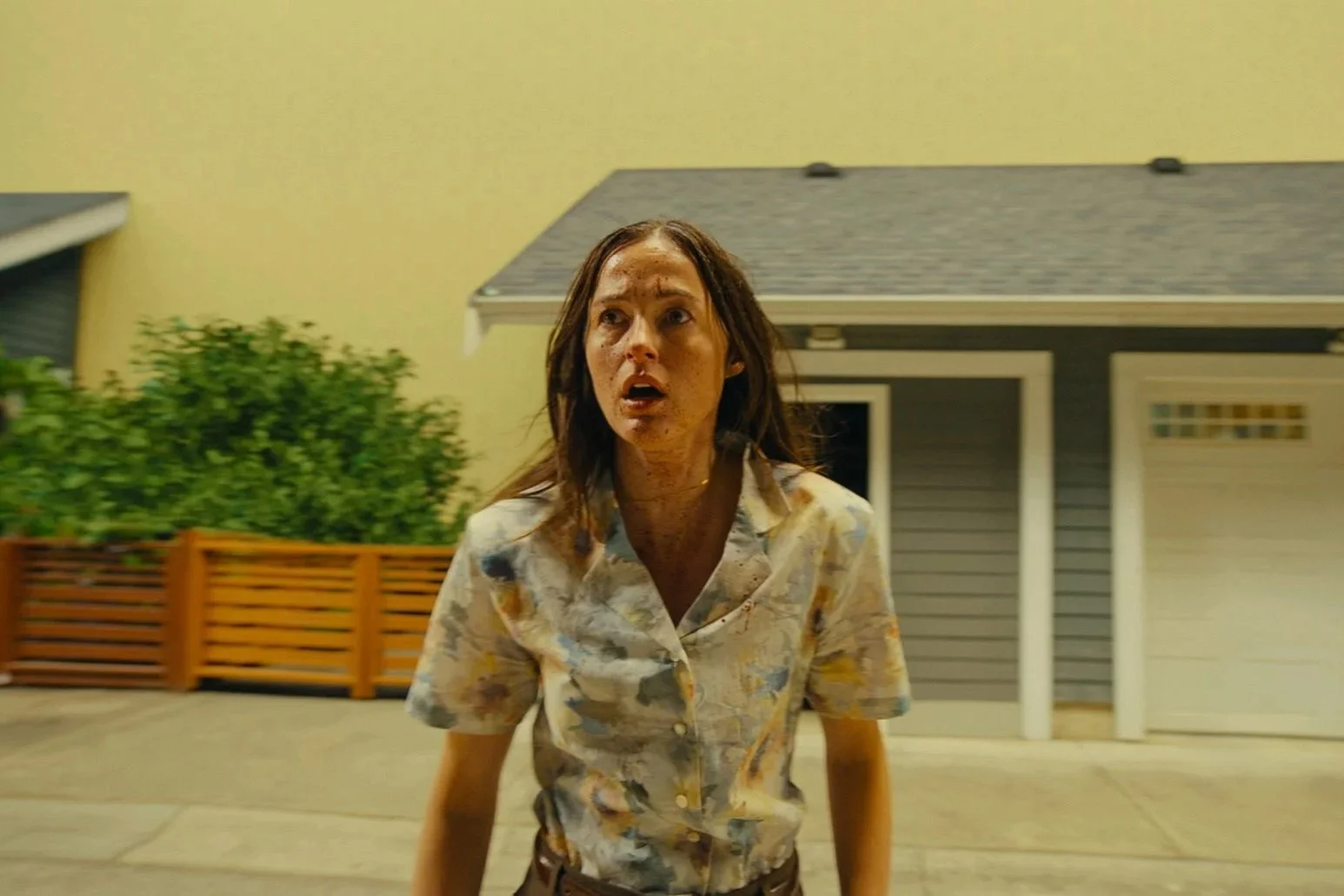
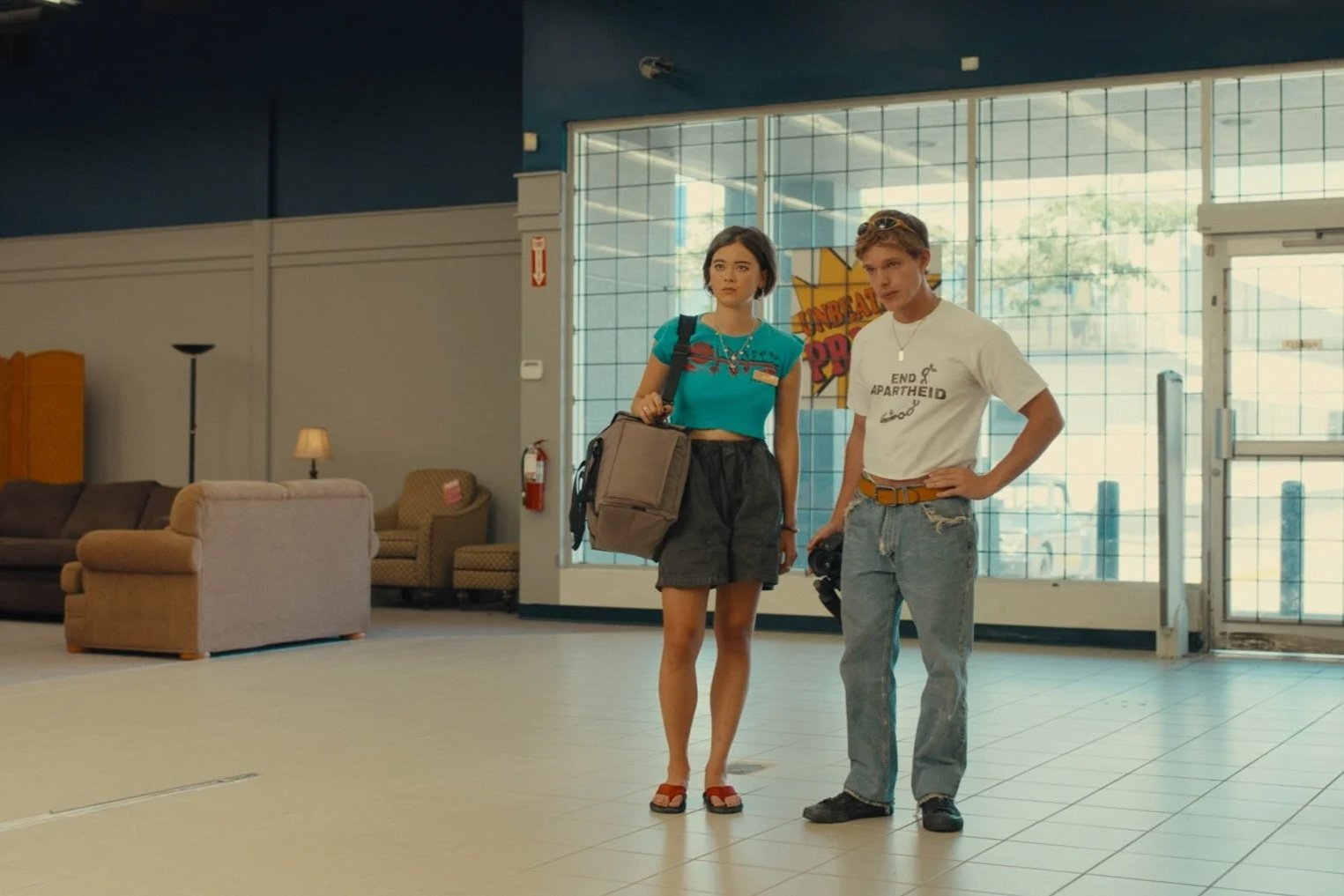
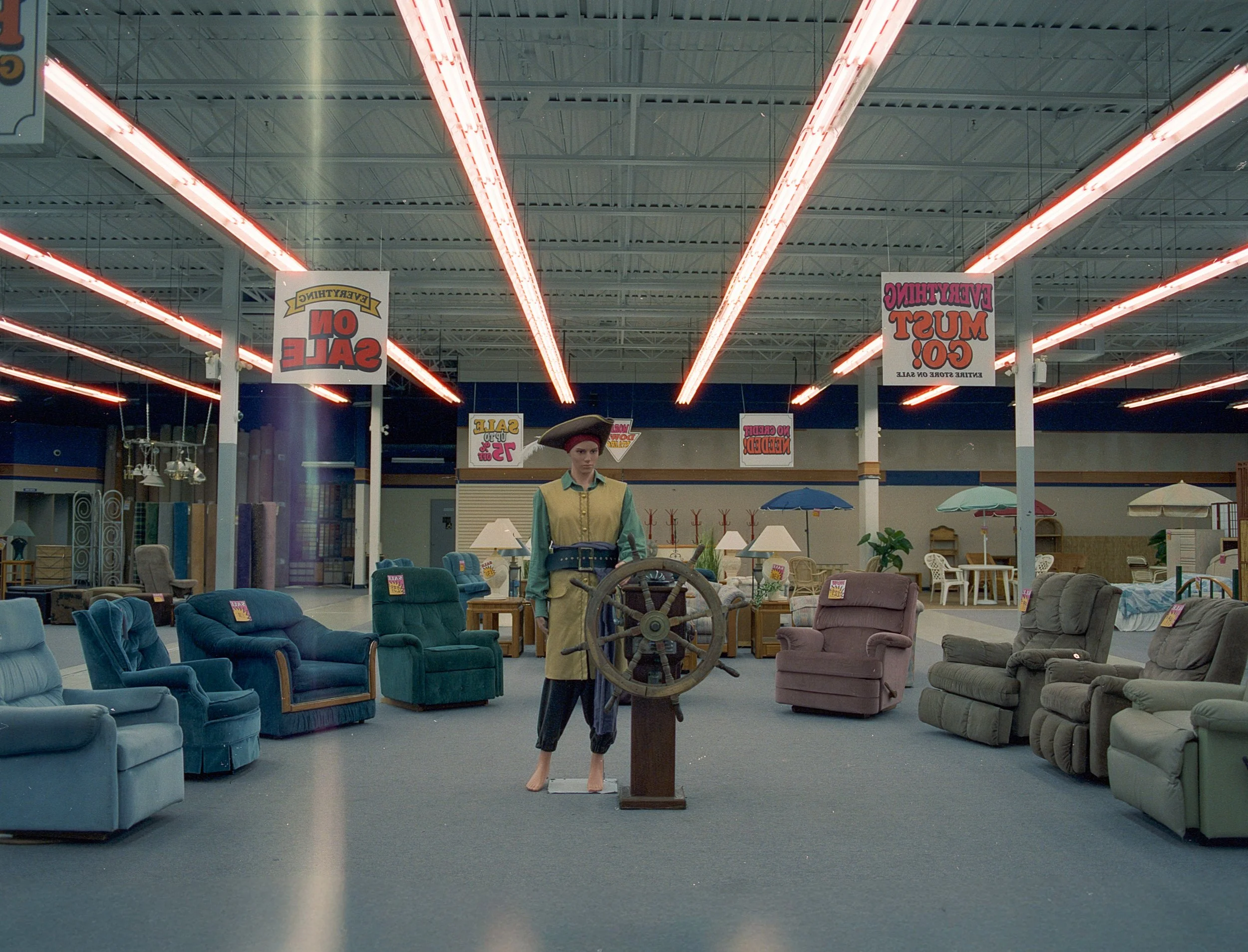
EJD: A dreamcore language to the outside world was definitely part of the vision. Some of that was driven by location scouting and our choices of where we filmed. So the little pastel-coloured homes that Bobby and Kat were living in is a motel in Vancouver. But these were all based on spaces around where Kane grew up in Northern California, around San Jose. The air is strong, blue skies, the big puffy clouds… He referenced this space near where he grew up, these vibrant green hills with blue sky that was everyone's Microsoft background. It’s an iconic image called “Bliss” [the photograph was taken in Sonoma County]. That was a reference point for the outside world that felt familiar to Kane, but also had this surreal dreamcore [quality]. There were many shots where we enhanced the environment to bring it more into that space. The Truman Show was a reference. Then, of course, it’s a film that takes place in the 1990s, so there are always little bits of invisible work to bring it both into the era and also move it outside of Vancouver and into the setting of the film, San Jose.
A24
P: I know you were on set for the film. How does that inform your process?
EJD: As a VFX supervisor, you become one of the few people that carries through from the very first days of the film all the way to final delivery. That's a pretty amazing perspective. So I get to see the first inklings of ideas. I get to see the dreams we have on set. And I get to see how it evolves in the edit. Sometimes I feel the responsibility for carrying the torch for the department heads. As we're expanding the world, I want to make sure that I'm honouring what Danny Vermette, the production designer, made.
When we're building new CG sequences and expanding the world, it needs to look the same way that Jeremy Cox, the director of photography, would've shot it. So working with all the VFX teams and studios to help be the voice of that is a huge part of the edit for me. Being involved on set lets me just immerse myself in the film and then carry that through into post and hopefully have a much more cohesive final product than if I were to just come in at the end and get a list of things to fix and add. When you don’t have context from the other creative participants for how they’re approaching the world, you can’t do your job properly. Being on set and being a true partner with all the other department heads is one of my favourite parts of the job.
P: Do you have any favourite days from set?
EJD: One of my favourite days from set would've been the first day that we shot in the Backroom sets. We were shooting around in Vancouver for a handful of weeks, all the outside world stuff, and then we finally got into the Backrooms, and we all just did a big walkthrough through the stages, and the movie changed that day. We all felt like we were in the Backrooms. We really understood what the core of this film was because you got into certain spaces and you could look around 360 degrees, and you couldn't see the exit. That was a really powerful moment. Then there are moments like the first time Chiwetel [Ejiofor] was on set, feeling the strength and the power of his performance was amazing. And Renate Reinsve, of course, was incredible. They're both just amazing performers to watch at work and get to know. Every day [on that set] was something pretty magical.
P: Because the fandom is so massive, you're going to have so many breakdowns of your work. What is the thing you're most excited about for fans to talk about or notice?
EJD: I'm excited just to share the great work that all the teams did. One of my favourite things when I was growing up was watching all the behind-the-scenes of movies, listening to DVD commentaries, and that's how I learned about making movies. I'm excited to share all those kinds of things and talk about what we did and how we did it, and maybe inspire a new generation of people who want to really handcraft films and create things like we've been able to do.
P: What are you excited to work on next?
EJD: I’m currently working with Osgood Perkins. He has more coming up, and I'm working very closely with him. That’s what's on my desk right now. His next film [The Young People].
Backrooms is now playing in theatres.