Colony Review: Hive Mind Zombie Horror is a Sharp, Timely Thrill Ride for the Age of AI
Cannes Film Festival: Yeon Sang-ho (Train to Busan) updates his favourite monsters for an age of algorithms and overwhelming information exchange in this large-scale genre flick with poignant social commentary
by Alex Kaan 16 May 2026
Showbox
Of all the horror subgenres, the zombie thriller is a strong contender for the most political. From Night of the Living Dead to The Last of Us, the apocalyptic setting examines our behaviour as law and order falls into disarray, while the hordes of lurching, brain-dead villains call into question what truly separates the humans from their infected counterparts. The latest Train to Busan director Yeon Sang-ho is no exception. A practical effects-driven spectacle that finds Yeon in fine form, Colony updates the zombie thriller for a world where AI and high-speed communication are erasing individualised critical thinking. It’s as much a thoughtful parable as it is a brash, bloody midnight movie.
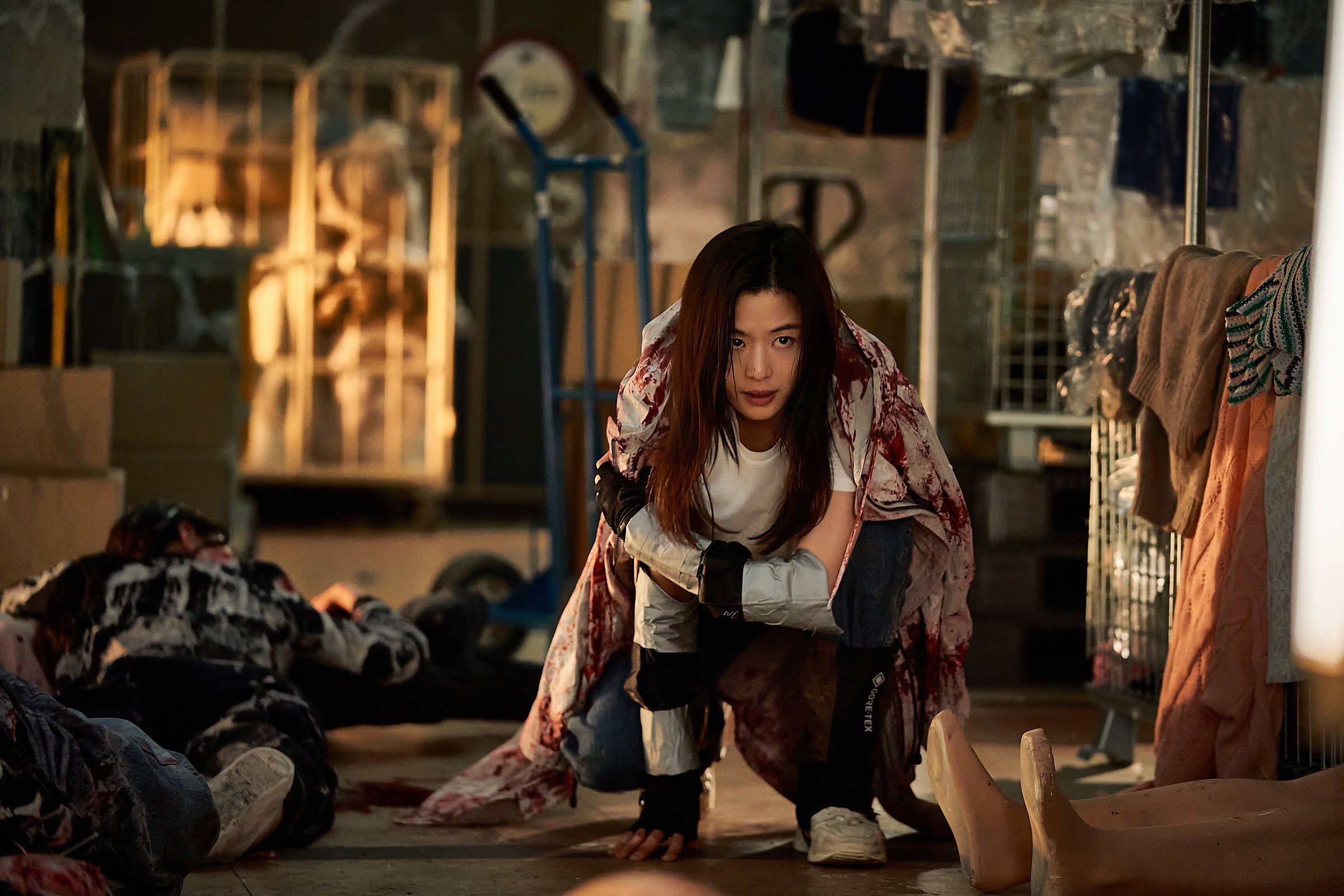
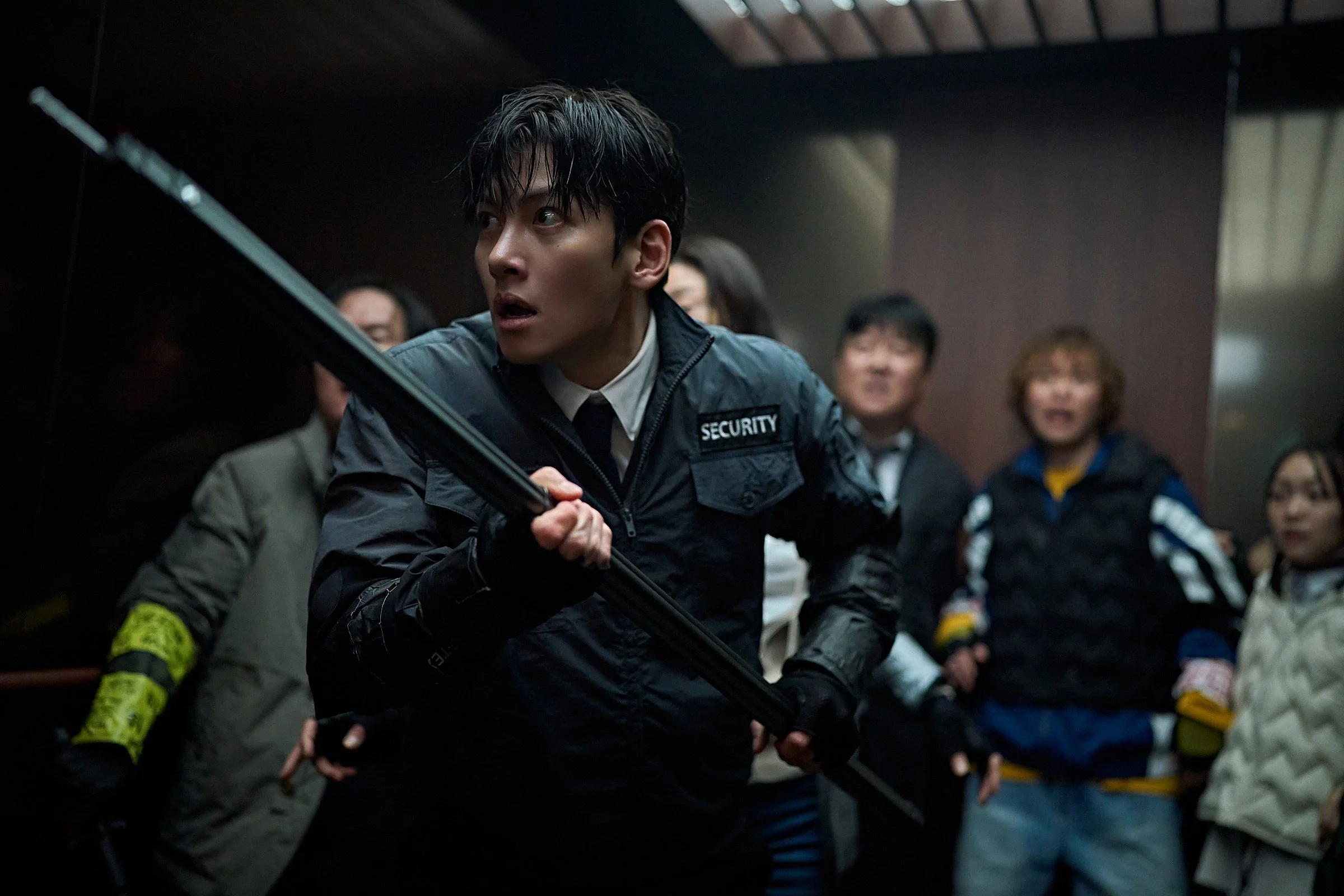
The film wastes no time in setting up its premise. To the tune of Chai Min-joo’s thundering synth score, Dr Suh Young-Chul (Koo Kyo-hwan) calls the police with an unnerving confidence and arrogantly informs them that he will commit an act of bioterrorism, unleashing an unknown virus in a high-rise building in downtown Seoul with the only vaccine injected into himself. Inside the building, professors Kwon Se-jeong (Gianna Jun) and her ex-husband Han Kyu-seong (Go Soo), with whom she’s still on friendly terms, are attending a biotech conference. Meanwhile, security guard Choi Hyun-seok (Ji Chang-wook) and his wheelchair-bound sister Hyun-hee (Kim Shin-rock) are spending quality time together at a shopping centre.
Showbox
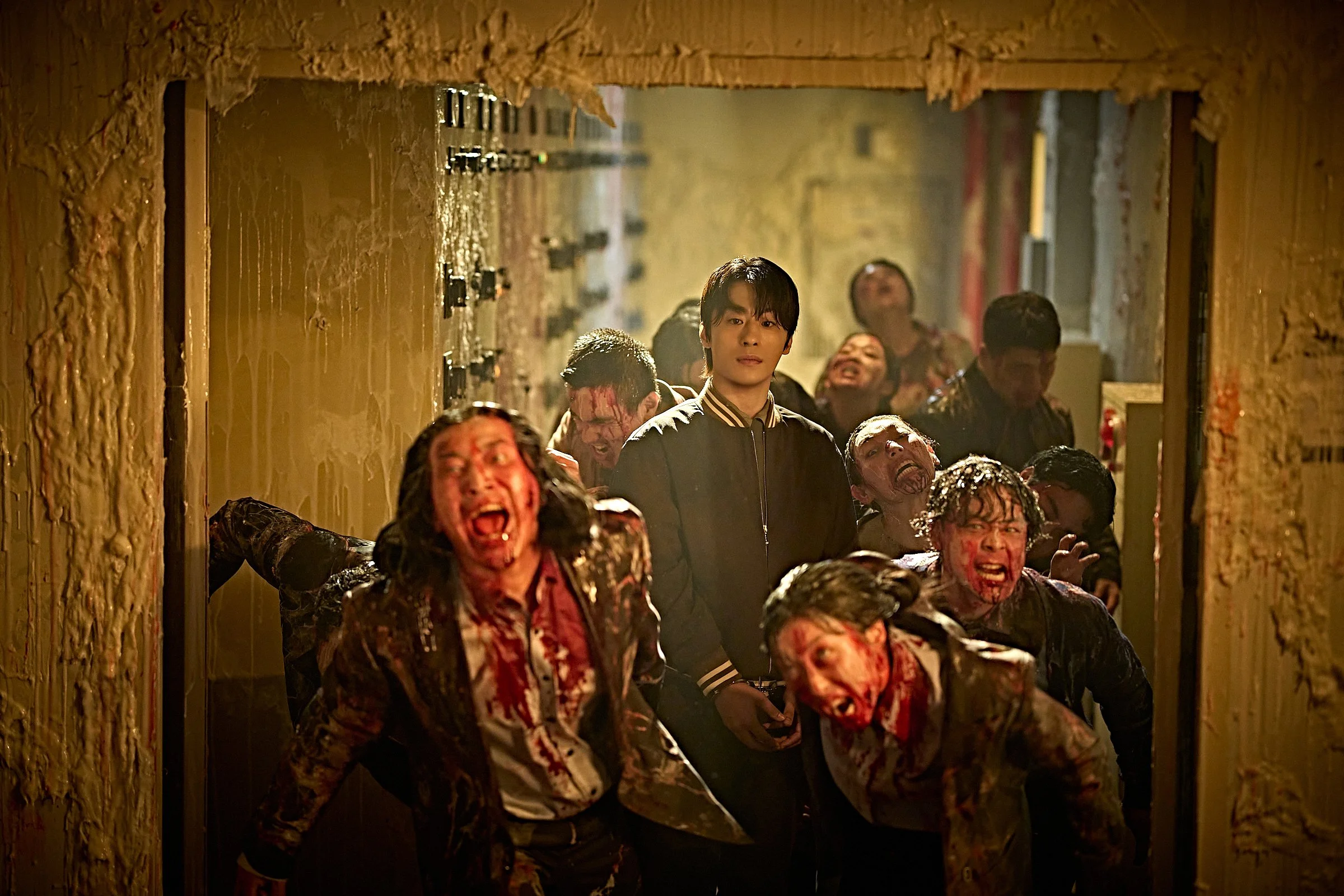
The paths of those two pairings cross when they’re forced to hide in an outdoor retailer, along with a varied cast of supporting characters, as the building is overrun by goopy, snarling hive mind zombies who communicate through a trail of mucus. Balancing the chaos in the high-rise is a storyline following Kyu-seong’s current wife, Gong Sul-hee (Shin Hyun-been), as she works with the government to try to piece together how to stop the infection.
In his director’s statement, Yeon has outlined how he made Colony as a response to AI and its ominous capacity to replace individuality with a collective consciousness, with algorithms that weed out outliers and unique thinking. The deranged Dr Suh consequently believes that his virus is the next stage in evolution, basing human society on ant colonies and fungal networks to eliminate any conflict and difference. Yeon ensures that the weighty themes only enrich the genre thrills—if one zombie spots where a character is hiding, they all can come running at a blistering pace. And the creature design is appropriately gnarly. While their movements are so jarring and unnatural that you’d swear they must be CGI, the grotesque physicality of the zombies is captured in camera and crafted by choreographer Jeon Young and professional dancers—making the threat feel infinitely more real.
Showbox
Playing the brains of the ragtag group trapped in a quarantined building, Gianna Jun is a captivating lead amidst a solid ensemble cast, while Koo Kyo-hwan makes for a delicious villain as a crazed scientist convinced he’s found the logical next step in human evolution. The brother-sister relationship between Hyun-seok and Hyun-hee is a particular highlight, with tension arising in the group from Hyun-seok’s refusal to abandon his disabled sibling at all costs.
For all the carnage, vomit, and zombie bites, Colony is at its best when making astute, often devastating observations about humanity and the depths of its selfishness—or kindness—in a time of extreme distress and social change. And the result is an explosive, biting analogy.