Cornish Auteur Mark Jenkin on His Atmospheric Sci-Fi Ghost Ship Horror Rose of Nevada
George MacKay and Callum Turner lead the writer-director’s eerie third feature
by Lana Thorn 17 June 2026
1-2 Special
When describing Mark Jenkin, the term “multi-hyphenate” seems like an understatement. The Cornish filmmaker writes, directs, edits, and scores his projects, shooting them himself on vintage 16mm cameras. After his 2019 fisherman drama Bait and 2022 folk horror Enys Men, Jenkin has returned with a sci-fi ghost ship story driven by subdued, existential dread and a visceral seaside atmosphere.
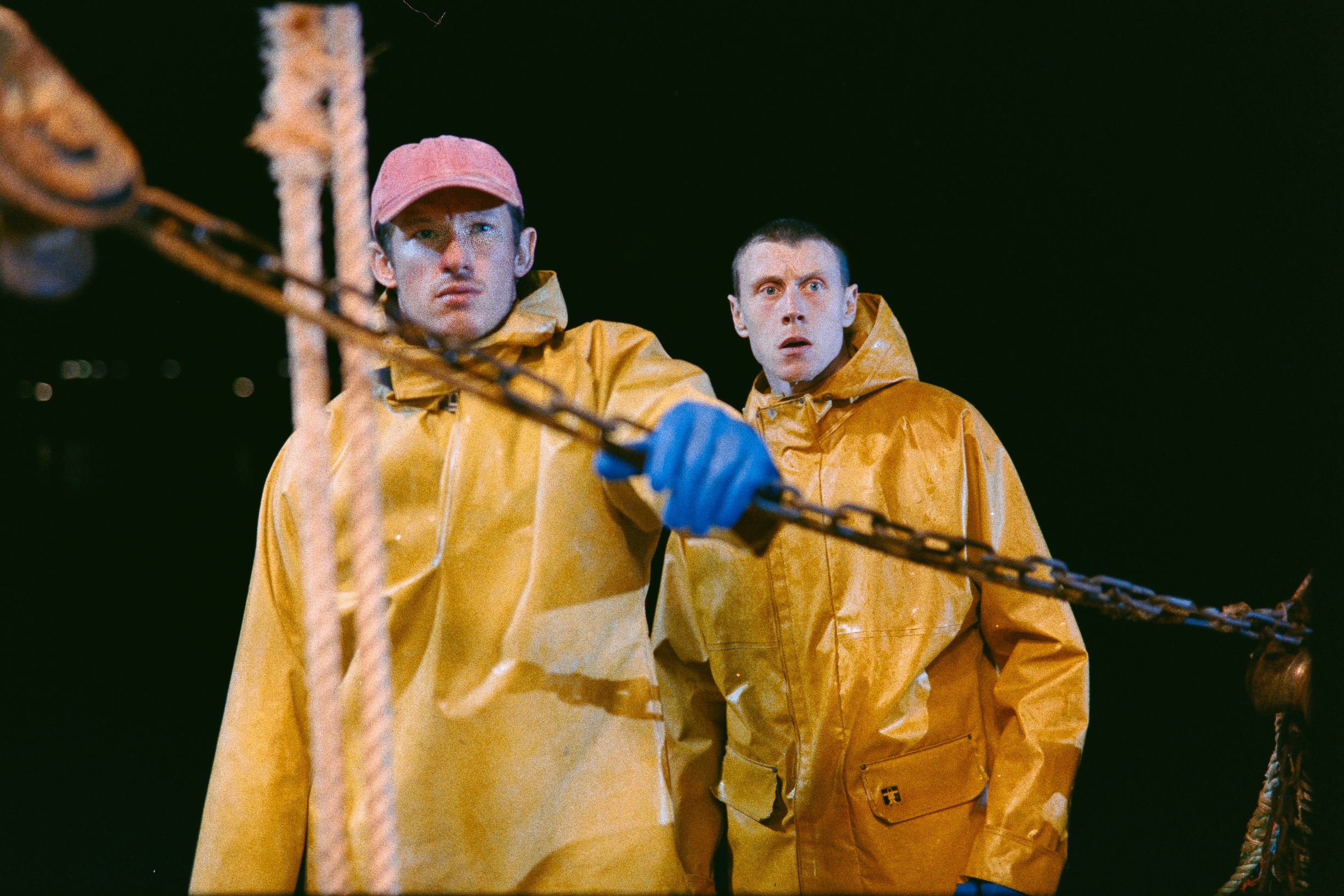
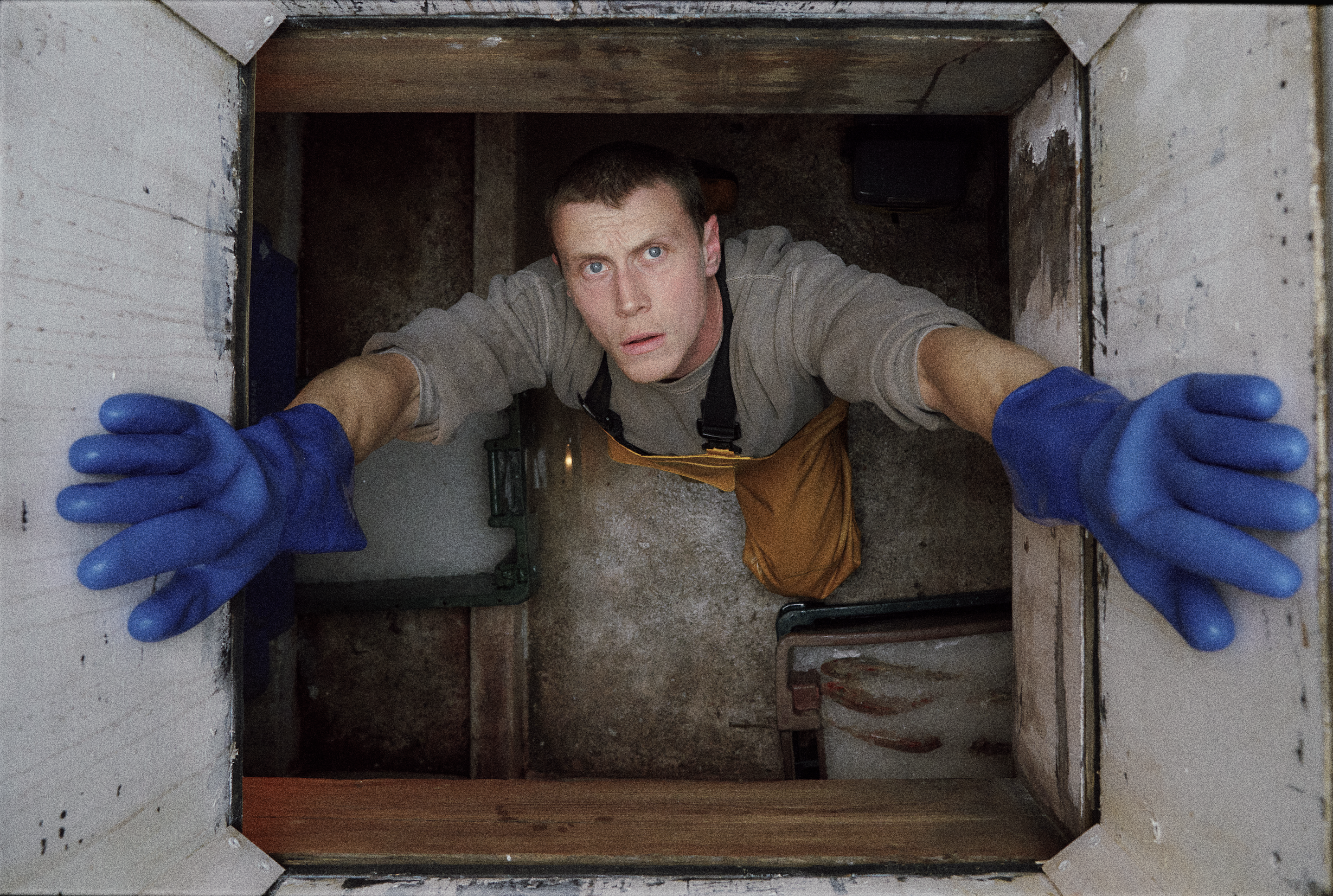
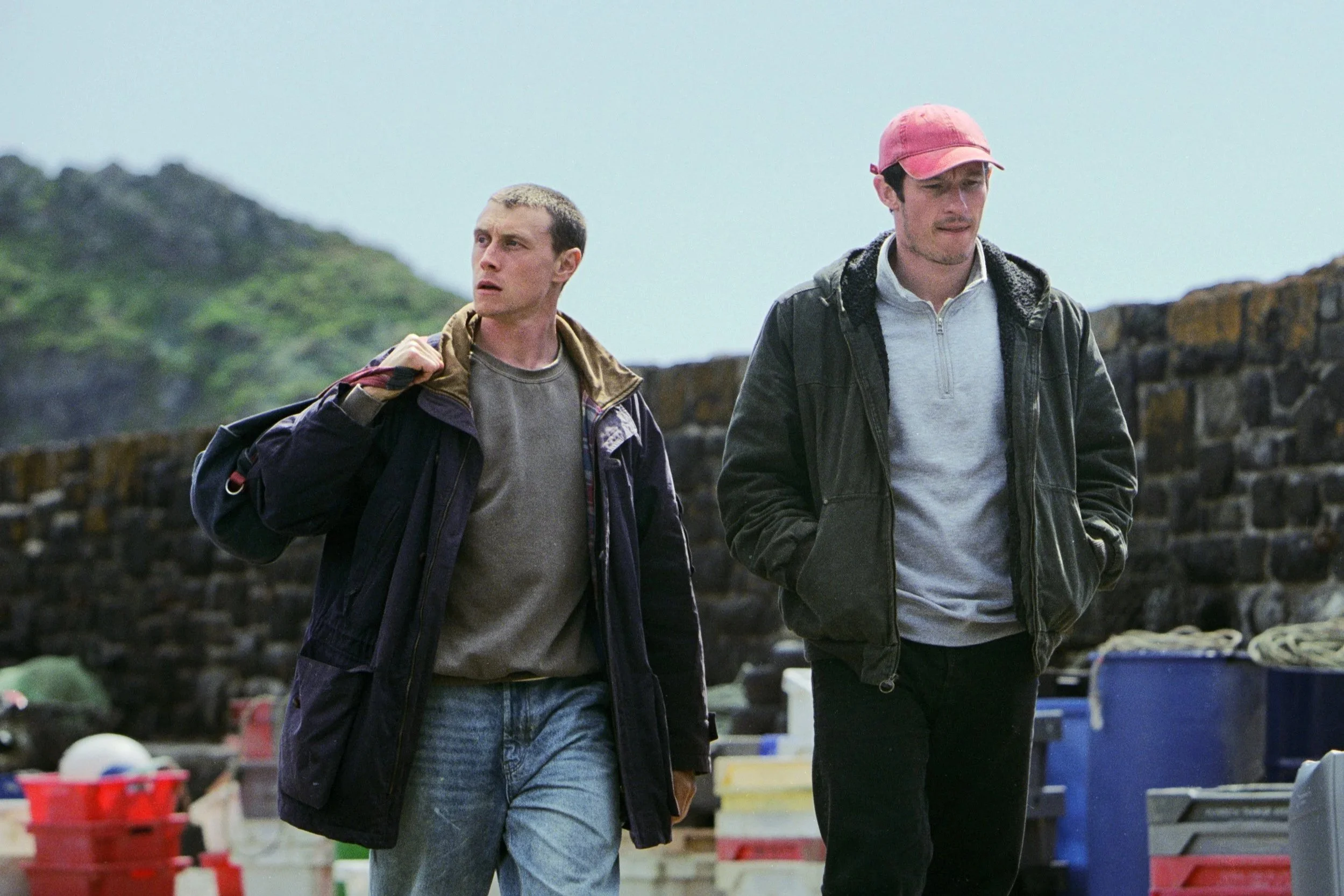
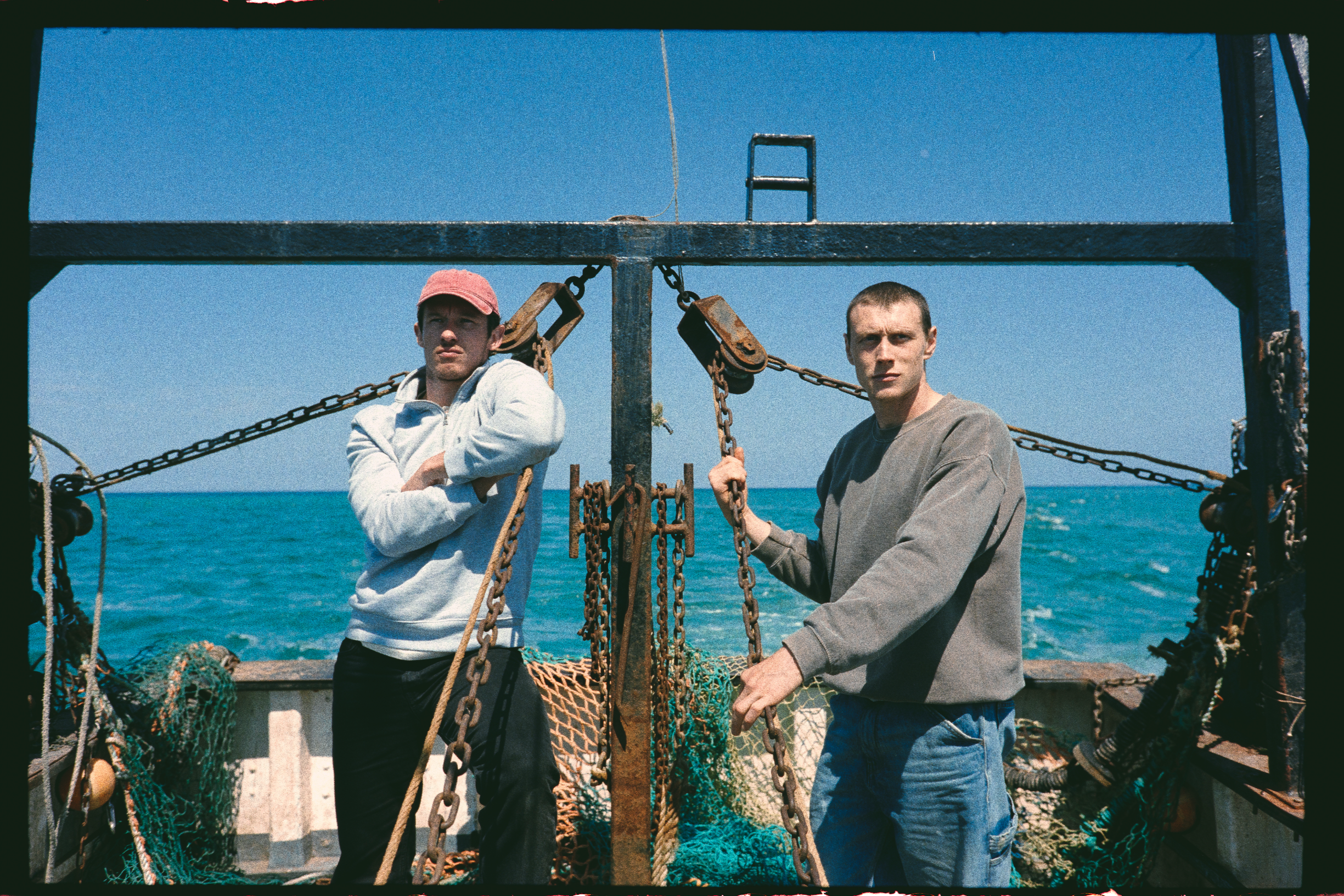
Premiering at the Venice Film Festival last September and holding a 100% approval rating as of June 17th, Rose of Nevada follows a missing fishing boat that docks in a small Cornish village 30 years after it disappeared along with everyone onboard. When a new crew (George MacKay and Callum Turner) sets out to sea, they find themselves slipping back in time to 1993.
Speaking with Phantasmag over Zoom, Jenkin discussed the value of authentic storytelling, the prejudice against certain British horror films, and how the industry is changing after Backrooms and Obsession.
Phantasmag: Stateside audiences will recognise Rose of Nevada as a British film. But like your previous work, there's a great small town intimacy, and it's a very localised story about Cornwall. What keeps drawing you to telling stories specifically about the county you grew up in?
Mark Jenkin: I never really thought about it. I just made films about what I knew, and I think I'm always the last to really understand what's going on. So with Bait, my first feature film, which was set in a small fishing community here in Cornwall, when we finished it, I thought other people in Cornwall wouldn't even be able to relate to the story ‘cause it was so local. And what turned out was that people did relate to it, even outside of Cornwall. I'd always heard this expression that you have to be truly specific to be universal, but never really thought about what it meant. What Bait proved to me was that if the setting is authentic, the audience will go with the story, 'cause the audience is sophisticated and clever, and they can sense when something’s fake. To have that sort of insider authenticity means I can only make films in Cornwall. Having said that, the film I'm writing at the moment is actually set in America, but it's very much an outsider's view. Still, Cornwall is the only place that I truly know intimately and understand.
1-2 Special
P: What was the initial seed of Rose of Nevada, and what convinced you that it was the right project to pursue after Enys Men?
MJ: Well, it was written before we shot Enys Men. We were getting ready to shoot that in Spring 2020, and then Covid shut us down for a year. So my agent said to me, ‘Why don't you write something during the lockdown?’ But I'm never overwhelmed with ideas. I tend to have one idea every three years, which has been fine [laughs] 'cause it takes me about three years to make a film. Mary [Woodvine], my partner, who's in Rose of Nevada [as Mrs Richards] and the lead in Enys Men, she said to me, ‘Have you not got any ideas?’ And I said, ‘No, nothing. But I've got one scene, which is this fishing boat arriving back in the harbour 30 years after it was lost at sea with all hands lost on it.’ And she said, ‘What if not everybody in the community is surprised that it's come back?’ That's what opened it up, 'cause it stops being just a straightforward mystery about why this boat came back. Then I had to know what it was about thematically to be able to pitch it to the financiers. So you have a meeting where you tell them, ‘It's a film about this’, and you get to the end of making it, and you realise, ‘Well, no, it wasn't about that at all’ [laughs]. But that's the beauty of film.
P: Rose of Nevada really defies categorisation in a lot of ways. But as a lifelong fan of the genre, I connected with it as a horror film. What has been your relationship with horror?
MJ: I keep trying to make horror films, and I keep failing. The critic Mark Kermode said — I think he might have been quoting Kim Newman — there's a definite breed of British horror films that are almost horror films. They're not quite horror films in most people's book. I'm really glad you identified it as horror because my area of interest in the genre is probably not the obvious area. So much more cinema is horror than people give it credit for. Cinema was born out of horror. The Lumières’ train coming through the wall — [the audience’s reaction is] a horror response.
When we made Bait, it was very difficult to categorise because we were saying, ‘Oh, you know, it's a black-and-white 16mm post-sync film about Cornish fishermen, and it's a drama.’ That's quite a hard sell. So when we did Enys Men, I was like, ‘Right, let's make a horror film.’ The danger with that is half the audience think they don't like horror films, so straight away will say, ‘Oh, I'm not gonna go to see that.’ And then the horror fans quite often have a preconception of what they want a horror film to do, and Enys Men won't satisfy that.
In answer to your question, my relationship with horror is that the films that I like are the ones that don't answer any questions and continue playing in your head afterwards. I was in Paris over the weekend because Bait finally came out in cinemas in France this week. I was with the distributors, ED Distribution, and they had a load of DVDs. I just picked up a copy of Lake Mungo, which I hadn’t seen. I knew it was very highly regarded. So I came back last night, and I was here on my own, so I put that on. That properly got under my skin [laughs]. There's no horror in it really. There's that one shot, but there’s like a creeping sense of dread. That’s the horror that I’ve really enjoyed. Picnic at Hanging Rock is one of my favourite horror films.
1-2 Special
P: Some people don't want to call it horror, but it is a horror film. There's a huge reluctance to classify something outside of slashers and bloody, jump-scare-heavy movies as horror.
MJ: Yeah. And the final caption [in Picnic at Hanging Rock], that’s pure horror. But something like Don’t Look Now, one of my favourites, that does contradict what I said because it does have jump scares. Then the third Blair Witch film, it didn’t get received particularly well, but some bits really unsettled me to do with the perception of time. When they're running around in the witch's house at the end, and it's dark, and then they realise it never got light even though it’s a day later — that for me is terrifying.
Cinema is horror. Because you can manipulate time and space with cinematic language in a way that you can't with any other art form. It's pointless trying to define what horror is, ‘cause so many people say to me, ‘I don't like horror films,’ and then will say, ‘My favourite film's Picnic at Hanging Rock [laughs].’ I remember somebody saying to me they didn't like horror films, but their favourite film was The Shining.
P: Do you feel like, because there's so much critical acclaim coming to horror, British audiences are becoming more receptive to it?
MJ: I think so. With all the buzz around Obsession and Backrooms, I hope people are just getting swept up in it and feeling that they have to go and see it because everybody's seeing it. There's so much hype that hopefully they'll forget what they're watching, and they'll just watch a brilliant piece of cinema. I haven't seen either of the films yet, actually — I might go and see Backrooms tonight if I finish early enough. But it's very exciting because it feels like Friday night cinema again. Nobody’s calling this ‘elevated horror’ and all that bullshit [laughs]. This time, it’s just young people who've come seemingly from nowhere who are making a horror film, which means a lot of young people are filling cinemas.
P: Time-travel films are popular today as a vehicle to explore the aesthetics of the past, in this misremembered, often commodified manner. How did you want to explore nostalgia and the concept of returning to the past differently with Rose of Nevada?
MJ: When I pitched this idea, one of the execs straight away said to me, ‘That's exciting. You're making a period drama.’ And I was like, ‘No. No, 1993.’ And she said to me, ‘That's a period drama. It's 30 years ago.’ Which was really depressing for a minute [laughs]. But it’s exciting because it's a subtle change in the world. I really wanted to resist the temptation to do anything with the visual style of the film to differentiate the two time zones. I was very keen that it was always going to be within the production design and the art department.
There are certain traps you can fall into formally when there's an idea that everybody remembers the past in Super 8 or in Mini DV. Then you look at the classic time-travel canon, something like Back to the Future, and that's all in the production design, the music, the clothes, and the hair and makeup. I wanted to [emulate that], but it’s a very romanticised version of the 50s, obviously. I didn't wanna romanticise everything. I wanted it to be filthy and dirty — quite a gritty version — but full of people. That was the difference. There was community in the world of my film in 1993, where there isn't in the present day.
1-2 Special
What was really fun was being able to choose the music to put in the film. When I wrote the script, because it was during the pandemic, they jumped back to 1990, and I was quite excited about putting music in from 1990. But by the time we locked the script, the thirty-year jump had become 1993. And I was like, ‘Oh, I'm not so into the music of 1993; I much prefer the music of 1990.’ But then I thought there'll be a time lag, and the music in the jukebox in a Cornish pub will probably be two or three years out of date. The more we thought about that, the more we realised that the actual interior design of the houses and stuff wouldn’t look like 1993. It would look like the 80s. And in fact, in the world of some of the older characters, they probably hadn't decorated the house since the late 70s.
P: You often linger on close-ups, whether it’s the rust on a boat or Nick’s wife’s neck as he admires her. Do you capture these moments spontaneously during the shoot and then iron things out in the edit? What’s that process like?
MJ: Some of them are in the script. I'm really glad you said the one about Nick's wife and her neck because that's such an important scene for me. It was argued about in the edit — some people said, ‘Lose that scene; That scene adds nothing.’ And I always think, well, it may not be a plot point, but if you start removing everything that isn't a plot point, then you'll have a very strange film. That [shot] was so important to show that it wasn't a relationship that was just about bringing up a child. It was about being a family, and they were still in love and in lust with each other. Looking at her skin, from the doorway of the kitchen, that was a big moment in building that relationship. The stronger that relationship is, the bigger the tragedy is. So that was in the script, and then I really fought for that scene in the edit.
For other shots, I just follow my gut on the shoot. My art department learned very quickly that none of their props are safe [laughs]. When they decorate a location and put stuff on the shelf in the background, it may well become very significant in the film. Every single prop is carefully thought about.
P: From premiering at the Venice Film Festival last September to its upcoming US release, you’ve been on a long press tour for Rose of Nevada. Is there a question about the film that you still haven’t been asked that you wish that you had, or something you think audiences and critics haven’t picked up on that you’d like to address?
MJ: I just recorded the Blu-ray commentary the other day, and I mentioned that there's a reference to Herbie the Love Bug. There's a reference to the Love Bug in Rose of Nevada that I'm still waiting for somebody to notice [laughs]. But sometimes people will get a reference [I didn’t even intend]. I was reading a review on Letterboxd, and somebody said the black pickup truck was an homage to Back to the Future. That was an accident, because in the script it’s a red pickup truck. Now everybody thinks it's a Back to the Future reference, but if it was, it was very subconscious.
Rose of Nevada is in US theatres June 19th.