Director Dave Boyle on His Stephen King-Approved, Gothic Haunted House Horror Never After Dark
The House of Ninjas director breaks down his stylish ghost story about a medium (Moeka Hoshi) attempting to exorcise an isolated country home
by Lana Thorn 23 September 2026
Magnolia Pictures
Dave Boyle is making his first horror film. Putting his bilingual skills to good use, the US director has made a career out of Japanese-American co-productions, which have traversed the comedy, noir, and thriller genres. Now, with his follow-up to hit Netflix series House of Ninjas, the filmmaker is infusing the J-horror he grew up on with a western Gothic sensibility, delivering a chilling ghost story that has already been deemed “amazing and haunting” by no less than Stephen King.
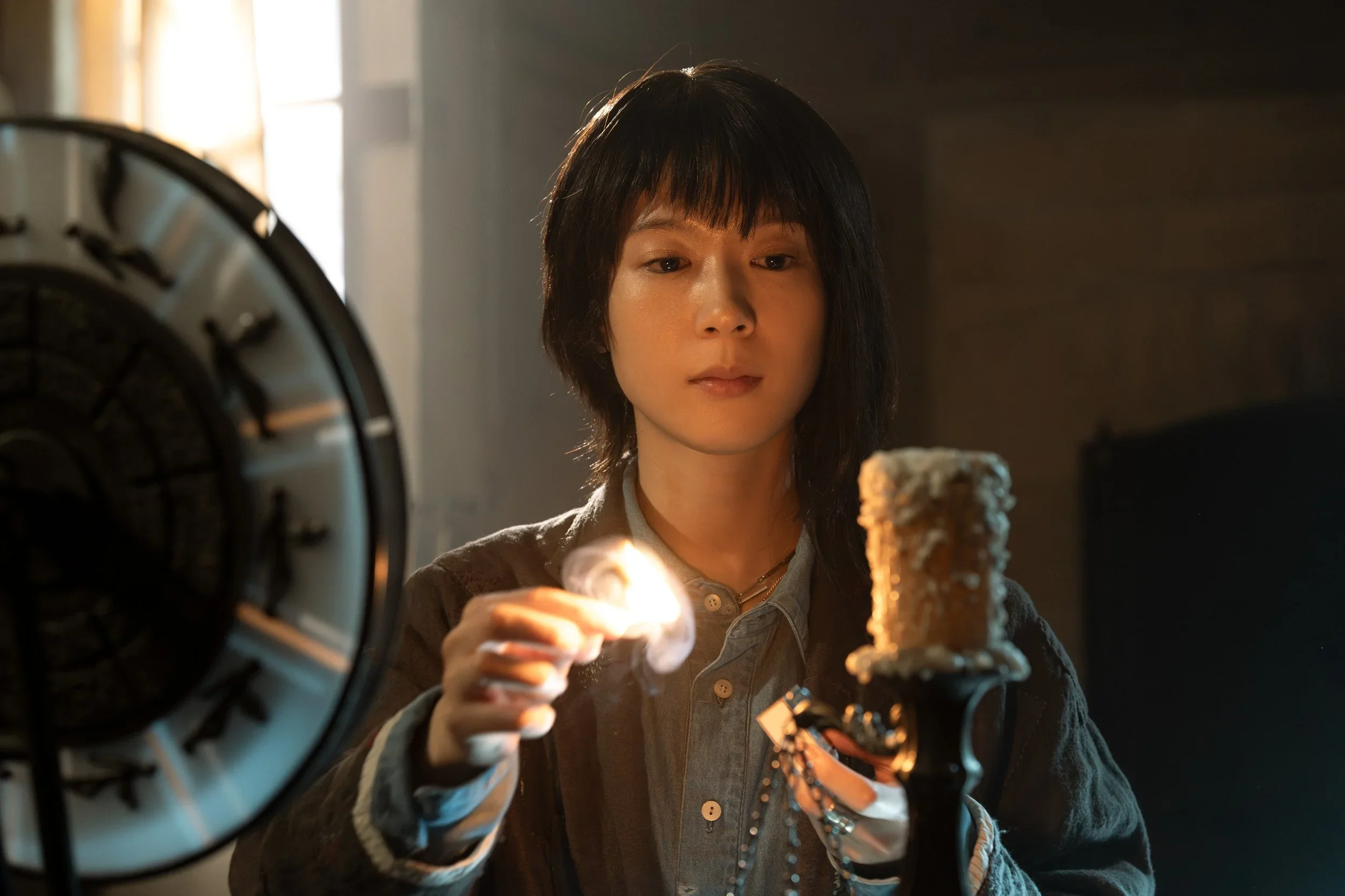
Never After Dark follows Airi (Moeka Hoshi of Shōgun), a travelling medium called to a desolate house in the woods by its new owner and her son (played by House of Ninjas stars Tae Kimura and Kento Kaku, respectively). With the help of her dead sister (Kumuri Inagaki), Airi, whose rule to never carry out her dangerous work at night gives the film its title, faces a case that begins to test the limits of her expertise, and she soon discovers there may be more than a supernatural threat plaguing the tranquil country house.
Calling Phantasmag over Zoom, Boyle reflected on his insistence on practical effects, crafting a striking lead performance with actress Moeka Hoshi, and subverting the traditional haunted house story formula.
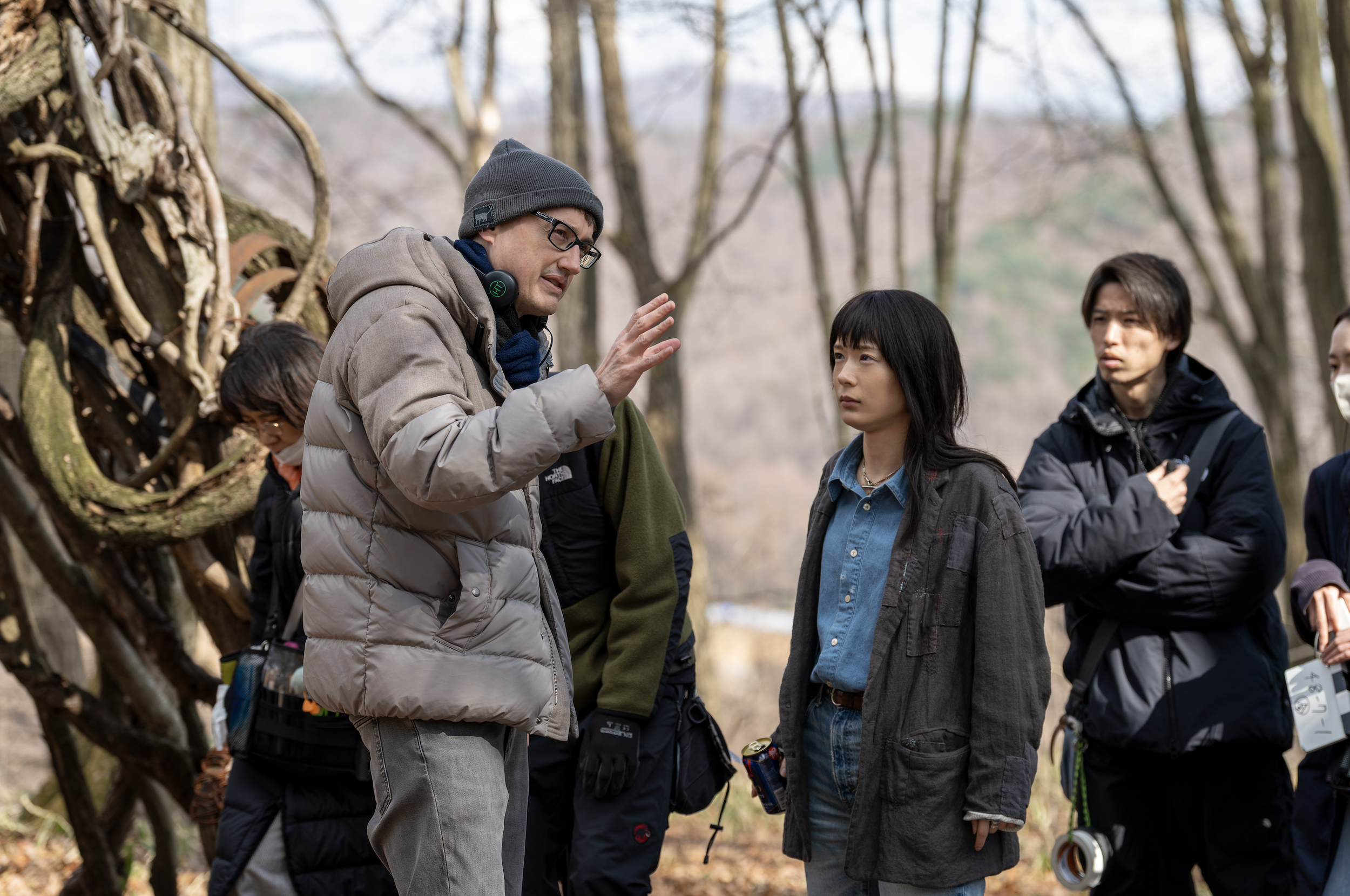
Dave Boyle (left) and Moeka Hoshi (right) on the set of Never After Dark. Courtesy of Magnolia Pictures.
Phantasmag: With this being your first horror film, what was your relationship with horror growing up?
Dave Boyle: I loved horror movies growing up. The first experience I remember was watching Night of the Living Dead and Dawn of the Dead, two in a row, with a friend during a sleepover. Those movies were sort of my gateway into it. Then, the J-horror boom was happening around the time I graduated high school, with Ringu and the original Ju-On. It’s something I’ve wanted to do for a long time, and this was my first opportunity to dip my toe in.
P: You've described Never After Dark as a blend of J-horror and Gothic Western horror. What did you draw from each of those traditions, and what attracted you to fusing them together?
DB: Overall, the Gothic horror tradition was the biggest source of inspiration for the concept. Often, the stories are about ordinary people who encounter a haunting, and a medium will get called in to help them deal with the problem. And I felt it would be interesting to start from that person’s perspective and use the character as the entryway into the story, and to really unpack what it would be like to have this perfect knowledge of the afterlife. And yet, the world that we live in is a very scary place because of all the living villains that are out there. So that was the starting point.
As for the J-horror influence, part of it was just a desire to, as an experiment, reverse a lot of the usual patterns that you find in Japanese horror stories. Most Japanese horror stories, going back hundreds of years, are about a female ghost who's usually a victim who was powerless in real life, but in death has a power that she didn't have when she was alive. There’s a sympathy there, as well as a commentary on society. And I thought it was important in the movie to have a ghost who was, rather than a victim, [spoiler alert] the polar opposite of the usual J-horror ghost. Then I felt like pairing that presence with a living antagonist would be an interesting narrative experiment.
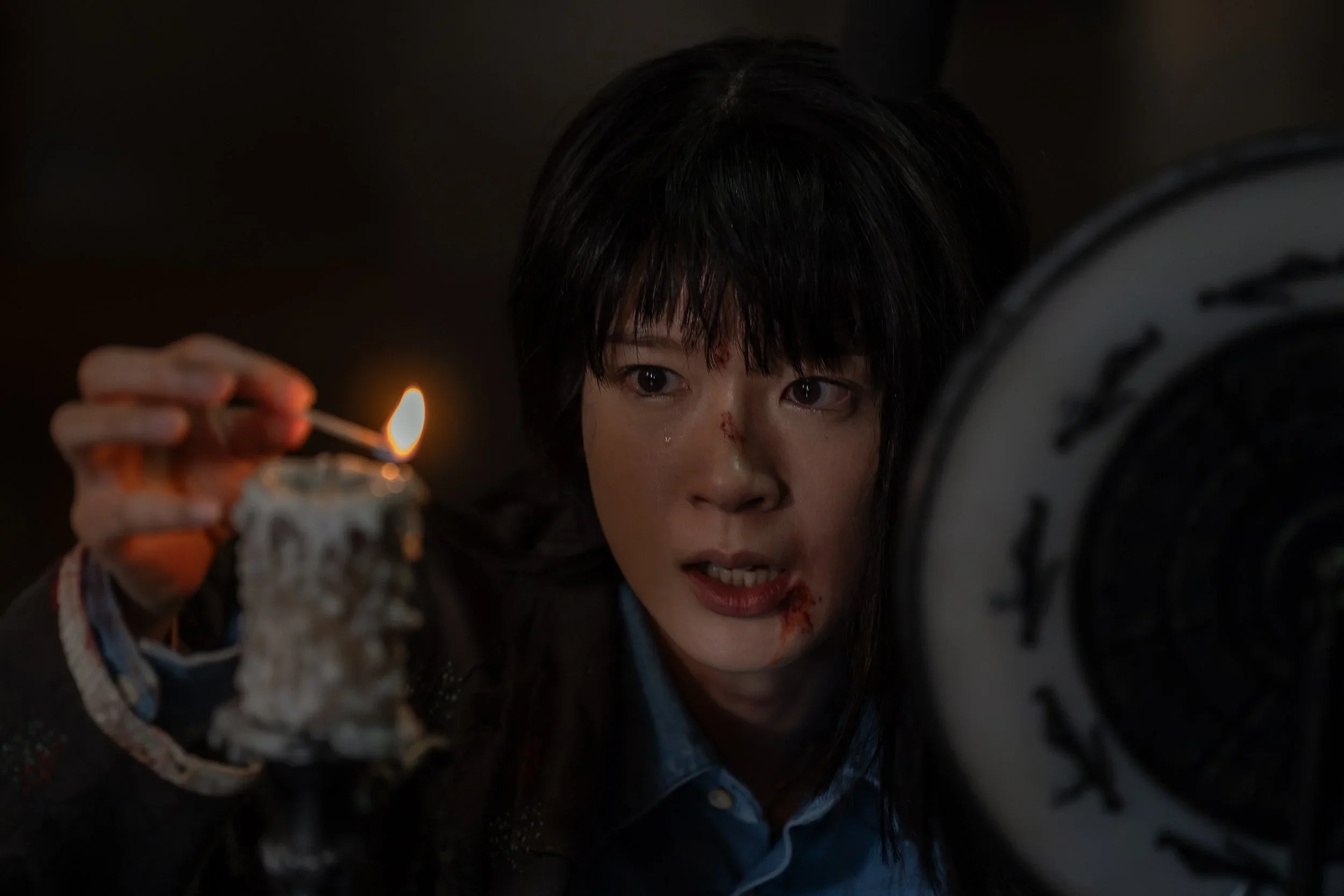
Moeka Hoshi as Airi in Never After Dark. Courtesy of Magnolia Pictures.
P: You've said that you’re a fan of horror, and you’ve now made a great haunted house film. What would you say are the essential elements of a good haunted house story?
DB: Oh, boy. One essential element is just a house that feels like a character in and of itself. That’s a cliché at this point. Certain places have a sense of history and a weight to them — and I think it’s possible to evoke a haunting in any setting — but it helps to have a place that already has that weight from the very beginning. In terms of the actual story, structuring it as a mystery is key, having a central question that makes you wonder why things are the way they are. There’s something about the nature of haunting that transcends logic and doesn’t always make sense to us and our world, but having that track to some kind of real-life mystery I find is always satisfying. The other thing about haunted house movies in general is that they're really hard to end, and they tend to all do so in one of three or four different ways. Part of the reason why I wanted to make this film was to see if we could come up with a different trajectory for the haunted house movie. It starts out as a very traditional story, but my hope is that people are surprised by where it goes.
P: On that subject, what are your all-time haunted house movies or novels that might have served as a subconscious influence?
DB: One of my all-time favourite movies is The Changeling with George C. Scott, a wonderful Canadian movie that has a really, really interesting central character and a puzzle that's very satisfying to unfold. If I had to pick just one desert island haunted house movie, that would be the one.
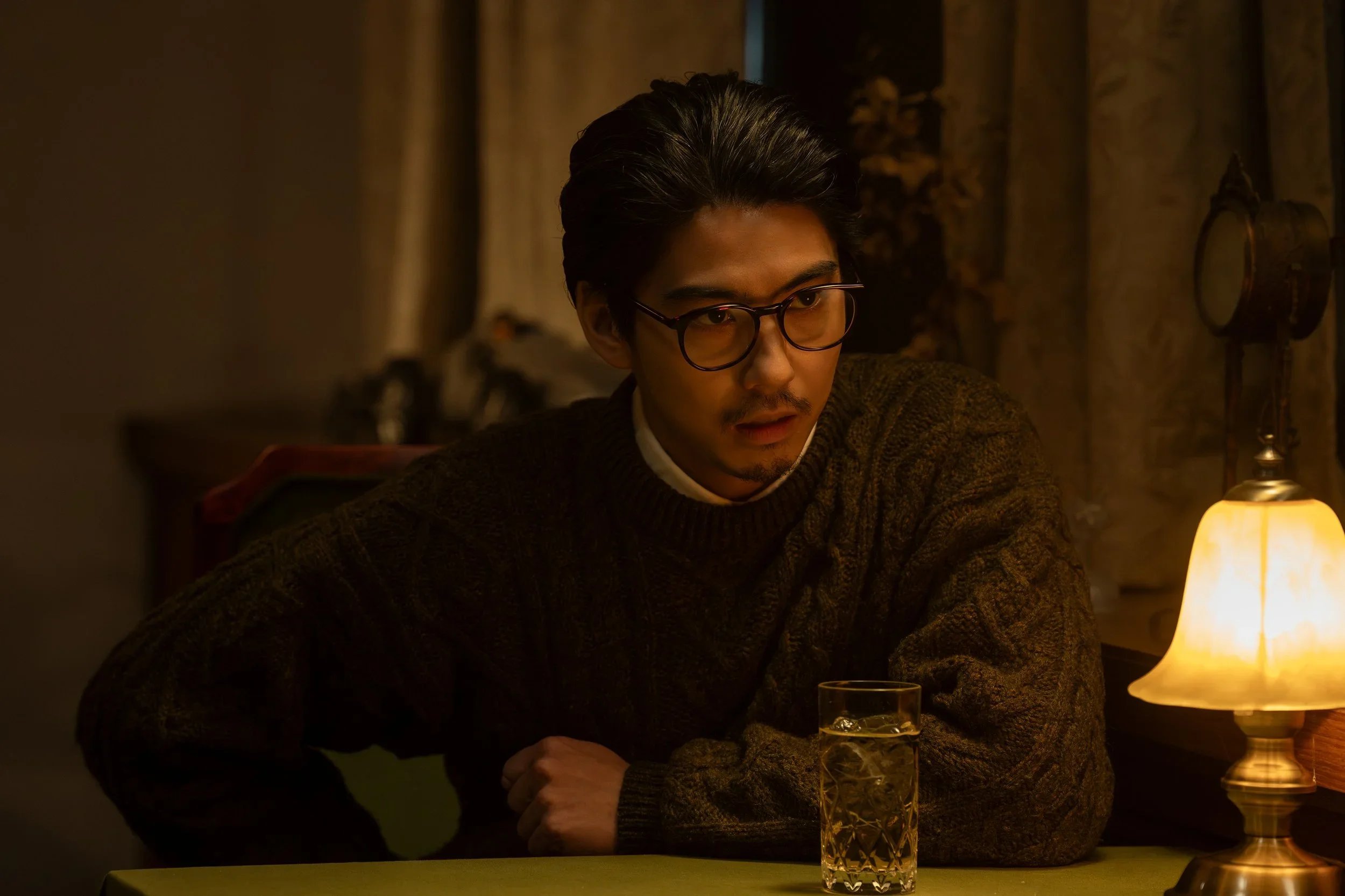
Kento Kaku as the skeptical Gunji. Courtesy of Magnolia Pictures.
P: Never After Dark is very tactile, from the in-camera effects to the villain's terrifying design. What drove you to prioritise practical effects?
DB: I watch a lot of horror movies, and for some reason, any time I see something that is CG-ified, I stop being scared. Even if the CG version of the effect is objectively more realistic than the practical one, there’s something about the tactile nature that frightens me more. It’s the reason why so many movies from long ago, even if they have dated techniques, are so scary in a way, because there’s something about the presence of being in front of the camera as well as in front of the other actors. They always have something to interact with.
There were a lot of challenges because you’d be surprised how hard some seemingly very simple things are to execute, like the clock running backwards. It would be very simple to digitally replace a clock, but I felt strongly that I wanted to see that in-camera and have the actors react to it. It’s purely a personal thing. I did a Netflix show called House of Ninja, eight episodes of TV that had a lot of green screen and visual effects. It was a great experience, and I brought those visual effects artists onto Never After Dark. But we did want it to feel very tactile overall.
P: A lot of the film rests on Moeka Hoshi’s shoulders, and she spends a lot of time as the only character on screen. What conversations did you have with her about that character?
DB: Moeka’s really quite wonderful and very dedicated. Before we started, the conversations were about why I wanted to make this movie. Even though I wanted to make a fun ride for the audience, we talked about the ideas under the surface. And she was determined to make her character feel as real as possible. She told me upfront, ‘I’m going to ask a lot of questions’ because she didn’t necessarily believe in [the supernatural], but she wanted to convincingly portray being a medium. So we wanted the audience to feel that there was a cohesive belief system underneath it. There is an internal consistency to how the ghosts work and how her medium carries out the job, and I hope people feel that even if we don’t explain it.
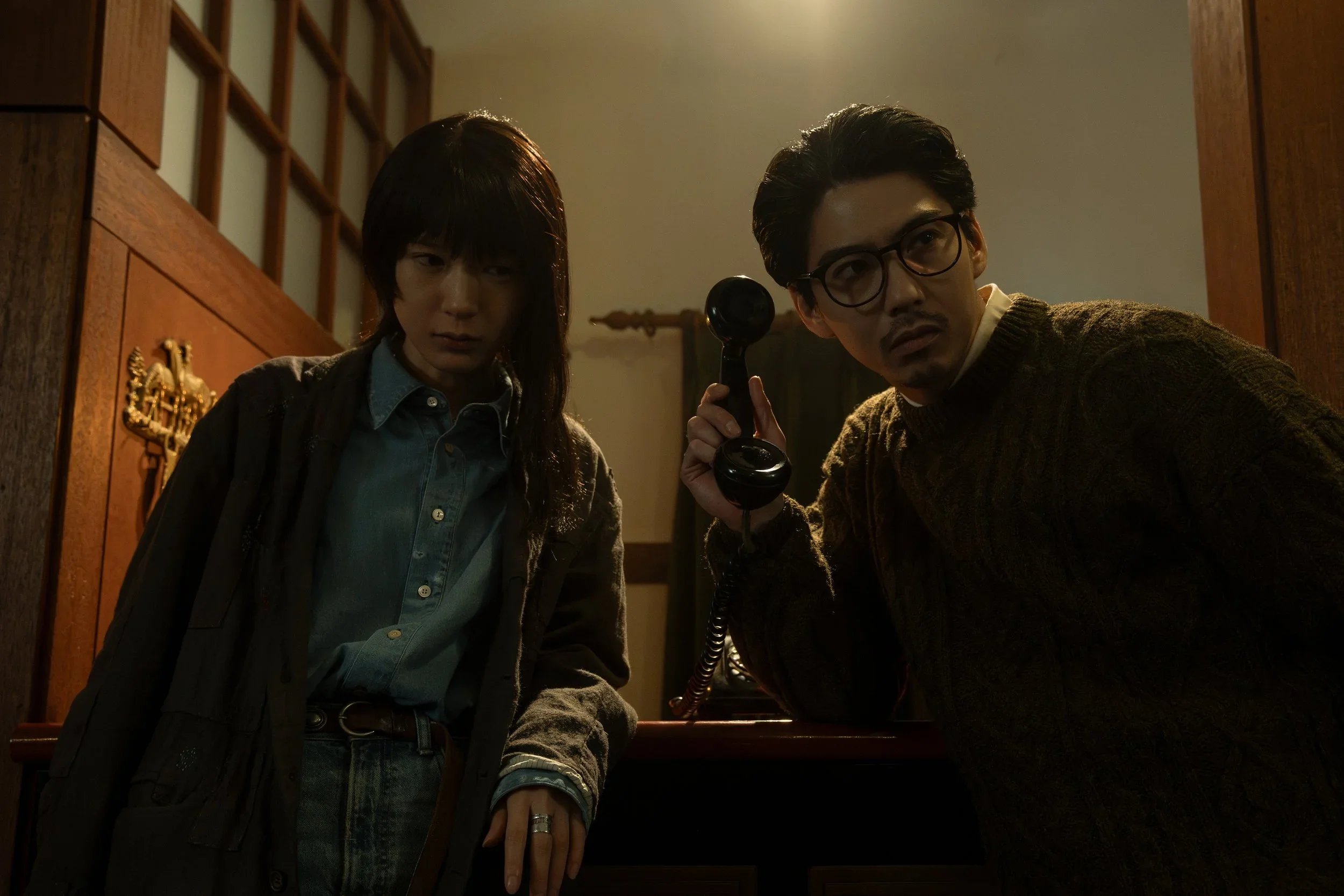
Moeka Hoshi and Kento Kaku in Never After Dark. Courtesy of Magnolia Pictures.
P: That brings me right to the next question. How did you go about developing the mythology and the rules of Ari’s ritual? Was there any specific research that you did?
DB: It’s funny, the ritual was the very first thing I came up with when I had the idea for this movie. Because I love these kinds of movies, but I feel like psychics and mediums usually all work from the same kind of toolkit. So I wanted to create a medium who comes from a fictional tradition that's neither Japanese nor Western, but is this thing that is a little bit mysterious and new, even if it’s easily understandable. I just came up with it on the fly, but there are many examples in many cultures of rituals using mirrors and candles, for example. I definitely did a lot of research, and the great thing about the Japanese filmmaking system is that the assistant directors actually function as a research department, and they came on very early in the process and did a lot of interviews and research on various traditions, including shamanism. There were various visual clues that we planted to help kind of orient people as to who Ari is and what her practice means.
P: This is your second project with Kento Kaku after co-producing House of Ninja and founding a production company together. So I'm wondering, what do you get out of your creative partnership both as actor-director and also as co-producers?
DB: It’s funny because Netflix introduced us, and we just realised right away that we like a lot of the same things, and we also hate a lot of the same things. It’s easy when you have somebody who has a similar taste and what you want to do creatively is very similar. He’s a great sounding board, and he’s very brave in his taste. So we have a rule that we only work on things that we’re both really excited about. And the company we founded together, we’re hoping to make more projects like this that are Japan-centric but for audiences all over and are hopefully really unique and original.
Never After Dark is playing in US theatres from this Friday, September 25th.