“Carrie Is About Bullying and School Violence”: Mike Flanagan and Samantha Sloyan on Reimagining Stephen King’s Classic for the 2020s
The horror auteur and actress reflect on transforming Carrie for the age of social media, the challenge of taking on the iconic prom scene, and how the show prepared them for The Exorcist: Martyrs
by Lana Thorn 7 October 2026
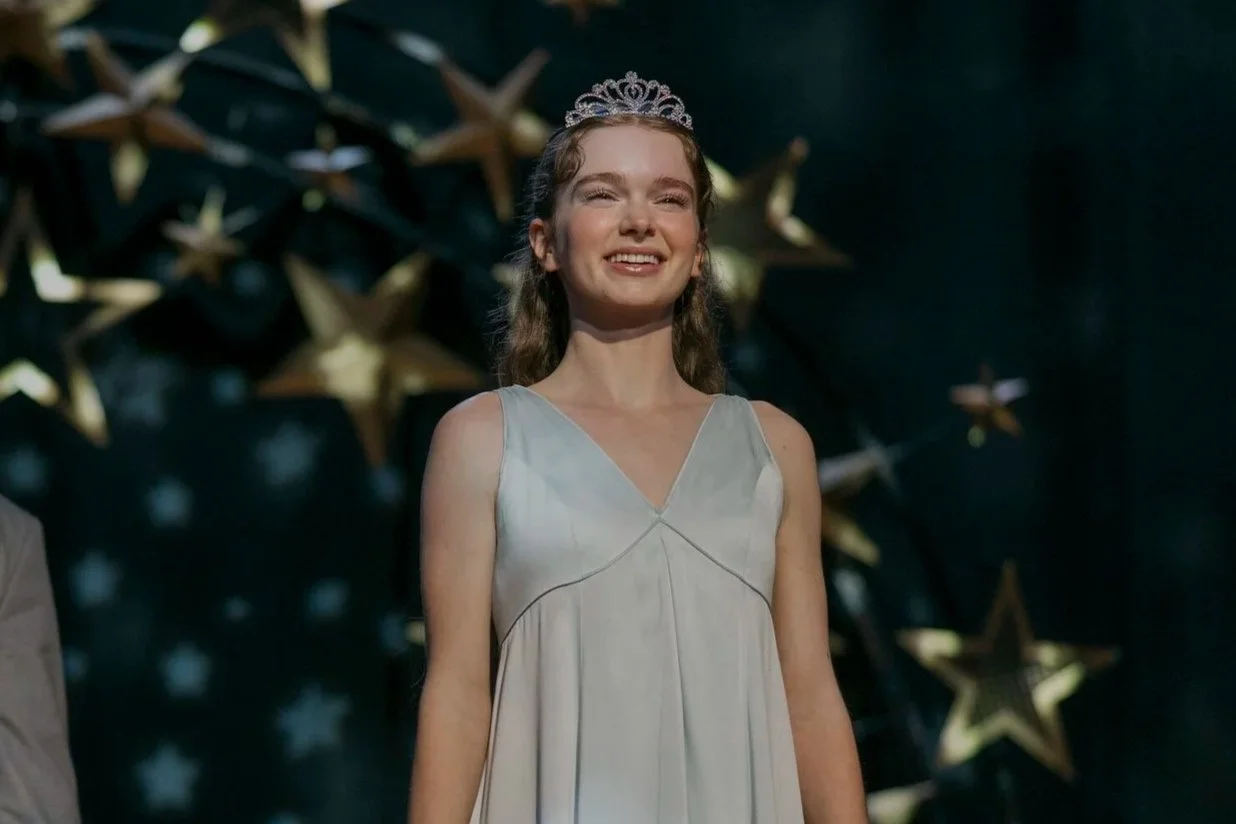
Amazon MGM Studios
“I've had the strangest couple of years,” Mike Flanagan tells me at London’s Soho Hotel. The prolific writer-director and showrunner, known for television series like The Haunting of Hill House and Midnight Mass, is referring to the overlapping tasks of reinventing two of the most celebrated horror stories of all time with new takes on The Exorcist and Carrie. While initially sceptical of both projects, his justification for approaching such sacred texts was the same: make something “radically different”.
For Carrie, Flanagan’s fourth Stephen King adaptation, this meant turning the famed novelist’s debut into an eight-episode miniseries about a new high school environment, one defined by a rampant cruelty facilitated by social media. Striving at every opportunity to do the opposite of what has been done before so perfectly in King’s original text and the classic 1976 Brian De Palma, Flanagan and Summer H. Howell change Carrie White from a shy, closed-off student to a formerly homeschooled sixteen-year-old who, after she is made by the state to go to Ewen High, approaches her new life with a wide-eyed sense of wonder and a seemingly unwavering kindness. The great tragedy, as the series unfolds, is how quickly that kindness degrades after she is subjected to the cruelty of her peers.
If Flanagan wanted an entirely different Carrie, then her infamously evil mother — played previously by the likes of Piper Laurie, Patricia Clarkson, and Julianne Moore — had to be similarly reinvented. Enlisting frequent collaborator Samantha Sloyan, Flanagan still sees Margaret White as a religiously zealous, overbearing figure, but crucially, Sloyan’s Margaret is a mother who, for the first time, genuinely loves her daughter.
Ahead of the series’ release, Flanagan and Sloyan sat down with Phantasmag to discuss the uncomfortable relevance of Carrie today, crafting an “anti-antagonist” in Margaret White, and the lessons on kindness that they hope audiences take away from the series.
Phantasmag: Carrie is arguably one of the most iconic stories in film and literature. Can you both remember your introduction to the story, and what impression it left on you?
Samantha Sloyan: Mine was the movie. I was a tween and really enjoying the thrill of watching horror movies, and to see one with a young woman at its centre was something that was incredibly rare.
Mike Flanagan: Mine was the same, and it was right before I went into high school. My impression of it, other than that the filmmaking was extraordinary and I was completely lost in it, was that I identified with Carrie White as a character, and it made me really nervous to go to high school [laughs].
P: Not the best movie to see before high school.
MF: No. It made me pretty scared.
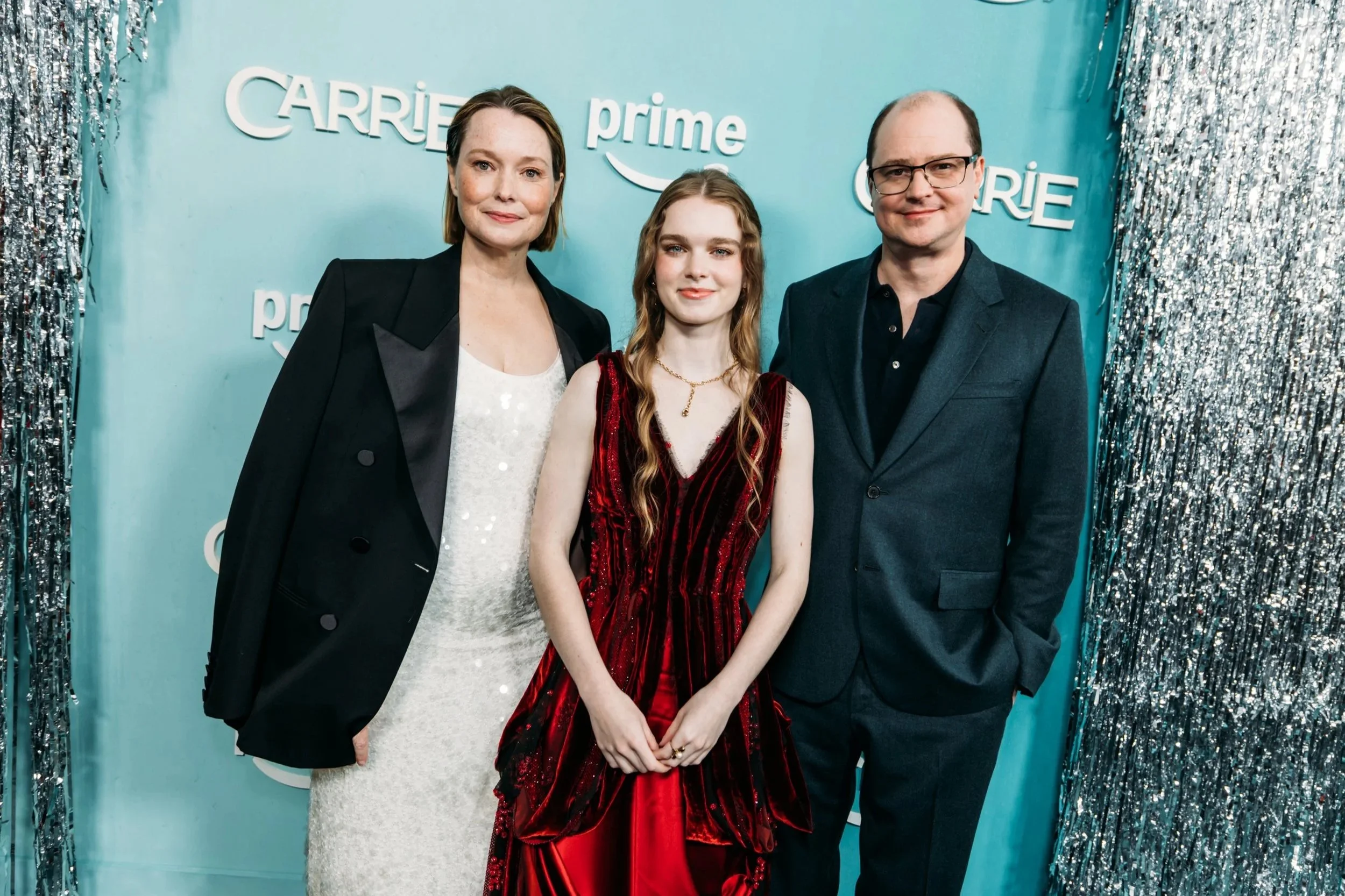
Samantha Sloyan (left), “Carrie” actress Summer H. Howell (centre), and Mike Flanagan (right). Courtesy of Amazon MGM Studios.
P: This is the kind of bold, modern adaptation that reminds me of the way Shakespeare gets reimagined today, by preserving the essence of a classic story, but changing so much of the context. For both of you, what does it mean to adapt Carrie in 2026, and what do you think makes Stephen King's work so ripe for reinvention?
MF: In this particular case, you're talking about a story that was fundamentally about the difference between kindness and cruelty, and about the potential consequences of choosing cruelty. Carrie is about bullying, and it's about school violence. And in 2026, we have seen the evolution of both of those things in a way that I don't think Stephen King could have imagined half a century ago. Bullying and cruelty, especially in the age of social media, have become normalised in a way that has completely reshaped our discourse, our politics, and our world in ways we never could have imagined a few decades ago. In America especially, school violence has become something so horrific that I don't think Stephen King and Brian De Palma could have ever reasonably expected we'd allow it to get to that place. So it felt like there was an enormous opportunity here to talk about things that were entirely topical and vital right now, using the familiar in order to build something new, and to have an important conversation about what it's like to be a teenager today.
P: Samantha, Margaret White is your seventh character in a Mike Flanagan project. What have you learned from your previous collaborations with Mike that helped you prepare for this role, and how was your work on Carrie different?
SS: One thing I learned from working with Mike is not to edit myself as much as I might with somebody else. I can really let the wilder ideas in and understand that, when I’m afraid they might be taking away from the story, there’s a reason they’re coming to me because I trust his vision is so clear that he's always gonna keep me on track. And every time we work together is really an evolution of what we've done before. So although it's a familiar trip, what we did this time that I hadn't had the opportunity to do with you [gestures to Flanagan] is rehearse. That was incredible, just as a cast to be able to connect on that level, especially when you're dealing with mother-daughter relationships, when you're dealing with lifelong friendships and stuff like that. I think you can feel the connection of the ensemble as a whole because we got to [rehearse].
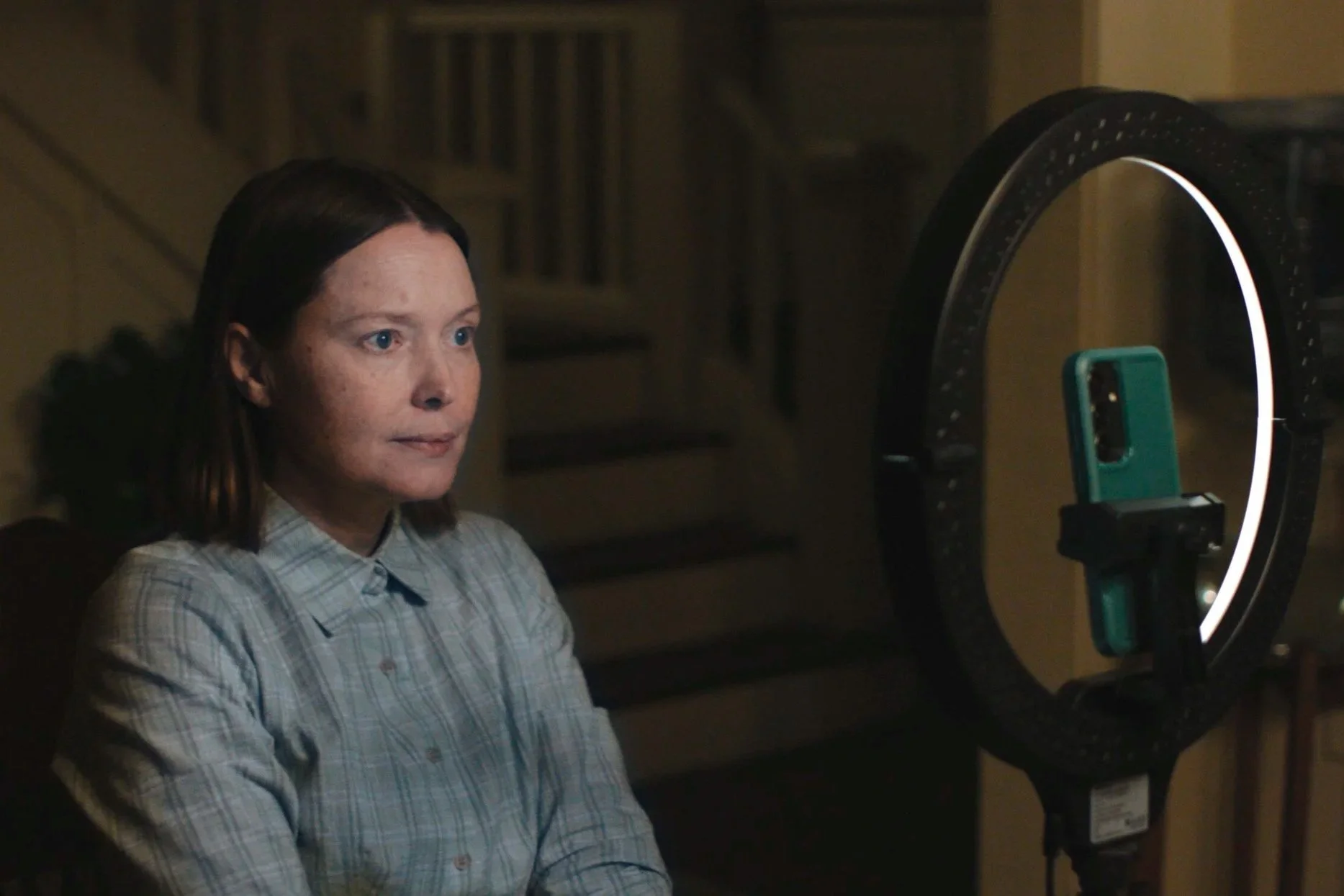
Samantha Sloyan as Margaret White. Courtesy of Amazon MGM Studios.
MF: There’s something Sam does in this series. You know, in the way that they talk about anti-heroes, she kind of created, for the first time, an anti-antagonist, which I think is really interesting.
SS: I'll take it [laughs].
MF: It's such a strange inversion of an antagonistic figure that is so committed to the humanity at the heart of the character while not flinching away from the awful things that she chooses to do. That was really amazing to watch. Because with Beverly Keane [Sloyan’s devoutly religious antagonist in Midnight Mass], while I think you tapped into as much humanity as could possibly exist within a character like that, doesn’t come close to the level of empathy that I ended up feeling for Margaret White the way you played her.
P: Mike, what was the first image that came to your mind when you were envisioning your take on Carrie?
MF: The very first thing that I imagined was Carrie White walking through a metal detector. In a story about school violence, to see one of the most potentially dangerous characters walk through the metal detector of an American high school and not set it off was an image that really struck me and stuck with me. Because there are all these other images that come involuntarily when you say “Carrie”. You immediately see Sissy Spacek covered with blood. You see the images that De Palma forever tattooed onto the imagination of pop culture. So it took me a long time to be able to push those aside. They're that ingrained. But yeah, the first thing that came to my mind was Carrie with the backpack, putting it down and walking through [the metal detector]. It suddenly felt like, ‘Oh, that's the show we're making.’
P: What was the toughest scene to shoot, either technically or emotionally?
SS: The more emotional scenes I actually quite enjoy. They're very thrilling. I guess the difficulty is just that they mean a lot to you, and everything in [Episode] 8 for me was the highest on that scale. There are several different scenes for me that demanded a lot of focus and attention.
MF: The most difficult sequence for me by far was the prom. It is the most difficult sequence of my career logistically. It took us 10 days to shoot it. It's hundreds of extras, all the principal characters, fates being determined and arcs being closed off, blood, fire, water, stunts, special effects, rigs, smoke, sparks, everything flying through the air — all in service of an event that needs to be viewed from dozens of perspectives, on a set that we're destroying. So that was wildly difficult, but it was also one of my favourite things I've ever gotten to do on set. It was so fun.
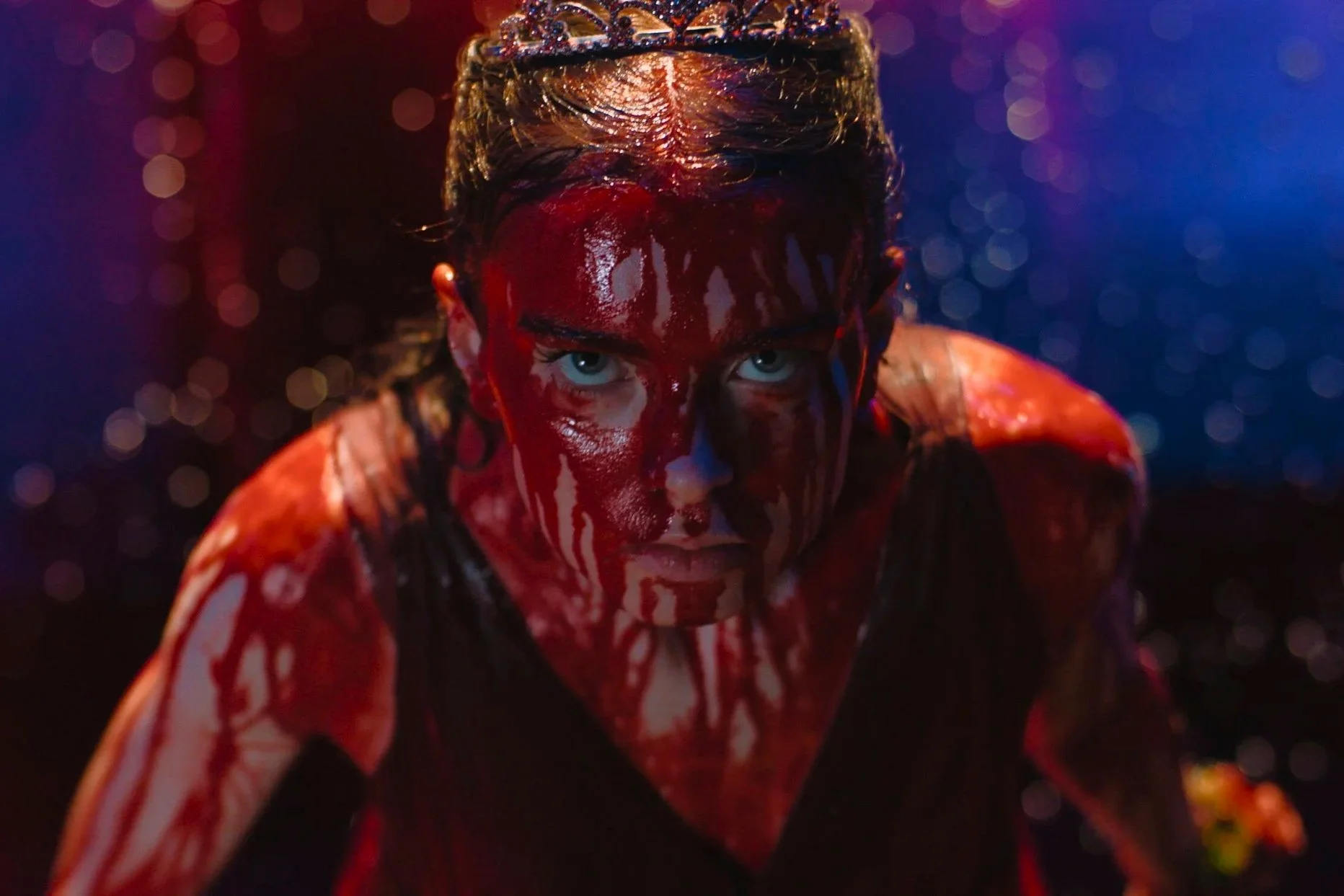
Summer H. Howell in the iconic prom scene. Courtesy of Amazon MGM Studios.
P: It was a very brutal scene.
MF: It's quite a sequence, and it goes for so long. If you take it from when she arrives, it bridges over two episodes of enormous catharsis and horror. I'm profoundly proud of it and of all the people who had to rally to make it happen. We got to go to the prom with Carrie White, you know? How amazing is that?
P: Aside from previous Carrie adaptations, what do you think is a good companion movie or series that viewers should watch to warm up for this version of Carrie?
MF: That's a great question. Maybe Thirteen. A bit intense.
SS: You could go the other way and just do Pretty in Pink [laughs]. Like this also could [have happened] on a different day.
MF: The Breakfast Club!
SS: If somebody hasn’t seen the De Palma movie, I would check that out after watching ours.
P: Carrie is based on a classic book that spawned one of the most celebrated horror films of all time, and you both have another one of those projects releasing in March, which you've described as your darkest film yet, Mike. What can you tease about The Exorcist: Martyrs, and what did you learn from your experience making Carrie that you applied to that film?
MF: I've had the strangest couple of years, in that my professional life has been defined by splitting my time between Carrie and The Exorcist for the last few years, and in a way where both projects were greeted with the same confusion and scepticism when they were announced, and in the way where my defence of both projects has always been the same, which is it's so different than what you think. The Exorcist, as we've approached it, is radically different. I'm really excited for people to see what it actually is because what I love is a chance to use the familiar to do something very new, and The Exorcist, even more so than Carrie, gave me that opportunity. I've learned a lot over the years about what it means to step into a story and into a legacy that means a lot to different people, and how to balance a profound amount of respect for that legacy with the excitement of being able to invent within it. Both of these projects were that for me.
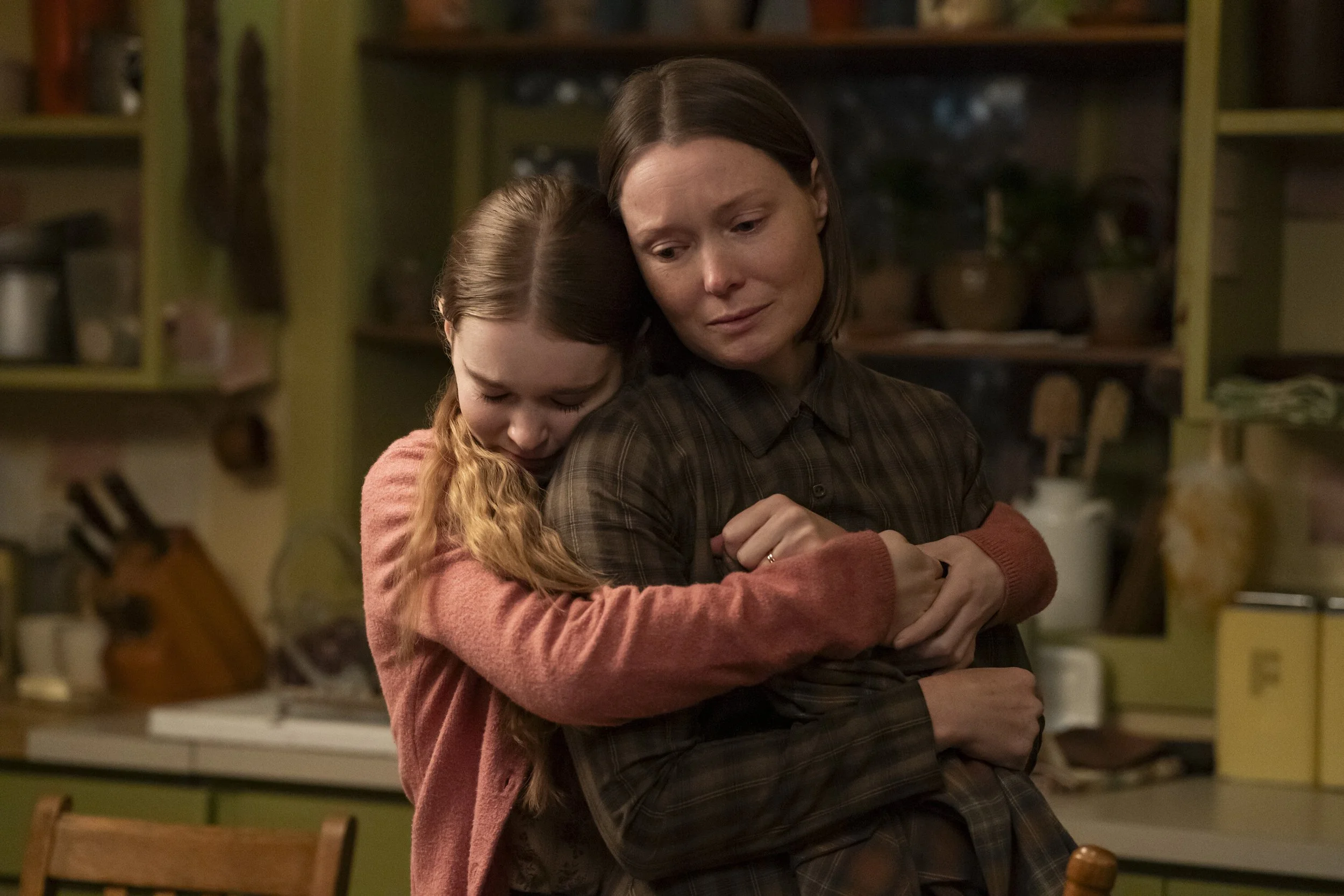
Carrie (Howell) and Margaret (Sloyan) share a tender moment. Courtesy of Amazon MGM Studios.
P: If there's one thing that you hope audiences take away from Carrie, what would it be?
SS: One of Mike's key things, for me, is kindness and hope. One of the things I love about Mike is that, at the core of everything he creates, he has a profound sense of hope for the world, for young people, and for us. I like to hold onto that myself. So I hope that people can grab hold of that, too.
MF: Same [laughs]. I think all of us encounter moments throughout every day where we have a choice to make between being kind and being unkind. We have so many of these moments, and they can seem so small and inconsequential. They can really feel like they don't matter. But they really do, and what I hope is that people who watch this show and see themselves in Carrie and hopefully see even just a little bit of themselves in Chris and in Margaret and in all the characters on the screen, when they encounter those moments, they think just an extra second or two before they decide what they're going to be. That's my hope for the show.
All eight episodes of Carrie are now streaming on Prime Video worldwide.