Maika Monroe and Director Zachary Wigon on Their Outrageous Gothic Horror Comedy Victorian Psycho
The scream queen and filmmaker reflect on their gruesome yet hilarious adaptation of Virginia Feito’s hit 2025 novel
by Lana Thorn 12 November 2026
Bleecker Street
Jack Torrance, Patrick Bateman, Norman Bates… Men have long populated the horror psycho killer hall of fame, but Maika Monroe’s Winifred Notty has something to say about it.
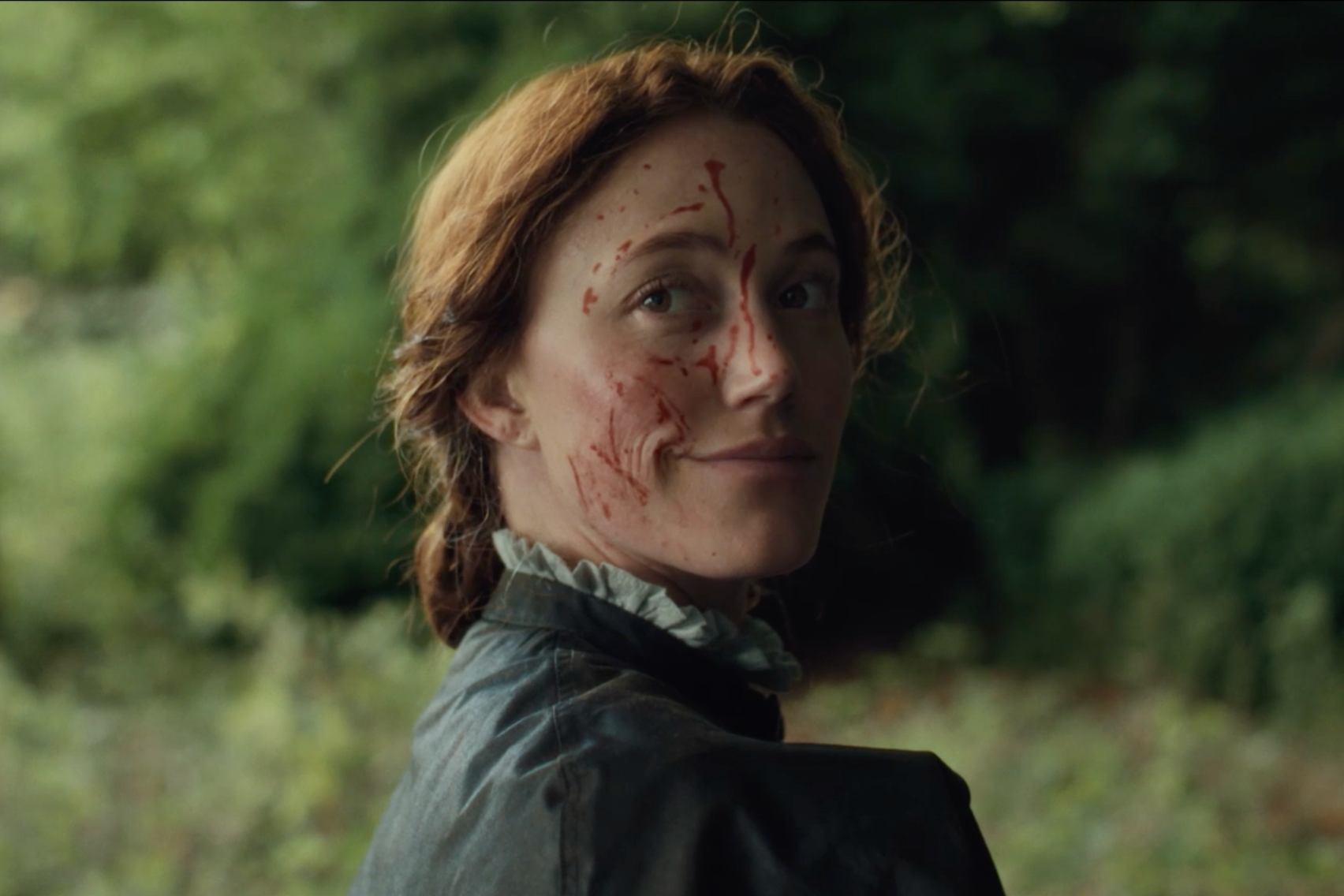
The scream queen, known for her roles in modern horror classics It Follows and Longlegs, has taken her biggest swing yet with the title role in Victorian Psycho, the big-screen adaptation of Virginia Feito’s acclaimed 2025 novel from Sanctuary director Zachary Wigon. Monroe plays Winifred Notty, a comically deranged governess who takes a new position at a Gothic manor under Mr and Mrs Pounds (Jason Isaacs and Ruth Wilson) to care for their children (Wednesday and Hamnet breakout stars Evie Templeton and Jacobi Jupe). She tells herself that this job will be different, but her nasty habit of leaving a trail of dead bodies in her wake soon rears its head in increasingly horrific, ultra-gory ways.
After the film earned a stellar reception at the Cannes Film Festival, Monroe and Wigon sat down with Phantasmag ahead of the US release to discuss why horror is a great genre for layered female characters, studying videos of real psychopaths, and taking inspiration from Korean thrillers by Bong Joon-ho and Park Chan-wook.
Phantasmag: Maika, you’ve called Winifred Notty your favourite role of your career so far. When Zachary first approached you, and you read the script, what was it that made you go: I have to do this film?
Maika Monroe: It was a no-brainer for me. I mean, I fell in love with Winifred. Reading the script, I was just fascinated by her, but the role also terrified me. I knew it would be incredibly challenging, and it would push me out of my comfort zone. That was exciting for me. Then I met with Zach, and we had an amazing conversation. He just had such a strong, strong vision for this film.

Bleecker Street
P: Zachary, when Virginia Feito came to you with the material, how did you go about developing the visual language for the world that Virginia had written on the page?
Zachary Wigon: The visual language is something that doesn't really present itself until later in the process, after the screenplay is done. So basically, long story short, Virginia sent me the manuscript of the novel, and then we developed the script together. We spent about a year developing it. After the script was done, you've been soaking in the atmosphere and the feel of the story for a long time. You ideally have been incubating it. You've ingested it. It’s like a band that you love, you know? You know what that band's music feels like. So with that in mind, I just sat down when it was time to write the shot list, and you just read the script and drink a lot of matcha [laughs]. You close your eyes, and you try to essentially watch the movie in your head.
P: I heard that you both sent each other clips of famous psychopaths, either from real life or movies. What were some of the videos that you shared, and which ones were particularly useful?
ZW: One that was really helpful for both of us was this video of a forensic psychologist breaking down and analysing an interview with Ted Bundy. Every minute or two, this psychologist would pause the video and would comment on very minute, particular details of Bundy's physical tics, gestures, and mannerisms, things that were contrary to what he was presenting to the interviewer.
MM: That was immensely helpful. It was fascinating to watch what is being suppressed and what is the outward-facing persona.

Bleecker Street
P: Maika, with your breakthrough role in It Follows, you came onto the scene at the beginning of this huge wave of horror receiving more critical recognition and popularity. From It Follows to Victorian Psycho, what are the biggest changes that you've noticed about the genre's evolution?
MM: This genre, in the past 10 to 15 years, has evolved so much. Some of the most interesting roles and scripts I’ve been sent are for horror films. Incredible filmmakers are stepping into this space, and I think it's so nice that, finally, slowly, there's some recognition of the performances in the horror genre. That was never the case, and I don't know why, but I think it's one of the hardest genres for actors. It's really underrated, and now I feel like finally people are like, Oh, wait, that was really great. It's pretty incredible what a lot of these actors go through, and I'm just so happy to see people getting recognised for that.
P: Winifred is joining a long line of villainous women in horror. Why do you think that the horror genre is such a rich space for these exciting female roles?
ZW: One of the things that is striking to me about Winifred in this film is that she's occupying a traditional female position, which is that of the governess. You think about The Innocents, obviously, and it’s a story about a woman who's coming in to take care of these children. And to take that kind of role and turn it on its head and have the caretaker for young children become the threat, there's an enormous sense of tension, and it's deeply unnerving to see that kind of turn. To be able to do that while at the same time retaining sympathy for this character creates a lot of interesting textural qualities in the tension of the story.
MM: Totally. Why I love the horror genre so much is that I get some of the most layered characters and the most challenging roles.

Bleecker Street
P: Zachary, this film is a classic atmospheric Gothic horror film, but it also has elements of slashers and social satires. What influences did you draw from to devise this unique blend for the tone?
ZW: Funnily enough, some of the primary tonal influences were actually works of contemporary Korean cinema, in particular the films of Bong Joon-ho or Park Chan-wook. The Handmaiden and Memories of Murder are great examples, films with thriller or horror elements, but you also have these sharp turns into very direct comedy, along with more straightforward drama. Being able to make a film that jumps between genres was exciting to me because I didn't want the film to just be about madness. I want the film to almost feel as if it is inducing madness, and to put the audience inside Winifred's head. And in Winifred's head, things don't add up. Things are misassembled. It's jagged. Things are bumping against each other, and I realised the genre-bending in the novel would be a good way to approximate that feeling on film.
P: Maika, this performance sees you balance horror and comedy in long stretches when you're actually acting in silence, with your voiceover to be added later. What was the biggest challenge of playing this complex character?
MM: I think back on other roles that I’ve done, and there’s always been a part of me in the role, something that I could fall back on. But for this role, that wasn’t there at all. So there was a ton of prep that went into knowing where Winifred was at mentally, and I wanted to have the freedom to just go for it. Because of that prep, we were so ready by the time we were filming, and it was so fulfilling. I really fell in love with my job on this set because we were able to push the boundaries in so many ways.
Victorian Psycho opens in US theatres this Friday, November 13th.