Paolo Strippoli on His Wicker Man and Carrie-Inspired Queer Folk Horror Film The Holy Boy
The Italian director reflects on the therapeutic power of horror, layered queer representation, and bringing his films to US audiences
by Lana Thorn 25 November 2026
Shudder
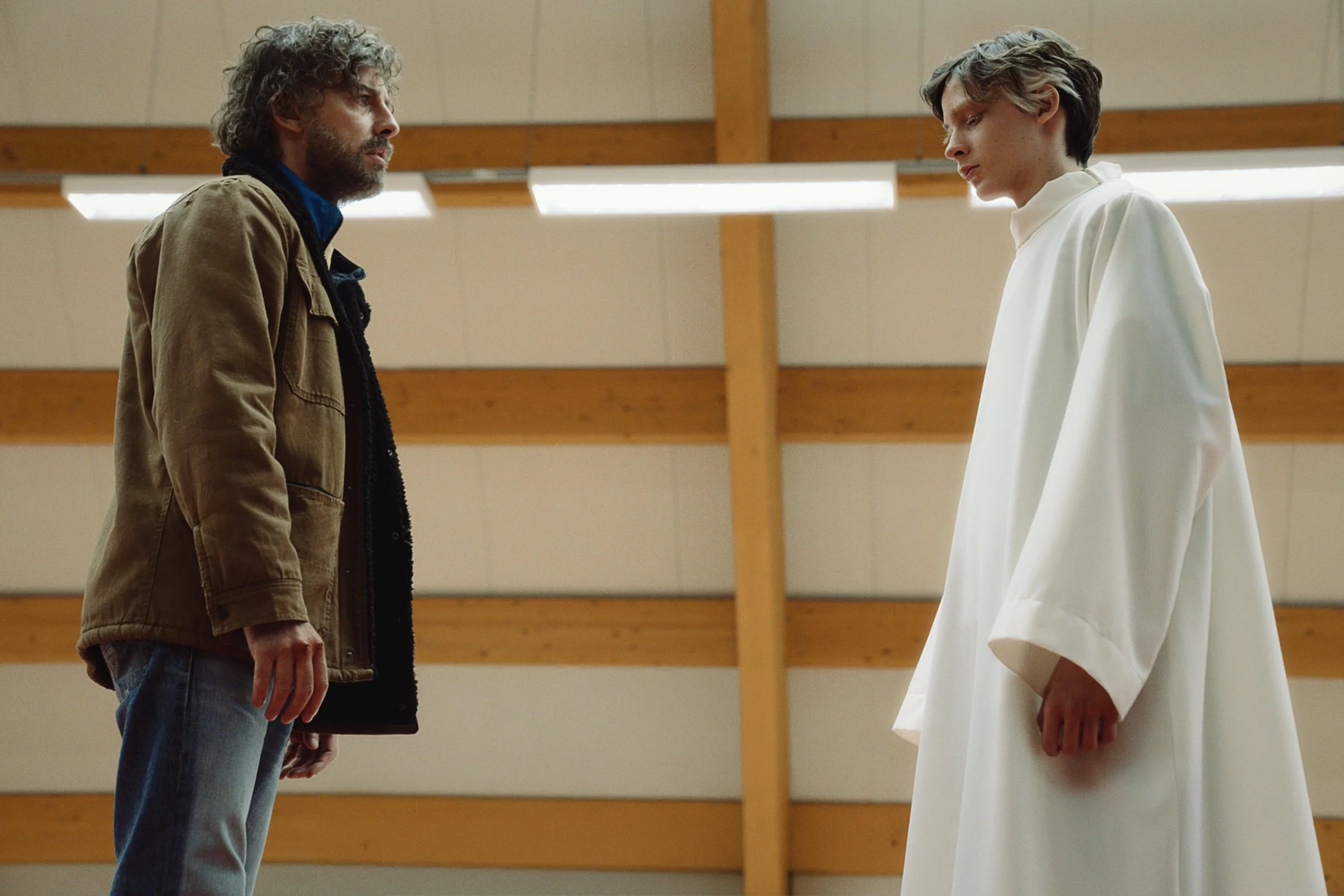
Paolo Strippoli is a name in horror that you won’t want to forget. The 33-year-old’s latest effort, psychological horror The Spiral, has been selected as Italy’s Oscar contender for Best International Feature Film after a buzzy run saw it compete for Venice’s Golden Lion and, like Curry Barker’s Obsession the year before it, be recognised as the runner-up for TIFF’s People's Choice Midnight Madness Award. New Line Cinema (Weapons, Evil Dead Burn) just picked up US distribution rights along with rights to an English-language remake. With Strippoli Hollywood-bound, his precursor to The Spiral, a muscular, haunting queer folk horror film in the vein of The Wicker Man, is finally making its way to US audiences with a Shudder release.
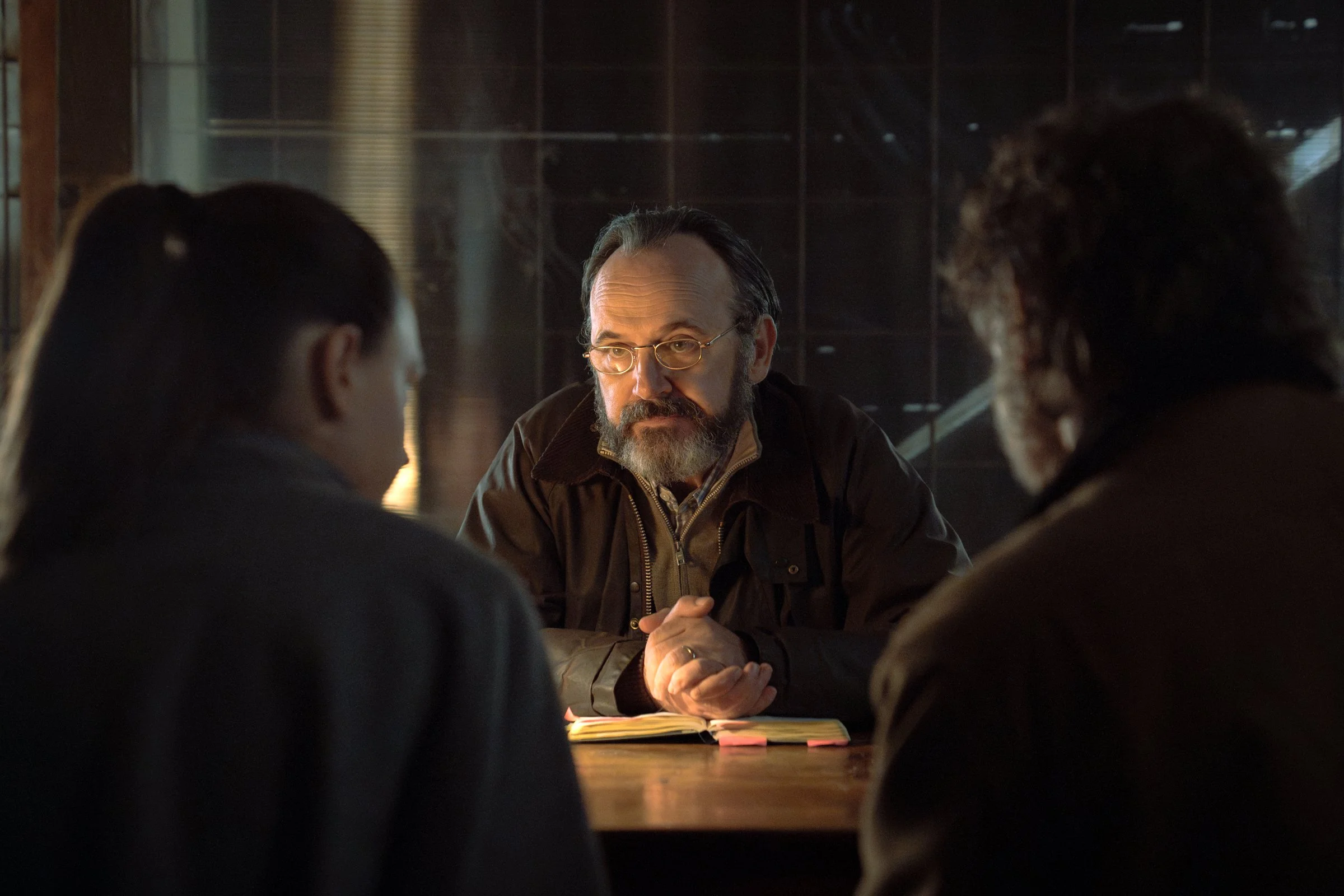
A standout at Venice’s 2025 edition and the winner of Fantastic Fest’s Audience Award the same year, The Holy Boy, originally titled La Valle dei Sorrisi (“The Valley of Smiles”), follows a grieving teacher named Sergio (Michele Riondino) who accepts a temp job at a local high school in a remote Italian mountain town. When he arrives, he is surprised to find that the residents are abnormally happy, and soon discovers the supernatural secret behind it: a 15-year-old boy named Matteo (Giulio Feltri) can take their pain away with a single hug. But while his neighbours worship him like a saint, Matteo is also a closeted, isolated teenager. Soon Sergio finds himself asking the question that no one else will: When Matteo absorbs the pain, where does it all go?
Calling Phantasmag over Zoom from Los Angeles, Strippoli discusses how he devised the film’s eerie premise, casting first-time actor Giulio Feltri in a lead role, and why he wants to keep making movies that “push boundaries”.
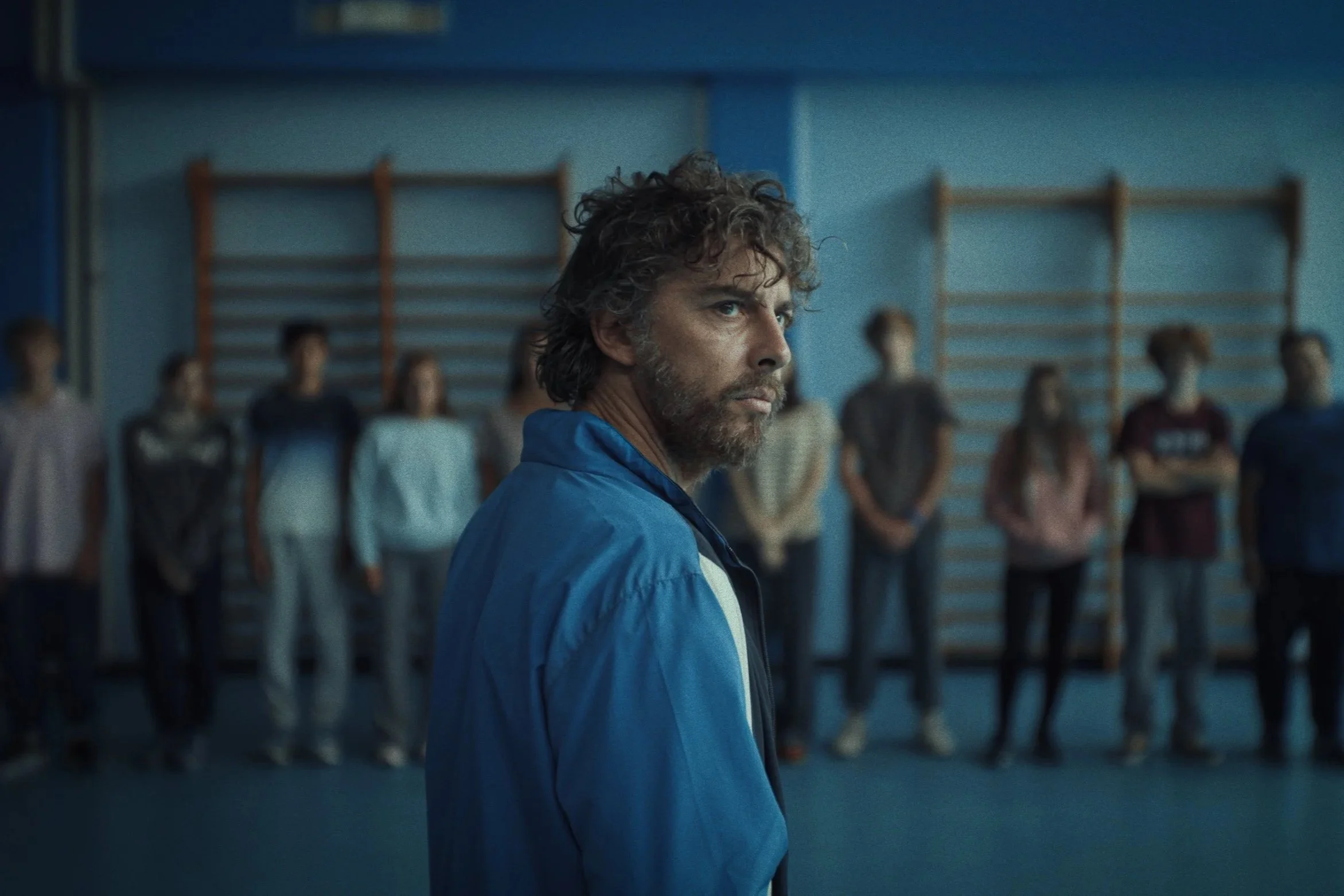
Michele Riondino stars as Sergio, the substitute teacher who moves to the remote mountain village of Remis. Courtesy of Shudder.
Phantasmag: What was your relationship to the horror genre growing up?
Paolo Strippoli: Horror saved me. I had an incredibly happy childhood but then not-so-happy teenage years. I wasn't that popular when I was in middle school. I grew up later than my peers, and I was often alone during my preteen years. That was when I started watching movies compulsively [laughs]. And I really loved horror movies because they made me feel more courageous, and also a little bit like a rebel. I started to understand that it was a space that could really speak to me, you know?
It was therapeutic for me. It was not only about the scares. I don't like the scares — I like to be disturbed. I like movies that leave scars on my skin and something that I can take with me even after the credits end. In a way, horror movies made me what I am now. So I'm really thankful for those nightmares I experienced while I was a kid.
P: How did you arrive at the premise?
PS: I had months-long brainstorming sessions with my co-writers, Milo Tissone and Jacopo Del Giudice. They’ve been my friends since film school. We wanted to find a story that really spoke to the lengths we go to, as humans, to escape pain. But we also wanted to have a main character who was a teenage boy who could embody empathy as a damnation. We wanted to use genre, so this ultra-empathy had to turn into a superpower: the power to free other people of their pain.
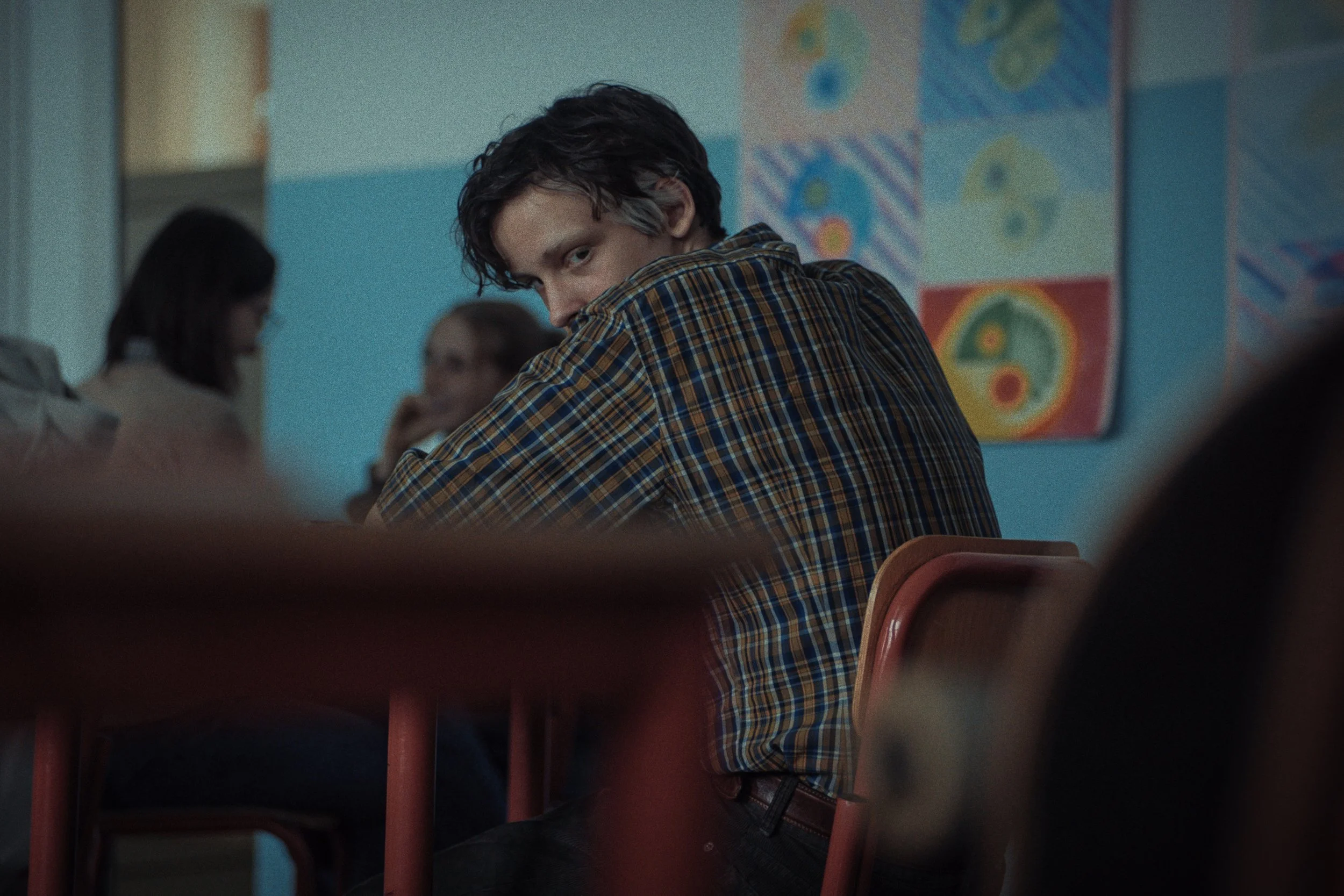
Giulio Feltri as Matteo, the “holy boy” who can take his neighbours’ sadness away with a hug. Courtesy of Shudder.
Every story that we like about isolated communities starts with an outsider. The premise of the movie came into our minds because we thought of movies like The Wicker Man. We also thought of very flawed characters that we love in movies. We love desperate characters because it reminds us of ourselves. I remember one of the first movies we thought of while trying to design Sergio was Paul Newman’s character in The Verdict. It turned out to be very different, but we talked a lot about that movie.
The premise came down to this sentence: Let’s try to put the saddest person on Earth in the happiest town on Earth, and see what happens. And for me, ‘sad’ is a synonym for ordinary. I always think that the Gothic genre was born with this definition: ordinary people in extraordinary situations. I wanted a premise that could sound really similar to that definition.
P: Why is it important for you to represent queerness in your films even if the representation may be uncomfortable?
PS: I am a queer person, and I always looked for a certain kind of representation. The representation in The Holy Boy was really important because what is problematised is not his queerness. The queerness is problematised, but his homosexuality is not problematised, you know? He’s a gay kid who is attracted to his peer in school who is also his bully, and it happened to me. This is the part of my life experience that I put in the movie.
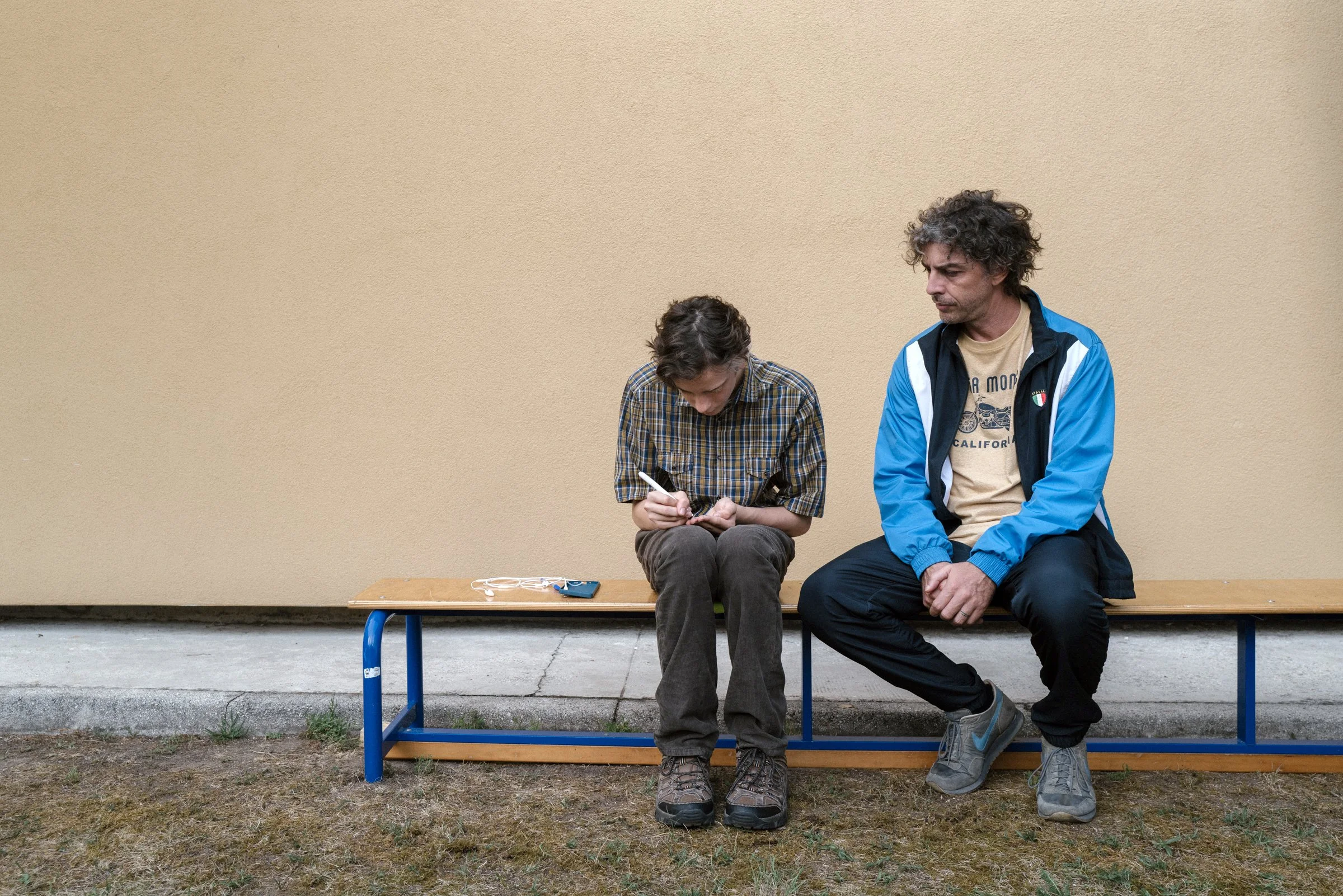
Matteo and Sergio soon develop an unlikely friendship. Courtesy of Shudder.
What was really important to me is that it wasn't meant to be a problem. Matteo has so many problems, but him being gay is not a problem. He is just a gay character, and it's okay. He’s also a gay character who is both the main character and the antagonist of the movie. I didn't want a clean gay character. I wanted someone really flawed who was not defined by his homosexuality. It was a way of representing a gay character that I really missed in my teenage years but wanted to see, so I tried to create one.
And the queerness of Matteo is not only in his homosexuality. He's a ‘queer’ kid in every way possible. His superpowers make him queer, you know?
P: This was Giulio Feltri’s first on-screen role. What was it about him that convinced you he was the right actor to play Matteo, and how did you build the character together?
PS: I met Giulio three years ago now. He was 14; now he's 17. He’s a whole other person. But he was already so mature and had this emotional intelligence and this maturity that was really precious to me. He had a deep understanding already of his sexuality at 14. I tried so hard to find someone who was similar to Matteo with this disturbed and fragile personality, but then I found Giulio, who was the opposite.
He was already so sure of himself. At first, I felt he wasn’t right for the role because he was so different from Matteo. But I was so fascinated by him because when I met him, I thought, ‘This is who I wanted to be when I was a kid.’ I wish I had been like that when I was 14. He was one of a kind.
P: How did you go about devising the ritual specifically?
PS: A hug can be something really comforting and beautiful, but it could also be oppressive and constricting. It was important that Matteo was hugged and wasn’t doing the hugging because it's a gesture. It's something we do to comfort someone and to express love to someone. But it could also be violent. We see these grown men and women hugging this teenage boy — it’s so violent. It was a perfect symbol to project the condition of Matteo in this community. I also thought about how no teens that I know want to be hugged [laughs].
Paolo Pierobon stars as Matteo’s controlling father. Courtesy of Shudder.
P: With The Holy Boy releasing on Shudder and The Spiral coming to cinemas, how does it feel for your work to be getting that kind of exposure to international audiences?
PS: It’s great because I get to talk to many different people and hear their stories. It makes me travel a lot. What I really value about this experience is hearing other people's experiences. It feeds my knowledge of the world and my creativity too. I like to make friends all over the world, and I like to share my work with them. It’s a huge privilege, and I wasn't expecting it. But when we make movies, we don't think, or I try not to think, about how people will react. Movie-making is communication, and if you can communicate to people, it really makes everything worth it.
P: Whether it’s the Mia Martini song in The Holy Boy or the 2006 World Cup Final in The Spiral, you really foreground Italian culture in your work in an exciting way. What does it mean to you to tell Italian stories in the context of the horror genre?
PS: I am Italian, and I love Italian pop culture. We’re not used to seeing this pop culture in genre movies, and especially in horror movies, but I think it has a lot of value. It’s something I do to make my movies feel different and to give them an exact setting. The Mia Martini song was perfect for The Holy Boy because of what it says in the lyrics, but also because it’s so weird for a teenage boy nowadays to hear that song [Matteo listens to it on his headphones]. So it was both a pop culture reference and something that shaped my character at the same time.
P: Do you hope to make movies in Hollywood next?
PS: I want to keep making films that speak to me, but I also want to push boundaries. So if making an English-language feature helps me push boundaries, then yes, I want to find the right story and the right partners. It’s something I would love to do.
The Holy Boy is streaming on Shudder from this Friday, November 27th.