Twin Peaks at 35: Re-Examining the Haunting Pilot
From the very beginning, David Lynch and Mark Frost’s landmark series is a transcendent portrayal of an idyllic community undone by violence
by Willow Catelyn Maclay 27 December 2025
© Paramount
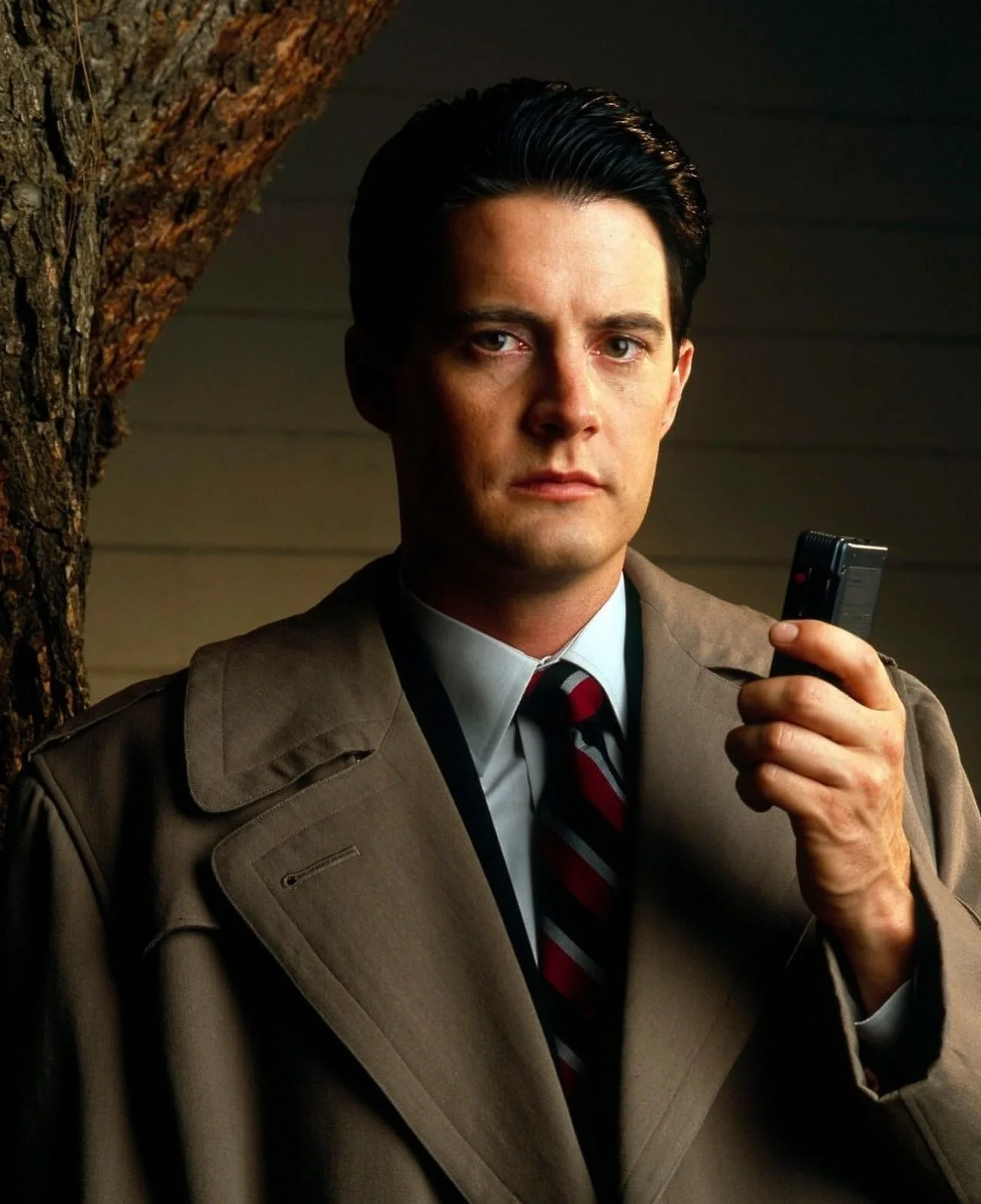
David Lynch liked to use birds to symbolise hope. In Blue Velvet (1986), amateur detective Jeffrey Beaumont (Kyle MacLachlan) asks his girlfriend Sandy (Laura Dern) why there are men like the maniac Frank Booth (Dennis Hopper). In his moment of disarray at the state of human behaviour, Sandy recounts a beautiful dream she had the other night. Dern’s face beams when she speaks of a dark world that found the light when hundreds of robins were unleashed to soar in the sky. “There is trouble until the robins come.” When a robin is shown in close-up at the end of Blue Velvet (1986), it signals Lynch’s sincere belief in a happy ending for these characters. In 1989, Lynch conjured a nightingale for the angelic voice of Julee Cruise for their album “Floating into the Night”. She sang of a bird giving her lonesome narrator a message that there was a love meant for her, and the bird would carry her longing through the night, all across the world. The very first image in Twin Peaks is of a wren in extreme close-up, caught in the golden shine of the rising sun, high up in the trees of Twin Peaks. Almost everything we need to know about the series is presented in the first episode, and the image of the wren speaks to a harmony and decency that once belonged to this sleepy logging town, but has vanished with the discovery of Laura Palmer’s (Sheryl Lee) dead body.
© Paramount
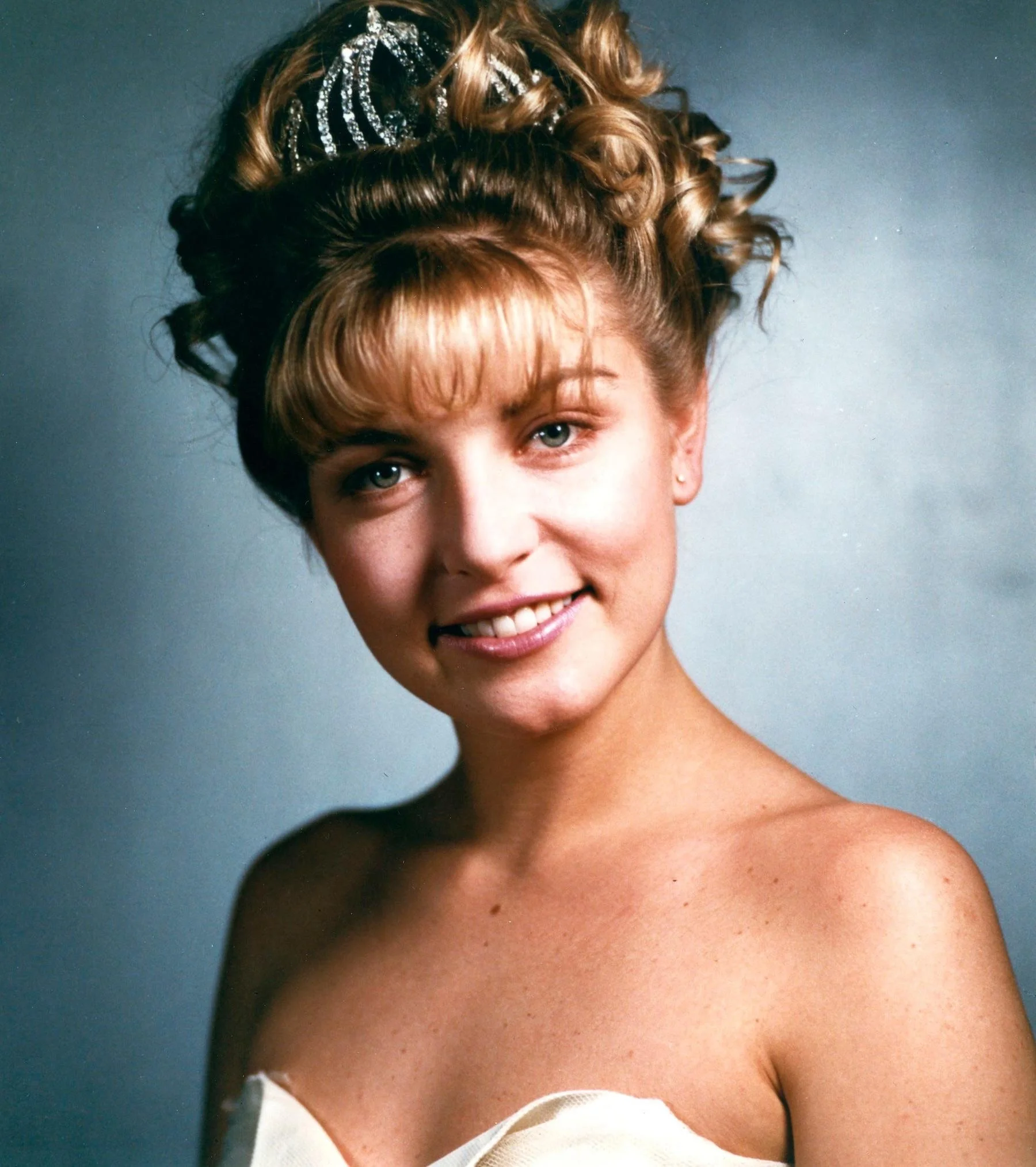
David Lynch’s crew were on location in Washington State when they were shooting the pilot, and he became enamoured with the Snoqualmie Logging Mill while they were visiting. He filmed an enormous amount of footage capturing the day-to-day operations of the workers, and much of it found its way into the opening credits. The unspoken history of Twin Peaks plays out in the minutiae of these images of the factory. Lynch lingers on the sparks of metal machinery colliding, then uses a wide frame of a billowing puff of smog out of the factory chimney, and concludes on a monument to a gigantic log that was torn out of the forest many years ago. The Snoqualmie Logging Mill (now redubbed the Packward Sawmill) is the lifeblood of the town of Twin Peaks. It allowed everyone who settled out West to build a life for themselves, and the surrounding forested areas were so beautiful that the population surely took the scenery for granted. The surfaces that are presented in this opening, including the establishing Wren, are designed to allow the viewer to find their way inside the setting. Angelo Badalamenti’s lush theme is a composition of deep angst and longing, and set to its dreamy romanticism are images which further define the timelessness of the town. There’s the foggy mountain peaks, the trees that are still barren from the lingering winter cold, and a cascading waterfall at the Great Northern Hotel. The harmony of their life alongside nature suggests a place that is breathing, and thriving, but like the white picket fences that precede Blue Velvet, Lynch almost immediately turns the majesty of modern life into a subversive playground of sublime melodrama.
© Paramount
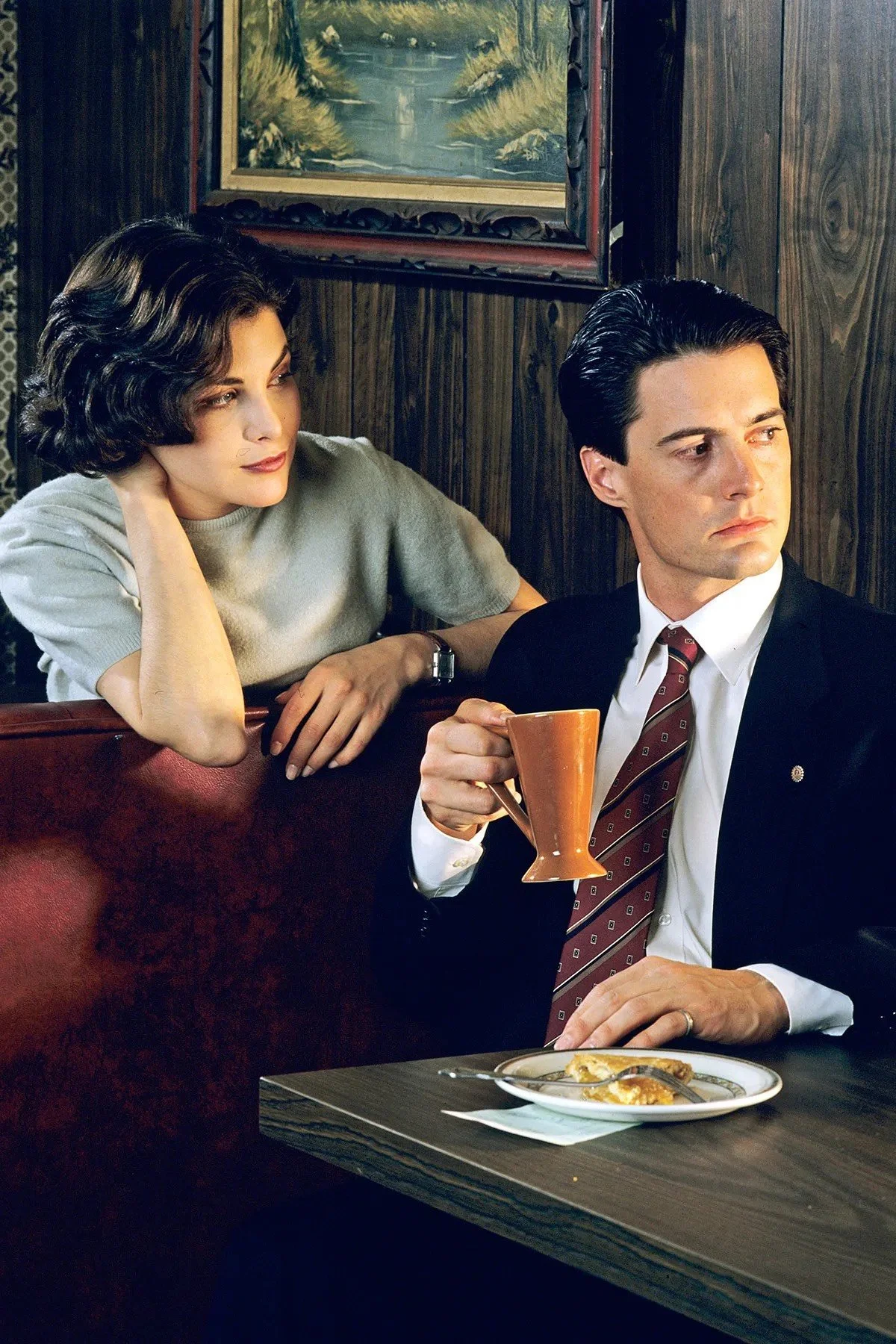
Viewers are given the briefest hints at the pre-history of Twin Peaks when Pete Martell (Jack Nance) strolls through his wood-panelled home in red flannel and informs his wife, Catherine (Piper Laurie), that he’s going fishing. It’s another perfectly peaceful day in this perfectly peaceful town. The lonesome foghorn blows, but in the corner of the frame, an abject disruption of a cadaver is visible on the coastline. He rushes back to telephone the local police station and, with shuddering breaths, tells Sheriff Harry S. Truman (Michael Ontkean) that someone is dead, “wrapped in plastic.” Viewers were captivated by the mystery of who killed Laura Palmer because the series did such a good job of exploring how severely her death fractured an idyllic American community, but it also registered as profound, because of the time Lynch and co-creator Mark Frost dedicated to the grief of those who mourned Laura’s untimely passing. The show was criticised at the time for engaging in the trope of the “beautiful dead girl”, and the likes of Bikini Kill frontwoman Kathleen Hanna were among them, writing a song called “Fuck Twin Peaks”, but with time, the interrogation of what Laura Palmer’s death meant spread over every element of the series. It was Laura’s agency, and her experiences of sexual assault, which gave depth to Lynch and Frost’s rendering of a community that failed one of their own. Those elements are present in some capacity from the very beginning. There’s an unusual amount of time spent showing those closest to Laura reacting to her death in real time. Her mother, Sarah (Grace Zabriskie), rushes up the stairs and calls everyone she knows while trying to find the location of her daughter. An incantation of feminine intuition has informed her to expect the worst, and when talking to her husband, Leland (Ray Wise), over the phone, her nightmares come true when their conversation is interrupted by Sheriff Truman visiting Leland at his job to break the news. Leland whispers the law enforcement officer’s name over the phone, and it’s all the communication the grieving parents need to have with one another to relay how they feel knowing that their daughter is gone.
© Paramount
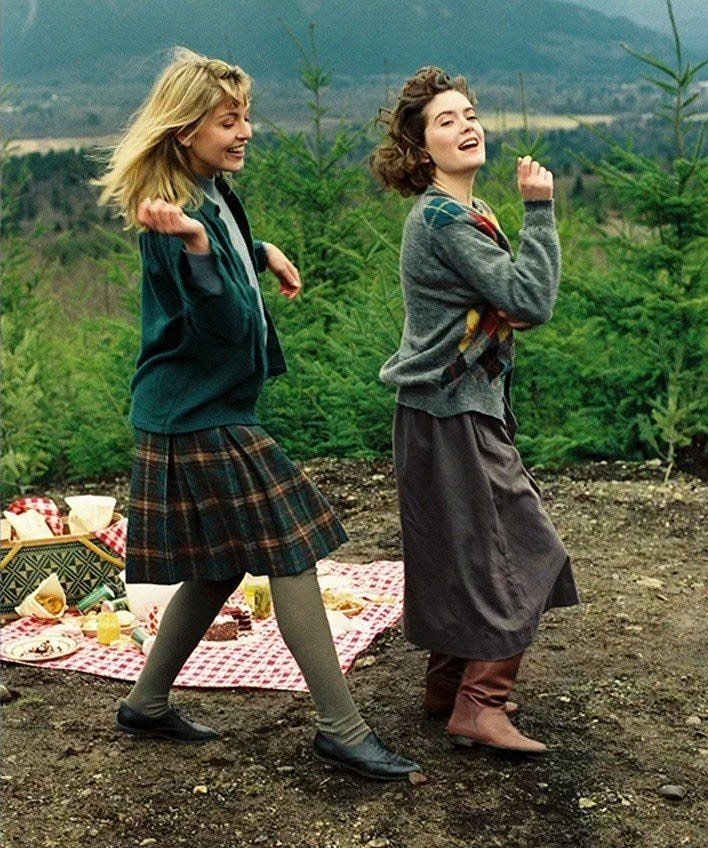
At Laura’s high school, there are scattered rumblings of what’s going on, but nothing concrete. Lynch keys in on Laura’s best friend Donna (Lara Flynn Boyle), and she fears the worst when a nameless girl sprints through the promenade screaming, and then gazes over to Laura’s empty desk. The grave images of negative space recur continuously in the pilot. Their friend has been torn out of their lives, and they do not know what to do. Lynch would re-use the image of the screaming girl to introduce viewers to Twin Peaks: The Return in 2017, and it was likely his intention to communicate that it would be a deconstruction of everything that came before in the initial seasons. It still makes me cry when Donna clutches her chest and whispers Laura’s name, and she sobs recklessly with ugly heaving around a coven of teenage girls when the news is made official. Twin Peaks is about many things, and holds many mysteries, but the primary tension of the series emanates from Laura’s corpse and its contrast to the face of the town preceding her murder. Lynch and Frost predominantly see the women of the series through a vibrant and compassionate lens, examining their turbulence, their glamour, and their survival when all the troubles of modernity come knocking in the form of generational and sociological violence. He consistently returns to the image of Laura, because he was enchanted by the shape of her life—and her secrets. When one of those mysteries spilled out into the open air, the day-to-day life of this community began its descent into the true nature of what all that beauty from the opening credits was hiding. Near the end of the half-hour mark, the decadent and fashionable heiress to the town’s lumber economy, Josie Packard (Joan Chen), informs the workers that the mill will be shut down for the day. Lynch uses a close-up of a giant saw slowing down until it ceases its function. It’s a close-up with a deep symbolic meaning. When contrasted with the gentle and prosperous nature of the logging imagery from the opening, it tells us something very important: Life as they have known in Twin Peaks has changed irrevocably. Their new history beckons them forward, and much, much more about Laura Palmer will be revealed.
Willow Catelyn Maclay has written about every episode of Twin Peaks on her Patreon and is featured in the book Laura's Ghost: Women Speak About Twin Peaks.
Twin Peaks at 35: Re-Examining the Haunting Pilot
From the very beginning, David Lynch and Mark Frost’s landmark series is a transcendent portrayal of an idyllic community undone by violence
by Willow Catelyn Maclay 27 December 2025
© Paramount
David Lynch liked to use birds to symbolise hope. In Blue Velvet (1986), amateur detective Jeffrey Beaumont (Kyle MacLachlan) asks his girlfriend Sandy (Laura Dern) why there are men like the maniac Frank Booth (Dennis Hopper). In his moment of disarray at the state of human behaviour, Sandy recounts a beautiful dream she had the other night. Dern’s face beams when she speaks of a dark world that found the light when hundreds of robins were unleashed to soar in the sky. “There is trouble until the robins come.” When a robin is shown in close-up at the end of Blue Velvet (1986), it signals Lynch’s sincere belief in a happy ending for these characters. In 1989, Lynch conjured a nightingale for the angelic voice of Julee Cruise for their album “Floating into the Night”. She sang of a bird giving her lonesome narrator a message that there was a love meant for her, and the bird would carry her longing through the night, all across the world. The very first image in Twin Peaks is of a wren in extreme close-up, caught in the golden shine of the rising sun, high up in the trees of Twin Peaks. Almost everything we need to know about the series is presented in the first episode, and the image of the wren speaks to a harmony and decency that once belonged to this sleepy logging town, but has vanished with the discovery of Laura Palmer’s (Sheryl Lee) dead body.
© Paramount
David Lynch’s crew were on location in Washington State when they were shooting the pilot, and he became enamoured with the Snoqualmie Logging Mill while they were visiting. He filmed an enormous amount of footage capturing the day-to-day operations of the workers, and much of it found its way into the opening credits. The unspoken history of Twin Peaks plays out in the minutiae of these images of the factory. Lynch lingers on the sparks of metal machinery colliding, then uses a wide frame of a billowing puff of smog out of the factory chimney, and concludes on a monument to a gigantic log that was torn out of the forest many years ago. The Snoqualmie Logging Mill (now redubbed the Packward Sawmill) is the lifeblood of the town of Twin Peaks. It allowed everyone who settled out West to build a life for themselves, and the surrounding forested areas were so beautiful that the population surely took the scenery for granted. The surfaces that are presented in this opening, including the establishing Wren, are designed to allow the viewer to find their way inside the setting. Angelo Badalamenti’s lush theme is a composition of deep angst and longing, and set to its dreamy romanticism are images which further define the timelessness of the town. There’s the foggy mountain peaks, the trees that are still barren from the lingering winter cold, and a cascading waterfall at the Great Northern Hotel. The harmony of their life alongside nature suggests a place that is breathing, and thriving, but like the white picket fences that precede Blue Velvet, Lynch almost immediately turns the majesty of modern life into a subversive playground of sublime melodrama.
© Paramount
Viewers are given the briefest hints at the pre-history of Twin Peaks when Pete Martell (Jack Nance) strolls through his wood-panelled home in red flannel and informs his wife, Catherine (Piper Laurie), that he’s going fishing. It’s another perfectly peaceful day in this perfectly peaceful town. The lonesome foghorn blows, but in the corner of the frame, an abject disruption of a cadaver is visible on the coastline. He rushes back to telephone the local police station and, with shuddering breaths, tells Sheriff Harry S. Truman (Michael Ontkean) that someone is dead, “wrapped in plastic.” Viewers were captivated by the mystery of who killed Laura Palmer because the series did such a good job of exploring how severely her death fractured an idyllic American community, but it also registered as profound, because of the time Lynch and co-creator Mark Frost dedicated to the grief of those who mourned Laura’s untimely passing. The show was criticised at the time for engaging in the trope of the “beautiful dead girl”, and the likes of Bikini Kill frontwoman Kathleen Hanna were among them, writing a song called “Fuck Twin Peaks”, but with time, the interrogation of what Laura Palmer’s death meant spread over every element of the series. It was Laura’s agency, and her experiences of sexual assault, which gave depth to Lynch and Frost’s rendering of a community that failed one of their own. Those elements are present in some capacity from the very beginning. There’s an unusual amount of time spent showing those closest to Laura reacting to her death in real time. Her mother, Sarah (Grace Zabriskie), rushes up the stairs and calls everyone she knows while trying to find the location of her daughter. An incantation of feminine intuition has informed her to expect the worst, and when talking to her husband, Leland (Ray Wise), over the phone, her nightmares come true when their conversation is interrupted by Sheriff Truman visiting Leland at his job to break the news. Leland whispers the law enforcement officer’s name over the phone, and it’s all the communication the grieving parents need to have with one another to relay how they feel knowing that their daughter is gone.
© Paramount
At Laura’s high school, there are scattered rumblings of what’s going on, but nothing concrete. Lynch keys in on Laura’s best friend Donna (Lara Flynn Boyle), and she fears the worst when a nameless girl sprints through the promenade screaming, and then gazes over to Laura’s empty desk. The grave images of negative space recur continuously in the pilot. Their friend has been torn out of their lives, and they do not know what to do. Lynch would re-use the image of the screaming girl to introduce viewers to Twin Peaks: The Return in 2017, and it was likely his intention to communicate that it would be a deconstruction of everything that came before in the initial seasons. It still makes me cry when Donna clutches her chest and whispers Laura’s name, and she sobs recklessly with ugly heaving around a coven of teenage girls when the news is made official. Twin Peaks is about many things, and holds many mysteries, but the primary tension of the series emanates from Laura’s corpse and its contrast to the face of the town preceding her murder. Lynch and Frost predominantly see the women of the series through a vibrant and compassionate lens, examining their turbulence, their glamour, and their survival when all the troubles of modernity come knocking in the form of generational and sociological violence. He consistently returns to the image of Laura, because he was enchanted by the shape of her life—and her secrets. When one of those mysteries spilled out into the open air, the day-to-day life of this community began its descent into the true nature of what all that beauty from the opening credits was hiding. Near the end of the half-hour mark, the decadent and fashionable heiress to the town’s lumber economy, Josie Packard (Joan Chen), informs the workers that the mill will be shut down for the day. Lynch uses a close-up of a giant saw slowing down until it ceases its function. It’s a close-up with a deep symbolic meaning. When contrasted with the gentle and prosperous nature of the logging imagery from the opening, it tells us something very important: Life as they have known in Twin Peaks has changed irrevocably. Their new history beckons them forward, and much, much more about Laura Palmer will be revealed.
Willow Catelyn Maclay has written about every episode of Twin Peaks on her Patreon and is featured in the book Laura's Ghost: Women Speak About Twin Peaks.