1000 Women in Horror: Alexandra Heller-Nicholas on Shudder’s Essential New Documentary
The acclaimed film critic’s sprawling documentary rewrites horror history from the inside out
by Heather O. Petrocelli 20 March 2026
© Shudder
Heather O. Petrocelli: Alex, your work on women in horror has felt like an act of forensic recovery—illuminating the women who were always in the room but were often edited out of the history books. In 1000 Women in Horror, you and Donna take your 600-page “dare” of a book and turn it into a living, breathing cinematic story. Since my own work focuses on queer spectatorship of horror, I’m struck by how often our work overlaps in the genre’s shadows. So I want to start with the mechanics of this erasure: why, even in 2026, does the mainstream narrative still frame women’s contributions as a series of intermittent miracles or sudden interventions, rather than the very bedrock upon which horror was built? Beyond the obvious single-word answer of misogyny…
Alexandra Heller-Nicholas: [Laughs] Damn! Obviously, my passions are focused on horror, exploitation, and cult cinema, but I’ve also had a long interest in women’s filmmaking. I co-edited a book on Elaine May, who is distinctly not a horror filmmaker. So this project really brought together a lot of different research interests.
What I find so interesting, and what was really the kernel at the heart of 1000 Women in Horror, both the book and the documentary, is that women in horror functions as a microcosm for bigger sociocultural issues. We only need to look at women’s filmmaking more broadly: Julia Ducournau was the first woman to win the Palme d’Or solo; Jane Campion won in 1993, but had to share it—that was a draw. There’s a very long history of women not winning Oscars. These glaring imbalances can’t be anything but systemic.
It comes back to something that I talk about in the book: the invisibility of women’s labour. You only need to look at the household. Laundry is invisible labour. Cooking is invisible labour. Historically, women have just done so much invisible labour. Even in horror. Think about the beautiful women of the Hammer Horror films, the ethereal white gowns, gorgeous women like Ingrid Pitt, who had an alarm clock that woke her up at dawn to be on set by 6:30 for makeup. It’s labour. Women who work in horror work in horror. It’s a job. The idea that women just ethereally waft across the screen with tits out is insane. Even if that’s what we see, it completely negates the idea of labour. And when we start looking at women behind the camera, the invisibility of that labour becomes quite explicit. We literally don’t see somebody like Margaret Cardin, a negative cutter who worked on some of the biggest Australian horror films of all time. We just don’t see women’s labour in film.
HOP: Your book works as an encyclopedia, letting readers jump around a comprehensive repository, even if no single volume could truly hold all of the history of women in horror. But a film simply cannot have even the scope of your book; a film has to make more choices, impose a shape, and decide what connects to what. When you were writing the screenplay, how did you distil a book that vast into a single cinematic thread, and what did you have to leave behind?
AHN: The book and the film had the same challenge: it’s impossible. You can’t do a 90-minute documentary on the history of women in horror. It’s insane. It’s materially impossible to do to an exhaustive level. Same with the book. My ideal goal with that book, and honestly, the same thing applies to the documentary: I would love people to get to the end of each and say, “Why only 1000? What about this person? What about this person?”
So the title 1000 Women in Horror is really a provocation. It’s to get people irate, to make them conscious of the fact that narrowing the history of women’s contributions to horror down to 1000 is ludicrous. It can’t be done.
That was our starting point with the documentary. We calmly accepted that people are going to complain because X person isn’t in it, and decided to lean into that spirit of provocation. The book is an alphabetical encyclopedia with paragraph-long entries and long-form interviews on the 1000 women. What we did with the documentary to give it a narrative structure is break it down into the clichéd stages of a typical woman’s life cycle: girlhood, school years, womanhood, working life, motherhood, and ageing. Our premise is that horror transgresses and subverts assumptions about those stages every step of the way. You’re a little girl with a doll… what if the doll’s evil? What if the little girl is evil? It’s a way to tap into bigger ideas about representation while including as many women as possible.
I love the idea of somebody sitting there with a pen and paper and trying to count how many women are actually in the film. Which is hilarious to me. That’s not the point. The fact that you think there might only be 1000 women in horror: that’s the problem.
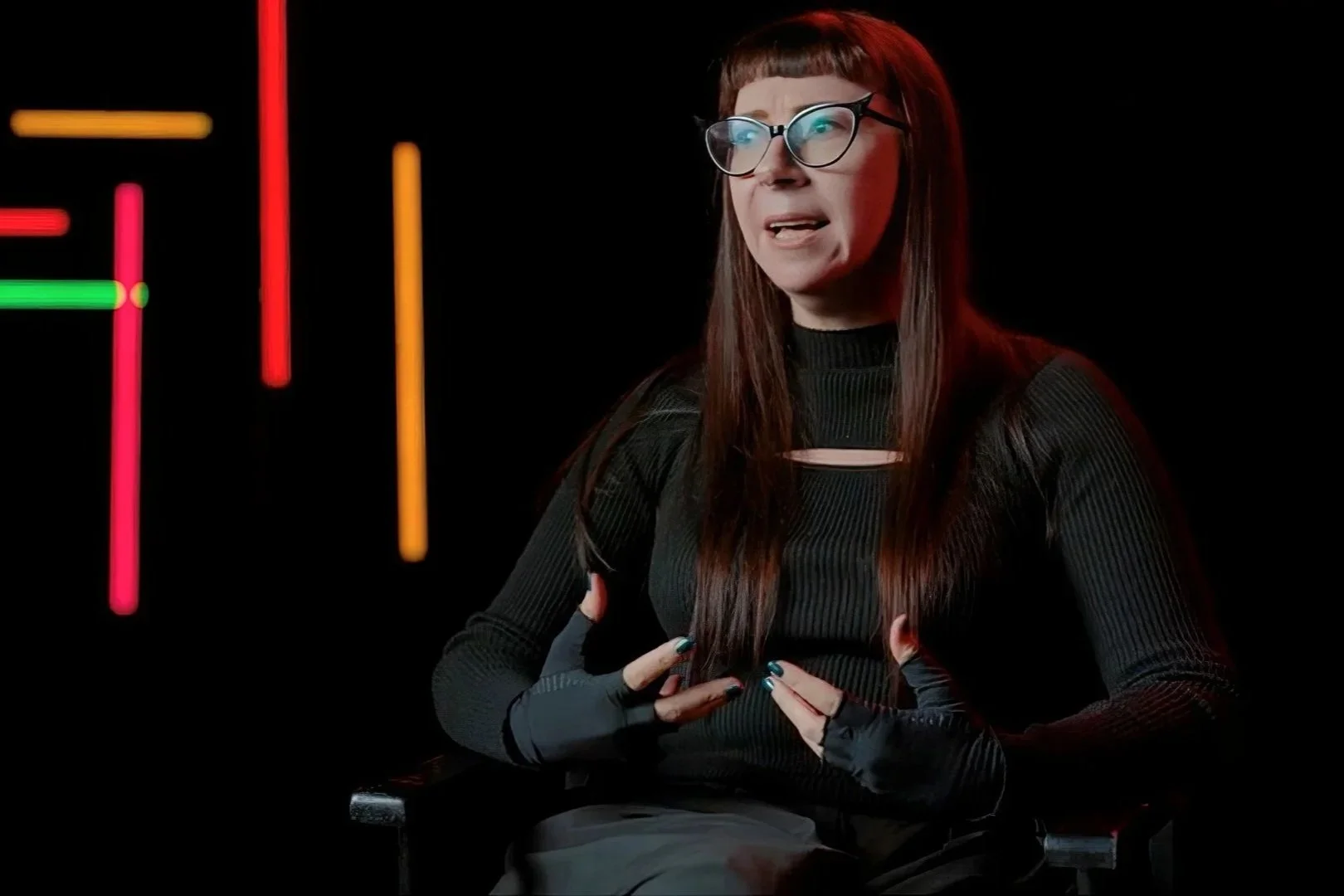
Heller-Nicholas in 1000 Women in Horror © Shudder
HOP: 1000 Women in Horror, 1895-2018 began as an act of scholarly recovery, proving on the page that women have always been central to horror. But horror is also, at its core, a sensory and visceral experience. Now that the work has become a documentary, what did moving into a visual medium open up that the written word couldn’t?
AHN: I love this question. When I was younger and working more as an academic, I had these long, convoluted explanations for why people are drawn to horror. As I’ve gotten older, I’ve moved away from that. I think it’s just a sensory-seeking thing. Some people just seek the sensory pleasures of horror movies; we like the thrill. Some people are repulsed by it; they’re sensory avoidant. That’s it.
The difference between the book and the film is that with such a remarkable director as Donna, we could make that sensory experience quite palpable. One of my favourite segments is where the great Kate Siegel gives a graphic description of having a caesarean section, and the delight Donna took in cutting together footage from films in a fast montage to illustrate this horrendous story. At festivals, people were screaming, standing up in their seats, hollering. You could see this visceral reaction. It’s one of my favourite parts of the film. And it was an indescribable joy to see people let go of their intellect and to surrender to this very femme-coded experience of how horror speaks to the experience of a woman, of somebody, having a caesarean section.
HOP: That scene is incredible. One of the best things committed to “celluloid.”
AHN: My feeling is that if people don’t like the rest of the film, that’s fine. But that is the one scene they’re going to remember.
HOP: Has making this documentary given you any instincts or tools that you think will migrate back into your writing practice
AHN: I’ve been writing books for a really long time; my first book was published in 2011. I’m just about to announce my next one, a short monograph on the soundtrack to The Blair Witch Project, called Josh’s Blair Witch Mix, out through Channel Academic. It goes back to my origins as a music journalist, and I love The Blair Witch Project; it’s one of my all-time favourite films.
So I’m still writing books and will continue to. But eleven books in, you do get a little fatigued, so pivoting to documentaries is something that I’m really excited about. I had the privilege of being interviewed in Alexandre Philippe’s Texas Chain Saw Massacre legacy documentary Chain Reactions, which won an award at the Venice Film Festival and features Takashi Miike, Karyn Kusama, Patton Oswalt, Stephen King. So I’m one of the five people interviewed in that. Getting that peek behind the curtain and seeing how somebody of Alexandre Philippe’s calibre makes a film: I can’t turn the clock back now. I’m very eager to keep moving into the filmmaking space and rethink ideas that I would normally communicate in books through a different medium.
HOP: I think Chain Reactions is a great documentary, the same way I thought Lynch/Oz was incredible, but, truthfully, you were my favourite segment in it.
AHN: Aw, thank you. It’s pretty scary. I mean Stephen King. The first grown-up books I read were Stephen King.
HOP: There’s something subversive about the idea that horror, a genre built around fear, keeps returning to women because women are genuinely powerful—and society knows it. Horror has spent over a century trying to contain women—burning them, drowning them, locking them up—but it keeps failing. Since horror then actually functions as a subversive tribute to women’s power, how do you hope 1000 Women in Horror changes the audience’s perspective on the genre’s history?
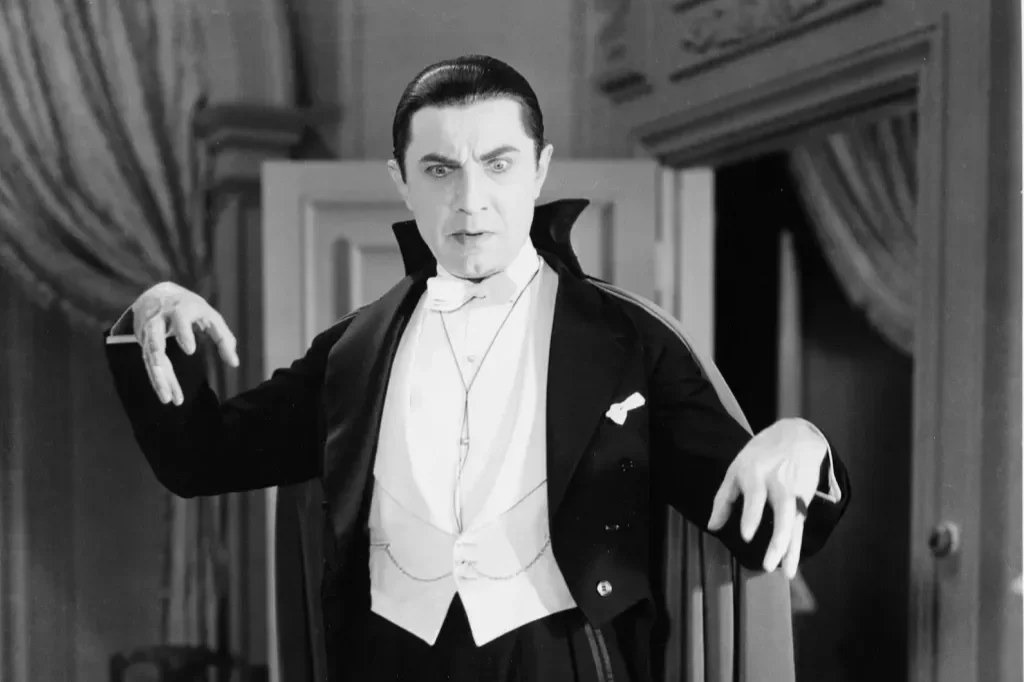
AHN: It’s a really interesting thing to think about. One of the things I find really fascinating about horror history is that it’s not just women, but femininity itself. If you look at Boris Karloff as Frankenstein, Bela Lugosi as Dracula, those classic Universal monsters: their otherness is marked by a kind of softness, a femininity. Femininity is othered in horror as a kind of default setting. But rather than just pushing a hegemonic line, horror has found enormous space to really play with that. To be subversive and transgressive, to play with empathy and alignment. Which is what Carol Clover’s whole final girl idea is about: not who we identify with, but who we are aligned with in this story?
So I like that horror is broadly a space for femininity to be thought out. And what’s really beautiful about it is that it quite organically creates a space for other identities, for non-binary identities, for the idea that gender performativity is just elastic. That’s why horror, in my experience, has been broadly quite trans-inclusive in recent years, and there’s been some amazing critical work by trans critics on the historical representation of transgender folk in horror. I think that this subversiveness and this slipperiness with gender is one of the most powerful things that horror has going for it.
© Kino Lorber
HOP: Horror thrives on the abject body and “leaky” transitions; we’ve seen a thousand first periods on screen, but almost no last ones. As someone navigating your 50s, as I am, why do you think the genre still flinches at portraying menopause? Is a woman who has outlived her biological purpose in the eyes of the patriarchy actually the most unknowable, un-categorisable monster of all?
AHN: This was a big point of discussion when we were making the film. It’s clearly missing from it, but I don’t see that as a weakness on our part. I think it reflects the fact that it’s invisible, even in horror. I was very much in the deep, dark throes of perimenopause. I was on HRT, along with some of my trans buddies, which was an amazing experience. All bonding together with the joys of HRT. Donna is of a similar age and has had a similar experience. And there was just nothing. It’s just invisible. Obviously that reflects that culturally it’s invisible. I’d never heard the word perimenopause until I was in perimenopause. It’s something that horror needs to aggressively address.
And I don’t know who or how that can be done. Because talk about the elephant in the room: we have Ginger Snaps, we have Teeth, we have Carrie, all these wonderful films about menstruation. When it comes to menopause, crickets. And, again, it’s invisibility. Once you’re unfuckable, you become invisible.
HOP: This goes back to what you were saying about invisible labour. And, like you, I didn’t know anything about perimenopause until I was going through it.
AHN: It’s like being hit by a bus. And when I say unfuckable, I don’t mean unfuckable, I mean considered unfuckable—culturally assumed to be unfuckable.
HOP: I understood completely. Oh, our first number is 5, we don’t matter anymore. Time to go do crime.
AHN: Right right right! You can’t make babies anymore. You actually have no function other than to be a grandmother or a psycho hag. That’s what’s on the table for you.
HOP: I’m interested in how radical subcultures get absorbed by the mainstream. Women are reclaiming the Monstrous Woman and Monstrous Feminine, but that same figure is now being sold back to us via fast-fashion. As someone who has championed the transgressive and the uncomfortable, at what point does a radical figure become just an aesthetic. Do you think the industry’s appetite for marketable female rage actually leaves the most radical, difficult, and unpleasant women behind?
AHN: This builds on our discussion about menopause. I will always defend hagsploitation films, things like What Ever Happened to Baby Jane? I know a lot of women who are uncomfortable with that label. I’m old. I’m a hag. I embrace it. And I love those films because they give older women work. Bette Davis and Joan Crawford couldn’t get work at that time, so they made these films as older women: these fabulous, over-the-top, monstrous characters. But you don’t see a lot of girl power, girl boss merch about hagsploitation films, right? You don’t see post-menopausal women on Shein t-shirts. We can commodify this stuff, but we want hot young chicks covered in blood. We don’t necessarily want Shelley Winters with a knife.
HOPi: I do! Well, we’ll have to create our own line of hagsploitation merch: Psycho Hag and Father Crone.
AHN: I’m so in.
HOP: The Bride! is currently in theatres and already being called one of the biggest bombs of 2026, yet many see it as a bold, uncompromising work of horror. It’s a Warner Bros.-backed, woman-directed, woman-centred horror film, and the press is running with the “failure” narrative. Given that your book and documentary 1000 Women in Horror spend so much time documenting the hard-won history of women both in front of and behind the camera, do you worry that high-profile commercial “disappointments” like this get weaponised by studios to justify not funding women-led horror projects?
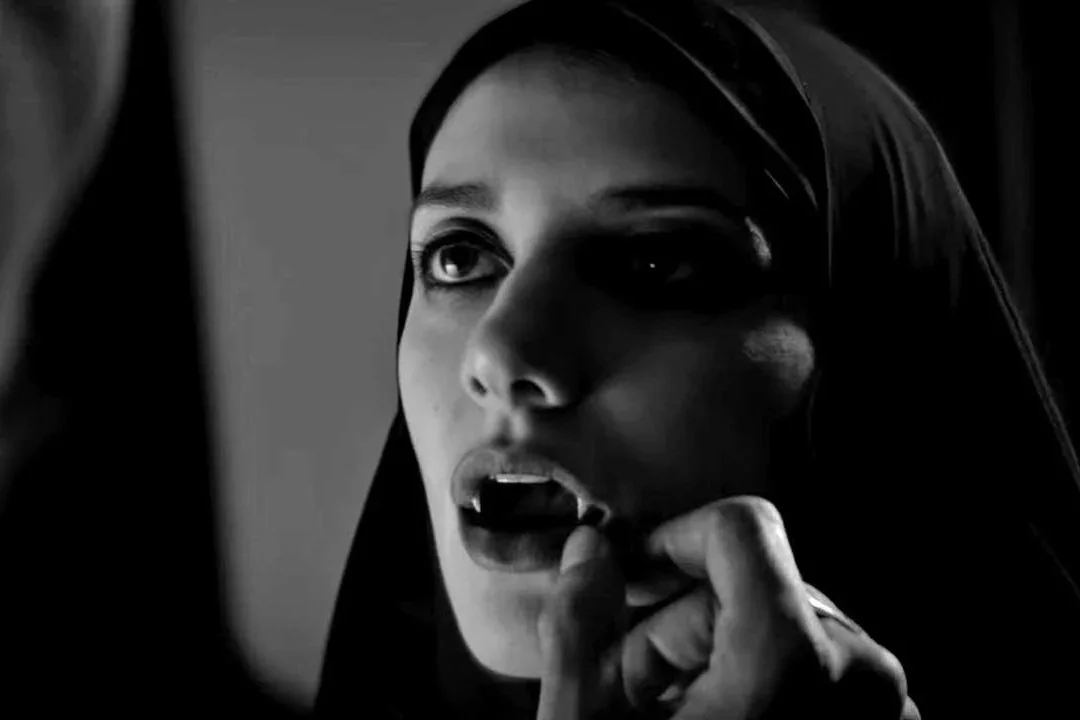
AHN: Absolutely. It really pushes the belief that women are interlopers, that women shouldn’t be making films. That it’s not natural to have women direct films. You go back to Elaine May and Ishtar: she’s an out-of-control woman, too emotional, doesn’t know what she’s doing. That thinking still perseveres. I don’t think that’s really gone. Women have obviously always been making horror films. Alice Guy-Blaché was making Hunchback of Notre Dame films in the early silent era. Women directing horror films is not new—we had things like Pet Sematary and American Psycho. But it was really the triple threat of Raw, A Girl Walks Home Alone at Night, and The Babadook, all released roughly around the same time in multiplexes, that changed the conversation. This was a really important moment because suddenly these films weren’t just getting made, but they were getting distributed.
But those old biases stay. That women don’t naturally belong in the director’s chair, is still conventional wisdom, certainly in Hollywood. Something like The Substance is considered a fluke or luck. Something like Titane is considered a fluke or luck. And something like The Bride!, which I personally can take or leave, takes such wild swings and has such a clear creative vision driving it. It’s so bold and so exciting. Whether I like it or not is almost neither here nor there; the glass-half-full in me says at least she got the space to take that swing.
But it does keep validating the assumption that women don’t really know how to make films.
© Universal
HOP: This documentary maps a global web, from Iran to Mexico to Japan and beyond. What does horror history actually look like when you stop building it outward from a Western centre and just let the global picture speak for itself?
AHN: There’s one bit of the film that I really wanted included that didn’t make the final cut, and it’s probably my only regret. Near the end of the film, we touch on the women in horror movement being global, very briefly. We have the wonderful Heidi Honeycutt from Etheria Film Night, the author of I Spit on Your Celluloid—basically the goddess of women in horror. But I also mentioned a woman named Sapna Bhavnani, a filmmaker in India who runs a festival called the Wench Film Festival. If this interview does anything, I hope it draws people’s attention to Sapna’s work, because it will radically reframe how we think of horror as an assumed Western practice. It’s so exciting and so important. And, really, Sapna should be as well-known as anybody in our documentary.
HOP: If you could magically restore one forgotten or overlooked film by a woman and give it a world premiere tomorrow, which one would it be?
AHN: So Karen Arthur’s 1978 film, The Mafu Cage, does have a 2K restoration. It is long, long overdue for a 4K restoration. It is a film that not many people know outside of the women-in-horror fan girls. It stars Carol Kane. It is just the most suffocating, strange, beautiful, important film. And it’s one of those movies that everybody who I put it on to, they watch it, and they’re like, “How did I not know about this film?” That film should be as well-known as something like Żuławski’s Possession.
HOP: One so-called problematic or cliché trope of women in horror that you love anyway?
AHN: Carol Clover is another really important tribal elder in the women in horror field. Men, Women, and Chain Saws is foundational for very good reasons. But I would like to see more rigorous critical engagement with the idea of the final girl. The most simplistic, reductive reading of what Clover suggests is now the common understanding, and there’s a lot more complexity to the idea, in good ways and bad, than generally gets used. I would like people to be a little more literate when they come to the final girl rather than just, “oh, it’s the chick who survives.” There’s a lot more going on there.
HOP: If you had to introduce yourself using just two movies to explain who you are, which ones would be your cinematic handshake?
AHN Żuławski’s Possession and Lucky McKee’s May.
1000 Women in Horror is now streaming on Shudder.