“The Most Challenging Part Was Not Being Able to Talk to David Lynch”: How Scott Meslow Wrote the Definitive Twin Peaks Book
The author discusses his groundbreaking new book, A Place Both Wonderful and Strange: The Extraordinary Untold History of Twin Peaks
by Lana Thorn 24 February 2026
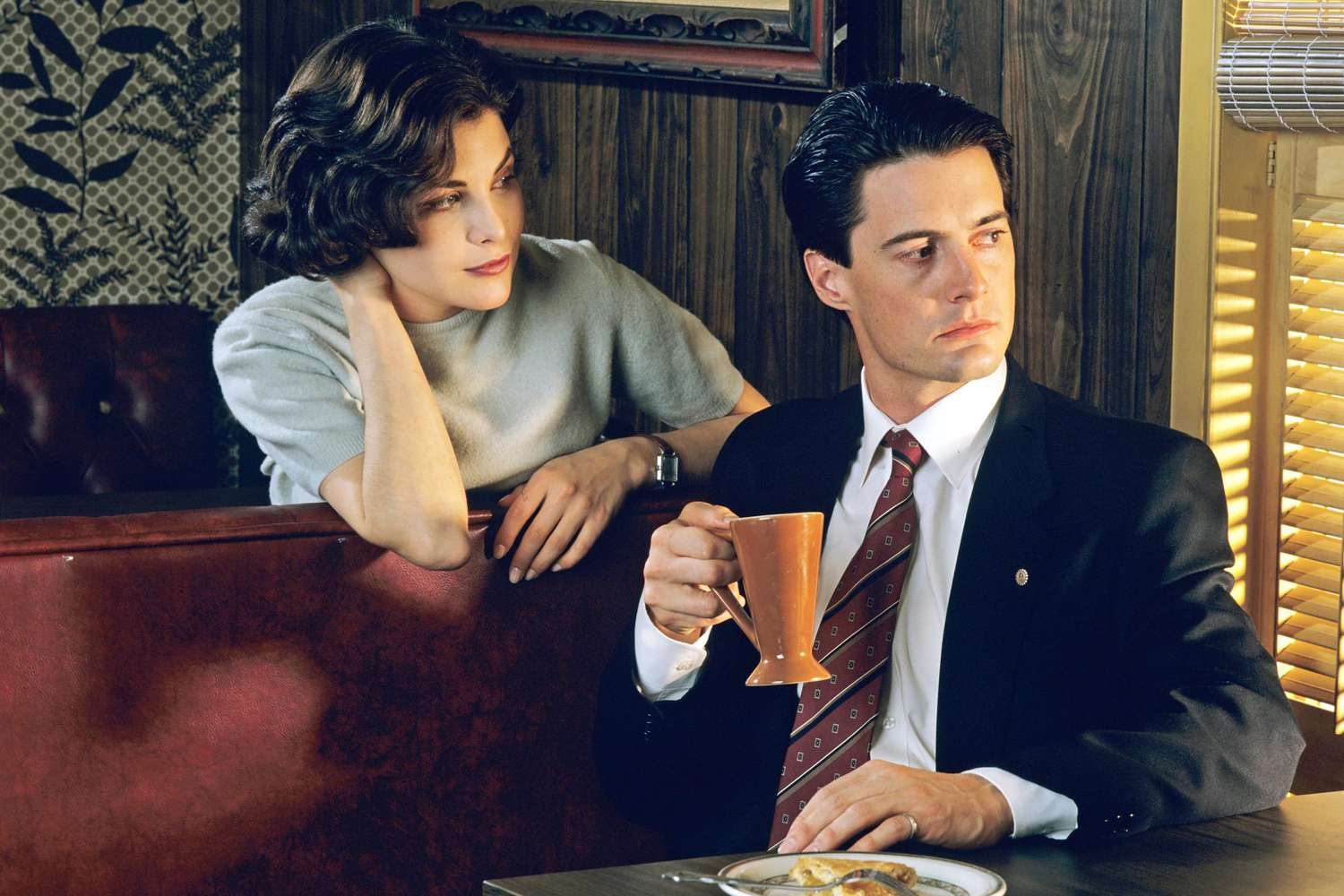
ABC
Just in time for Twin Peaks day, we caught up with Scott Meslow. Covering everything from the pilot to Twin Peaks: The Return, the film and TV critic’s new book—A Place Both Wonderful and Strange: The Extraordinary Untold History of Twin Peaks—is the first comprehensive chronicle of the cult series and features interviews with Kyle MacLachlan, Sherly Lee, Laura Dern, Mark Frost, and more.
The book follows Meslow’s debut, From Hollywood with Love, which explored the golden era of the modern romantic comedy. For his second effort, the GQ and Vulture writer is tackling his “dream” book. Reflecting on the enduring appeal of Twin Peaks, Meslow reveals his favourite anecdotes that he unearthed, the surprising A-list star that might have played Leo Johnson, and what he would have asked David Lynch if he could have interviewed him before his passing.
Phantasmag: How did Twin Peaks come into your life, and why did you connect with it? I understand you found a VHS box set from an eBay auction.
Scott Meslow: Yes, Twin Peaks goes way back for me. I was a second-wave fan—I was born in 1988, so I was too young when it was airing. But I discovered it in the 90s. In the summer, I would bike down to the video store and just rent horror movies. It was great because the college kids working there definitely didn't care if some 11-year-old was watching stuff you weren't supposed to. So I saw this cover, and it was this blue box with a traffic light, Laura's golden necklace, and James Hurley on his bike. And I thought, ‘This looks cool.’
I didn’t know it wasn't a movie. It was the VHS of the pilot, and it had what they call the European ending—so it did have a closed ending. I thought I had finished it, but I went online on my 56K connection and tied up the phone line—that was the era—and I learned there were 29 more episodes. It made a lot more sense that it wasn’t the end of the story, but it was really hard to watch because this was before DVDs had come out. Fortunately, I managed to get that set on eBay, and I apologised to the people I outbid. Then it went from ‘This is so interesting’ to ‘This is my thing. I love this. I’m going to be thinking and talking about this show for the rest of my life.’ And here we are.
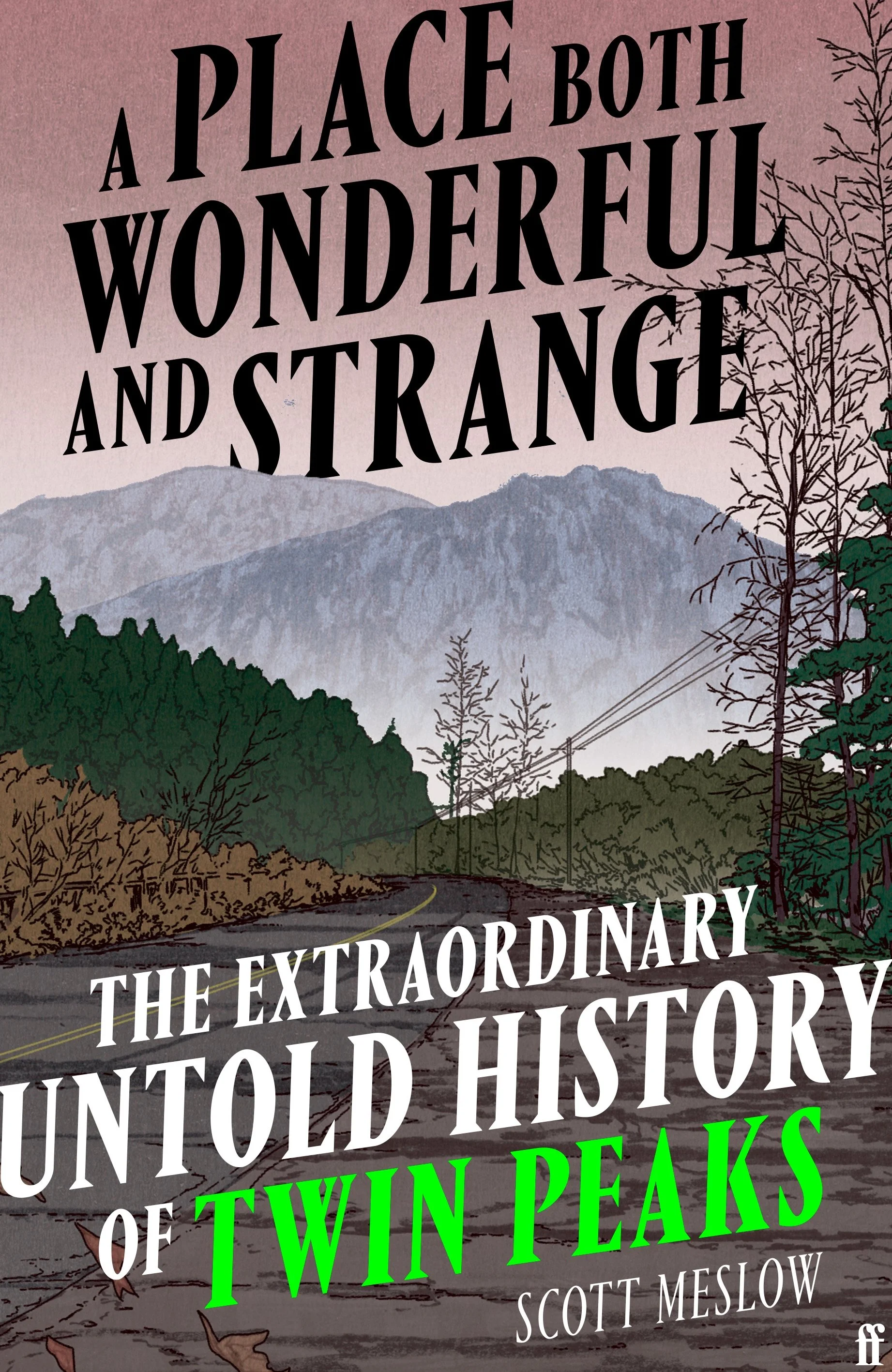
Courtesy of Faber
P: When was the moment you decided you wanted to write a book about the show?
SM: About two years ago, I sat down with my agent. We were ping-ponging ideas around for a second book, and he threw out the big picture question: ‘What’s your dream?’ I think before he finished speaking that sentence, I was like, ‘Twin Peaks. I want to do a Twin Peaks book.’ I thought it was the right time because The Return had been off the air for a few years at that point, and my feelings for the new show had settled.
There are so many great Twin Peaks books out there, but there hadn’t been anything under one cover that took the totality of the show from the original run to Fire Walk with Me to The Return and the books, which I think are also very important to understanding the whole scope of it. Once we pinned that down, I started reaching out to some of the people who worked on the show, and they were at least willing to hear me out. Eventually, I was able to convince them to talk to me on the record and get some new stories. Then the ball started rolling.
P: Your book’s subtitle describes this as an ‘untold history’. While few TV series have been discussed and written about more than Twin Peaks, when did you actually realise that you were, in fact, uncovering a story we hadn’t heard before?
SM: There were great moments. It helped that I knew the show so well already, so I knew what had been reported out there, and I could start from there and ask in the right direction. I remember when I was talking to Joanna Rae, who was the casting director on both shows, and her son ended up playing Leo Johnson in one of those classic David Lynch happy accident stories. He was there reading the part so other actors could read against him, and then Lynch was like, ‘Actually, I want him to do this.’ She said, ‘Well, he's not really an actor.’ But sure enough, all of a sudden, we had Eric Da Re as Leo Johnson. When I asked her, kind of casually, ‘Well, if that hadn't happened, which actor would it have been?’ she said, ‘Oh, I remember exactly who I wanted. It was Brad Pitt or Michael Madsen.’ I knew I'd never heard the idea, and it would have been just the right time to cast Brad Pitt. He wasn't an A-list film actor yet, and you could have gotten him. What a different Leo Johnson that would have been. There were moments with the original run where I just thought, ‘I'm happy I get to put that in the book because even the hardcore fans don't know that.’
Then, when it got to The Return, that was a fun part of the process because so much less had been reported. The great primary document on that is in the Twin Peaks A to Z Blu-ray set. There’s amazing behind-the-scenes footage. But there had not been, other than when the show aired, a ton of interviews with people who'd worked on that. People like Duwayne Dunham, who edited it, had so many insights and memories about how that show came together. It was certainly great talking to Mark Frost about how long it took, how long he'd been thinking about the revival, and the earliest versions of it. So there was a lot of gold in the hills that hadn't been dug out yet.
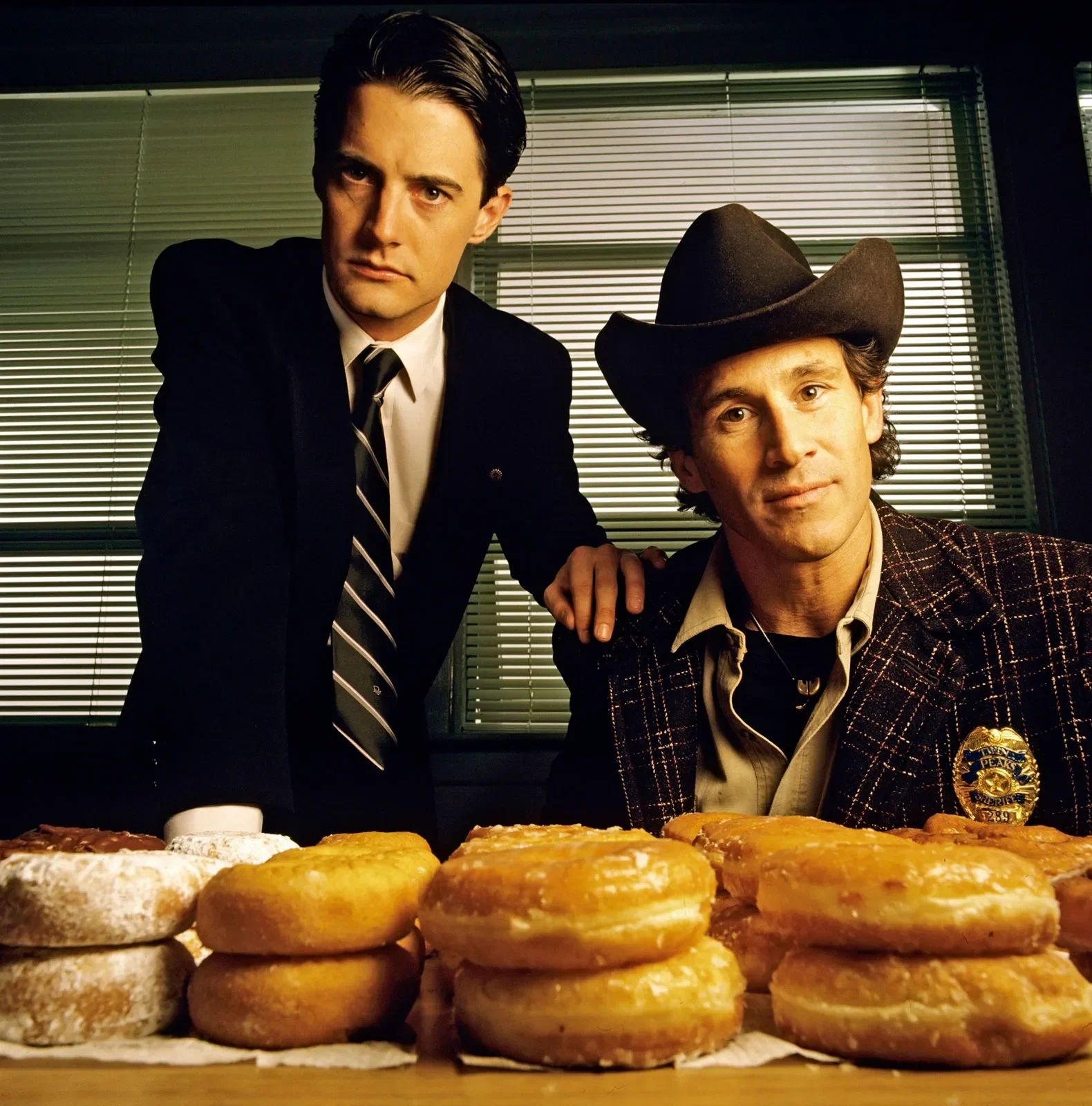
ABC
P: How did this project differ from your previous book, From Hollywood with Love?
SM: It’s safe to say Twin Peaks isn’t a modern romantic comedy. But I would say the big difference was the scope: I could never go as deep on one movie as I did on Twin Peaks in this book. The great thing about covering something like Twin Peaks is that it's such a rich text. I never got tired of thinking and talking about it. There was always more to learn. But also, it was great to talk to Mark Frost—he has a perspective on everything from before it existed to when he and Lynch were figuring out Twin Peaks: The Return. Once I locked in some key sources, they could speak to a wide swathe of what I was covering in the book.
P: Obviously, the Brad Pitt story is exciting, but was there anything else you discovered during your research that really surprised you?
SM: I was fascinated when I was talking to Mark about the origins of The Return. People had talked about rebooting Twin Peaks so much over the years, and they had never really taken it seriously. You can kind of imagine the easy version of that reboot where it's like, ‘Okay, there's another murder in Twin Peaks. Another Homecoming Queen gets murdered.’ And it might have been good. The easy version of that pitch, I'm sure, is what the networks were looking for. So for Mark to say his first image, the thing that really made him want to do a new Twin Peaks, was the housing crisis in Las Vegas, it was like, ‘What a strange place to start a Twin Peaks reboot? It has nothing to do with Twin Peaks as we've understood it previously.’ But then you see it in the show, and it's great. Then Mark told me they didn't pick the name Twin Peaks: The Return. That was Showtime's marketing team. But they had a really interesting subtitle: it’s the name of a desert in New Mexico near where they did the atomic bomb test [Jornada del Muerto (‘Dead Man’s Journey’)]. They were going to call the show [Twin Peaks: Jornada del Muerto]. It would have been interesting because it recontextualises Episode 8, which is already so celebrated and such an iconic piece of TV from the moment it aired. I wonder how that episode would have hit if people had gone like, ‘That's where this name is coming from. This whole show is about the original sin of detonating an atomic bomb.’ Which, really, not to get too into the weeds about it now, changed my whole understanding of what Twin Peaks was even about.
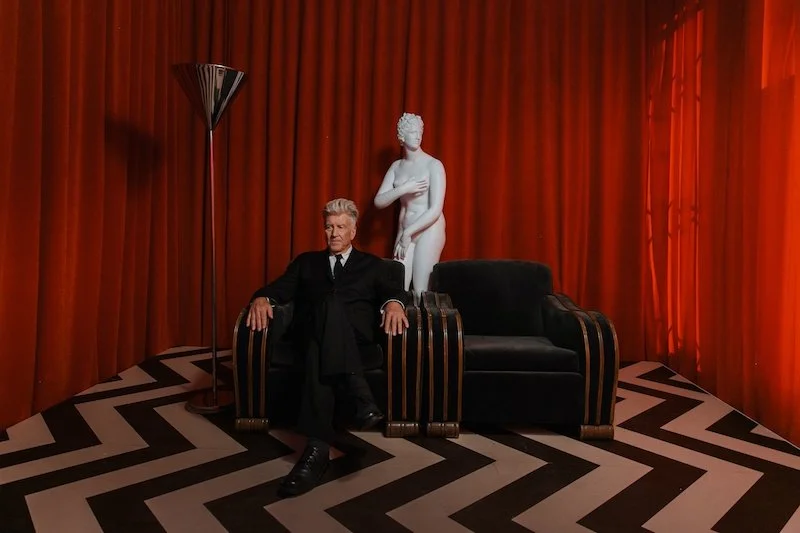
David Lynch Foundation
P: What would you say was the most challenging part of writing the book, and what was the most rewarding?
SM: The most challenging part was not being able to talk to David Lynch. I always knew talking to him was going to be the biggest challenge, whether or not I could, and I always knew I could do the book with or without his voice because he had done a lot of interviews on the record over the years. And to be clear, I would never ask someone like David Lynch, ‘What did Twin Peaks: The Return really mean?’ That’s the worst and laziest question. What I really would have wanted to talk to him about was some of his work with his collaborators, in particular, the ones who had passed before The Return, actually. To get to talk to him directly about Catherine Coulson and shooting her final scenes over Zoom. So I sold the book and started my reporting, and my plan was always, ‘I'm going to interview a lot of people, hopefully, just by osmosis, it'll eventually get to him.’ The hope was that some people would vouch for the book, and he would talk to me. What I couldn't have known is that he would pass away about nine months later. I talked to roughly half of the [interviewees] before he passed, and they were speaking about him in the present tense as a friend and collaborator who they planned to work with again. Then the other half were grieving him and wanting to talk about his legacy. That led to more complicated reporting than I was prepared for, but I think it ultimately made the book a little richer. Some people weren’t interested in talking to me before he passed, and when he did, they were like, ‘Oh, I’ve got memories I want to make sure get on the record.’ And others were keen to talk to me before he passed, but then after, they were like, ‘I'm very emotional right now, and I'm not sure I want to go there.’ And I completely respect both sides of that equation. So it became a little more urgent for me that his side of the story be captured fully. I really believe in the importance of the show and the meaning of the work. So I want this book to contribute to his legacy being appreciated going forward.
P: How did you set about blending your own analysis with a fact-based chronicle of the show’s sprawling history?
SM: It was always something I was very conscious of. I wanted to make sure I wasn't just pontificating. I wanted the book to be a history of the show first and foremost, and that included a lot of production details. That was when I put on my reporter hat. Then I interspersed those chapters with shorter ones that are like essays on individual characters. There’s the chapter on developing the pilot, then there’s one on Laura Palmer. There’s a chapter on filming the pilot, then there’s one on Albert Rosenfield, and so on. That critical analysis actually came pretty late in the process—it was not a part of the original proposal—but I realised I was so interested in the production details that I felt I was losing the plot a little bit as I wrote about it. In some chapters, it was easier than others. There's one chapter just on the reveal of the killer, and it gave me the chance to sink into that specific part of the story. But then I would look at the book and go like, ‘Wait, where is Sheriff Truman in all this?’ So I came up with the idea of those shorter chapters. The other place I really get into the critical side is in the ending of Twin Peaks: The Return. It just felt like something I had to do because that ending is astonishing. I’ll never forget watching it live for the first time—my blood running cold, the hair on the back of my neck. It was so enigmatic. It felt right that I write about it. Basically everyone I interviewed, I asked them what they made of the ending. And almost everybody had a different answer. It was really interesting to pick over that with the people who made the show, who couldn't quite agree on what was happening there. So at that point, I felt like it was finally time that I say, ‘Well, here's what I take away from it. And do with that what you will. I am not saying I have the right answer, but I hope you find it interesting.’
Getty
P: Do you have a favourite anecdote that you uncovered in your interviews?
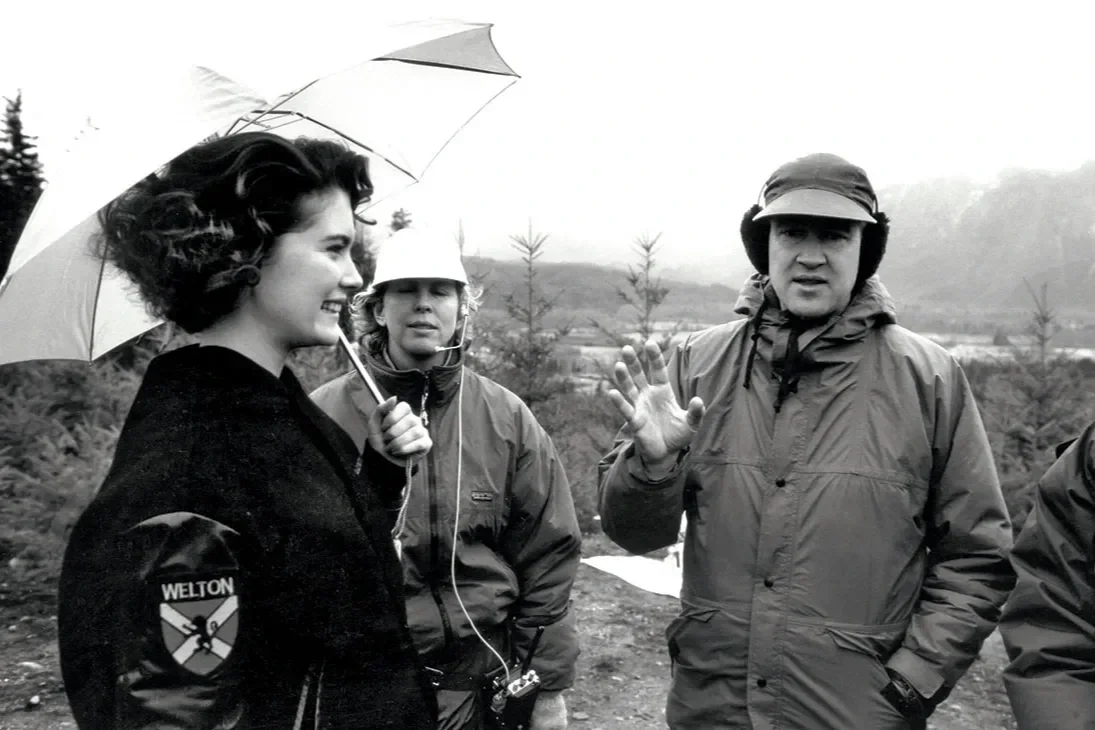
SM: Oh, man. I think anytime someone got into one of David Lynch's happy accidents on set, it was so much fun. I think part of what made him such a genius director was that he had this serendipitous, almost whimsical nature where he would be so open to the world, where weird things would happen, and he would just roll with them. Most famously, the whole reason the killer character [spoiler] exists was just a happy accident because the actor, Frank Silva, was a set decorator who David Lynch saw in the Laura Palmer bedroom, and he was like, ‘Why don't I just shoot you down crouched by the bed?’ Lynch did it, and then later that day, he accidentally caught him in a mirror. Those two things combined, they just got his brain turning. So the whole mythology of Twin Peaks came about because a couple of weird things happened one day. There were a lot of stories like that.
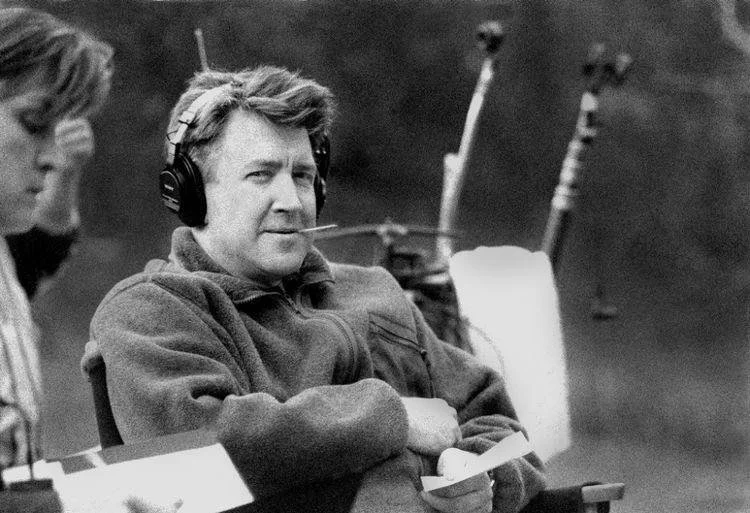
The other thing about David Lynch as a director that I loved talking to actors about is, invariably, if I talked to an actor long enough, they would remember some really weird, confusing, but helpful piece of direction he gave. Like Lara Flynn Boyle, in one of her scenes in the pilot, he gave her the direction to act like a deer. ‘Think about how a deer walks really slowly through the snow.’ And it's such a weird idea. But then you watch that scene, and you're like, ‘Yeah, that is what she had to do.’ Once you know that that's what she was thinking about, it's there in that Donna character. Or Sheryl Lee tells this great story about how there's a scene in the Double R Diner where she was playing Maddy. Right before they shot it, David was like, ‘Okay, it’s the 1950s, and it's sunny, and you're having milkshakes.’ Of course, it wasn’t set in the 50s, they were having coffee, and it was raining. But she said that there was something about that idea that changed how she played the scene. I loved hearing about his directorial style because actors adored working with him for that reason. He didn't give a ton of direction, but he would have these really precise notes. Or he would always just tell people to go slower. That's the other thing. Typically, everyone was acting faster than he wanted, which, especially for TV at the time, was very unusual. People would be worried it was going to be too boggy, and viewers would change the channel.
Getty
P: You paraphrase a quote about The Velvet Underground: ‘Not everyone watched Twin Peaks, but everyone who went out and created a TV show did.’ As a film and TV critic, can you talk to me about how you see Twin Peaks shaping and influencing television in the years after its release?
SM: It’s such a fascinating thing about the show that it had this reputation as something that burned really bright and then burned out. It was so good. I think even people's cultural memory of it for a long time was just sort of wrong. There's this kind of narrative that Season 1 was so good, but Season 2 was terrible. People forget that half of Season 2 is the lead-up to the killer reveal. It's not like Season 1 ends with finding out who killed Laura Palmer. There are eight more episodes before we get there that are really good. And I'm a defender of Season 2. My belief is, if you can't handle Twin Peaks at its worst, you don't deserve it at its best. So even the ‘worst parts’ of Season 2, I think are interesting and good. I think it’s interesting to see how TV creators would refer to it over the years, where David Chase, who created The Sopranos, was very, very open about how that show's dream sequences—which are pretty strange for a mob drama—came directly out of admiring Twin Peaks. And they become really important. There's a good argument that The Sopranos birthed what we consider the modern golden age of television. And I'm not sure it does that without those dream sequences. Otherwise, maybe it wouldn’t have developed the texture that it had.
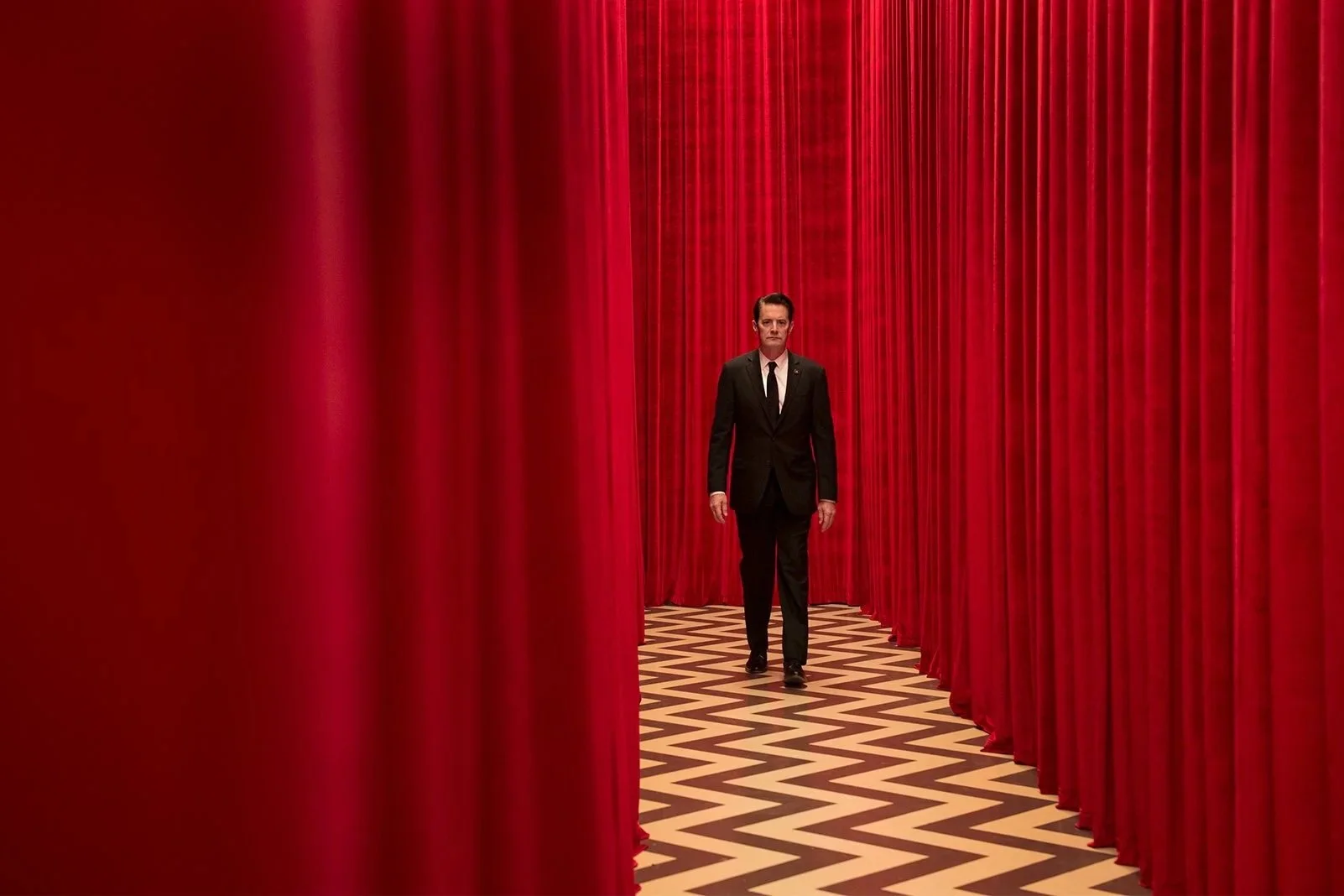
There's a great there's an anecdote in the book from Damon Lindelof and J.J. Abrams, who created Lost, which is another show that owes a huge debt to Twin Peaks. And Lindelof, the biggest Twin Peaks fan in the world, would totally admit that. But the president of ABC at the time, when they were pitching Lost, brought it up derisively, like, ‘Oh, how do we make sure this isn't another Twin Peaks?’ And J.J. Abrams got pissed. It was like, ‘We should be so lucky to be another Twin Peaks. That show, whatever you want to say about where it missteps, people are still talking about it. It still has this incredible legacy, and David Lynch and Mark Frost were geniuses.’ Then the copy of the book jacket mentions True Detective and Severance, which are two shows that clearly owe a huge debt, too. I think you also have to owe a lot of that to the DVDs coming out, which really gave the show a second life when it suddenly became discovered by the next generation of TV viewers. It's almost like Twin Peaks was made for binge-watching before binge-watching was a thing, even to the point that it was pretty hard to watch when it was on the air because they kept rescheduling, especially in Season 2. But shortly after that, Bravo TV bought the rights to it and aired it as a ‘Too Good For TV’ block. I think it aired better there as a marathon. It was like the show was a little too good and complicated for the way TV itself worked at the time. It was kind of better suited to the early 2000s. I think all of that contributed to its reputation just growing and growing as well as it has. The show is so good at the rhythms of [binge-worthy television]. And even when I think about it, TV drove David Lynch crazy. He made amazing TV. But there were things he really hated about it, like not being able to control the picture and the sound. One thing I always think about is that this show should not have commercials in it. It creates a mood so carefully with the music. So much of the mise-en-scène is creating a mood that you're sinking into, and then suddenly, you're watching a McDonald's commercial. You've got to sink into Twin Peaks. You've got to occupy the world. And it's such a cliché, but it really was way ahead of its time.
Getty
P: You’ve talked about what you would have asked David Lynch, but if you could ask him one question, what would it have been?
SM: That’s a lot of pressure. Knowing the way he interviewed, I don’t think I would have given much of a direct question. I would have thrown out a ‘Tell me the most special thing about making Twin Peaks: The Return,’ and let him take the reins. Because I would have been more interested in hearing what he thought I should know than what I thought I should know. And I guarantee it would have been something great.
P: How does it feel to release this book a year after Lynch’s passing?
SM: It's emotional. It's a strange feeling because I never got to meet him directly, but his work has meant a lot to me. It's not just Twin Peaks. Mulholland Drive is one of my favourite films, all of his work… Truly, I don't think he ever made a bad film. I've seen all of them many times. I love all of them. This has been true since I was in middle school. I think what it feels like to me is just a real hope that I am honouring the work. And that can be a bit of a complicated question because it's also about being fair about the work—one thing I didn't want to do is write a total hagiography. Everyone who made Twin Peaks is a person, and people have bad days, and they make mistakes. All of that is part of the story. What makes Twin Peaks, which I think of as a true masterpiece, even more special is when you realise what was happening behind the scenes. This stuff does not come from the clouds. It comes from a lot of people working really hard and sometimes having friction. I wanted to feel that I had told the story as fairly and completely as I could with the time and resources that I had.
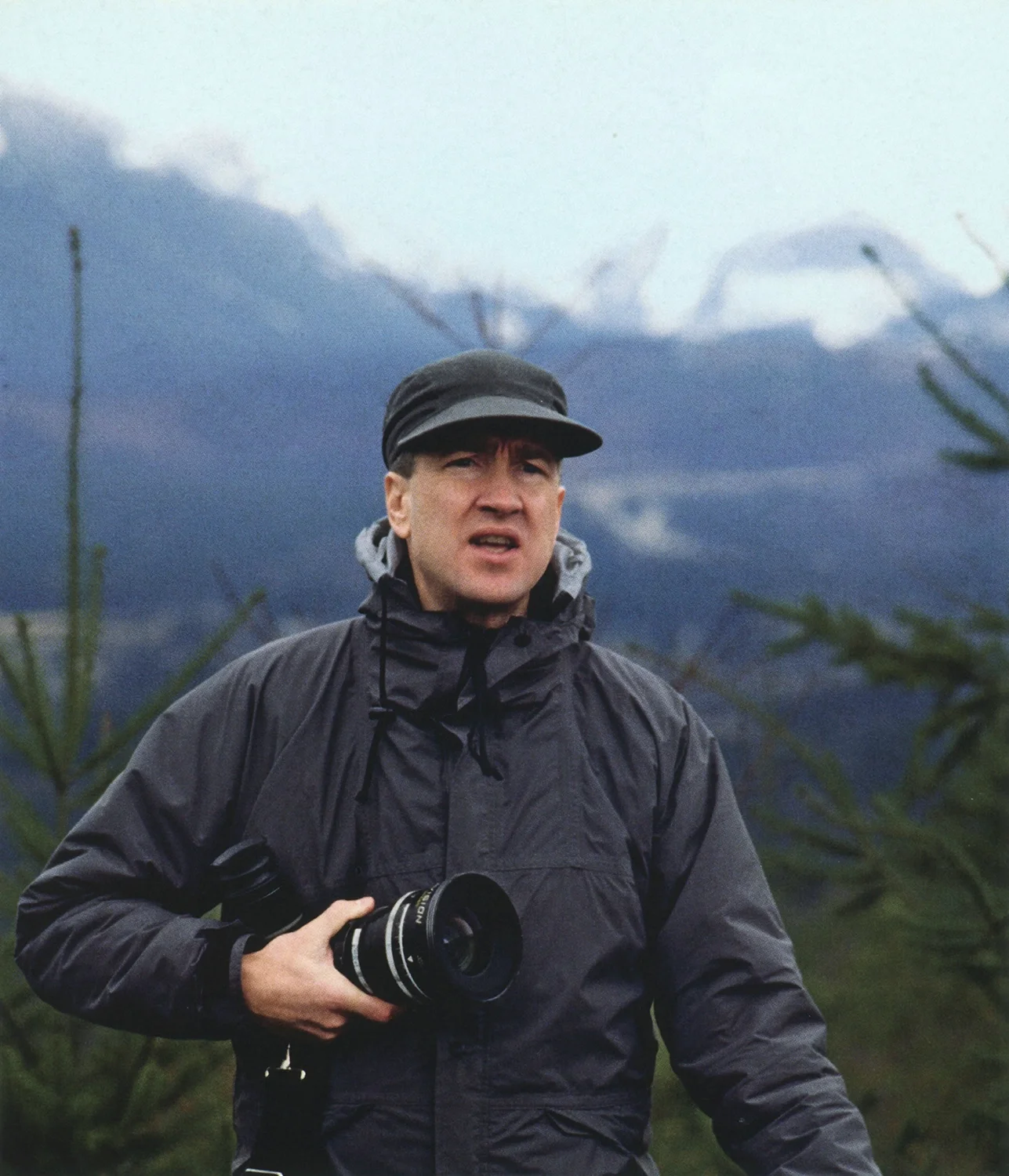
And last year, I went to Snoqualmie and North Bend, WA, where they shot the show, for the Twin Peaks Fan Festival. It was really powerful to be there last year because it was right after he had passed. I was struck by what it was like to be in a community that was grieving like that, including people who knew him very well. At one point, Lynch said the only thing that was really Twin Peaks was the pilot because they shot it there [in Washington] while the rest of it was filmed on sound stages. But that place and those people, it felt like I was being privy to something really special.
P: As a queer feminist horror magazine, something we’ve always appreciated about Twin Peaks is the way it resonates with queer viewers, women, and outsiders. Why do you think the series has this special connection with marginalised audiences?
SM: It’s a lot of credit to the people who made it. I do a whole essay on Denise Bryson, which is a really fascinating case—and I will not say they nailed it 100% with the representation there—but it was 1991. And it was 1991 on network television. But every time I watch it, I'm very moved again when Cooper sees Denise for the first time. She says, ‘It's Denise, if you don't mind,’ and Cooper says, ‘Okay,’ and they move on immediately to discussing the case. He clearly understands, ‘She's Denise. Great. It's not how I knew her before; that’s okay.’ So I love that moment. Then, in Twin Peaks: The Return, she’s running the FBI, and ‘Fix your hearts or die’ has become such a rallying cry, and for such good reason. Especially in the United States right now, how great to have that line, and to have the creator of the show be the one who says it, that all of the people who don't understand Denise should fix their hearts or die. That is a powerful statement. It meant something to the fandom, clearly. I'm always moved by that part of the story. I can see why it resonated so much. It certainly resonates with me.
Getty
P: Perhaps more than any other show from that time, Twin Peaks has maintained such a grip on popular culture. We still see Laura Palmer’s image all over social media. Why do you think it remains so relevant?
SM: I've been thinking about this a lot lately, especially because there's an upcoming Gen Z fandom of the show, people who are discovering it. It's an interesting thing about the show because you don't want to be a teenager, especially a teenage girl, in Twin Peaks because you're either getting murdered or getting out of hiding. It's a dangerous place to live. But there is something incredibly inviting about the aesthetic that it cultivates. ‘Isn't it too dreamy?’ is another iconic line from the show. And it is kind of too dreamy. You can get lost in the haze of this beautiful place and the way it looks. For a show that obviously goes to some incredibly horrifying places, it's very beautiful. And it's sort of inviting to have merch. People still want Twin Peaks cardigans, or they want the soundtrack on vinyl. That’s just the world they’ve created. Once it’s in you, you want to be around it.
P: Do you have a favourite memory of watching the show?
SM: The first time I watched the show was with my brother, who passed away. He died of cancer out of high school. So the book is dedicated to him and to his memory. I think I will never forget watching the finale of Season 2 for the first time with him when he was in high school, and I was in middle school, and just being like, ‘That's how it ends.’ Everyone knows it now, but it is such a shocking cliffhanger when you don't know it's coming. It's just amazing. So I remember immediately talking about what we would have done if there had been a third season. Obviously, at the time, we never knew there was going to be one. So it just opened up this infinite world of possibilities. I really remember how fun that was.
Then, in terms of amazing life moments, I went to the premiere of Twin Peaks: The Return in LA, which was the only time they aired any episodes before it officially aired on Showtime. Nobody knew anything. They'd really kept it buttoned up. And I was there for work, but I was also there as someone who had loved Twin Peaks so much. To sit in the theatre and for the theme song to kick in again, it was this great full-circle moment for me, personally and professionally.
A Place Both Wonderful and Strange: The Extraordinary Untold History of Twin Peaks is available now in the UK from Faber and in the US from Running Press.