Alice Maio Mackay is Redefining Trans Cinema, One Horror Movie at a Time
The prolific 21-year-old writer-director discusses her sixth feature film, The Serpent’s Skin
by Lana Thorn 21 April 2026 | Originally published in Issue 4
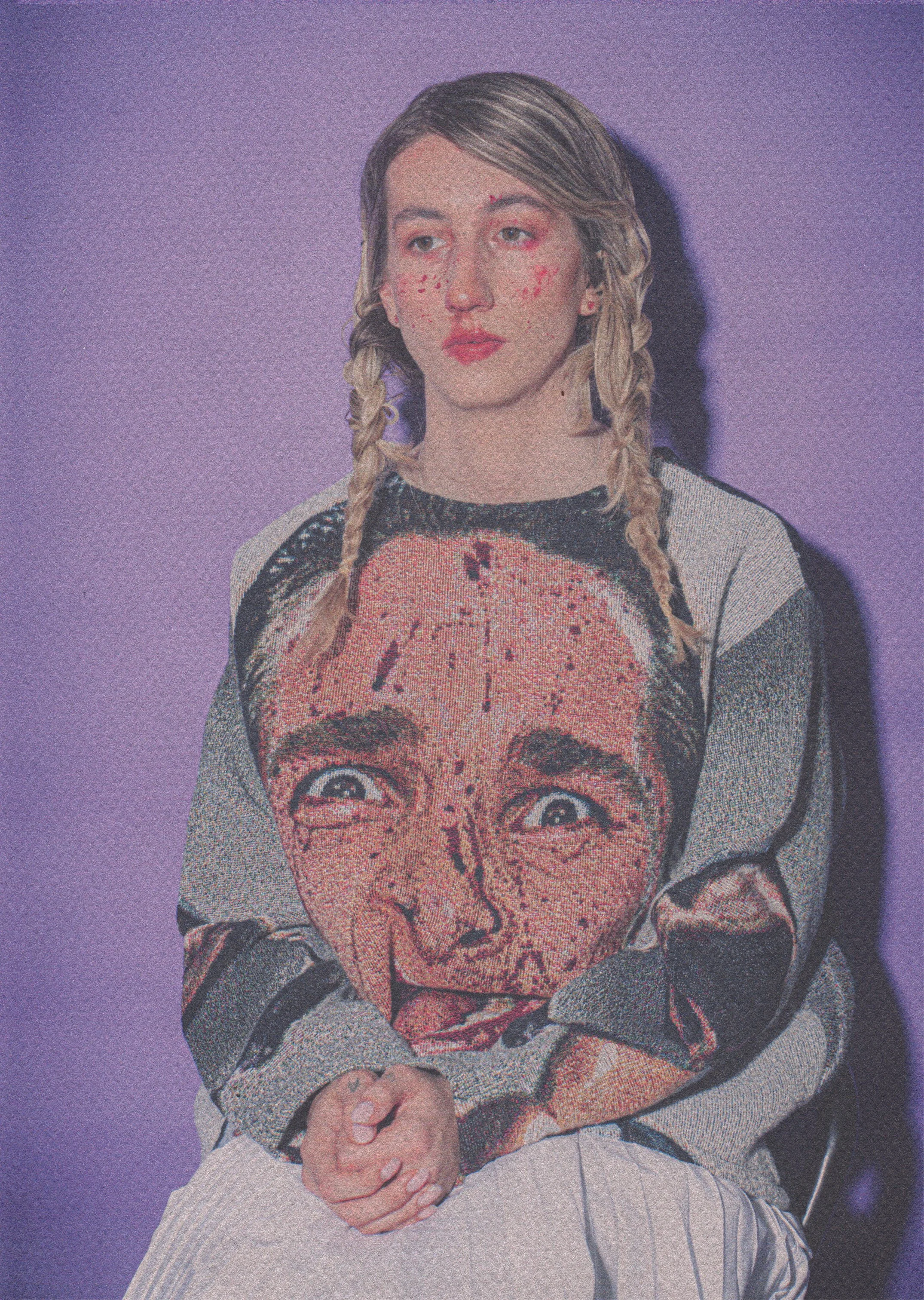
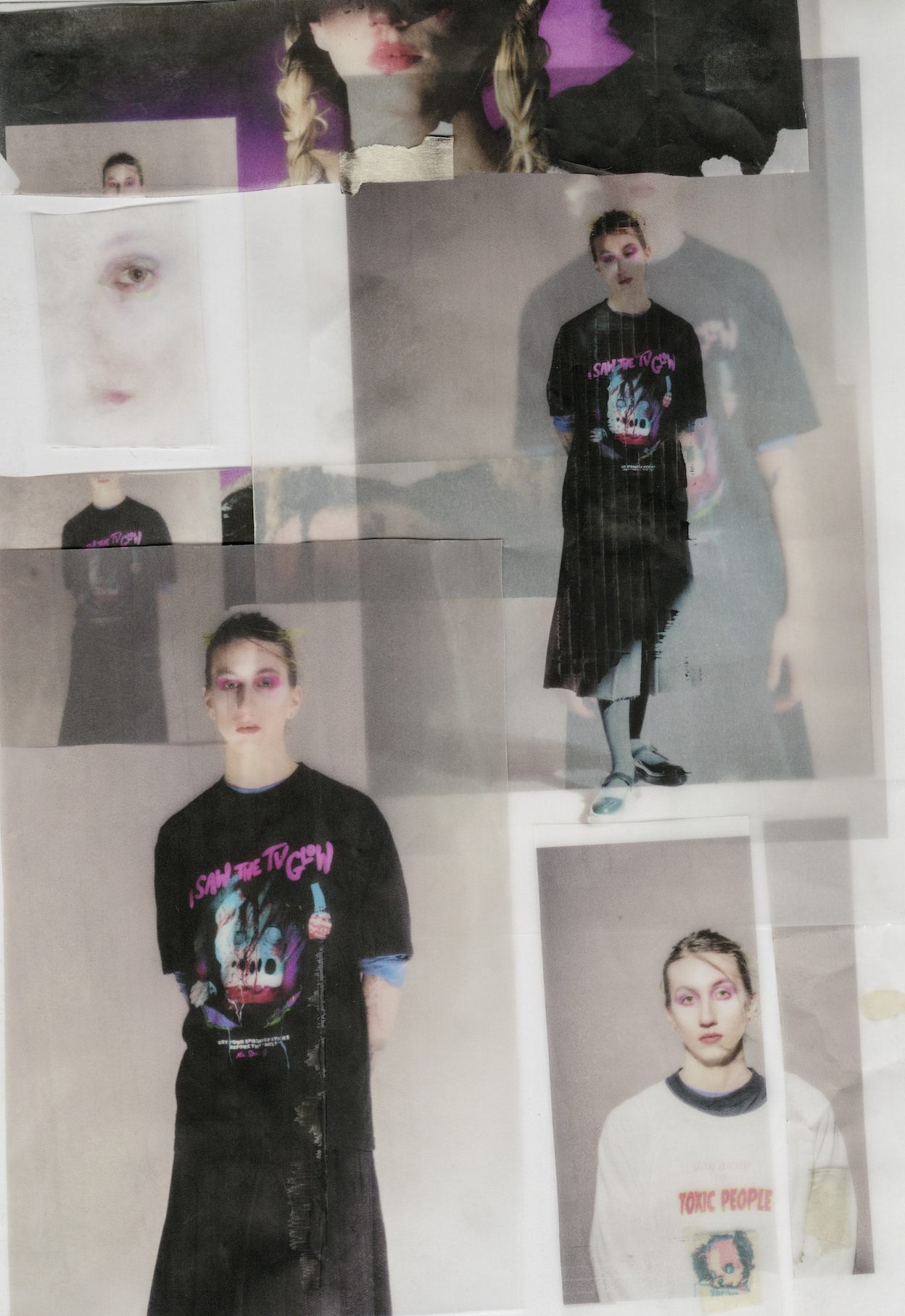
Photography Andrea Kasap Hair & Makeup Carlotta Boattini Styling Lana Thorn
Alice Maio Mackay is perhaps cinema’s youngest auteur. Telling singularly queer stories through the blood-soaked framework of the horror genre, the 21-year-old Australian director has made six features in the last four years. And whether she’s making a trans vigilante film (T-Blockers) or a demonic road movie (Satranic Panic), her blend of colourful, camp aesthetics and unrelenting punk energy is instantly recognisable.
Her latest, The Serpent’s Skin, is a romantic witch film following a young trans woman (Alexandra McVicker) as she escapes a small, conservative town and discovers she has supernatural powers. After catching it at London’s FrightFest, I meet Maio Mackay in Milan in the middle of her expectedly busy schedule—she’s just launched the film on the horror festival circuit around the globe, shadowed Jane Schoenbrun on the set of the upcoming Teenage Sex and Death at Camp Miasma starring Gillian Anderson and Hannah Einbinder, and even developed yet another horror movie. Unwinding with seafood pasta after a photoshoot, we talk about her start in the industry, 90s horror inspirations, and her enduring love of Bella Thorne.
P: From a stop-motion LEGO short to a Stephen King Dollar Baby film, can you tell me about your beginnings as a filmmaker?
AMM: Oh, my God, you did your research. Well, when I was 10, I would film myself on the school iPad, dressing up as a bunch of different characters. I guess that was my first foray into filmmaking… I was a theatre kid. I was very into the performing arts, and while acting wasn’t for me, I loved getting my friends together and making films that I had written. Up until the Dollar Baby when I was 14, I didn’t think of it as anything other than something I loved to do. I actually wanted to be an author—I loved reading, going to the library. It was more telling a story that interested me, and filmmaking didn’t really seem like a possibility.
P: So what made filmmaking seem possible?
AMM: I had already worked on sets because Adelaide is small and there’s a lot of filming going on. People I met on those sets volunteered to do my Dollar Baby, and that meant a lot. I was like, ‘Oh, wait, I can actually try and make movies.”
P: When did you first fall in love with the horror genre?
AMM: I was never fully into horror as a child. I loved The Munsters and the original Addams Family series—that was kinda my thing. Then I found Buffy, and that was my big obsession. In 5th grade, the Scream TV show came out, and I remember starting that because Bella Thorne was in it, even though it was scary.
P: So you love The Babysitter then?
AMM: Yeah, of course! Then I just fell in love with horror. In early high school, I discovered Rob Zombie, and he’s one of my favourite filmmakers. I don’t usually like extreme violence, but I found his films so disgusting and fucked up and aesthetically pleasing that they became distracting and comforting. I watched them over and over again.
P: In the opening scenes of So Vam, you establish a relationship between queerness and horror when Kurt compares himself to Frankenstein’s monster: ‘I’m stuck in a village full of a bunch of angry peasants who want to kill me.’ What is it about that relationship that continues to attract you?
AMM: It’s just a really interesting way to present the stories I want to tell. Because my films aren’t just explicitly horror—they’re more about the characters, and films like T-Blockers are hangout films and the horror always comes later. With The Serpent’s Skin, I wanted to do a queer romance, and the horror is a secondary element. It’s a way I can push the boundaries of the stories I’m telling. I’m able to get away with more.
P: Favourite explicitly queer horror film?
AMM: I love Seed of Chucky.
P: That’s also one of my favourites. Have you seen the TV show?
AMM: Loved it.
P: Your short film Tooth 4 Tooth begins with a radio host announcing that we are entering a new ‘age of hate’. You wrote those words and shot that film shortly before COVID, and they’ve proved to be very prescient. What made you identify that ‘age of hate’ at the time?
AMM: That’s crazy because that feels so long ago to me. 2020… I was 15—oh, my God, I feel old. I wasn’t even out as trans publicly when we shot that film.
I was just writing what I was seeing. Adelaide is a small town, so politically, I could feel that something was happening before everything got worse globally. Adelaide has always been a bit behind Sydney or Melbourne, or any of those larger cities.
P: You work consistently under the umbrella of queer and trans horror cinema, but your filmography is remarkably diverse—you’ve done everything from a drag-themed vampire film (So Vam) to a Christmas slasher (Carnage for Christmas). What drives you to explore so many subgenres?
AMM: I want to push myself as a writer. As much as I love vampires, I don’t want to just stick to one subgenre, especially when the horror elements come secondary. My co-writer and I find the characters, and then we ask ourselves, ‘What horror elements would be best used to tell this story?’
P: Is there another genre calling to you?
AMM: I would love to do a period piece.
P: I’d love that. With six feature films in four years, you’re an exceptionally fast filmmaker, making big films on a small budget. What is a typical day like on an Alice Maio Mackay set?
AMM: They’re jam-packed, but they’re not that long. You’re not going to make your best work when you’re tired. After working with a lot of the same people—we’ve grown up together and grown as creatives—nothing ever feels too unachievable. We kind of move as one unit now.
P: Your films have been praised for their punk sensibility, focusing on a gory battle against bigots and abusers. But they’re also consistently about queer found family. What is it about that narrative that makes it so worth re-exploring?
AMM: I like to explore queer family and queer friendships just because it’s something that I didn’t see portrayed in a lot of media growing up. Maybe there was a Blumhouse film with one trans or queer character—and I love those films and they mean a lot to me—but that wasn’t my reality. Queer people hang out with other queer people, and that’s a beautiful thing to portray.
P: You’ve cited Charmed, Buffy, and The Craft as influences for the film. How did you transpose that 90s aesthetic to a 2025 queer horror film?
AMM: I wanted to make something that felt like a TV movie but was still cinematic. Like a two-part Charmed episode. It’s disturbing material, but presented in a campy and outrageous way.
P: Like all your features, you wrote the film with Benjamin Pahl Robinson. What is your collaboration like?
AMM: I’ve actually never met him in person.
P: What?
AMM: I was working on this TV show, and the DOP had recommended me this writer who had just moved from Adelaide to Portugal. I was looking for someone to collaborate with who had the same interest in horror. And we got along very well. We go back and forth, one of us comes up with a concept or a scene, and it goes from there.
P: I can’t believe you haven’t met in person.
AMM: We haven’t even spoken on the phone or Zoom. And it’s been maybe, what, 7 years? But I think it’s actually kind of cool. Obviously, I’d love to meet him.
P: Very 19th century of you. From Alexandra McVicker to Avalon Fast, The Serpent’s Skin features a string of excellent performances. How did you shape these characters with your cast?
AMM: For those two, I let them craft the characters with me. I had watched Alex’s work, but I think this was her first film after transition, so it was really special for both of us to create a performance that she was happy with. As for Avalon, she’s a filmmaker—an amazing one—and we were friends. One day, she messaged me and said, ‘If you ever need an actor, I would love to audition for anything,’ and I knew she’d be a fit for this role. Jordan [Dulieu], who plays Danny, was different. He’s a great actor, but I didn’t want him to bring himself to this role. I wanted to transform him completely, and not just with the prosthetics.
P: Speaking of Danny, in the context of your filmography, he’s a different kind of villain.
AMM: I was tired of telling the bigot stories. I’m really proud of them, but I felt that, as I was growing as a person and as a creative, I wanted to tackle a different kind of movie tonally and thematically. What was interesting to me at the time of writing was straight cis white men who are almost performatively woke, and exploring the darkness within them that can actually be quite easy to access—despite good intentions. Or are those intentions actually fake, and are they just evil men?
P: The eternal question! What are some fond memories you have from set?
AMM: Directing-wise, it was the scenes with Gen and Anna together. It’s dialogue that’s always interested me the most—I love dialogue-heavy film; I love theatre. So it felt sacred and beautiful to work with them on those scenes.
P: Is there a play particularly dear to your heart?
AMM: That’s so hard. I love The Importance of Being Earnest. I’ve seen that like 30 times. Maybe my all-time favourite is Triple X, written by Grace Chase. It’s about a trans woman who’s a drag performer in New York, and she has an affair with a straight man on Wall Street.
P: Where did you see that?
AMM: The Sydney Theatre Company. I also love Noël Coward…I don’t know, maybe Blithe Spirit is actually my favourite? I saw this incredible production of it with Courtney Act from Drag Race, incorporating queer elements into this old text.
P: I wish these were on the West End. Your films are relentlessly colourful, and The Serpent’s Skin is no exception. Can you talk to me about the importance of lighting in your work?
AMM: I’ve always loved colourful films. I’m a big Gregg Araki fan. I saw his TV show, Now Apocalypse, way too young, and I just fell in love with his worlds—they’re just so vibrant. Even when he’s dealing with dark subject matter, it’s still visually beautiful. Going back to T-Blockers, my DOP Aaron [Schuppan] and I, there were certain places that we wanted characters to treat as their safe space, so those are vibrant and warm. We used pinks and blues for that, and then greens and oranges for the bad guys’ lairs.
P: You can certainly feel Araki’s influence in your work. How does he inspire you beyond the cinematography?
AMM: It’s the rawness with which he tells his stories. And he’s unafraid to show queer sex and queer characters who are flawed and imperfect. With Gen Z audiences, if you include something problematic, people assume that the filmmaker is supporting it—or at least not condoning it—and that’s such a strange way to view art. You should be able to show fucked up things without having to be like, ‘This is not an endorsement for said thing.’ Araki is a big influence for me because he stays true to the stories he wants to tell, without censoring himself.
P: The film features a spectrum of sex scenes: between Anna and Danny, Anna and Gen, or the “angry head” scene as you’ve described it. Can you talk about directing those moments, and the dynamic between queer and straight sex scenes?
AMM: We worked with an intimacy coordinator, which was really helpful. There’s a sex montage where you have the “angry head” scene and then a beautiful moment between two girls. I wanted to portray the difference between a cishet couple’s one-night stand and a queer couple’s tender moment, showing that their sex is actually magic in that instance. But at the same time, I wanted Anna and Danny to have a beautiful moment—albeit not the most tender—that’s still sensual, shot beautifully, and made to feel as loving as possible. Because you don’t see a lot of trans women and cis men hooking up in films either, so I didn’t want to make that feel icky. Then, for the rest of the film, Danny’s sexuality is almost violent—it gets more aggressive while Anna and Gen’s love becomes more intimate and deeper.
Read the full interview in Issue 4. The Serpent’s Skin is now available on digital and VOD.