Leviticus Director Adrian Chiarella and Star Joe Bird on Fan Edits, Taking Inspiration from John Carpenter, and the Power of Queer Horror
The Australian writer-director and the Talk to Me actor reflect on their harrowing Sundance hit ahead of its wide release in the States
by Lana Thorn 16 June 2026
Neon
From James Whale’s Frankenstein to Jane Schoenbrun’s I Saw the TV Glow, horror has always been a rich space to subtextually explore queerness. Still, it is not often that a widely released horror film has an explicitly queer relationship as its focal point — but Adrian Chiarella’s Leviticus, the latest offering from Australian horror specialists Causeway Films (Bring Her Back, Talk to Me, The Babadook), aims to change that.
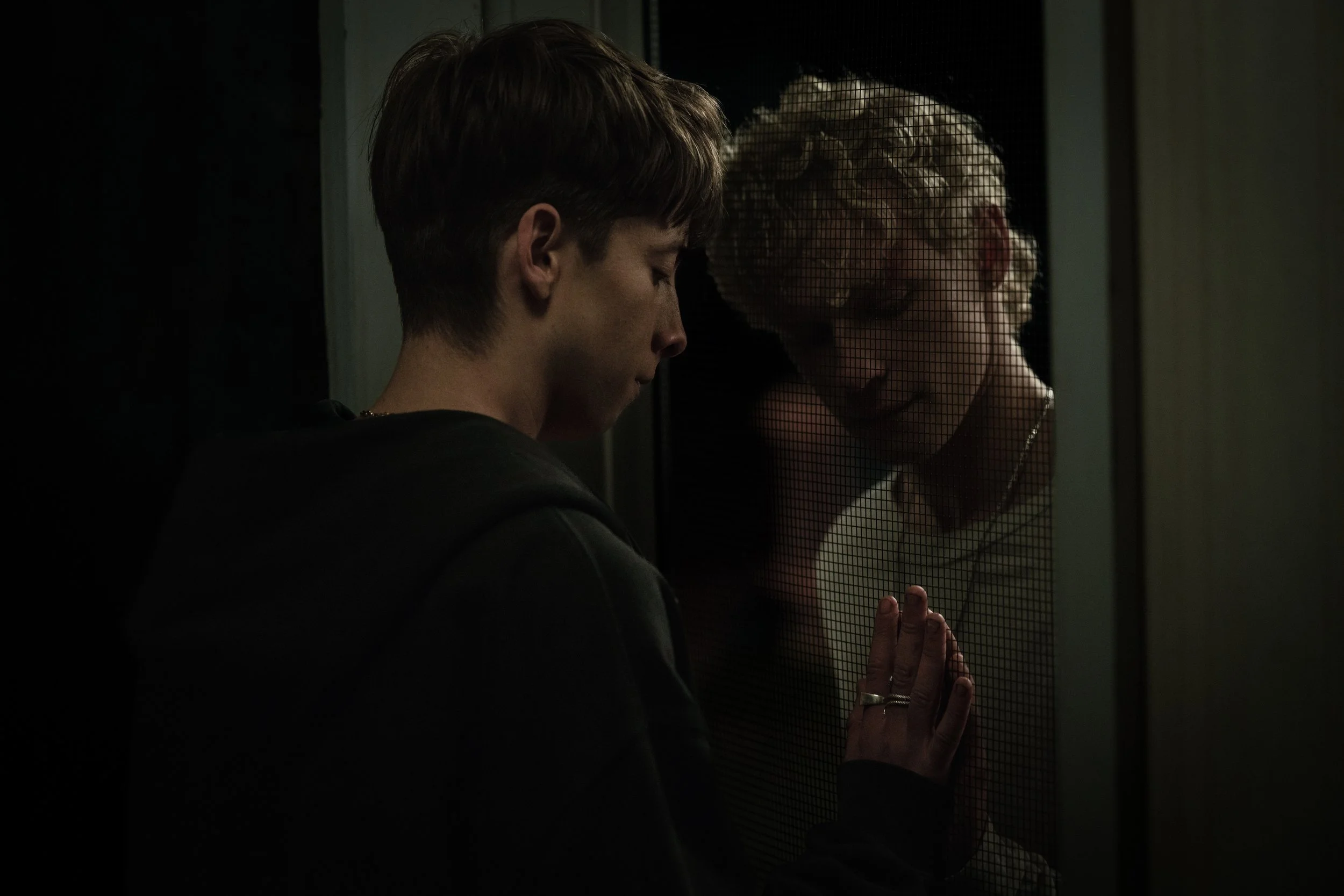
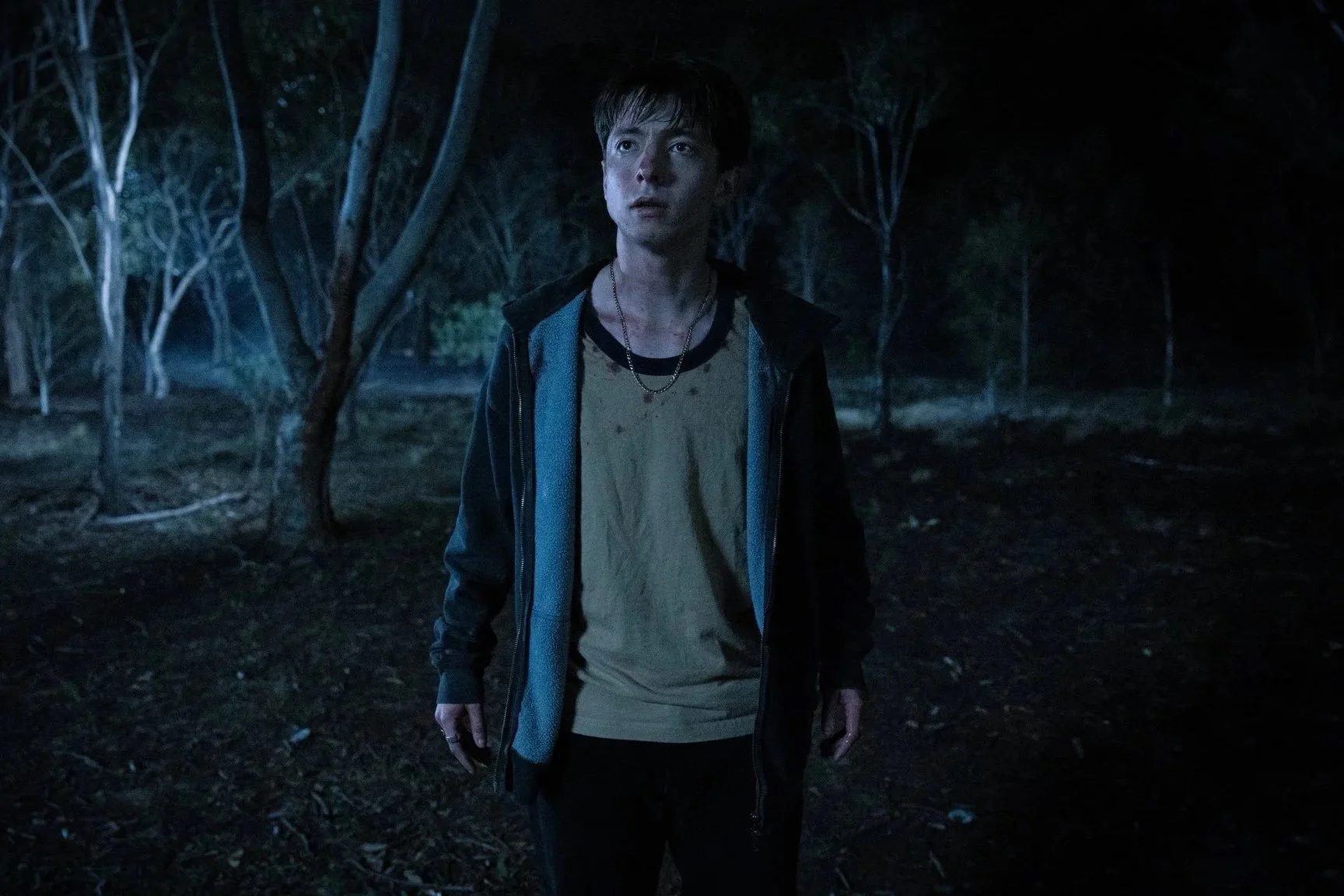
Acquired by Neon after a buzzy run at Sundance, the writer-director’s debut feature follows two teenage boys (Joe Bird and Thrash star Stacy Clausen) in a homophobic religious small town. When the pair are subjected to an ominous ritual organised by a “Deliverance Healer”, they find themselves stalked by a violent, shape-shifting supernatural entity that takes the form of the person they desire most: each other. Phantasmag caught up with Chiarella and Bird over Zoom to discuss the relationship between queerness and horror, their companion films and albums to warm audiences up for Leviticus, and why Australia has a storied tradition of psychological horror cinema.
Neon
Phantasmag: There's such a special connection between queerness and the horror genre. Adrian, can you tell me about what that connection means to you?
Adrian Chiarella: I've loved horror movies ever since I was a kid, especially as a young queer teenager growing up in Australia. Later in life, I realised I was not alone in that. A lot of queer teenagers share this love of a genre that is about exploring otherness, and a strange destabilising you might feel when you're going through this journey of self-discovery. So I think it was the right fit for this film. But beyond that, I wanted to make a film that explored homophobia, and horror is the genre of fear.
P: Joe, you're no stranger to genre film, from Talk To Me to your recent short, The Worm. What makes Leviticus a different kind of horror film to you?
Joe Bird: Reading the script, it didn't feel like a horror film, per se. Of course, there are horror elements throughout the film, but it felt like this coming-of-age romance about identity and religious trauma. I think what's so great about Leviticus is this writer, right? [Gestures to Chiarella] He can write so many different things and interweave them all together, and they all need to be in harmony for this film to work. That was what was really interesting about this script. And I actually filmed a Western right before I filmed Leviticus, and I was playing this villain. It's interesting to think about what scares people in this Western horror, and then what scares someone in this horror film. I took some things from there and brought them over here.
P: Adrian, people who haven't even seen the film are already so hungry for it, and you've even released an HD scene pack so that the fans could make edits. How does that kind of fan engagement feel, and why do you think Leviticus is already resonating so much with audiences, even ahead of the release?
AC: Every time there's a great queer love story in a film or TV show, it inspires a lot of fan edits and fan fiction, which is really great. So we really wanted to encourage that. I started out my career as an editor, so I do love that craft and what you can do with that specific mode of storytelling. So I did wanna encourage that. At the same time, it’s a little strange for me as a filmmaker [laughs]. You make this little independent film, and you don't even know if it's gonna get put into theatres, if anyone's gonna see it. But now it’s taken on this life of its own.
Neon
JB: But it goes to show people are being inspired just from these few clips that you put out. It’s so cool that people are being creative and responding to your material.
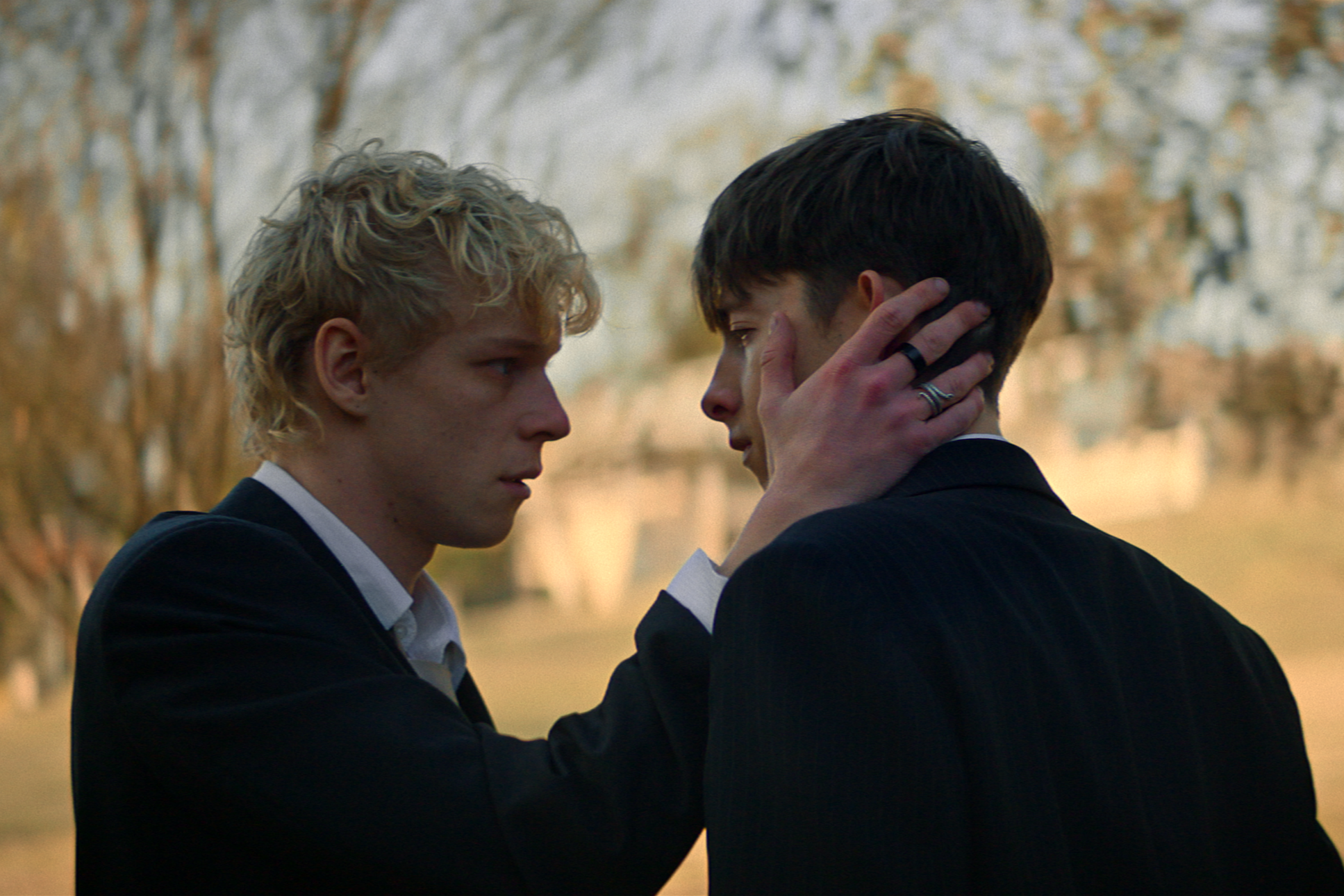
AC: Yeah. As soon as we started shooting and went all through the edit, I always knew that the chemistry between Joe and Stacy was gonna be the heart of the movie — that was gonna be our great strength. I think people can already see that connection just in the few clips that have come out already.
P: It's also a rare horror film in the way that the heart of the movie is very much this beautiful, romantic relationship between the two boys. Joe, how did you go about developing that chemistry with Stacy?
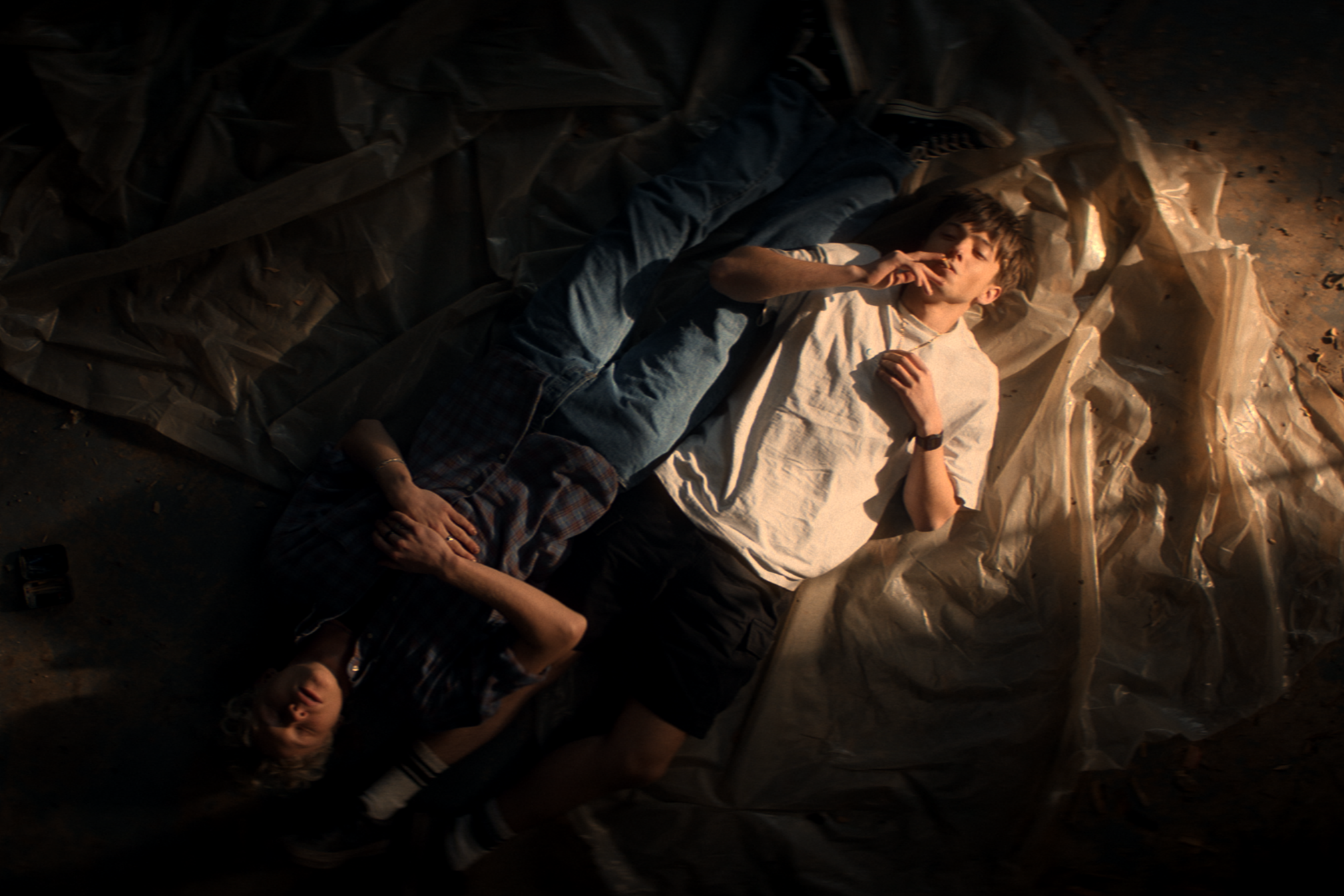
JB: Adrian had set up a lot of activities for us, and we went to an escape room together; we held snakes together… Adrian wanted us to be scared around each other with these activities because fear is a big part of this film. That just helped us build this connection with each other, and when we were on set, it came naturally. I feel like when you're with someone that closely for that period of time, it naturally happens.
AC: It's the best gift if you're a director to have your actors get along, and I know you and Stacy just connected right after the auditions. You guys were chatting and hanging out, and you were playing Fortnite together.
P: Do you have a companion watchlist for Leviticus that you think would warm viewers up for the film?
AC: I watched so many different films and drew on so many different points of inspiration. I watched classic horror movies — John Carpenter's The Thing was a really big one. I also looked at a lot of Japanese horror: the original Ring and Kiyoshi Kurosawa's movies like Cure and Pulse. But I also just loved looking at queer coming-of-age movies, like Call Me By Your Name.
JB: Since you said my movie — I was gonna say Call Me By Your Name — I'm gonna flip your question and give you an album I think that you should listen to with this film. It’s already an album written for a film, but I think the Wuthering Heights soundtrack that Charli [xcx] did is very Leviticus-coded. That’s my piece of companion media.
Neon
P: I’ve seen a few fan edits with Radiohead actually.
JB: Yeah, I know there’s been a lot of Ethel Cain too. We love Ethel Cain.
AC: For some reason, when I was writing, in the edit, I was listening to the Radiohead song “Fake Plastic Trees”.
P: Why do you think Australian horror has flourished so much in recent years?
AC: We have this incredible, beautiful, but terrifying landscape to draw on that just lends itself really well to horror. It has for many, many decades in our horror movies. But more importantly than that, what Australian filmmakers have done is taken that landscape and internalised it, and explored something psychological with their characters. So not just showing you the landscape, but also expressing something with it. There have been some amazing horror directors come out of Australia because of that. It's a tradition we were really proud to be a part of, and one we didn't shy away from. We wanted to tell this queer coming-of-age story very much in that specific sub-genre.
P: What do you hope audiences take away from Leviticus?
AC: I don't wanna give away the ending, but there's a very specific choice that Joe's character makes at the end, and I really hope that audiences understand what that is and take away not just what I intended, but take away their own very personal meaning out of that final moment in terms of what this relationship means to him and what he's choosing to do in the face of adversity.
JB: I'm glad he went first 'cause I would've spoiled the whole film [laughs]. That's what I was gonna say, but he did it in a coded way. So I'm not trying to cop out, but I will say that I hope people connect with the story, and that’s all that filmmakers and actors really want at the end of the day: for our work to inspire and connect other people.
Leviticus is in US cinemas June 19th.