Hope Director Na Hong-jin Talks Inventing an Alien Language and Audacious Live-Action Set Pieces in His Epic Sci-Fi Creature Feature
Reflecting on his Cannes hit starring Hwang Jung-min and Hoyeon, the Korean genre filmmaker discusses working with motion-captured Hollywood stars Michael Fassbender and Alicia Vikander and teases the plot of the already-written sequel
by Lana Thorn 7 September 2026
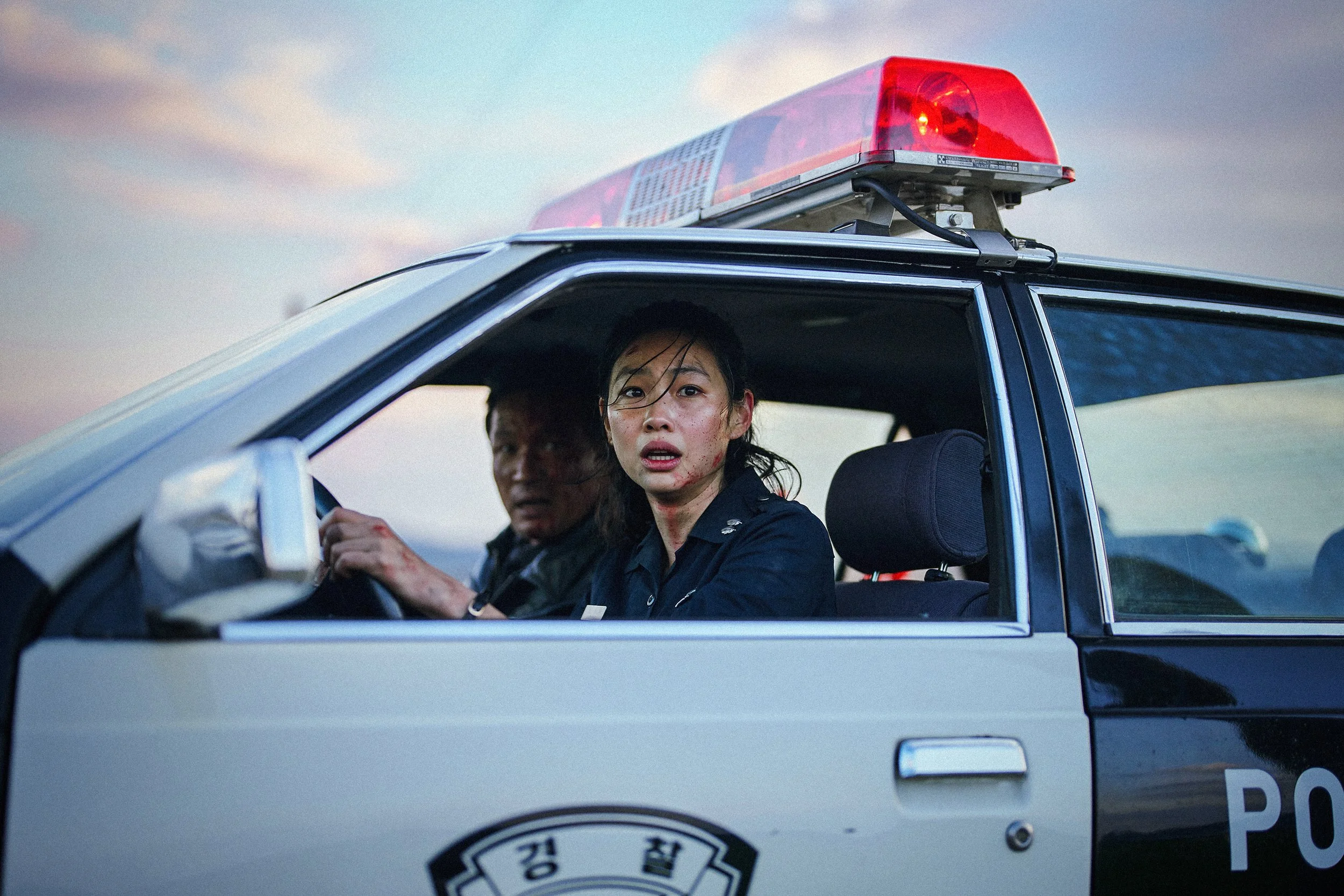
NEON
Na Hong-Jin’s return was long overdue. Initially known for a pair of critically acclaimed crime thrillers, Chaser (2008) and The Yellow Sea (2010), the Seoul-based writer-director released The Wailing in 2016, earning him increasing international recognition after a buzzy festival run. A small-town detective story wrapped up in an eerie supernatural thriller, The Wailing is now regarded as a modern classic of Korean genre cinema. Now, after the spooky short Faith and co-writing the hit Thai-Korean folk horror mockumentary The Medium, the filmmaker is finally releasing his next feature a decade later.
Na’s latest likewise begins in a remote Korean village, but what follows is a daring, large-scale sci-fi thriller that sees its local heroes (played by Hwang Jung-min, Zo In-sung, and Hoyeon of Squid Game) battle a barnstorming alien threat that the audience doesn’t get to see for the better part of an hour. When viewers finally do get a glimpse at the antagonists, they’ll see Hollywood actors Michael Fassbender, Alicia Vikander, Taylor Russell, and Cameron Britton in motion-capture performances, speaking an invented alien language, no less.
Calling Phantasmag from Korea, the 52-year-old director discusses planning the film’s elaborate action sequences, collaborating with scholars to develop the alien language, and a planned sequel in which “the human part of [the story] ends.”
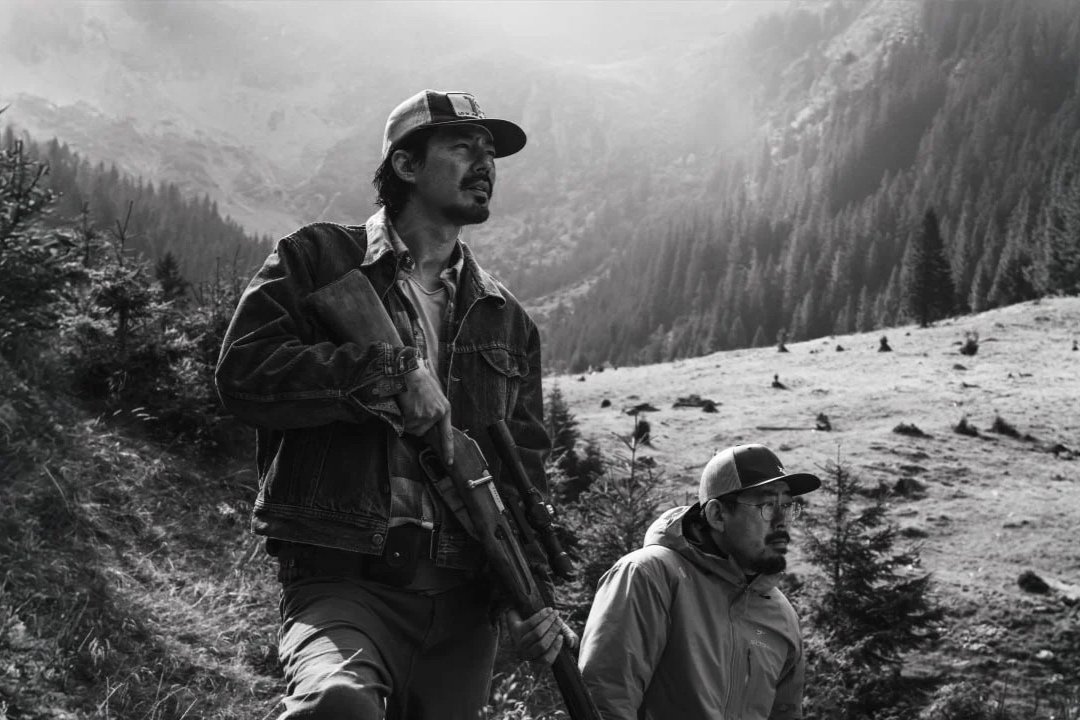
Zo In-sung (left) and Na Hong-jin (right) on the set of Hope. Courtesy of NEON.
Phantasmag: You tackled supernatural horror with The Wailing, and now you’ve turned epic sci-fi action film. Why was Hope the perfect film to return with, and why did you want to explore the sci-fi genre specifically?
Na Hong-jin: It’s really all about timing. With The Wailing, we were looking at the supernatural perspective and how that affected humanity. So I wanted to go deeper, and in going deeper, we ended up in space.
P: While Hope is a big, fun action spectacle, there's also some heavy themes at play surrounding violence and community. Why did you want to make this film in today's current geopolitical climate?
NHJ: Hope is coming out in 2026, of course, but the development started many years ago. At the time, Korea felt like it could be on the brink of war. There was a conflict happening in Ukraine, and all these wars overseas felt very close to home, like it could happen on our own land. And there was a lot of news and disputes about immigration. So this was a story that felt very pertinent in the development process of Hope.
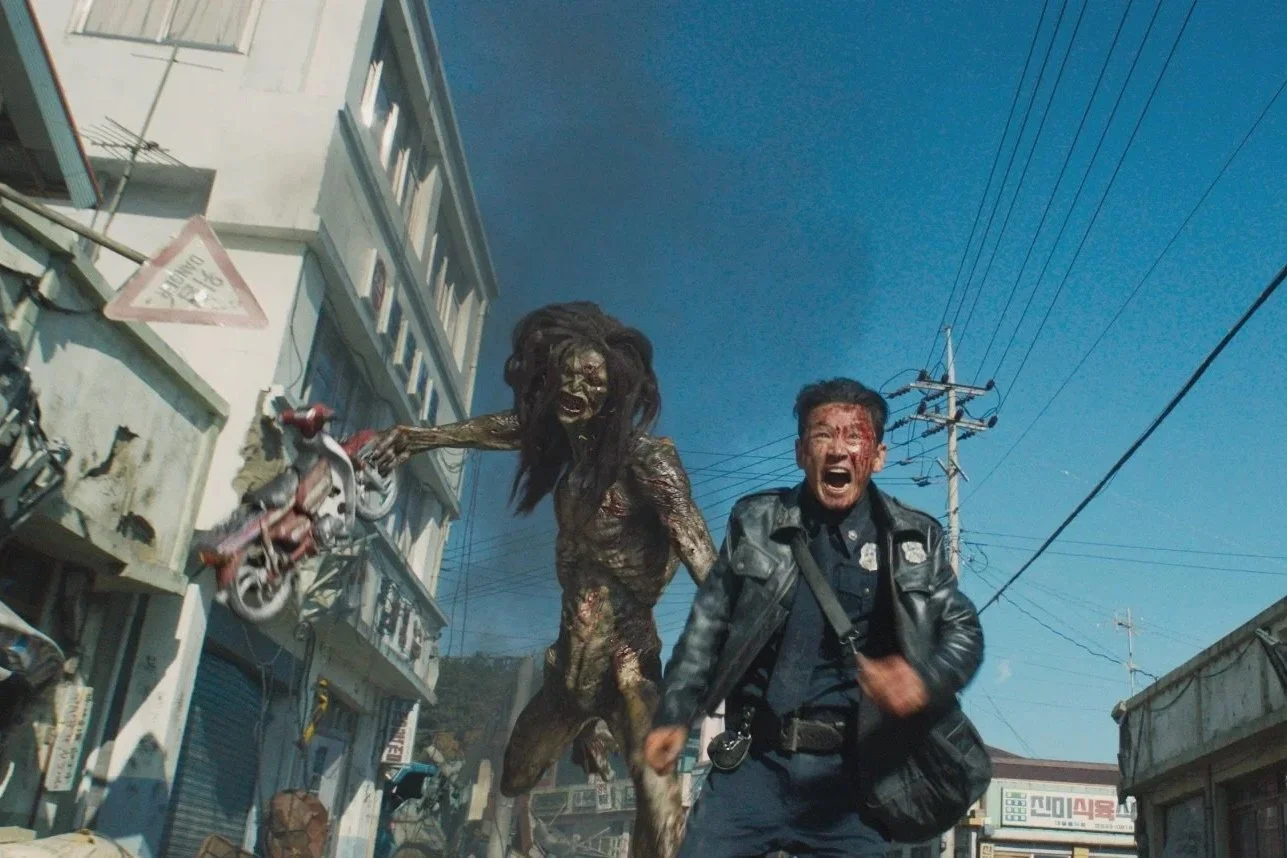
Bum-seok (Hwang Jung-min) runs from Va’migere (Cameron Britton). Courtesy of NEON.
P: There's some breathtaking cinematography in the film, and I'm specifically thinking about the driving sequences and the opening chase scene. How did you shape those scenes and the film's visual language?
NHJ: The inspiration for the cinematography came from the storyboards that we really built very meticulously. We focused on the speed and the pacing of the film in crafting these scenes. There’s a lot of action, and the scenes are long, so we wanted to create a sense of diversity between sequences. It took a lot of thought and brainstorming [to determine] how we could create this as realistically as possible. If you're creating this kind of sequence in animation, you can just plop it in. But there are a lot more devices and planning involved when trying to execute it in live action.
So I was given two choices: doing very VFX-heavy sequencing or focusing more on cinematography and being able to shoot that live, and that ended up being our ultimate choice. To do as much as we could in camera. In terms of the scenes that don’t have a lot of action, we wanted to create a sense of artistry by using natural light and really focusing on framing the characters eloquently within the space. And when it came to the action, we wanted to highlight that speed and that impact.
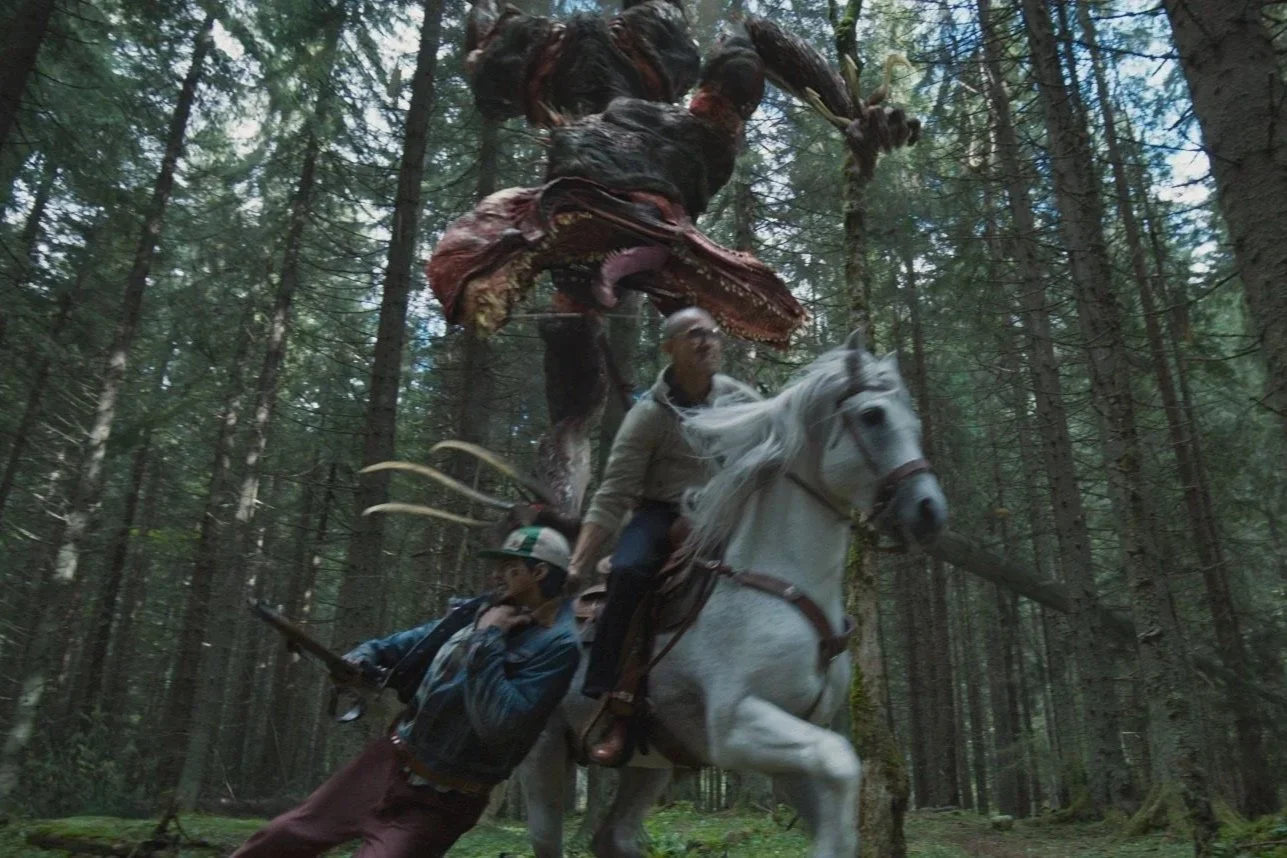
Sung-ki (Zo In-sung) has a narrow escape. Courtesy of NEON.
P: If you were programming a double feature involving Hope, what would be the second film?
NHJ: It's the first time [the translator and I] have been asked that question [laughs]. I would say one of my films that doesn't have a creature in it, The Chaser, would make for a really fun double feature.
P: In the 10 years since you released The Wailing, audiences' viewing practices have changed so dramatically, with their attention spans getting shorter and them prioritising instant gratification. Was that a challenge to overcome when you were making the movie, or something you were even thinking about?
NHJ: A lot of people voiced those concerns in the development of [Hope], but I would hope that this film would quell that issue of the short attention span and keep people really engaged.
P: Hollywood stars Michael Fassbender, Alicia Vikander, and Taylor Russell Ralls play CGI aliens speaking another language. What inspired that casting decision, and what did those performers bring to the roles?
NHJ: Primarily, the Hollywood actors in the film shaped the look of the creatures themselves because we scanned their exact faces. The casting began when I asked Alicia [Vikander] — I had worked with her before, and we already had a friendship — so I thought she was really perfect for the role. When I asked her to read, she was more than happy, and it was actually a very easy casting process because these are actors that I already really loved.
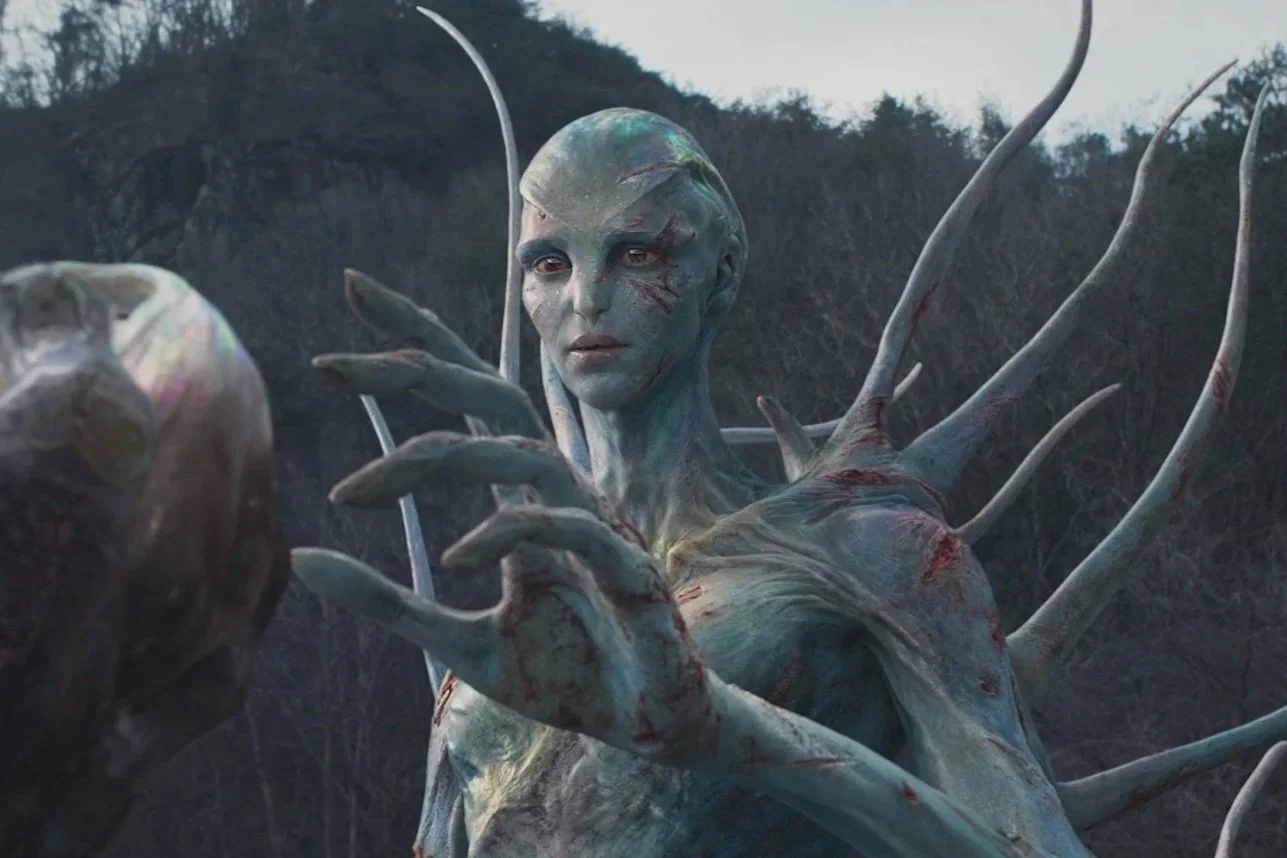
Alicia Vikander stars as J’aur. Courtesy of NEON.
P: How did you go about developing the alien language? What did the research entail?
NHJ: I’m in shock that the actors were able to memorise the lines in the alien language [laughs]. It started from a real prehistoric language, and it was actually scholars from Seoul National University [who developed it]. It has a lot of similarities to old Mongolian, and I really loved the feeling of that. I felt the language was extremely poetic — you could almost imagine Mongolians in prehistoric times lying in a field and looking up at the immense sky and get a real sense of space.
P: [Spoiler alert] The film has a very open ending and a potential for a sequel. Where would you want to bring these characters next?
NHJ: I don't know if I can tell you [laughs]. Well, Hope starts in the early morning, and by the end of the film, it's almost time for the sun to set. The characters are in this isolated village, and it almost seems like, by the time we're at the end of the film, we're at the end of the world. There's a sense of confusion and pandemonium, and that is really kind of when the human part of it ends. The aliens do understand what is happening — the sense of senseless destruction — and this combined goal of finding the child becomes stronger and holds them together as a sense of purpose. So it foreshadows that night will fall into the village. And what will unfold from there, I think you can use your imagination.
Hope is playing in US theatres from September 9th and in UK theatres from September 25th.