The Spiral Review: Brutal Faustian Thriller Cements Paolo Strippoli as an Exhilarating Psychological Horror Auteur
Venice Film Festival: With his follow-up to The Holy Boy, the Italian writer-director charts a wealthy family’s destruction after a supernatural bargain goes wrong
by Alex Kaan 7 September 2026
Propaganda Italia
On a dark and stormy night, Rome-based designer Alice (Romana Maggiora Vergano) sees her life upended when her mother, Anna (Jasmine Trinca), knocks urgently on her door to deliver a terrible tale with an appropriately dramatic prelude: “Everything you think you know about our family’s history is a lie — a lie that I told you.” Echoing the gut-wrenching family drama of Hereditary and the stylistic flourishes of the Smile films, Paolo Strippoli’s The Spiral is a gripping horror thriller about a new-money family’s gradual, painful implosion when the mother makes a Faustian bargain.
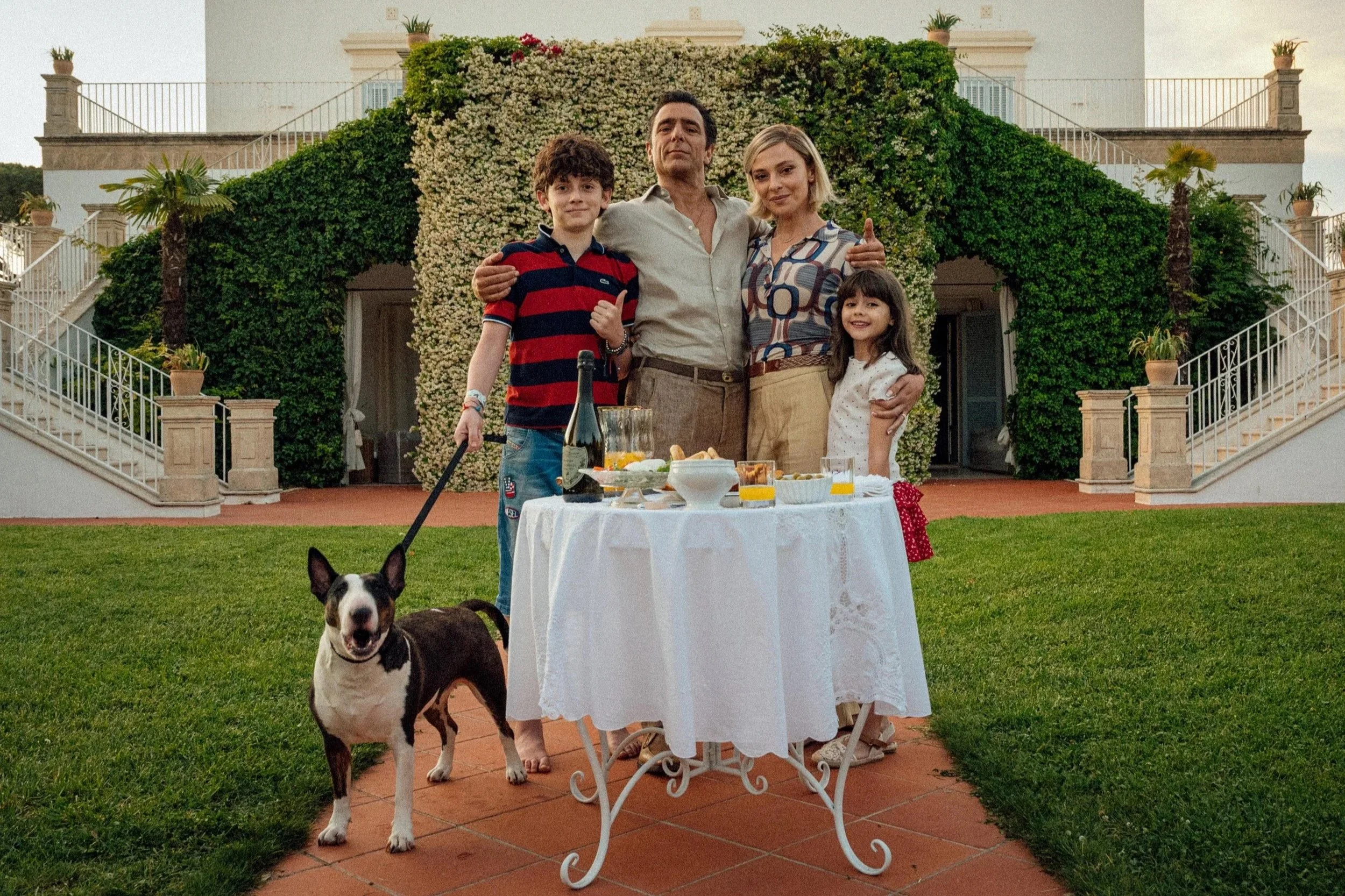
Competing for Venice’s Golden Lion a year after his queer folk horror chiller The Holy Boy, an intoxicating mix of Carrie and The Wicker Man, premiered out of competition, the 33-year-old filmmaker’s latest swaps the gloomy chill of the Italian mountains for the sunny charm of 1999 Bari, Puglia. As Anna looks back on how it all went wrong, The Spiral, releasing in Italy as L’Estranea (“The Stranger”), begins in the Colonnas’ luxurious new home, at an idyllic time when everything is looking up for the bourgeois family.
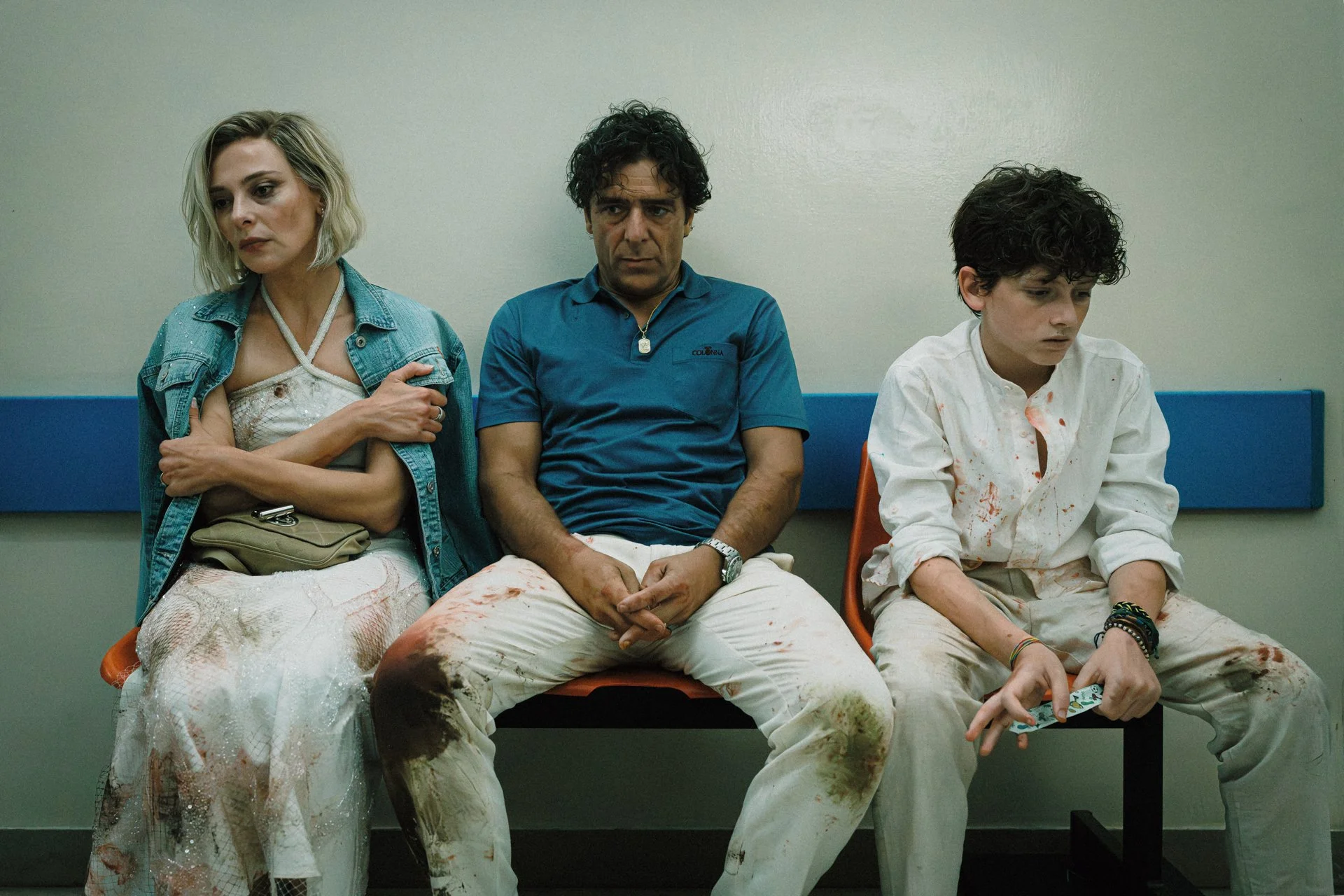
Anna and Walter (Adriano Giannini) couldn’t be prouder of their two young children. Tobia (Alessandro Carbonara) is something of a football prodigy — when a friend suggests that the local Bari team will snap him up, his father states emphatically that he’s bound for the far stronger Inter Milan — and his aspiring actress little sister Alice (Gabriella Telegrafo) has just booked a commercial for a famous pasta brand. Both parents are bragging about these achievements while hosting a glamorous party that will forever change the course of their lives, with the all-white dress code making the ensuing violence all the more traumatic.
Propaganda Italia
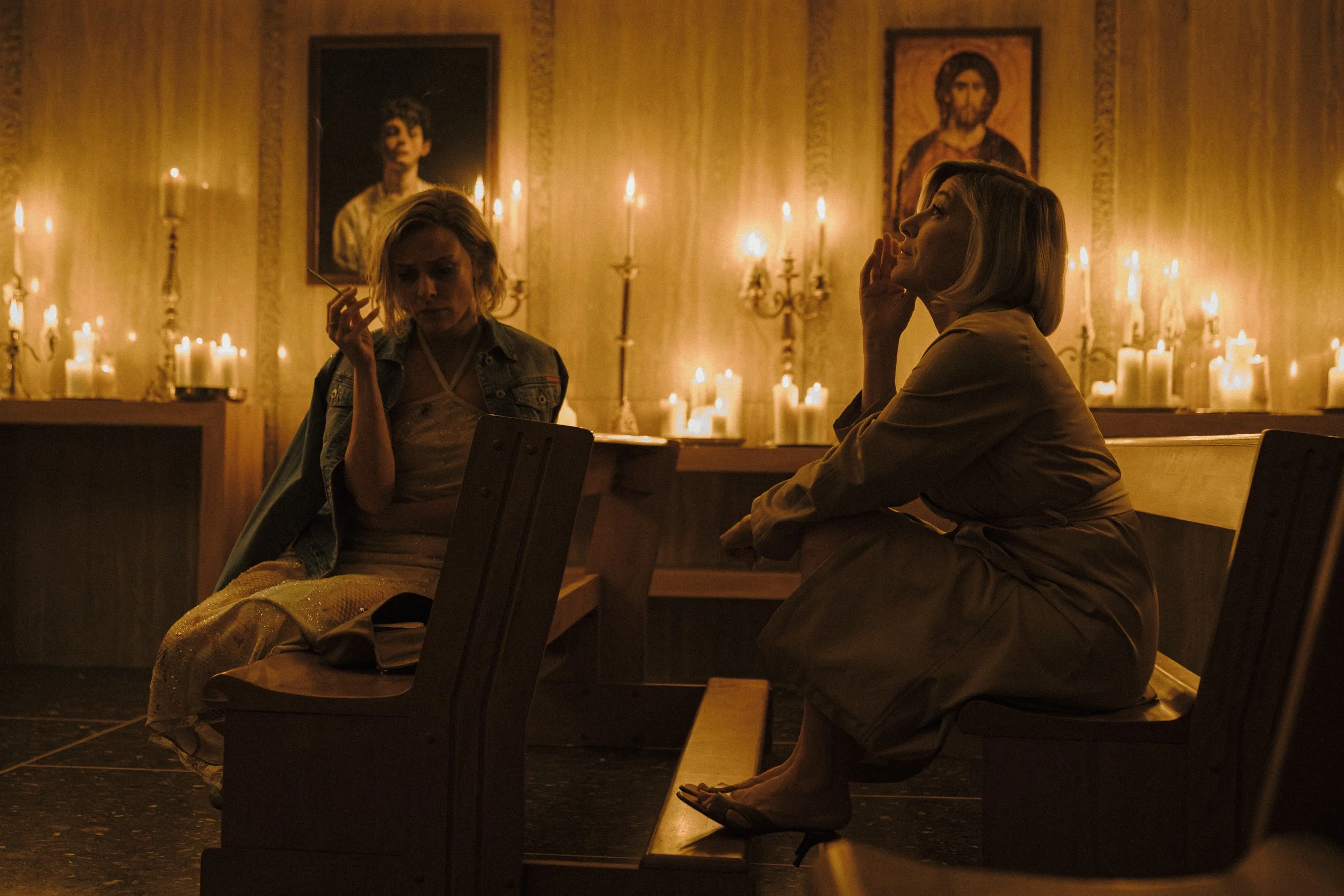
A horrific accident leaves Alice with a mangled leg that the doctors speculate may need to be amputated, and in a desperate moment in the hospital chapel, Anna meets a mysterious woman (Valeria Bruni Tedeschi) who offers her a cigarette and a supernatural deal. Gradually convincing a shocked Anna, the mischievous stranger, who clearly takes an unnerving amount of pleasure in Anna’s predicament, states with absolute certainty that Alice will indeed lose the leg, but this can be entirely prevented if Anna agrees to exchange another family member’s good health in return.
Reinterpreting the devil as a fashionable, cigarette-smoking woman in a trench coat, Valeria Bruni Tedeschi is a delight as a deliciously evil villain who provides the film with much-needed laughs to ease the relentless tension. But the film belongs to a superb Jasmine Trinca, playing a narcissistic mother trying to wrestle control over a series of unspeakable tragedies.
The result is a melodramatic, anxiety-riddled exploration of the very human feeling of helplessness in the face of traumatic moments, which simultaneously interrogates the fragility of an upper-class family who, whether they want to admit it or not, place an unhealthy weight on beautiful facades and outward success. While wrapped up in a macabre tableau of supernatural drama, including a masterful, horrific set piece revolving around the 2006 World Cup Final, The Spiral ultimately delivers one of cinema’s most nuanced portraits of narcissistic parenting in recent memory thanks to Strippoli’s determination to explore the horror behind closed doors.
Propaganda Italia
The filmmaker’s commitment to exploring the depth of the hurt committed in inter-familial relationships and on school grounds, particularly, raises the point of its sure-to-be-divisive second of four chapters, titled “The Son”. Centring on Tobia’s struggle with obesity as a consequence of one of the Faustian deals, the very presence of this topic will prove controversial, more so with US and UK audiences than local Italian viewers, and has already been deemed “fatphobic” in early reactions. While the scenes are surely uncomfortable, Strippoli keeps the focus very explicitly on the appalling ways in which Anna and Walter react to their son’s weight, rather than treating the plot as a joke or a lurid thrill, or aligning the viewer with his parents’ mocking gaze. Instead, the chapter is nothing short of devastating, taking an unflinching look at bullying, abuse, and the shallowness of some parents’ affection.
In addition to its focus on uncomfortable character-driven horror, The Spiral expands on the same visual and sonic language that defined Strippoli’s last feature. Cristiano di Nicola’s cinematography is elegant and dynamic, often fond of a whip-pan, while the bold soundtrack comes together through the pairing of Marc Bastien’s forceful sound design and ROB’s almost operatic score, which often incorporates choral elements and a thoroughly menacing organ.
Harrowing, stylish, and morbidly funny, The Spiral sees Paolo Strippoli further refine his brand of intimate, ruthless psychological horror and confirms the writer-director as one of the most exciting voices in the genre today.