Primetime Editor Daniel Garber on Making a True Crime “Fever Dream”, Shaping Robert Pattinson’s Electric Performance, and How Skyler Gisondo Changed the Ending
The Spermworld and CAM editor unpacks the bold true crime thriller dramatising the making of To Catch a Predator
by Lana Thorn 28 September 2026
A24
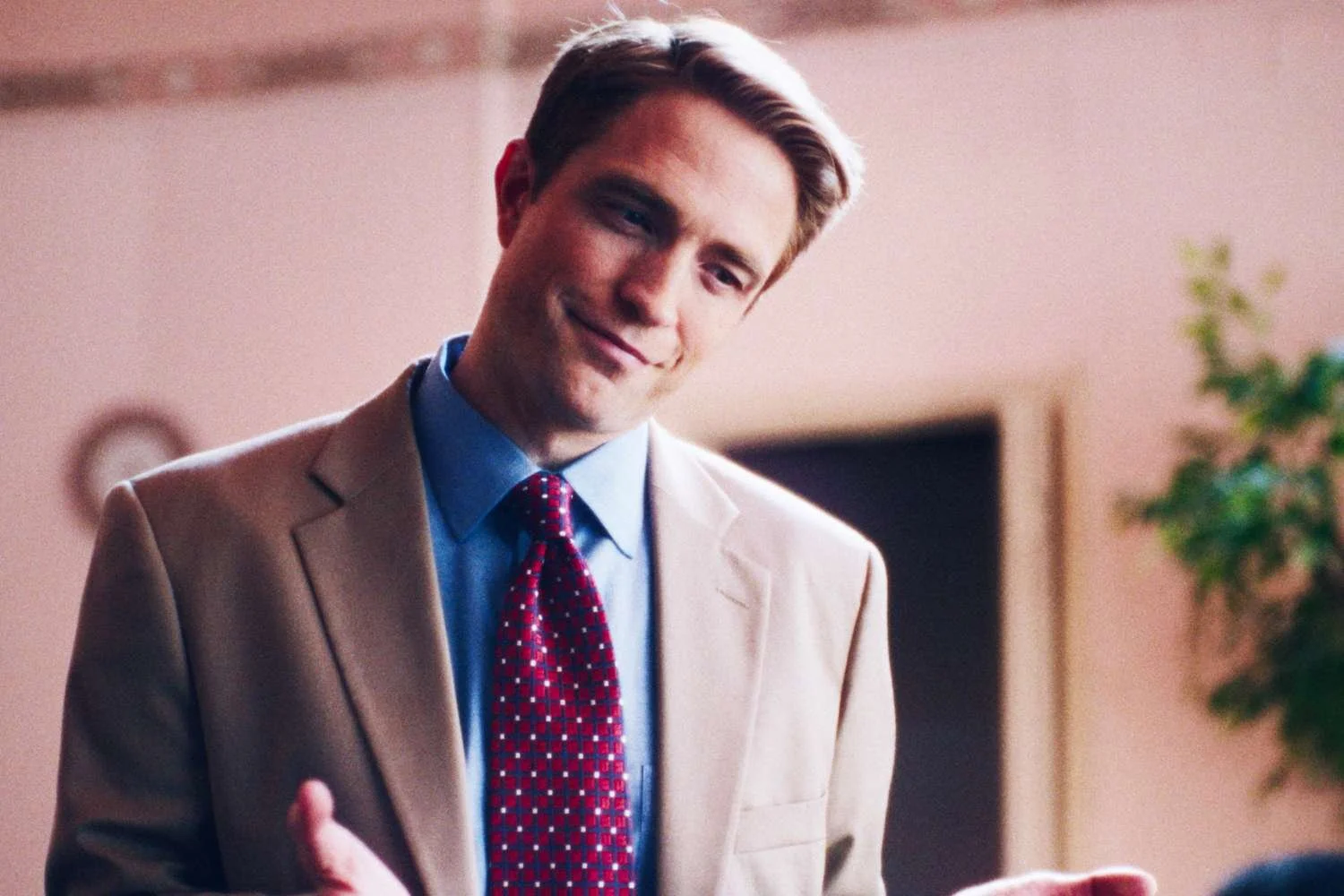
Like Robert Pattinson’s already viral, meme-spawning performance, Primetime is a film that isn’t afraid to take big swings. Lance Oppenheim’s portrait of infamous journalist and TV host Chris Hansen and his team on To Catch a Predator, the controversial American reality series revolving around sting operations to catch pedophiles, is anything but a straight biopic or a by-the-books dramatisation. Instead, opting instead for a dreamy, hyper-stylised true crime thriller with heavy elements of both horror and comedy.
With experience in both documentary (Some Kind of Heaven and Spermworld, both directed by Oppenheim) and narrative filmmaking (psychological horror CAM and eco thriller How to Blow Up a Pipeline), keeping that tonal blend in check — and moulding Pattinson’s gonzo performance for maximum effect over a 2-hour runtime — is editor Daniel Garber. Calling Phantasmag just ahead of the film’s opening weekend (it secured an impressive $19.2 million domestic haul), the Brooklyn-based filmmaker reflects on finding stylistic inspiration in the work of Oliver Stone and Brian De Palma, the reasons why they changed the film’s ending, and taking liberties with the portrayal of Chris Hansen in light of his negative reaction to the film.
Phantasmag: Primetime marks your third feature with director Lance Oppenheim, and your first narrative film with him. What were your initial thoughts when he brought the project to you, and what conversations did you have around the film’s unique style?
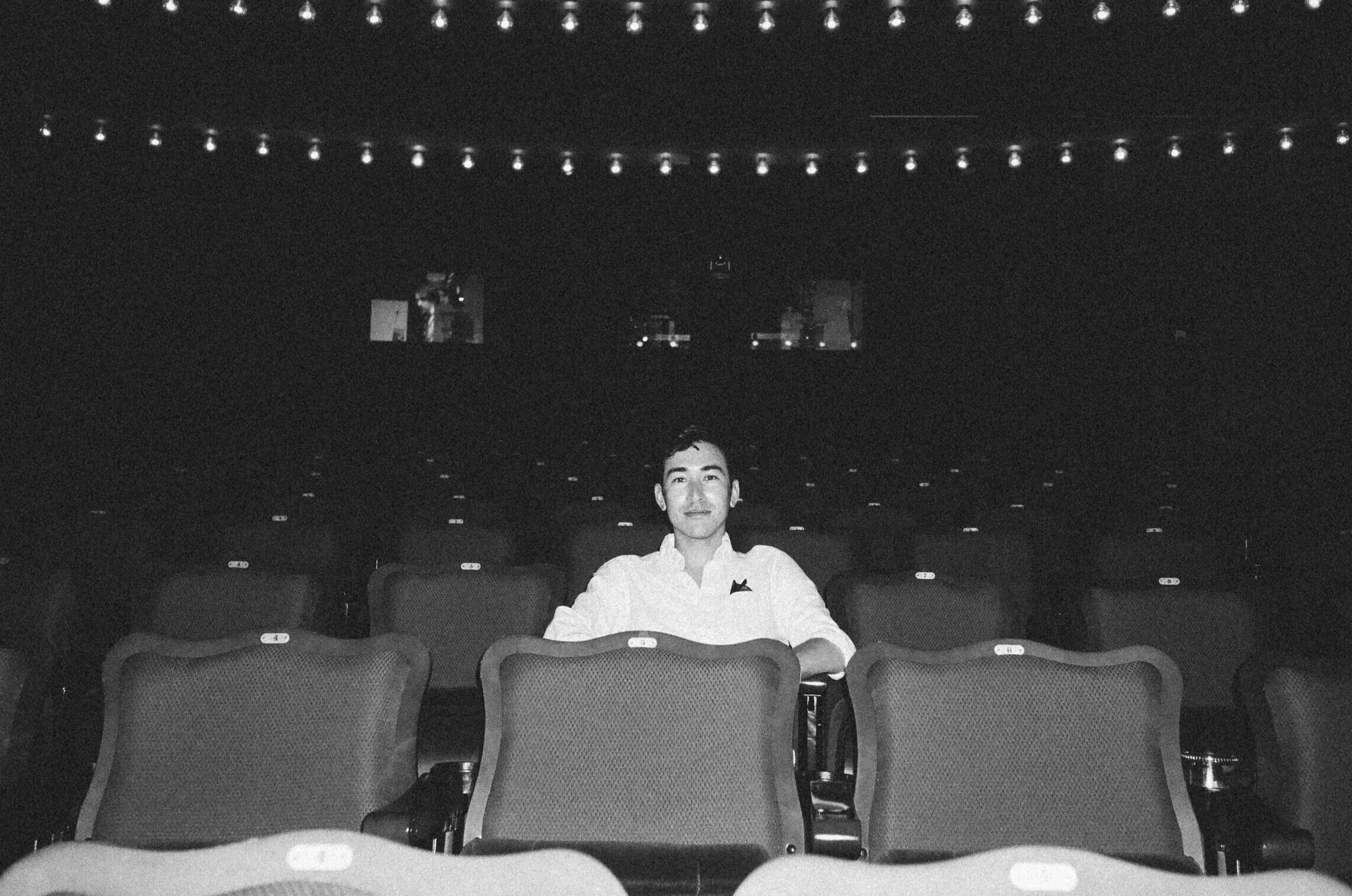
Daniel Garber: I think Lance has always been on track to direct a narrative feature, because the documentary work we’ve done together is very stylised for a documentary. I don’t think anyone would mistake it for strict cinéma vérité. It’s very subjective, and he always likes to dig a little bit beneath the surface to try to reveal things that wouldn’t just reveal themselves through straight observation.
So it was really exciting to see him take this turn toward narrative filmmaking, and with this project in particular because it felt like it was responding to themes and topics we'd been discussing for many years as documentary filmmakers. We both had a lot of discomfort at times with the way that documentary film sometimes takes real people's suffering and turns it into other people's entertainment, and that tension at the heart of nonfiction filmmaking is almost inescapable. And To Catch a Predator is sort of at an extreme of that, as is most true crime storytelling.
That was one of the reasons that this subject was instantly so exciting to us, and Ajon [Singh]’s script resonated so well with Lance's process and approach in that it really is not trying to be this standard journalistic biopic about Chris Hansen from beginning to end. It's a snapshot, where they've taken all of these elements of the show and Chris’ life and folded them into this fever dream. And Lance’s approach on set is also really reminiscent of his documentary filmmaking process, where he’s always picking at things and not just settling into a rhythm where he’s executing some preconceived vision. He’s working with the actors to try to draw out things that are unexpected, and allowing them to improvise, ad-lib, and deliver unexpected performances.
Daniel Garber
P: What was your relationship to To Catch a Predator before the film?
DG: I absorbed the show through cultural osmosis. I didn't really watch it growing up, in part because my parents didn't really like me watching TV at all. I wasn’t raised on network news, and I wasn’t watching all the fun TV shows my friends were watching. So a lot of cultural references were lost on me, but I think To Catch a Predator was just so omnipresent at a certain point that it was hard for me not to know of its existence. People would reference it and make parodies of it, and I think that’s how Lance first encountered it, through parodies on South Park instead of the show itself.
P: Did you watch a bit while you were editing?
DG: During the research process, Ajon compiled this whole database with as many episodes of To Catch a Predator as he could find. And the show has gone through several different iterations. They started releasing these more uncut versions called [To Catch a] Predator Raw, which was less packaged for news broadcast and more drawn-out, so you could get more of a sense of what each of these stings are actually like. I watched a bunch of that — not nearly as much as Lance and Ajon did, but I had to refer to it pretty frequently to get a sense of the tone of the show and its visual techniques. There are a couple of moments in Primetime where you see edited chunks of the show broadcast on screen, and I wanted to mimic the original style when I was editing those segments.
P: You’ve worked extensively with internet graphics in both CAM and Spermworld, and now Primetime has you integrate coverage that imitates To Catch Predator footage as well as surveillance cameras. What did your past work teach you about that mixed media approach, and how did you navigate it on Primetime?
DG: The interest in building these collages goes back to the very beginning of my career. The first project I worked on was an all-archival documentary called The Reagan Show, and that is entirely made up of found footage, mostly from this public domain archive of footage that was shot by an audiovisual unit of the US Navy that basically followed President Reagan around 24/7. So I've always been interested in breaking things out of their original context and finding ways through the tools of editing to make new meaning come alive.
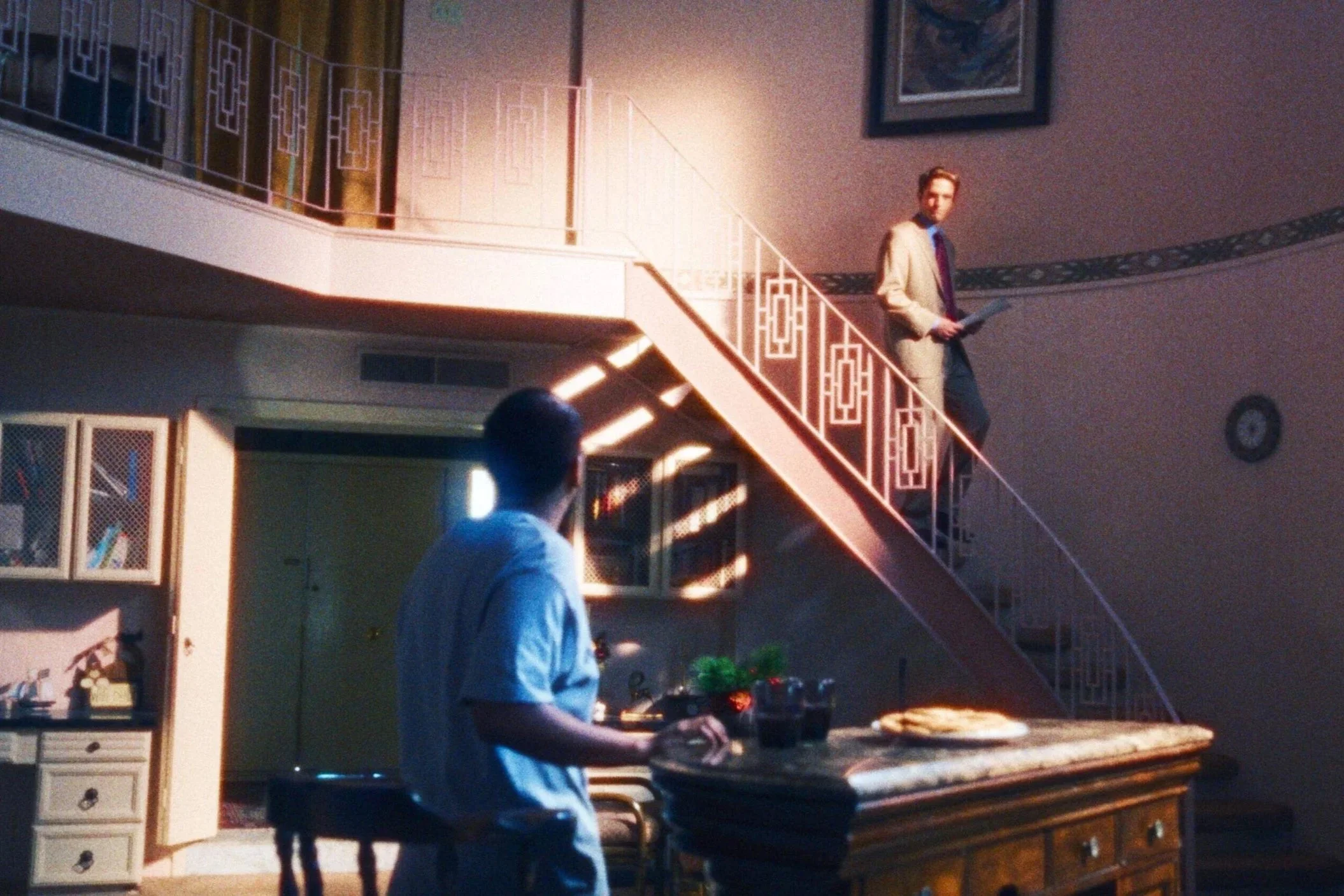
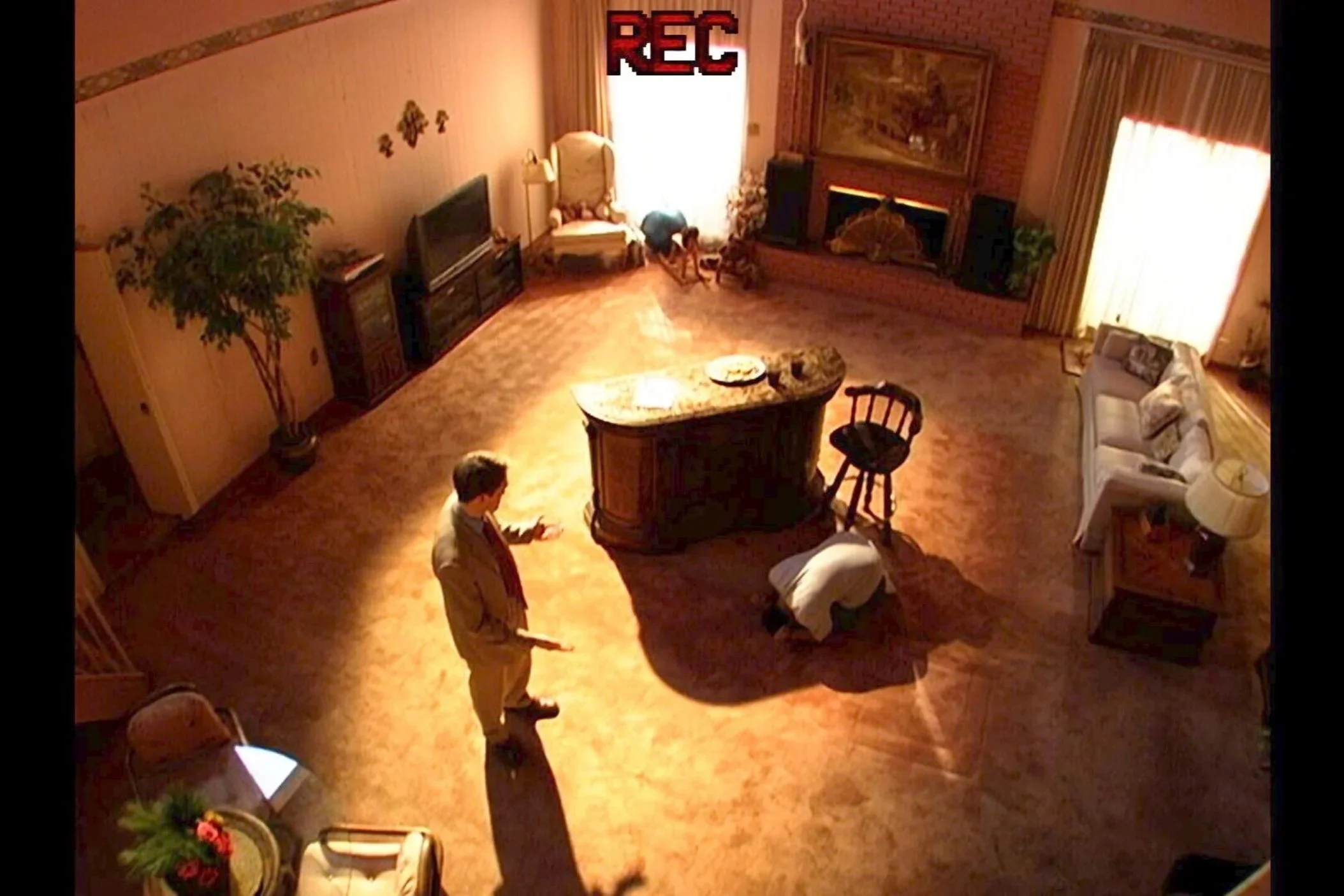
Still, I’ve never worked on a film that’s had so many different camera formats. I think there were 14 different cameras used over the course of production, and it took a lot of trial and error to develop a system for when we should use each one of those formats and why. All the DV footage — which is basically the hidden camera surveillance footage from the show itself — was just intended to be played back on the screens on set. It wasn’t actually supposed to be part of the texture of the film itself. It was only through starting the edit that I realised it was a very powerful tool to combine this very objective footage from the DV cameras with the much more subjective experience of the cinema camera. That really unlocked something for me.
Tony Revolori (left) and Robert Pattinson (right) in Primetime. Courtesy of A24.
There were all these other cameras as well. There’s this Sony Plumbicon tube camera that produces these really bizarre colours, super-saturated reds and blues, and it appears very infrequently throughout the film even though we had a ton of footage that we loved. One of the huge challenges of making this film was creating an emotional experience that is expressed through the format changes. It was painful to go through that footage and be like, ‘I love this shot, but I actually don't think it has a place in the language of the film.’ It took a while to get to a point where we felt like the camera changes weren’t drawing attention to themselves.
P: As you’ve mentioned, there’s a very ambitious stylistic blend that jumps from the feeling of a documentary to a Brian De Palma thriller to a horror film in some of the scenes. Did Lance give you any specific references?
DG: Honestly, we didn’t talk as much about references on this film as we usually do. I mean, Lance and I are Brian De Palma fans. So we definitely came into it having had this shared reference point of just loving De Palma. One of the first references that we bonded over was JFK. We were watching a lot of Oliver Stone movies at the time, and one of the things that’s so incredible about his work is that it often feels like a collage. JFK is remarkable because so much of the movie is just pure invention, pure fiction, but it’s given this sheen of believability because of the collage. The way it’s constructed makes you feel like you’re pulling these fragments of reality and assembling them into something coherent. So we wanted to imitate that feeling with how we were putting together [Primetime], especially when it comes to the mixing of formats. That was a great editorial reference point, but otherwise, our references were more thematic, like Billy Wilder’s Ace in the Hole, which is such a great media critique.
P: Robert Pattinson delivers an electric performance that is already generating Oscar buzz, and Skyler Gisondo has expressed how Pattinson would make really bold choices with the material that often surprised people on set. What was it like shaping that performance in the edit?
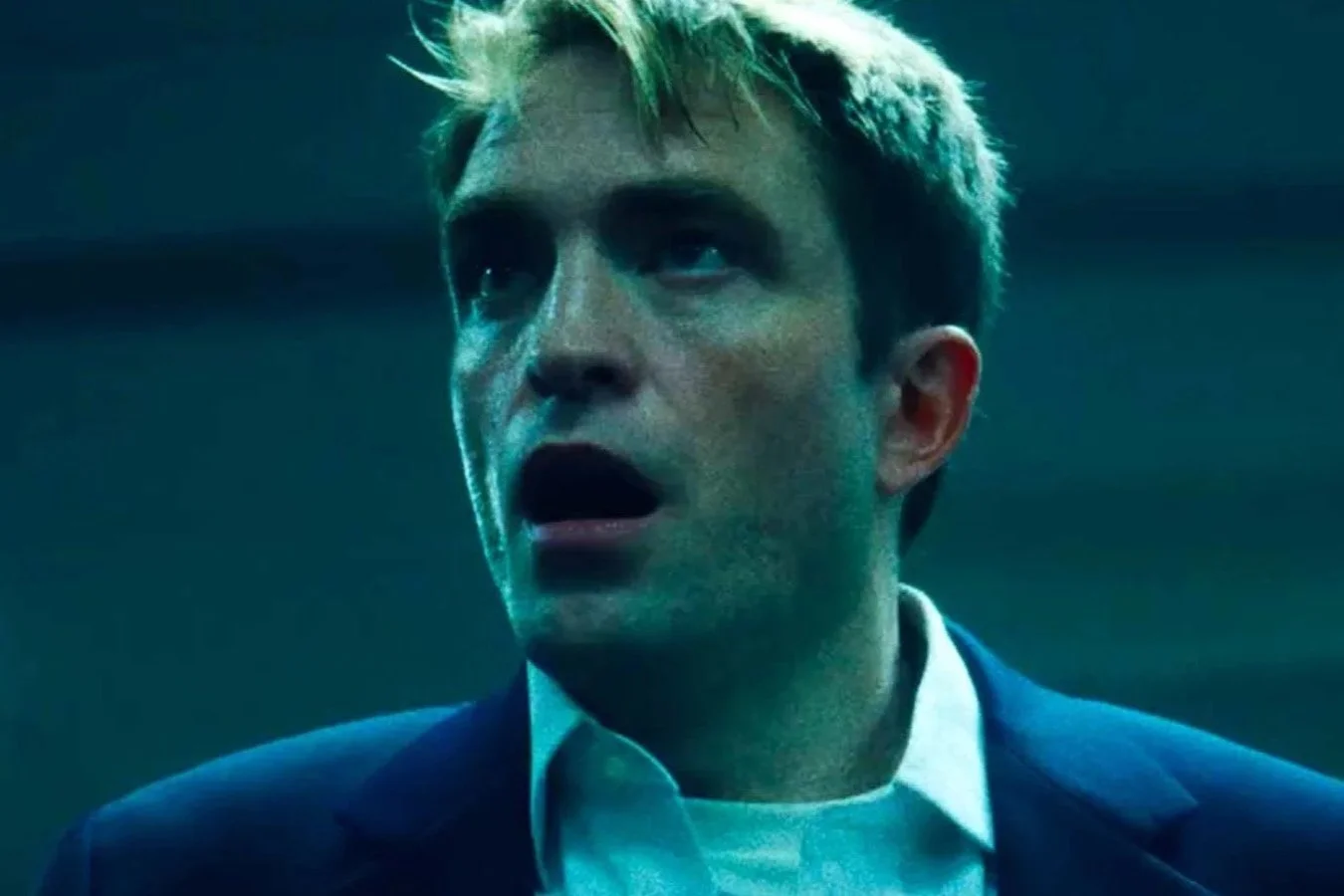
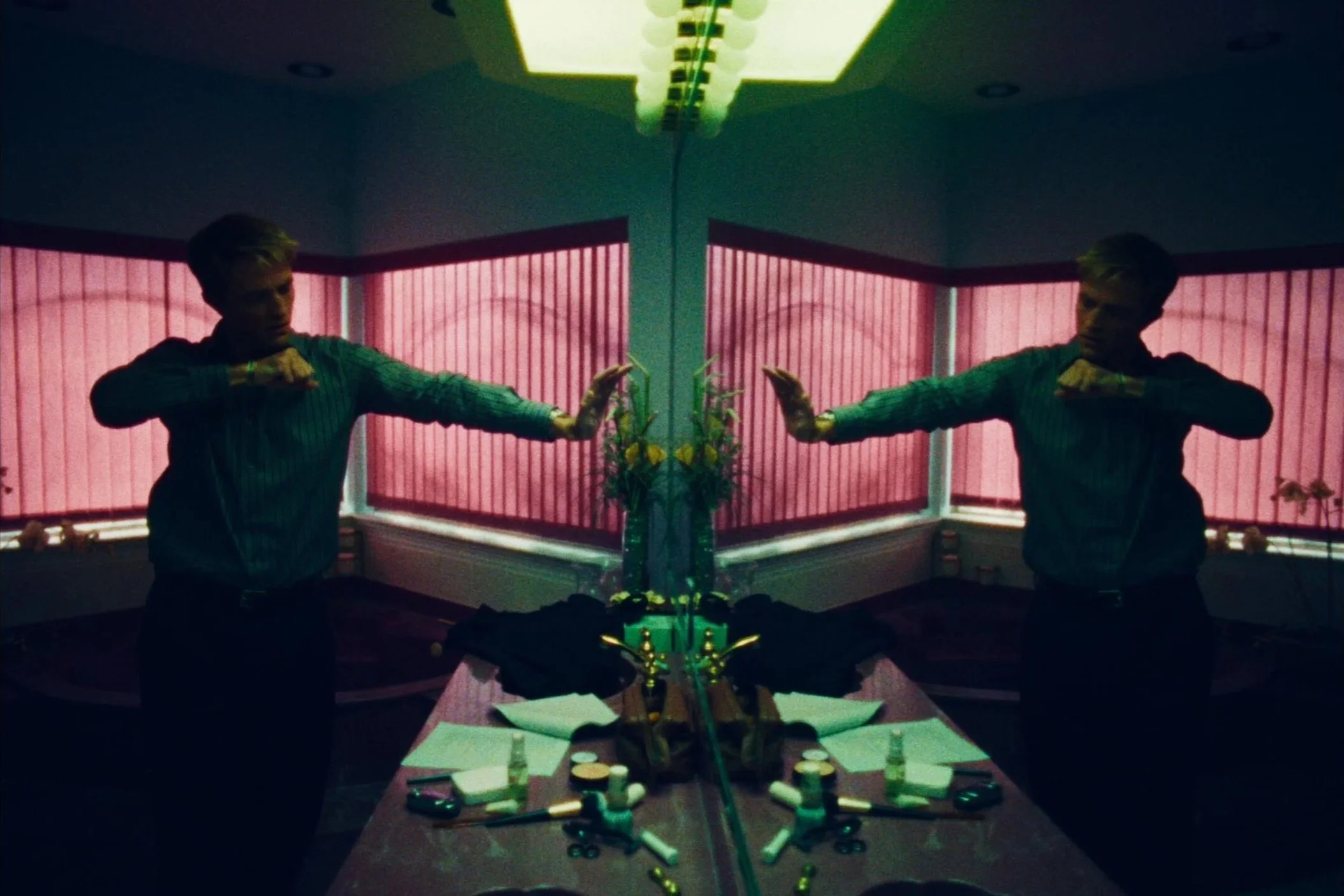
DG: That was one of the most exciting parts of working on this film. Every day, I’d be looking at the footage with my jaw on the floor because it was so unexpected, but also Rob is such a talented actor that he's so good at selling almost any decision that he makes. The temptation is to go with the biggest version of every moment, but of course, that’s not how a movie can be edited coherently. So a lot of it had to do with constructing a system around his character and figuring out how to earn the really big moments we were aiming for. In the movie, there are some moments that are jarring because he goes to such an extreme with the performance. So much of my job in the edit was to find ways to align you with him as a character so that when he gets to those points, you understand how they’re grounded in his emotional arc. Then it feels like it’s earned.
Robert Pattinson stars as To Catch a Predator host Chris Hansen. Courtesy of A24.
Rob is just incredible to watch because he’s so aware of how his performance is coming across at all times. He’s also the only person, I think, who watched all of the dailies. Even when he was on set, he was getting on his computer at night after wrapping and watching them, and I think it’s incredible that he cares so much as a performer and as a producer that he’s delivering something that will come together.
P: Talking about the surprising performance and the different takes, were there some scenes where the takes were very different, and you struggled to choose?
DG: There were a lot of moments where I felt like there were two radically different paths we could go down. One moment in particular that stood out to me was the scene where he’s getting a first call from this National Enquirer reporter. There was this one take that was in this film for the longest time where he was a bit more serious and seemed distraught. Ultimately, we went with this other take that I just find so bizarre. I wasn’t even quite sure how to identify what was happening in it. But it almost seems to me like Chris is short-circuiting in that moment. He gets this call, and he's actually just not sure what to do with his face. It breaks his reality. I found the performance just so uncomfortable and unexpected that at first I thought, This is wrong. But actually, sometimes going with the wrong performance on paper is actually the most exciting from a character standpoint.
P: Despite the serious subject matter, there’s a comedic touch to the film that really shines in a sequence like the NBC montage about moving To Catch a Predator to primetime. How did you focus on bringing out the comedy in the edit, and why was that important to you?
DG: There are two aspects of that. One, I think the show itself, To Catch a Predator, is a piece of entertainment. The film reflects this in the way [former NBCUniversal CEO] Jeff Zucker talks about it as a show that could go toe-to-toe with Lost. The film itself doesn’t have any interest in being really dour and sitting in the seriousness of the subject matter, because it is very grave. But if we’re making a film about To Catch a Predator, I think the film has to reflect some of the tone of the show. Embodying that tone and that form makes it a much more interesting comment on the show itself.
The second thing is that there is a lot of dark subject matter, and Lance and I have always couched serious subjects with some amount of levity. A lot of audiences are repulsed by films that are too self-serious, and people are much more willing to go to these dark places if there are moments of levity built into the film. I think of Eric Rahill, who plays Dan's friend Troy, as being the consummate comic relief at times. And you wouldn’t expect him and his brand of humour to appear in a movie like this, but I think it’s one of those things that creates this goodwill with the audience so that you can earn some of the much darker moments that the film reaches later on.
A24
P: Have you seen the film with an audience?
DG: I’ve seen it many times with audiences while we were making it, and since we finished it, I saw it at the premiere [at the Venice Film Festival]. Then I just watched it over this past weekend at Fantastic Fest. It’s amazing to see the contrast in audience responses, in part because the Venice crowd is very serious. They did not laugh nearly as much as the crowd [at Fantastic Fest].
P: They laughed a lot in the press screening, just to say.
DG: That's really interesting [laughs]. Yeah, something about the public audience was not that interested in reacting audibly to the film in any way. Then seeing it at Fantastic Fest with an American audience, an audience that I think has probably seen a lot of genre films, it was just far more rowdy. It was interesting to see culturally how different audiences receive the work. I think that both audiences liked it. It’s just that the way they reacted was very different.
P: There’s been a lot of media discussion around the fact that Chris Hansen is unhappy with his portrayal in the film, even though he hasn’t seen the whole thing yet [Hansen’s opinion of the full film, posted to his YouTube channel on September 26th, was similarly negative]. As an editor with experience in both narrative and documentary features, what conversations did you have about taking liberties with real-life events and making choices that might sway a viewer’s opinion of Hansen, for example?
DG: This is a unique instance for me because Hansen is also a public figure. This is not the same as the documentary work that I've done with Lance, where I think we have had very different standards because we're also turning ordinary people into characters who they haven't had a hand in creating. And I think Primetime, on the other hand, is about somebody who has had a very active role in creating his own persona, which I think just makes it a fundamentally different endeavour. He's somebody who's existed in the public sphere for quite some time. And I would just say, I hope that he enjoys it when he sees it.
P: You’ve said that as a documentarian, Lance shows his hand in a way that is quite overt and therefore “more honest”. How do you think that statement applies in this context?
DG: In part because it goes to such fantastical places over the course of the runtime, the film really quickly declares itself to be something that is not a straightforward and journalistic account of the man, Chris Hansen. It’s a media critique, and it’s ultimately a kind of fever dream. In trying to overtly break with reality, the film frees itself of some of these questions about whether we are realistically portraying the process of making To Catch a Predator. It’s much more about the subjective experience for the characters that Ajon created on the page.
A24
P: Another thing that really stood out to me while watching your film with an audience was the stark difference between the first half and the second, where by the end everybody just went quiet. How did you tackle the change in genre and style, and was that your intention?
DG: Lance has sometimes talked about this as a popcorn movie where you're having fun until you're not. In that sense, it was intentional. We are trying to bring people on this journey that has such a velocity that once you get to the point where things are really serious, you almost didn't realise that you had arrived there. It's so edge-of-your-seat and captivating until you realise that you've gone somewhere that's fundamentally very dark. And that's partly just a matter of taste and how Lance likes to work as a filmmaker. It's also partly about the emotional experience of characters like Decoy Dan, who enters with this wide-eyed, bushy-tailed optimism and is thrilled to be working as an actor, and then he realises only after he's in too deep that this has started to mess with him in ways that are going to be hard to undo. So the film in its structure and form mimics that experience.
P: I understand that the Dan sequence at the end of the film was shot in additional photography after assembling the film in post. What made you push for that extra scene?
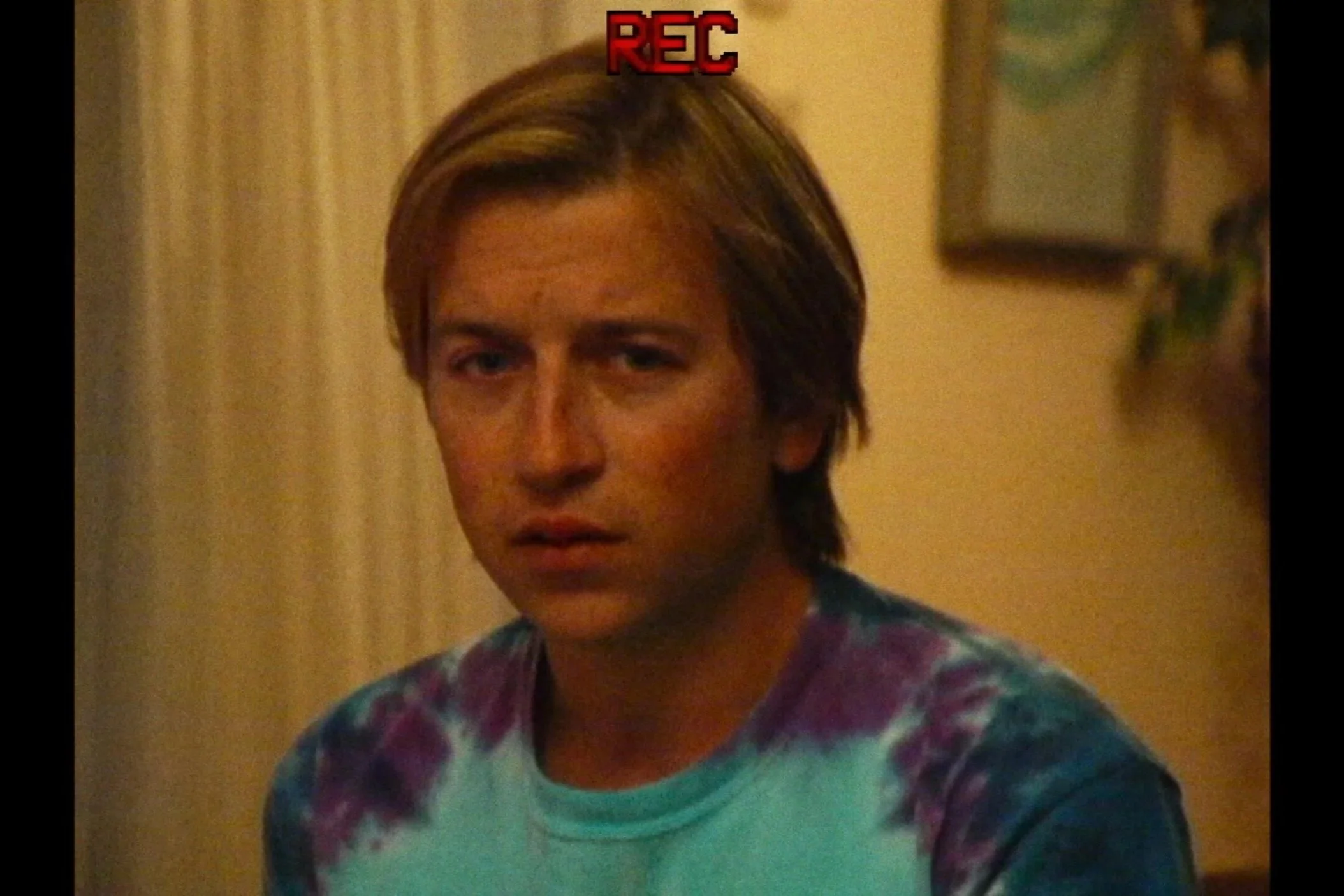
DG: Dan is so core to the audience's emotional experience of the film. He is, in many ways, a stand-in for the audience: this naive character who wants to believe in the best intentions of the people making the show. By the end, he's really hurt by the experience of making it and engaging so deeply in this process. The film initially ended on Chris stuck in this loop doing these incantations, repeating the chat logs, and it just seemed unnecessarily bleak and also left certain viewers hungering for more of a sense of closure with Dan. So we were wondering, What could possibly be that thing? Lance was out at dinner with Skyler at one point and was musing about this, and Skyler suggested, ‘Well, what if I got my SAG card?’ Lance liked that idea and pitched it to Ajon, and then Ajon said, ‘I love it; let’s go write it and shoot it.’ That was a very late-breaking development, but I think it addressed a need that we had identified after months of working on the finale and just being left with something that felt bleaker than it needed to be.
P: We live in an era where our reality has somewhat merged with social media and television, and Primetime really speaks to that blend. How did the current media landscape inform your approach to this story from 20 years ago?
DG: I love that interpretation of the film. I would say the editorial style of folding in all these fragments of other shows — like having flashes of Lost and Joey and whatnot on screen — feels almost like a very internet-y way of approaching the construction of the film. Our attention is always so fragmented now because we're bringing in all these other elements of a virtual reality into our physical reality, and there is no real hierarchy of different sources of information, whether it’s what’s in front of us literally in physical space or what we see on our screens. The edit of the film reflects that by treating all these different sources of footage, both found and original, as equal.
Skyler Gisondo as “Decoy Dan”. Courtesy of A24.
Also, to me, it’s not just a media critique. It's not just about the era of network news that we find ourselves in, in the mid-2000s. It's also about the early days of the internet and the origins of where we are now. I remember growing up and viewing the internet as this place of endless possibility. It was kind of the Wild West. And we don't really live in that reality anymore — it’s changed so much since then. But there is something a little bit nostalgic about it for me, just thinking about this as the beginning of what ultimately became the internet that we spend much of our time on.
P: Can you walk me through the challenges, or maybe the joys, of editing that intense, fast-paced climactic sequence?
DG: That was one of the toughest sequences to edit because you’re right, it has to be propulsive. It has to be fast-paced. You get to the end of the movie, and basically from the moment they arrive in Murphy and are pursuing this elusive whale figure [Bill Conradt (Alex Winter), an assistant district attorney], everything has to drive toward this conclusion. It really accelerates into what ultimately becomes this tragic outcome. So the pacing has to reflect that, but at the same time, the challenge is that — in the midst of all of that frenzied police activity and this whole circus that emerges outside of the whale's house — you also have to carve out a bit of space to have moments with each of the characters. It's the sequence in which you have to resolve Andy's storyline and her doubts about the show; it has to solidify Dan's misgivings about the entire show; and then you also have to eventually figure out what happens with Chris.
So being able to land all those emotional moments with these characters is really hard in the midst of all of that hullabaloo. It took a lot of trial and error just to get the exact right balance. I also have to credit Ari Balouzian, our composer, in particular, because he managed to strike that perfect balance in the music. It was really hard to capture both the emotional heft of it and this sense of frenzy going into that conclusion, and it certainly would not have been possible if he hadn't kept chipping away at that [cue] until the very end of the edit.
P: What do you hope audiences take away from the film?
DG: I hope audiences think critically about their own media consumption and about the costs of what they watch.
P: From an editing perspective, is there something you would like viewers to notice?
DG: The thing that I'm happiest with and proudest of is just the feeling of a collage, the way the film combines all of these different elements, both the numerous camera formats and outside footage, into something I hope feels like a very cohesive experience, where all of those formal flourishes feel grounded within the story itself. That was such a challenge to pull off, and it was so exciting for me to have such freedom in the edit. I really credit Lance with pushing me to that point.
Primetime is now playing in US theatres and opens in the UK on October 30th.