Other Mommy Composer Patrick Jonsson on Crafting an Uncanny Score to Match Jessica Chastain’s Performance
The Swedish film composer breaks down the music of the Blumhouse horror hit, from sampling a broken Lime bike to tracking down an esoteric German instrument from the 80s
by Lana Thorn 23 October 2026
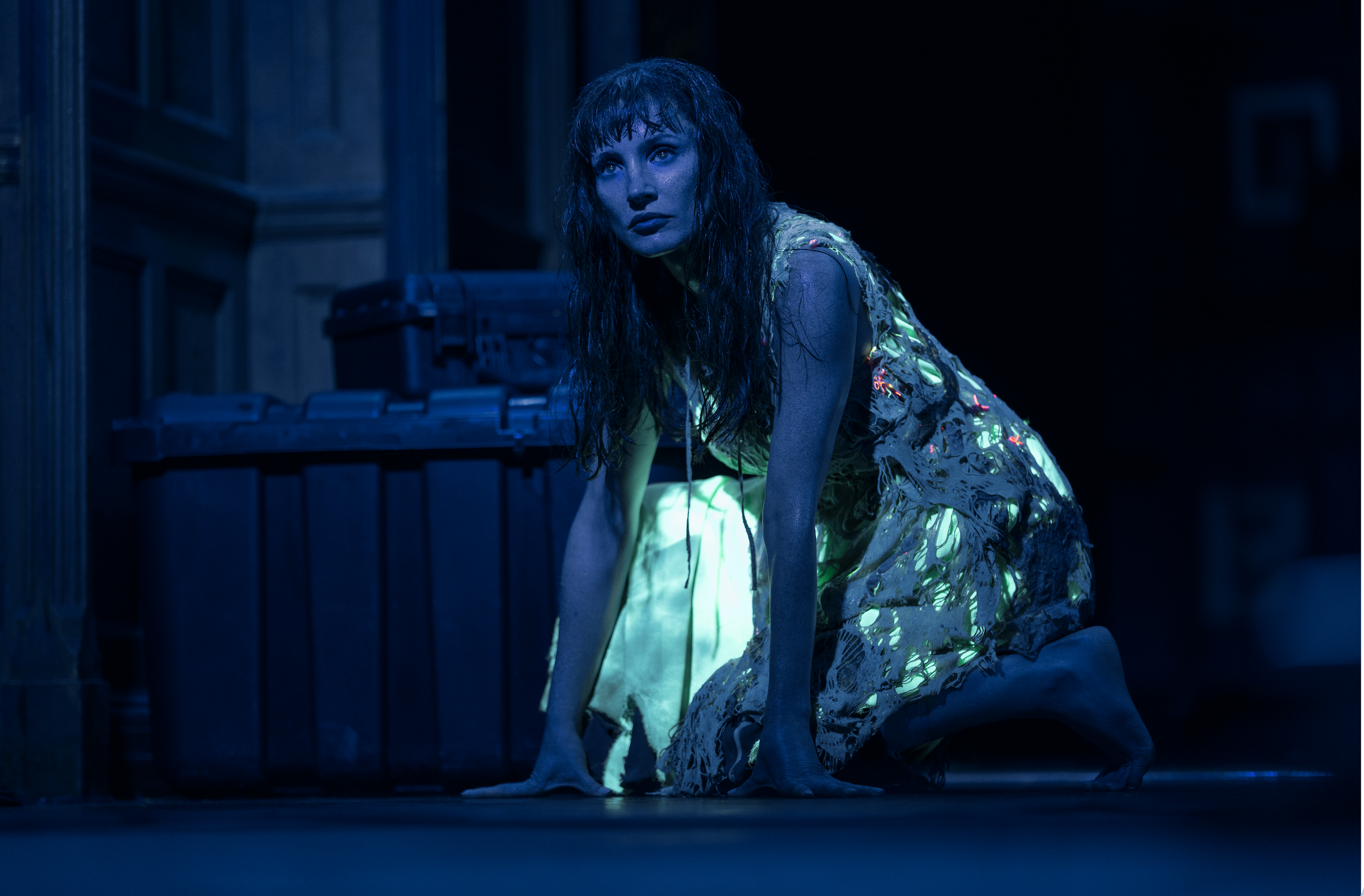
Universal
On the verge of crossing the $100 million mark at the worldwide box office, Other Mommy has been scaring audiences across the globe with its distinct, high-octane brand of uncanny valley horror. The Blumhouse adaptation of Josh Malerman’s acclaimed 2024 novel Incidents Around the House follows a young girl named Bela (Arabella Olivia Clark) who, amidst tension between her parents (Jessica Chastain and Jay Duplass), develops a close relationship with a devilish entity that looks exactly like her mother.
To score this trippy slice of psychological horror, which stands out immediately by having the whole household convinced of the supernatural force’s presence within the first five minutes, director Rob Savage enlisted his frequent collaborator Patrick Jonsson. The Emmy-nominated, London-based Swedish composer sat down with Phantasmag to discuss his approach to scoring horror movies, blending synth and orchestral elements with an ultra-rare instrument known as the daxophone, and his role in making each of the film’s numerous jump scares as terrifying as possible.
Phantasmag: Other Mommy sees you reunite with director Rob Savage after The Boogeyman. What was your first impression of the project when Rob approached you, and what were your early conversations like?
Patrick Jonsson: I've been working with Rob since he was making short films, which is really cool because then you have this shared language. I met Rob years ago at a screening of several short films, where I had scored a different short film. When I saw his short, I was blown away by how good it was and just pinned to the back of my seat, thinking, Wow, whoever made this, I really have to meet them [laughs]. I was really drawn to him. And then we’ve become really good friends since, and I’m very thankful to have been brought onto some of his projects. The Boogeyman was such a blast, and now with Other Mommy, we just decided to pull out all the stops. It’s such a different, exciting project — even structurally, everyone knows there’s this creature from about five minutes into the film. So the adults know, whereas typically you’d have a situation where no one believes the kid and it takes a while. It was really interesting to play around with the form.
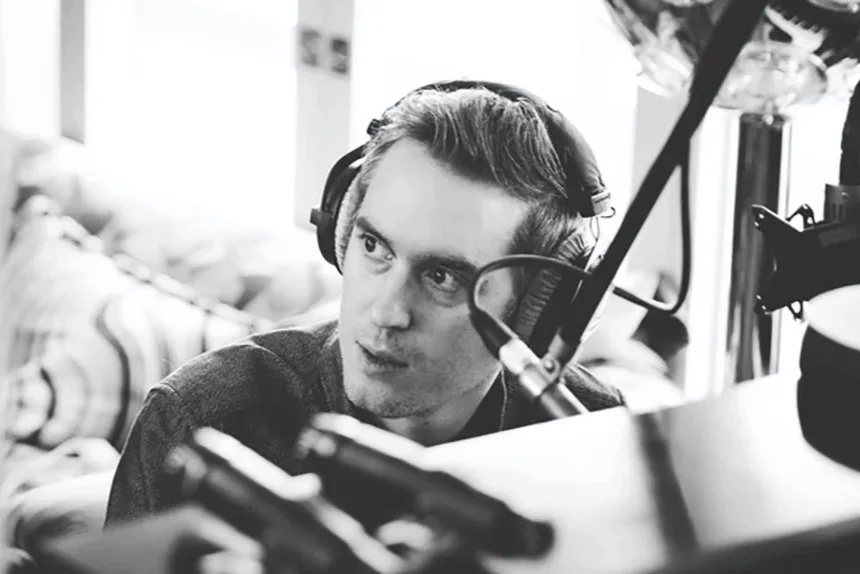
Composer Patrick Jonsson
For me, as someone who works in all kinds of genres, the thing I love about working in horror films is that it feels like this playground where anything is allowed musically. I love the feeling when you can’t quite put your finger on what you’re hearing. It’s something that goes straight into your body because of the immediacy of it, whether it's because of the emotional side or just the sheer force. Rob and I had a lot of conversations about the characters and about things being from Bella’s perspective. And if you listen to Jessica Chastain talk about how she approached the character, it’s interesting because it was very similar to my way of thinking about things. We didn't have a conversation about that; it just naturally emerged — this idea of the uncanny valley, where what you see isn’t quite what’s under the surface. There's always a tension and rigidity, and a performance on the creature's part in terms of it trying to seem normal, but there's something strange beneath the surface.
P: The score has a very fluid blend of orchestral and synth elements. How did you go about choosing the sonic palette for the movie?
PJ: That’s always the hardest thing. Because if you wanna slightly push the boundaries, sometimes you have to try and go down avenues that may be more challenging, but I think that’s always worthwhile. I did record a 22-piece string section in Berlin, but we weren’t so much recording pretty sounds as we were just making a racket in the studio, just making lots of noise, along with very uncomfortable quiet stuff too that's seeping under the surface.
I’m very interested in the place where electronic instruments meet traditional or live instruments and vice versa. For example, I’ll ask those performers to perform in a more robotic, rigid way, almost like it’s synthesised. Or I’ll grab that stuff and then loop it in post, where you have a really pristine recording, and then you break it down after. Or there's this instrument called the daxophone, which I had never come across before. I had two people help me with additional music — Richard Collins and Ioana Șelaru — and Ioana one day sent me a video of a single note someone playing the daxophone, and it had this throaty, guttural sound to it. I was just blown away and thought, I have to have one of these things. I don’t even know what it is, but I have to get my hands on one.
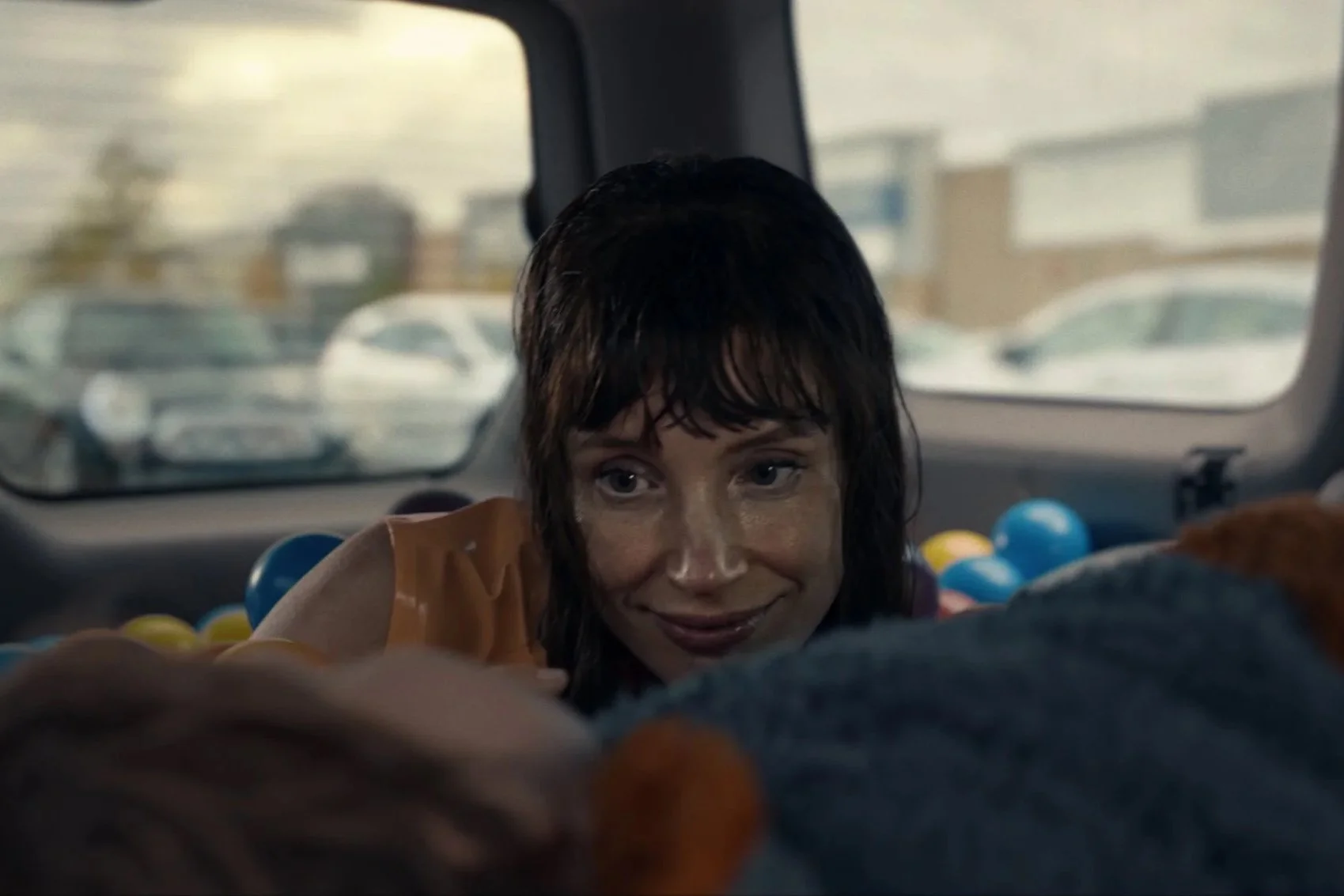
Jessica Chastain as “Other Mommy”. Courtesy of Universal Pictures.
I did a lot of research, and I discovered there are very few people in the world who make this thing. I managed to get in touch with this guy called ‘JohnSong’ in the US, and he was like, ‘I'm sorry, it's not possible.’ But somehow, with a bit of begging, we managed to make it so he could expedite the whole thing, and he could get it over to me. I'm very thankful to him for that because it was at a stage of the score where I needed it to come in — I kept leaving these holes in the score for where the daxophone was going to be. The thing about that one is it's an organic instrument, but it sounds almost synthesised. I also recorded voice a lot and asked them to sing into resonating chambers or drums or all kinds of stuff, so you're sort of manipulating the voice at the source or changing the embouchure of their mouth so it just comes out weird. If you play with that in post, then it's even more strange.
As far as the question of how I approached the instrumentation, it was really a slow process of discovery. One of my favourite things was when I was cycling home one day a few weeks into writing — I sometimes cycle home with rental Lime bikes — I jumped on one, and it was broken. The spokes were loose, so as I was cycling, it made this really interesting percussive sound but also had an overtone harmonic series to it, so it was also musical. My eyes just lit up. I was working on this scene in the movie where there’s a ball pit, and I realised that this was the sound of the ball pit. But I was on a bike in the middle of nowhere, so I had to get a lot of speed, hold my iPhone down, stop pedalling, and then let the sound go. Then I went up and down, fast and slow — I sampled it as much as possible. I went through a tunnel or on a bridge to get different ambiences. People must have thought I was nuts if they had seen me, but anything for the craft, right? It became a big thing in the score, which was awesome.
P: Can you tell me more about the daxophone?
PJ: It was developed by someone in Germany in the 80s. Most instruments have a resonating chamber, like a drum or a guitar. But a dexophone doesn't have that. So if you play it without amplifying it, it just sounds like you’re going up to a piece of wood and bowing it. But it has contact mics inside, and these things called tongues — they’re different shapes, and each one makes a different sound. John made four [tongues] for me. There’s one that’s more bird-like. I’m so glad to own [a daxophone] now. It’s not for every project, but it felt great here because Other Mommy is a mimic. So if this instrument has voice-like qualities, even though it’s clearly not a voice, when you get it right, there’s just this uncanniness to it where you think it’s both real and not real.
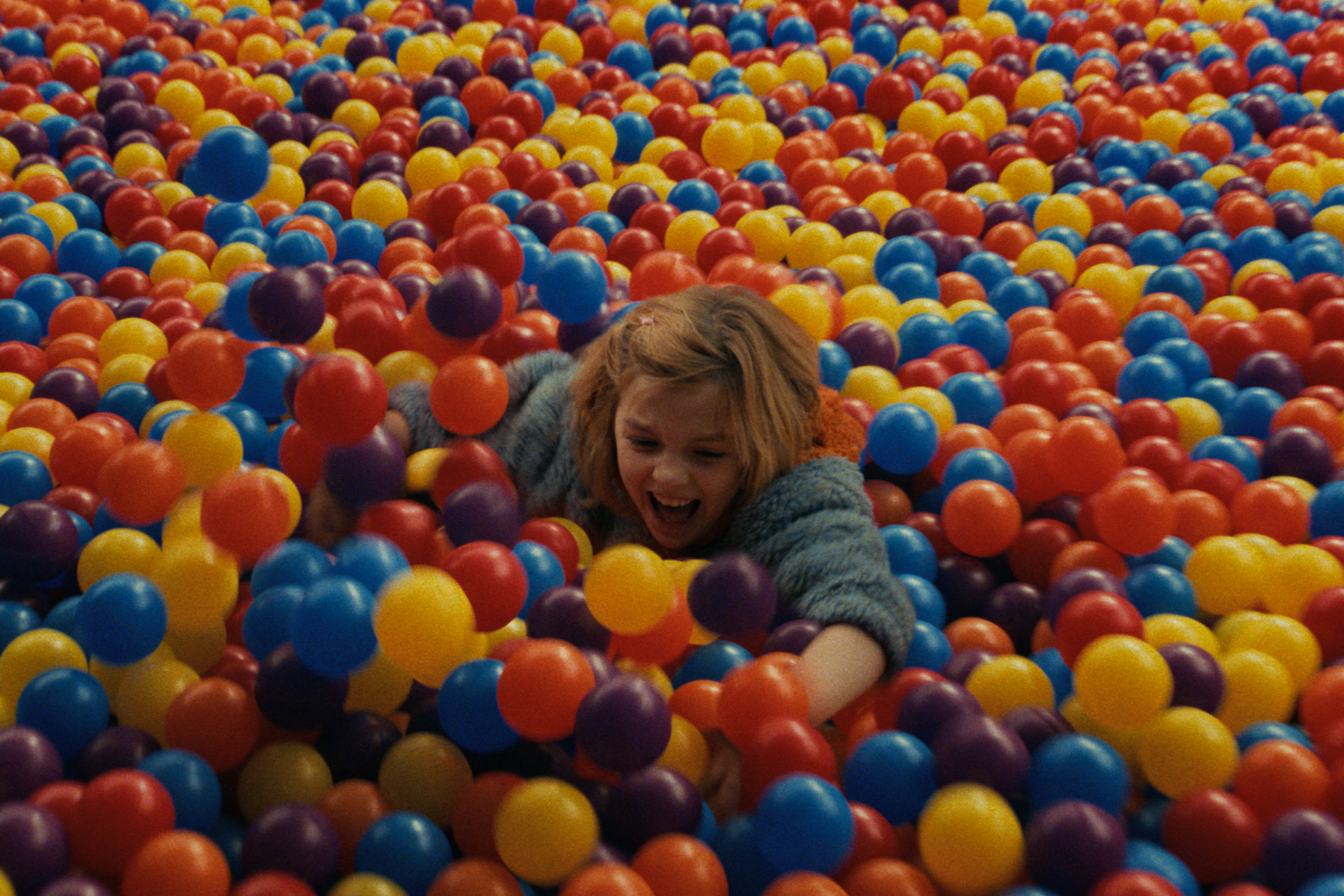
Arabella Olivia Clark as Bela. Courtesy of Universal Pictures.
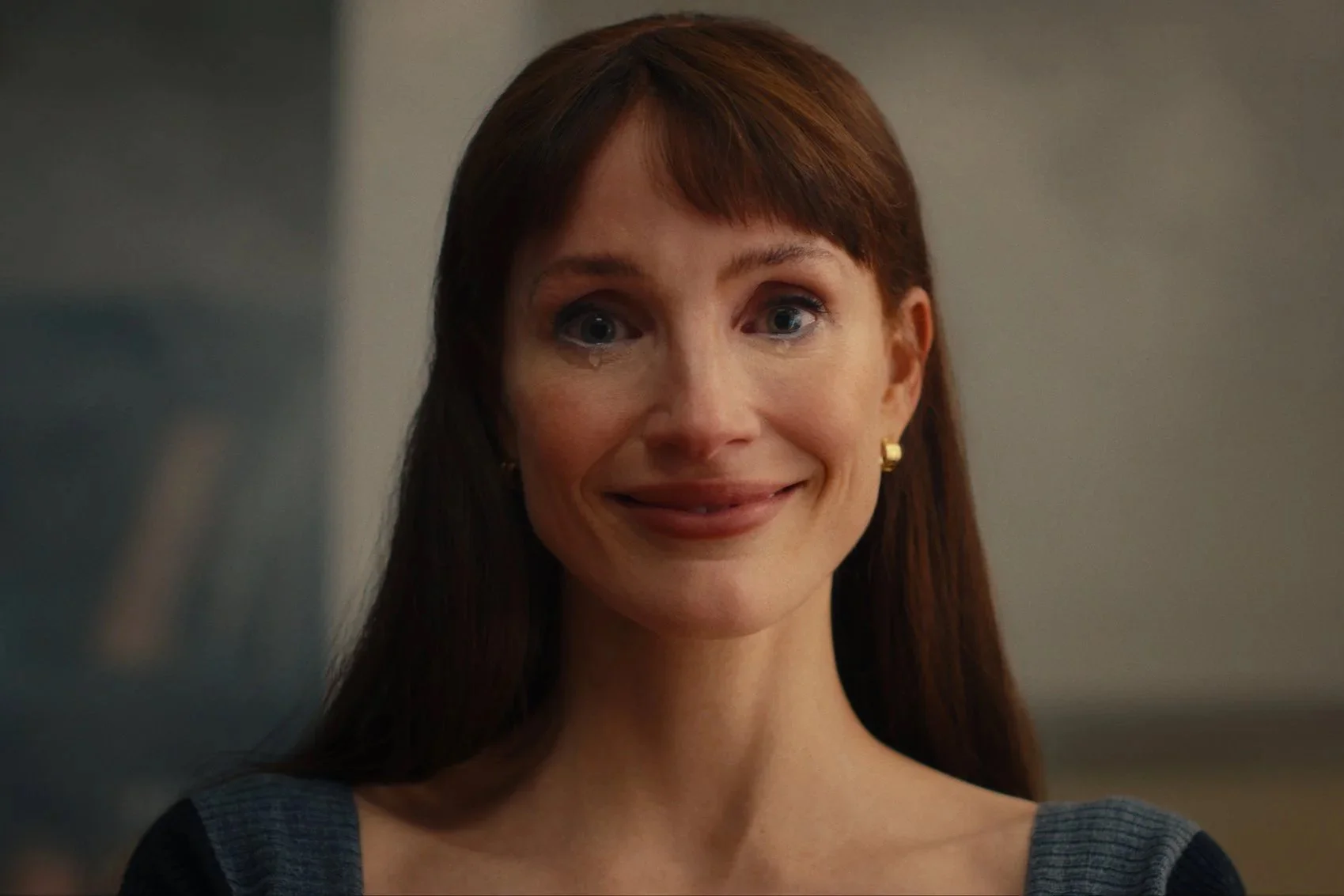
P: I wanted to talk a little bit more about Jessica’s creepy dual role. As the composer, how did you approach bringing the horrific qualities of that performance to life even more vividly?
PJ: It's just a privilege to come to work and have a picture in front of you that has that quality of acting from all the cast. When you have such great actors with such great performances, there's also an element of paying attention to when you're not needed. When it's more about leaving them some space, rather than pushing things, because you can lose the subtlety of what they're doing. Other times you can really highlight what they’re doing by using just the right scale, and sometimes you can go so big and match them — or even go against what they're doing, which yields really interesting results. In general, the way I think about it with acting is that they're channelling and embodying the characters, and I'm also trying to channel and embody the characters. I find that the most interesting stuff musically happens when you’ve really gotten into the project and understood that side of things.
There’s a filmmaker I worked with recently, and she used to say, ‘Don’t put a hat on a hat.’ That’s stuck with me, and now that I’ve been doing this for a while, I really do try to pay attention to the less-is-more approach, because we don’t need to be telling the audience everything all the time. The audience is smart, so we just need to choose our moments.
P: This film has an impressive number of jump scares. How do you go about pacing your score to make all of those moments have as much impact as possible?
PJ: It’s hard because Rob is steering the ship, right? He’s always gonna know when we're on the right side of the fence or not, but it's really fun to play with those expectations. You don’t wanna do the same trick a few times in a row, and you’re trying to keep the audience on their toes. Something I’ve learned through my time working with Rob is that not all jump scares are created equal. There are gag jump scares, there are real jump scares, and then there are some that are almost more powerful in their restraint. It’s almost a silent jump scare. What comes to mind is when they switch on the lights, and you just see the little fingers through the doorway. You can hit that, and I’m sure at some point we tried, but it’s just like it is with acting. Sometimes it's better to leave those things alone, and then you gotta save the tank for when you get to the end, and it just goes nuts.
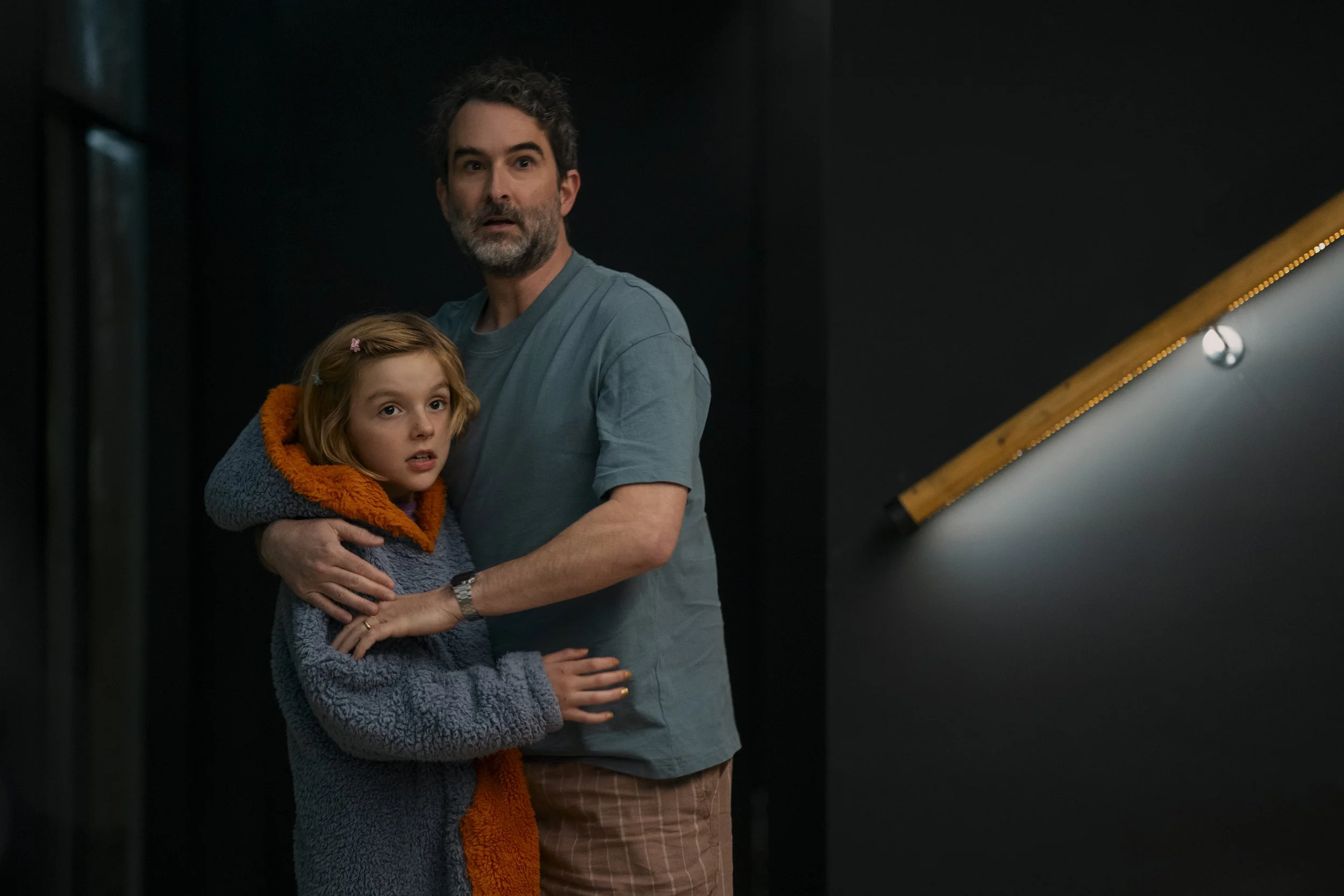
“Daddo” (Jay Duplass) protecting Bela (Arabella Olivia Clark)
P: Do you have a favourite type of jump scare?
PJ: The ones that make me laugh, where I know they’re coming, but they still get me [laughs]. Afterwards, I chuckle to myself and think, Okay, fine, you got me.
P: You’ve touched on this a little, but can you tell me more about how you approach horror movies compared to other genres?
PJ: There is a ton of freedom on the sonic front. I've been fortunate in my career that the filmmakers I've worked with have been very open-minded about music and open to experimentation. That’s my kinda thing, to do weird stuff and experiment. But I try to approach most films from an emotional core. On this film, that’s the relationship between the family members — in my mind, it’s the word shelter. It’s what Bela is looking for, and the reason she's even entertaining Other Mommy in the first place is that she's not getting that shelter from her mom and dad. Because their relationship is broken and they're lying to her on a regular basis, there's something that she's missing. It’s why she’s not scared of Other Mommy in the beginning, and it only gradually becomes that way.
So there is the emotional heart. The way I approached the film was more from a standpoint of understanding that we were gonna get to that place. But first, I wanted to feel what the pacing was gonna be, because I knew it was gonna be a real rollercoaster ride, and it was gonna be so punchy. There was going to be real light and shade in a lot of ways. So I wanted to try and discover a colour palette first, and then I would always test it against the emotional stuff to see if that was gonna work. There’s always emotional truth underneath horror films.
P: Was there a scene or a cue that was particularly challenging to work on?
PJ: The one that went through the most permutations was probably in the house when Other Mommy becomes the creature that's actually trying to harm Bela and her family. Before that, there’s a threat, but she never goes after them. There's a shift that happens there, and it's just such a loud scene in terms of sound design. It's so intense that being able to live there musically was something that really took a bit of exploration because it was an ever-evolving thing. But then it's funny, some of the other scenes that you would expect to be more difficult came very naturally. You never know.
Universal
P: Were there any other movie scores or scores in general that you wanted to reference?
PJ: I don't think there was anything specific, but of course, there are scores that I love and films that I love, and that all comes into your consciousness. I think it was more about what I didn't wanna do, which was go down the straight orchestral route. I like the modernity of the score and how it’s just so twisted. But there are scores I have always loved, like Under the Skin and The Exorcist.
P: Do you have a favourite horror score?
PJ: It Follows is wicked. There’s a relentlessness about the repetition of it, and I like the fact that you can be that electronic. That's inspiring to us composers. If you’re going old-timer, I would say The Exorcist for sure because it's iconic. You can just hum it straight away, can't you? There’s also all the Bernard Herrmann stuff, and I miss that feeling in modern films. Maybe that will come back at some point. If I had just done an electronic score before this, maybe I would have gone for full orchestral. It all depends on where you're at in your own journey.
P: Is there a dream horror film you would like to have scored, or a horror franchise you’d like to contribute to?
PJ: It’s hard because the reason you like the films is they’re already perfect. Even when they’re not perfect, they’re perfect. If you’re listening to your favourite song and there’s a squeak or a missed hit on the drum over there, you don’t want to change that. What I’ll say is I loved watching a lot of Asian horror films when I was younger. I vividly remember seeing Dark Water, The Ring, Suicide Club, and Battle Royale. I had a Blockbuster membership — this was before uni — and I would get three films a day. I’d get a horror film, a foreign film, and some kind of popcorn movie. I would just absorb so much of it, and I think that wave of horror was amazing. If you put a film like Dark Water in front of me [to score], I think I would have so much fun. I know it's not one of the famous ones like The Shining, but I think I would really enjoy that.
P: I get what you mean with those scores that shouldn’t be touched. I was thinking about Mike Flanagan’s new Exorcist film and how he said he’s not using the original score at all in the new movie. He thinks it will overshadow his work because it’s so good.
PJ: That’s interesting. There are people who will always be disappointed because it’s like if you go to a James Bond movie and they don't play the James Bond theme, right? But I totally get it.
Other Mommy is now playing in US and UK theatres.