Inside The Cycle: The Stars and Director on Their Coastal Creature Feature That Stephen King Wants You to See
Director Jordan Downey and actors Deborah Ann Woll (Daredevil) and Jeffrey Donovan (Sicario) break down Shudder’s buzzy new horror film
by Lana Thorn 22 October 2026
Shudder
In a stellar year for indie horror cinema (see Obsession, Backrooms, and much more), The Cycle manages to stand out. This twisty genre mash-up from Jordan Downey (V/H/S/Beyond) blends horror mysteries like Se7en and The Silence of the Lambs with the old-school charm of a practical effects-driven creature feature, with its atmospheric genre thrills and inventive framework catching the eye of no less than Stephen King, who has hailed the film as “special” and urged horror buffs to mark their calendars for its release.
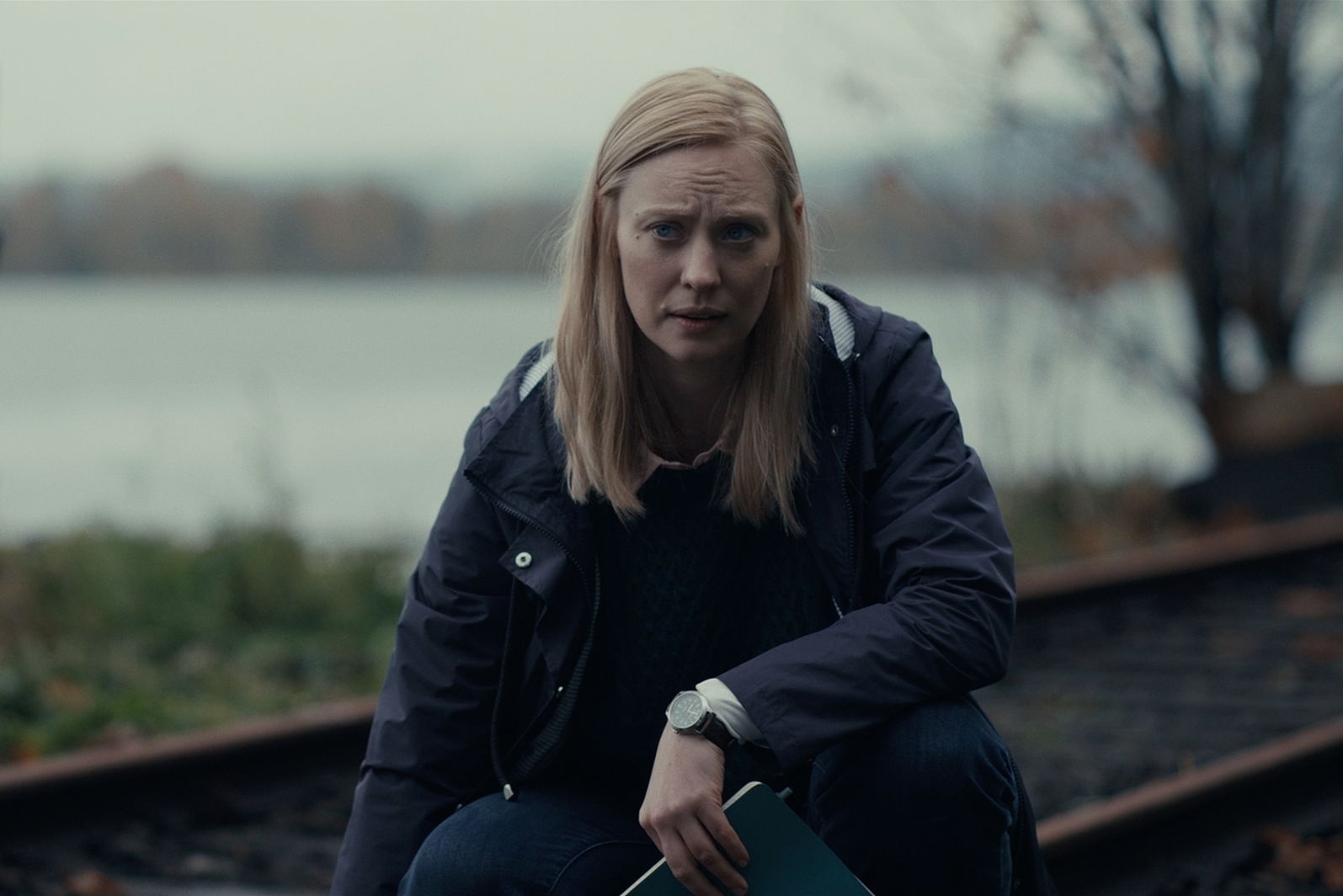
Unfolding in a creepy coastal town, The Cycle begins as the bizarrely preserved body of a man missing for 36 years is discovered at the scene of a horrific crime. His estranged daughter, Meg (Deborah Ann Woll), a forensic scientist, teams up with a local police officer, Marks (Jeffrey Donovan), to investigate, but they soon find themselves up against forces that go far beyond human understanding.
Downey, Woll, and Donovan sat down with Phantasmag to discuss working with creature performer Trevor Newlin (known for playing the Xenomorph in Alien: Romulus), taking inspiration from series like True Detective and The X-Files, and why audiences enjoy handmade craft in the age of digital effects and AI.
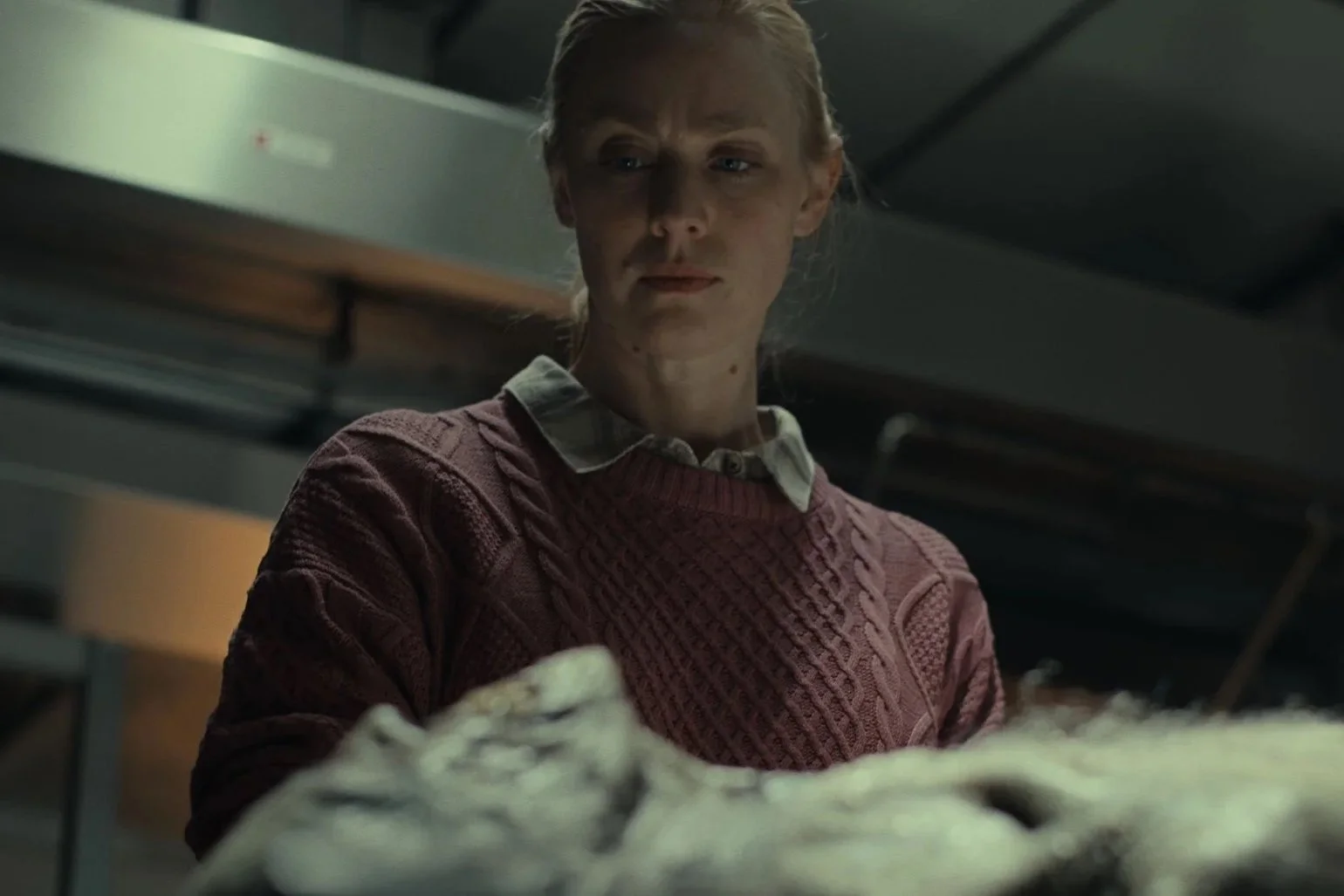
Deborah Ann Woll as Meg. Courtesy of Shudder.
Director Jordan Downey
Phantasmag: The Cycle is an exciting blend of horror crime thrillers and creature features. What attracted you to this particular genre mash-up, and what were your inspirations for the tone and the look of the film?
Jordan Downey: The idea was what attracted me. I'm a huge horror fan myself, and I'm always just thinking, Well, what doesn't exist? What do I wish I could go and watch tonight? And if that doesn't exist, then maybe it's my responsibility to try and make that happen. And in this case of The Cycle, we just had the hook, the concept for it, which is the spoilery part of the story. Then [screenwriter and cinematographer Kevin Stewart and I] thought that was so cool and unique and original that we had to build a movie around it and spend years of our lives bringing it to life [laughs].
As for the inspirations, there are kind of three elements to this. There's crime thriller/police investigation, creature feature, and coastal horror, which doesn't get mentioned as much, but I also love that. In the crime thriller world, we would look at some of the greats: True Detective, The X-Files, Zodiac, Se7en, and The Sixth Sense. There are so many of these that I grew up on, and especially the 90s and early 2000s were just filled with that kind of movie. For creature features, it was The Thing, The Blob, and The Fly, those movies that had really great practical effects and these great scary creatures. In the case of The Fly, it’s a tragic creature, which is very applicable to The Cycle. Then the coastal horror influences were The Fog, Jaws, and The Birds. Dead & Buried is another sort of random one. So I'd look at those a lot — I love the sound of the ocean in the background and certain sea birds and the clanging of ship masts. We tried to work as much of that into The Cycle as possible.
P: The practical effects in this film are so visceral and have a real old-school charm to them. What made you want to prioritise that kind of filmmaking?
JD: The great thing is that the most consistent question everyone has wanted to ask is about the practical effects. And that’s not taking away from how great the cast is or anything else, but what that shows me is that other people think the effects are cool, and it’s great to know that in the age of digital effects and now AI, people are gravitating towards physical media, whether that’s buying vinyl and Blu-rays, or in the case of this movie, practical effects. We still like to see things with our own eyes that are human-made, that you can touch and smell.
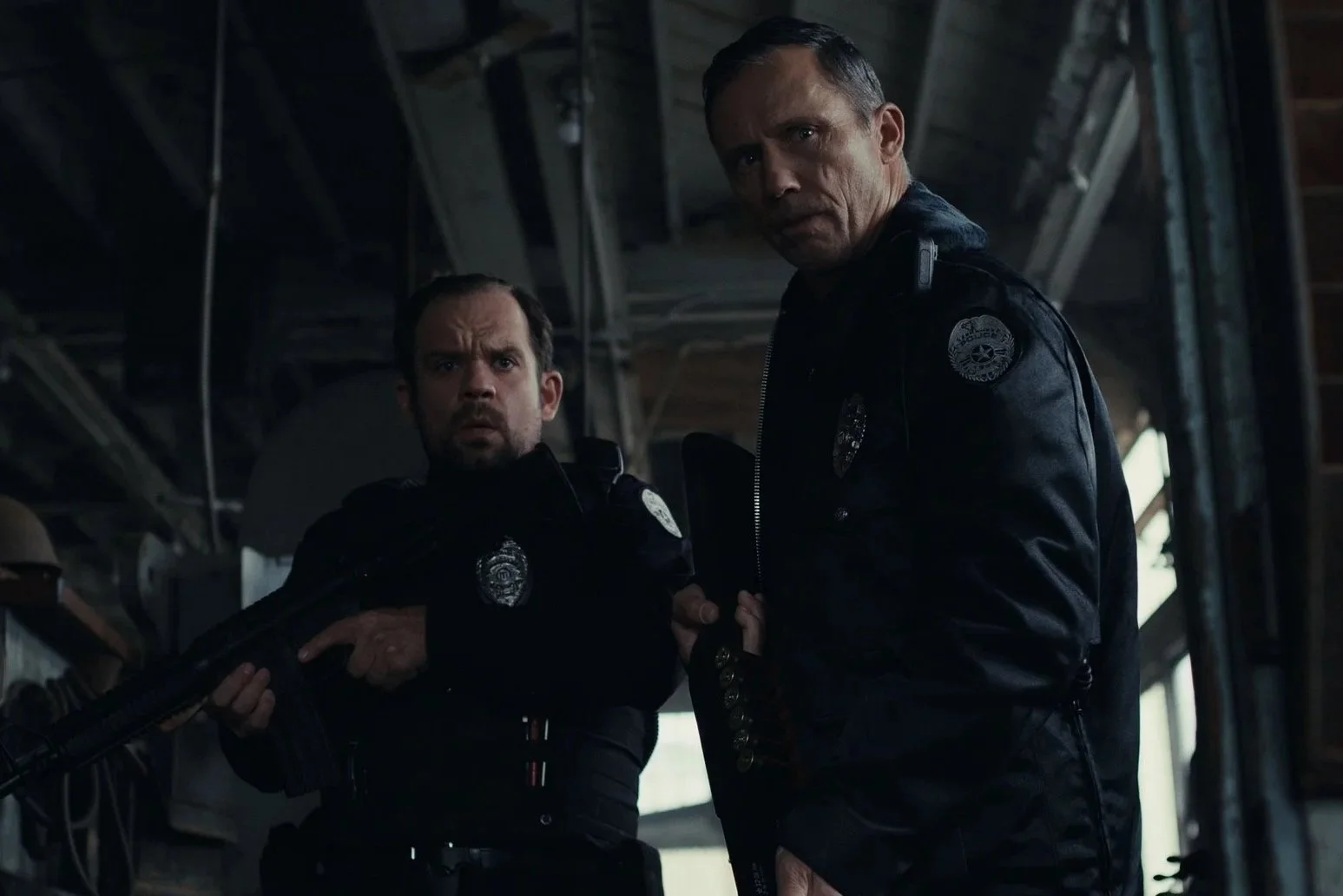
Jeffrey Donovan as Marks (right) and Jack Doolan as Lenny (left). Courtesy of Shudder.
I just grew up watching those kinds of movies, and I think there’s something special about the accidents that come from practical effects because you've got them on set, and maybe they don't work exactly as you planned, but they give you something unique and unexpected. Or maybe the skin stretches in a way that you didn't expect, so you can move it around and shake it and make it into something tangible and scary. I think there's no comparison really for how that stuff ultimately looks on screen and the believability that it gives an audience, knowing that you really filmed these things. That makes the viewing experience better for me when I'm watching movies.
P: At the heart of The Cycle is a horrific but strangely preserved corpse. Can you walk me through the process of designing the look of that grotesque figure? Because it’s so specific.
JD: You’re right, we’re not making a cable television show that needs to look perfectly anatomically correct. It’s a horror movie, and the corpse should look freaky but believable. It really begins with the life-cast. There's an actor named Graham Mackie who has sadly passed away since we did this, but Graham came in to Patrick Magee, our special effects makeup artist, and they did a life cast. So they covered him in plaster head to toe. He's fully nude — I wasn't there, but that was quite the experience for everyone involved [laughs] — and then you can pull the latex out of that.
So we had Graham, but the actor who plays the character of Peter is David Myers Gregory, and luckily they’re about the same age, and they look similar. So once they had that, then they were able to sculpt in some of David's features a little bit more into that face. A lot of the freaky nature just comes from Patrick McGee: the way you curl up the lip and have the teeth exposed, this kind of wicked smile because of the way the skin has decomposed. It's incredibly lifelike, gross, and detailed, and it's a little bit lifted away from the realism because it's a horror movie monster, but yeah, the corpse was important to get right because it's on screen for so much of the movie.
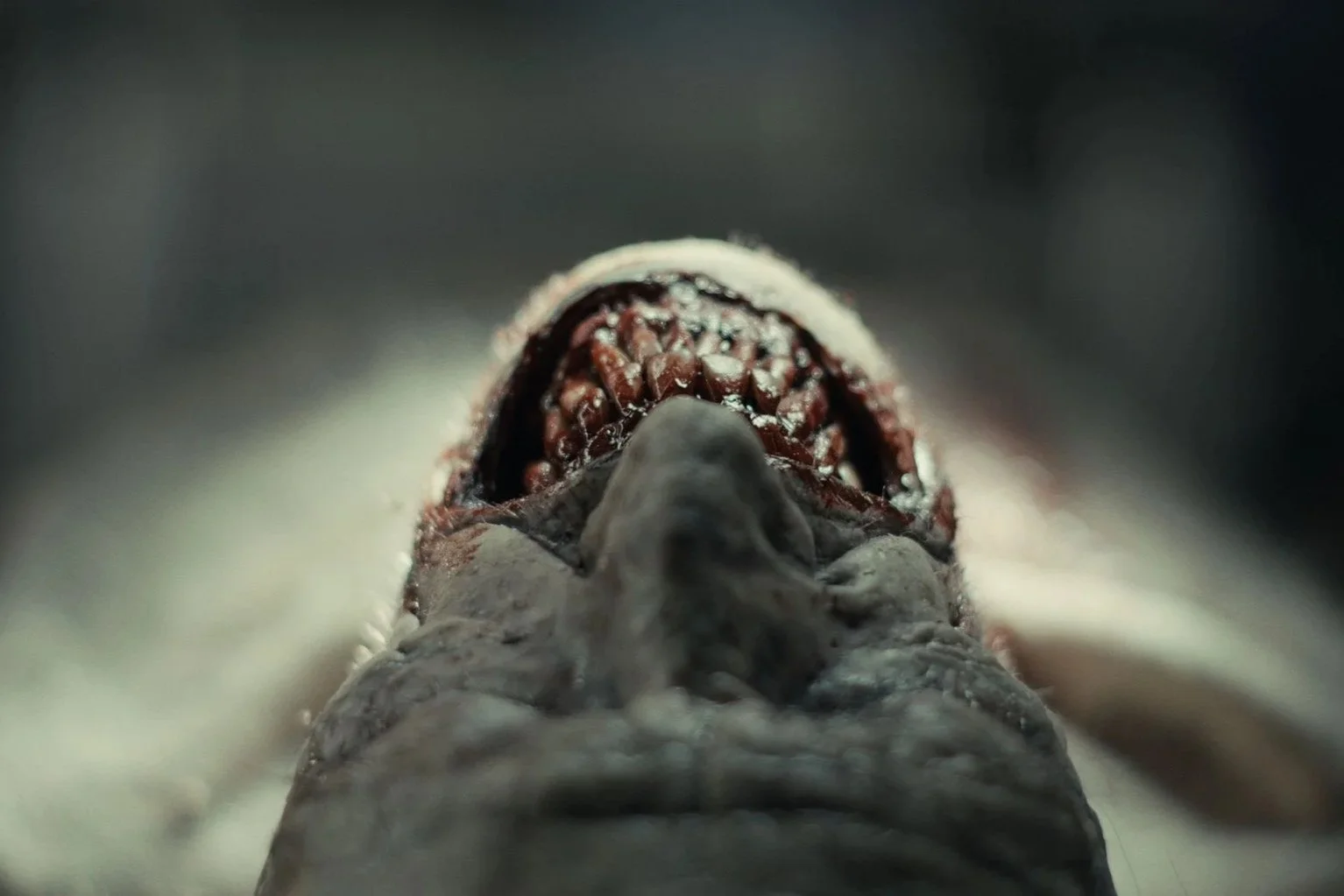
The strange, preserved corpse at the heart of The Cycle. Courtesy of Shudder.
P: The Cycle is also anchored by a real emotional arc for the character of Meg. What initial conversations did you have with Deborah Ann Woll about creating the character?
JD: It was exactly that: conversations. When we first met, she actually wanted to know about how we were gonna do this, and she cared about not just the character stuff, but how we were gonna shoot. Were we really gonna take these cameras out to these locations in Oregon, and were we really gonna shoot practical effects? Just as important to her as the story was the question of whether we were going to do things for real.
A lot of the drama is in the script from the start, the tragedy and the heart of the movie, because I love horror movies that have that soul and pathos. But then Deborah also had a lot of really good notes and feedback, and criticism of how we could make things better after our first meeting. This story about a daughter looking for her lost father and the trauma of that can sometimes be overstated and melodramatic. So a lot of it was us just trying to find that careful balance and maybe pulling out some dialogue or just the way that Deborah would handle certain things to keep that relationship with her father as cold and distant as possible until it breaks at the end.
Deborah Ann Woll (“Meg”) and Jeffrey Donovan (“Marks”)
Phantasmag: How did both of you get attached to the project, and what was your initial impression of this wild script?
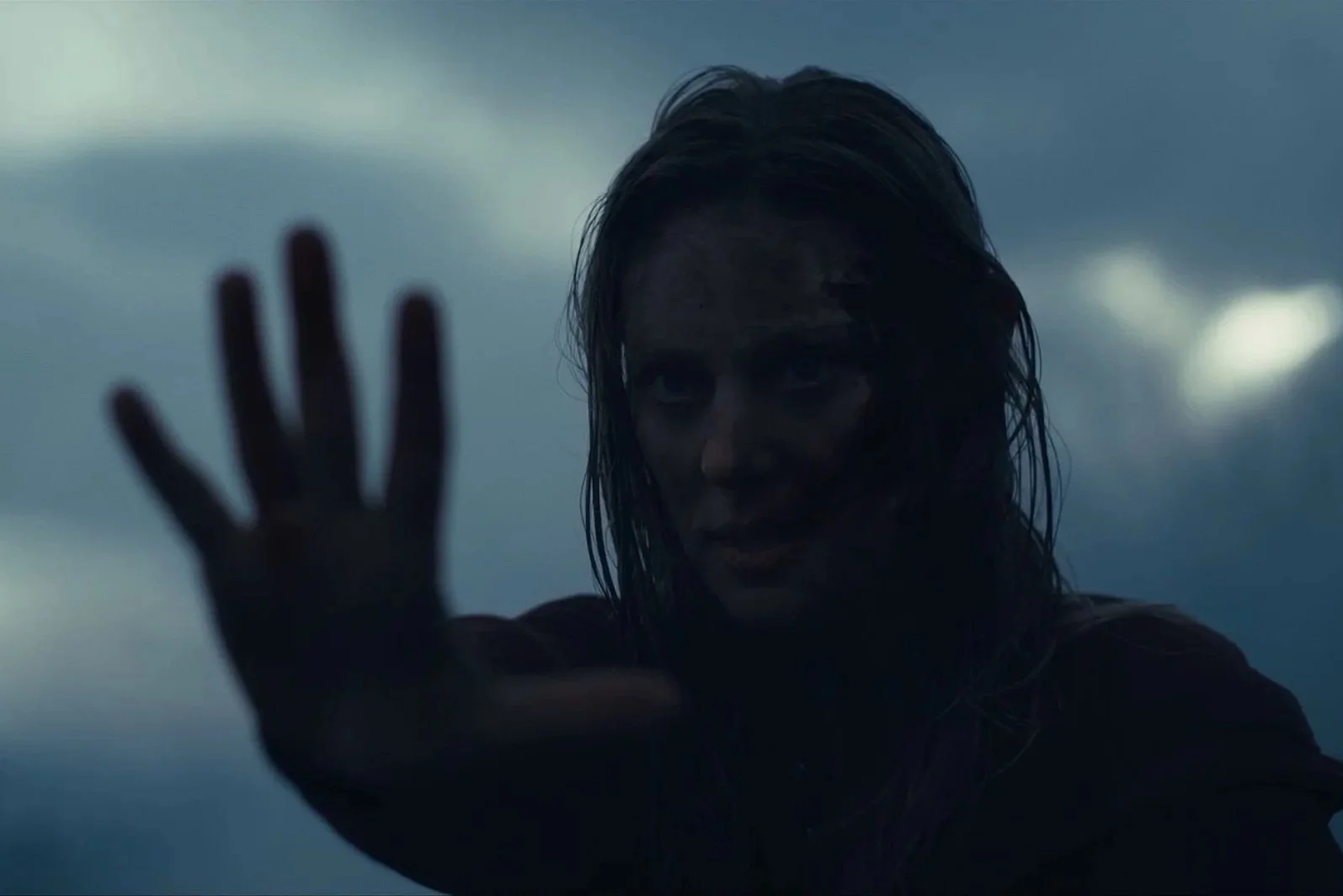
Deborah Ann Woll: Jordan had sent the script over to my managers, and I was so impressed and immediately dragged into the story. I had a meeting with him, and I think my two questions were: ‘Will you be using practical effects?’ and ‘How collaborative are you open to being about this role?’ And he said, ‘Yes, we'll be using practical effects’ and, ‘Yes, I'm open to being as collaborative as you would like to be.’ And I said, ‘Great, I'm in’ [laughs]. I just thought it was a unique way to tell a story. It felt like my favourite horror films. It had that same quality of being a great film first and then, second, also scary. I appreciated that, and I’m so glad to this day that I decided to do it.
Shudder
Jeffrey Donovan: It got sent to me and read, ‘This is a talented filmmaker. Check out his movie The Head Hunter.’ I watched it, and Deb, if you remember, [there was a shot] toward the end of The Head Hunter that was just a locked-off camera that looked outside and slowly panned for about 20 seconds. And I was like, ‘Oh, this guy is confident.’ Isn't that funny, the little tiny things that you see? Not even the big picture. So then I read the script and knew Deb was attached, which was a huge bonus. I talked to Jordan, and I said, ‘What do you think about this: maybe he’s not as verbose? Maybe he’s not the typical alpha cop?’ We started collaborating, and I signed on, and it was just a joy from then on.
P: Speaking of practical effects, this film has such an old-school feel to it. As an actor, what value did the practical effects bring to the film, and what was it like acting opposite the creature in those pivotal third-act scenes?
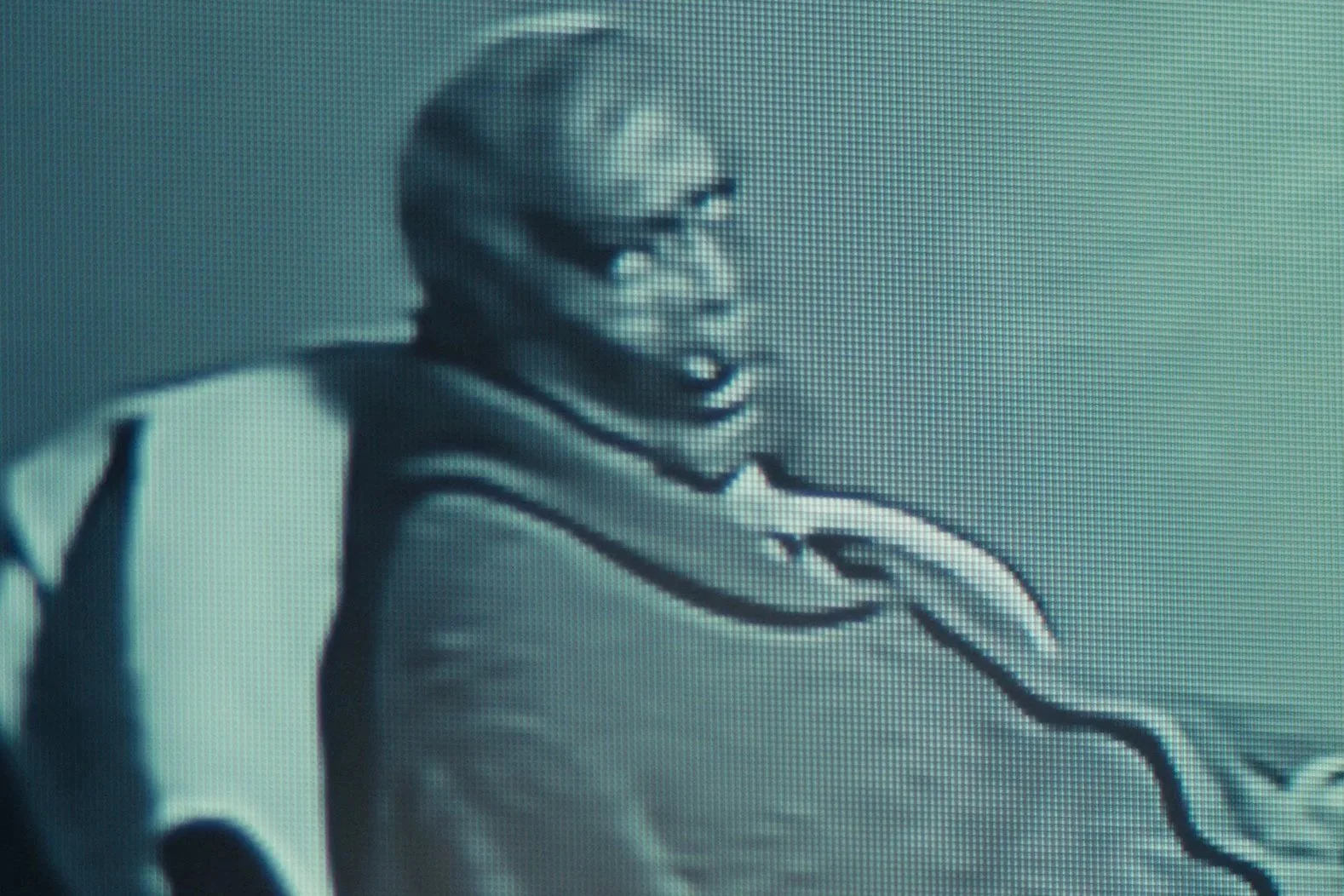
JD: You know, I realised it’s easy to say it’s a practical [effects-driven movie] versus a big CGI thing, but what I think people don’t know is that oftentimes when it is CGI — or even if if’s not, and the actor is not there because of the limitations of the room — there’s a matte box on the camera. It’s just a square on the lens to shade light from coming in and making a flare. Then they’ll put a piece of pink tape on it and say, ‘That’s who’s dying’ or ‘That’s an alien spaceship’, and that’s what you act against. But when we were in the room with Trevor [Newlin, the creature performer known for playing the Xenomorph in Alien: Romulus], his energy, aura, and persona gave us so much to react to, versus a piece of tape on a matte box. It was remarkable to be in the room with him.
DBW: Part of our job is to be able to do that, to act authentically to a piece of tape, but it's really nice when you don't have to [laughs]. It's really nice when there's something else there, and even if for eye line's sake you're still looking at a piece of tape, the fact that there is a monster in the room, and that that monster has a beating heart and has a point of view, just completely switches things up for you. Also, this is gonna sound weird, but there's a person to let down. You're motivated to not do that. I’m wanting them to get that monster on camera, and I want the audience to be as terrified of it as possible.
Shudder
P: The Cycle is a part of a very stacked year for the horror genre, which is having a real moment. What is your relationship like to the genre, and why do you think it's resonating so much with audiences right now specifically?
DBW: I do love horror movies, but I’ve always said that I’m actually not a horror movie fan. It’s just that my favourite movies happen to be horror movies. Your average run-of-the-mill slasher movie — I’m just not that interested in something that isn’t thoughtfully presented. But there are great films that also happen to be horrifying. Those are some of the best films because there's no reason to make a genre film unless it is an allegory for something else within our society. They’re meant to be a metaphor for something deeper, and when you look at these great films coming out now that are horror films, you look at the great horror films of old, and they all have something to say. Frankenstein is just a stand-in for our own God complex, you know?
P: If you were programming a double feature with The Cycle, what film would you choose as the companion movie?
DBW: I would pick Alien, only because when I first read this script, I was like: This is my Alien. This is my slow-burn great movie with a kickass heroine that ends with an amazing practical effects creature feature. My favourite quote about that movie is like, ‘She was right all along, and the only people that live are her and the cat’ [laughs].
JD: Jaws, where it all started with practical effects. CGI wasn't even an acronym back then [laughs].
P: While still being a real gore fest, The Cycle has a very emotionally grounded narrative. How did each of you set about balancing those two elements in your performances?
JD: For me, the stakes have always gotta be high, no matter whether you’re taking your child to school or you're battling a supernatural creature. The reason why you make movies is that you're putting usually ordinary people in extraordinary circumstances, and it's fun to watch that.
DBW: The characters in the story are a forensic anthropologist and a police detective. On a certain level, these are people who are in some level desensitised to gore, to death. What that means is that the camera work is going to do that work for us. We don't need to add anything and be like, ‘Ew, that's gross,’ or add... You know, we can just be clinical forensic people who are dealing with what’s in front of us and let the artistry of the corpse do the work for itself.
The Cycle is streaming on Shudder in the US and UK from this Friday, October 23rd.