What Americans Might Miss Watching The Bone Temple: The Distinctly British Horror of the 28 Years Later Sequel
With references to Jimmy Savile and the NHS, Nia DaCosta’s post-apocalyptic sequel is as much a meditation on British culture as it is a zombie film
by Alex Kaan 19 January 2026
© Sony Pictures
The popularity of 28 Years Later: The Bone Temple, the fourth film in the British post-apocalyptic horror franchise and a direct sequel to last June’s 28 Years Later, has led to a bizarre phenomenon at the cinema: American moviegoers are cosplaying as Jimmy Savile.
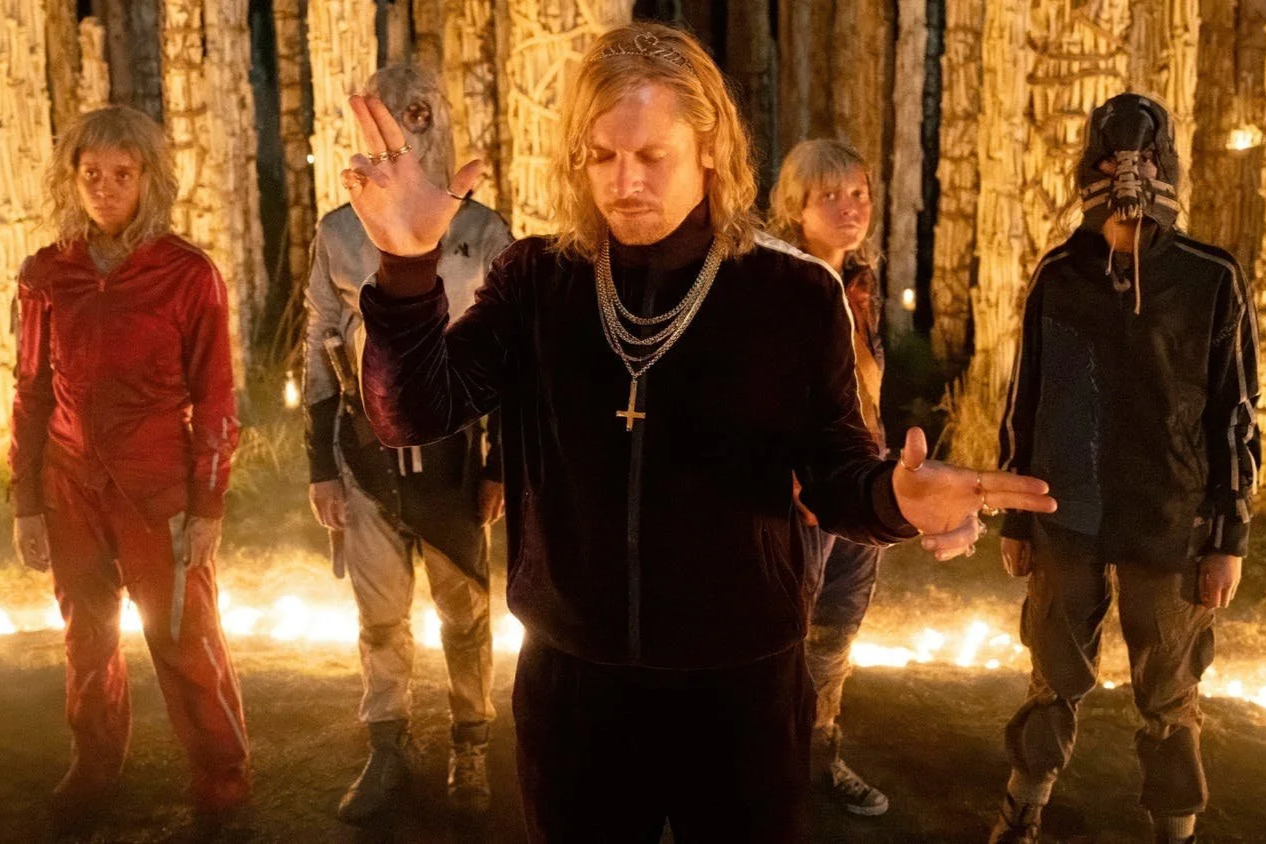
Well, not exactly. Americans, Canadians, and Australians (as reported by RADGE magazine) are dressing up as the film’s cult leader Jimmy Crystal (Jack O’Connell) and his band of equally deranged lookalikes—who all dress in tracksuits, sport a mid-length bleach blonde wig, and take the name “Jimmy” (or “Jimmima”, in the rare exception). While the Hollywood Reporter recently labelled the costume’s evocation a “fan theory”, the subtext is blatantly obvious: the cult is modelled in the unmistakable image of famed British media personality Jimmy Savile, who was exposed as a prolific sexual predator who predominantly abused children.
For American audiences, imagine if Jeffrey Epstein had an idiosyncratic, instantly recognisable “look” that was directly replicated by a horror villain. To dress up in that image, even if it’s through the barrier of a charismatic film character, would be in poor taste. Moreover, in this hypothetical, US viewers surely would heavily critique British fans for doing so, given the America-centric global news cycle and an expectation that the rest of the world would be familiar with it. This is not an indictment of global audiences that would have simply not understood the reference to Savile, but important context to the response to this shocking imagery. The tone-deaf cosplaying is proof that 28 Years Later: The Bone Temple is a singularly British film, and it’s one that will be enriched by an understanding of its references to British culture and history.
[Spoilers for 28 Years Later and 28 Years Later: The Bone Temple below]
© Sony Pictures
The Brexit Parallel
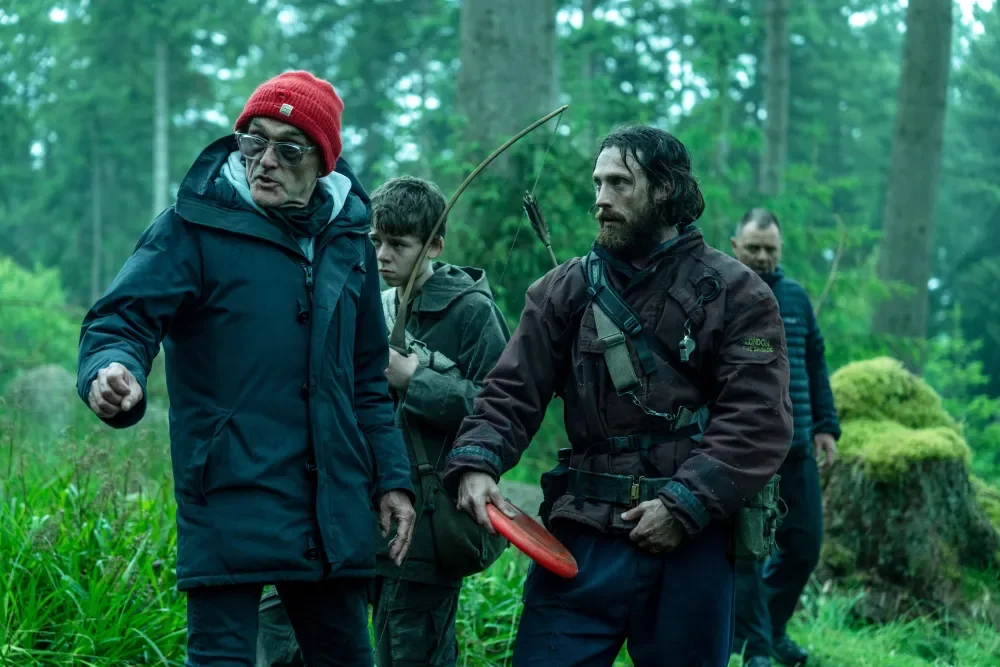
The preceding film in the franchise, 28 Years Later, was both a heartbreaking, humanist coming-of-age story—following 12-year-old Spike (Alfie Williams) as he battles infected while searching for a doctor (Ralph Fiennes) for his unwell mother, Isla (Jodie Comer)—and a Brexit allegory. After a referendum in 2016, the United Kingdom withdrew from the European Union in a decision fundamentally rooted in national identity. The isolation enacted by the referendum pairs nicely with a post-apocalyptic pandemic film—the titles at the beginning of the first instalment in the planned trilogy explain that the virus has been contained within the UK, and Spike’s small island community serves as a microcosm for Britain. Director Danny Boyle described the version of British history that the village passes onto its children as “selective and backward-looking”, and the party scene—when Spike and his father, Jamie (Aaron Taylor-Johnson) return after his first trip to the mainland—is a perfect illustration of this. A disorienting cacophony of Dutch angles and shaky cam with a portrait of Queen Elizabeth II watching over the scene, Spike grows overwhelmed as Jamie exaggerates the details of their hunting trip, calling him “Billy Big Bullocks” and “a fucking giant killer”.
Spike tries to clarify that that’s not what happened before eventually leaving his own party, and while Jamie’s intentions were pure, the scene becomes pivotal to understanding the as-yet-unfinished 28 Years Later trilogy: it’s an overzealous and ultimately unnerving celebration of British excellence and an active misremembering, or rather falsifying, of history—linked inextricably to a toxic masculine ideal that Jamie expects Spike to live up to. Crucially, what sets the plot into motion the next morning is that Spike has caught his father cheating and learned that there is a doctor on the mainland, leaving him furious that Jamie has essentially left Isla to slowly die. Jamie strikes his son across the face when confronted, the final straw that makes Spike sneak off the island with his mother to get her the care she needs himself. Spike sees through the village’s self-aggrandising celebration, and he sees through the macho hero that his father appears to be—the facade of British excellence is unappealing when nobody is caring for his sick mother.
When Jimmy Crystal and his cult—a vicious gang part-Clockwork Orange, part-Power Rangers—appeared in the film's cliffhanger ending, the jarring Jimmy Savile-inspired costumes already caused backlash last year in the British media. How could a horror film reference such an evil real-life figure in the name of entertainment? Many outlets opined that the justification would become clear in the sequel, but 28 Years Later’s engagement with British history already explained it. Dressing Jack O’Connell’s villain to resemble a notorious pedophile is an outrageously bold and controversial choice, but it works wonders as a critique of the amnesiac nostalgia behind the rise in British nationalism and MAGA.
© Sony Pictures
From Jimmy Savile to Duran Duran
While 28 Years Later explored Brexit and national identity, The Bone Temple focuses explicitly on how the country’s cultural past is used to shape identity in a post-apocalyptic world. In Alex Garland’s two-pronged script, the protagonists of the sequel, Dr Kelson (Ralph Fiennes) and Jimmy Crystal, are both defined by their relationship to British popular culture. While Kelson listens to Duran Duran to preserve his humanity, Jimmy clings to a perverse memory of the TV he watched as a child (Teletubbies and Jimmy Savile).
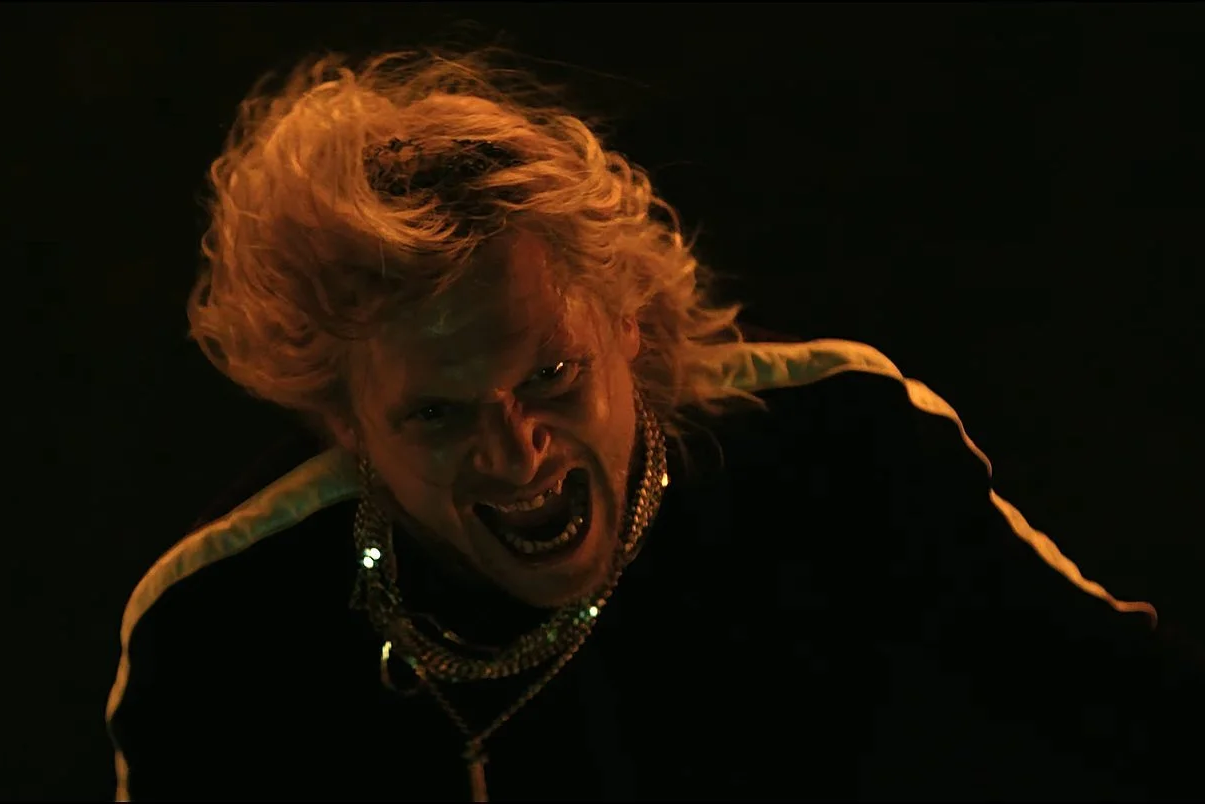
In Jimmy Crystal’s case, the warped amalgamation of his childhood television favourites is a haunting case of arrested development. 28 Years Later opens with an eight-year-old Jimmy watching the Teletubbies before his family is killed by the infected, and his vicar father gleefully embraces his death because he interprets the virus as a divine sign of the end times. Without anyone to raise him, that violent last memory of his father horrifically blends with the remembrance of his favourite programmes, moulding him into a murderer who dresses like Jimmy Savile, kills in the name of Satan, and recaps old Teletubbies episodes like ancient campfire stories to his poor victims. While Savile is never mentioned explicitly, the reference is even more eerie and poignant because, with the outbreak taking place in 2002, he would have never been exposed for his crimes. As malicious and murderous as Jimmy Crystal may be, he’s not modelling himself after a pedophile, but rather constructing an identity that he sees as powerful. O’Connell has repeatedly referred to the Savile evocation as a comment on “unchecked power”.
© Sony Pictures
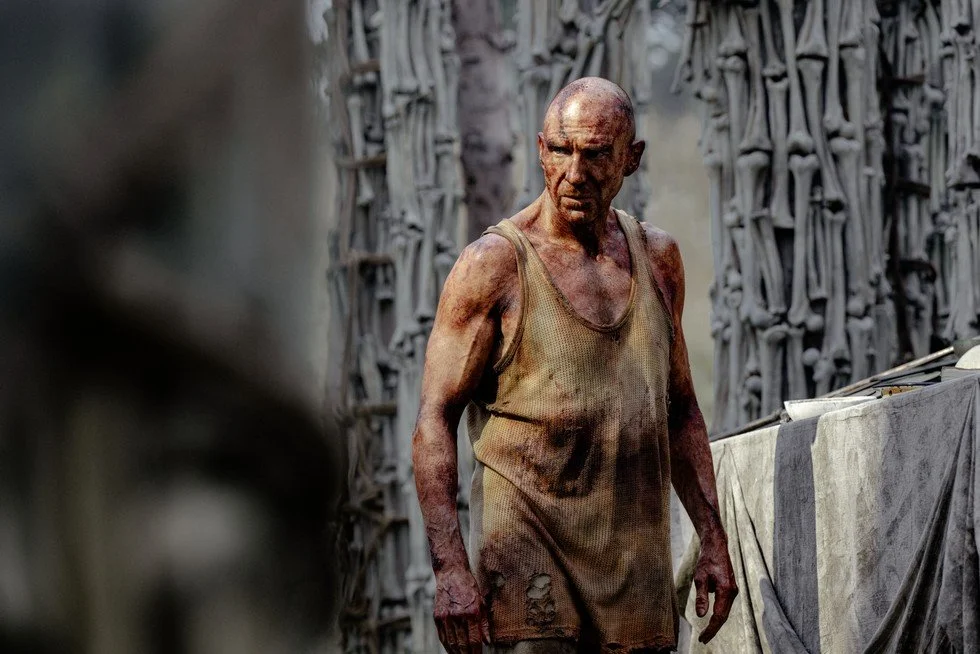
Kelson is the perfect foil to Crystal. While the bleach-blonde villain represents a past misremembered, Fiennes’ gentle doctor is a solitary man staying in touch with the man he was before the outbreak. Exploring the twisted “normality” of Kelson’s day-to-day life, we see him haul the body of the dead, infected pregnant woman from 28 Years Later while he sings “Girls on Film to himself. At the end of the day, he retreats to his bunker and undresses while he plays the same song on his turntable, and the camera finds its way to a poster of Duran Duran frontman Simon Le Bon on his wall. It’s a tender portrayal of the profound loneliness of his quotidian reality, made all the more moving when Kelson later uses his favourite Duran Duran songs to bond with the “alpha” zombie that he dubs Samson (Chi Lewis-Parry). When he treats the zombie’s wounds, he quips that won’t charge Samson for the unorthodox consolation, explaining, “I’m NHS.” The acronym refers to the National Health Service, the free healthcare system in place for all UK residents, and while it’s a quick joke for the benefit of British viewers, it’s also an important link to Kelson’s pre-pandemic identity—where the encounter allows him the grace of stepping back into his profession.
The Bone Temple has been praised for its needle-drops, and they’re particularly effective because its all-British soundtrack (featuring three Duran Duran songs, Radiohead’s “Everything in its Right Place”, and Iron Maiden’s “The Number of the Beast”) is central to the narrative. As Kelson dances and sings “Rio” acapella to Samson, whom he has calmed with morphine, we start to faintly hear the studio recording of the 80s new wave hit, placing the audience in Samson’s head as the song starts to trigger a memory and initiate his journey to reclaiming his humanity and healing from the virus. If the film’s exploration of British popular culture wasn’t layered enough, the delightful, gonzo climactic scene sees Ralph Fiennes dress up as the devil and lip sync to Iron Maiden.
Why Jimmy Crystal Should Be Embraced
While I would draw the line at Jimmy Savile cosplay, I don’t think the rapturous fan response to Jimmy Crystal should be lambasted. Crystal isn’t a serial predator and pedophile, but rather a cult leader brought to life in a stunningly nuanced, often comic performance by Jack O’Connell, and enthusiastic praise (and even thirst edits) are very clearly directed towards this fictional character and not the monster he unwittingly dresses as. The two things can exist at once—he’s a fantastic, charismatic villain and he provides commentary on a horrific real-life figure—and to condemn any appreciation of the character as immoral is a shortsighted approach that discourages challenging media. In the final scene, when Jim (Cillian Murphy) teaches his daughter about post-war Europe, she quotes Churchill: ‘Those who forget history are doomed to repeat it.’ The line both summarises a core message of the film and justifies the unsettling Savile costume. We shouldn’t forget difficult histories, and we certainly shouldn’t be afraid to make art that addresses them.