Edward Scissorhands at 35: The Enduring Legacy of Tim Burton’s Frankenstein Tale
Examining the origins of the cult classic and how it continues to enchant viewers
by Alex Secilmis 29 December 2025
© 20th Century Studios
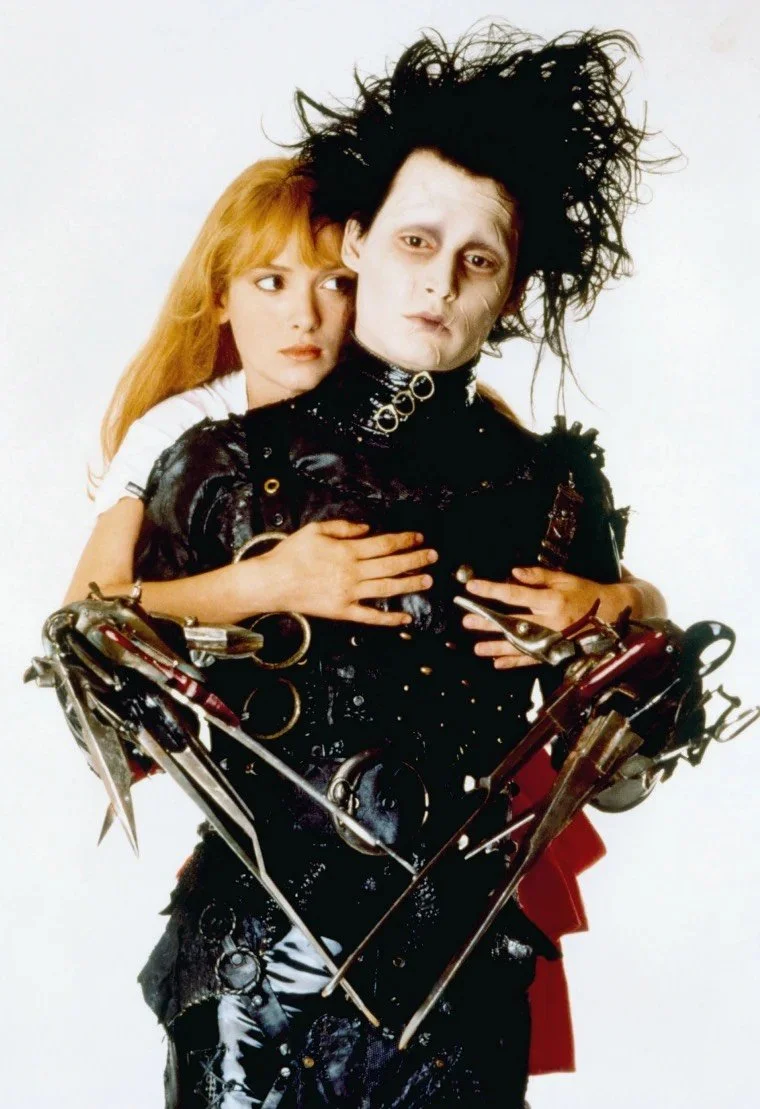
A year after breaking box office records with Batman, Tim Burton made his most personal film. Inspired by a character the idiosyncratic director had drawn when he was around 20, Edward Scissorhands has cut out a place for itself in popular culture and remains a deeply affecting portrait of an outsider ultimately rejected by a nightmarishly normative community.
By 1990, Burton had quickly risen to become one of Hollywood’s most in-demand directors. With his debut feature released only 5 years earlier, the filmmaker had built goodwill at Warner Bros. through back-to-back surprise successes with low-budget, off-kilter comedies: Pee-wee’s Big Adventure and Beetlejuice. That track record got him the coveted Batman job, which became a global phenomenon when it hit theatres in June 1989 with the highest opening weekend (roughly $40 million domestic) in history at the time.
© 20th Century Studios
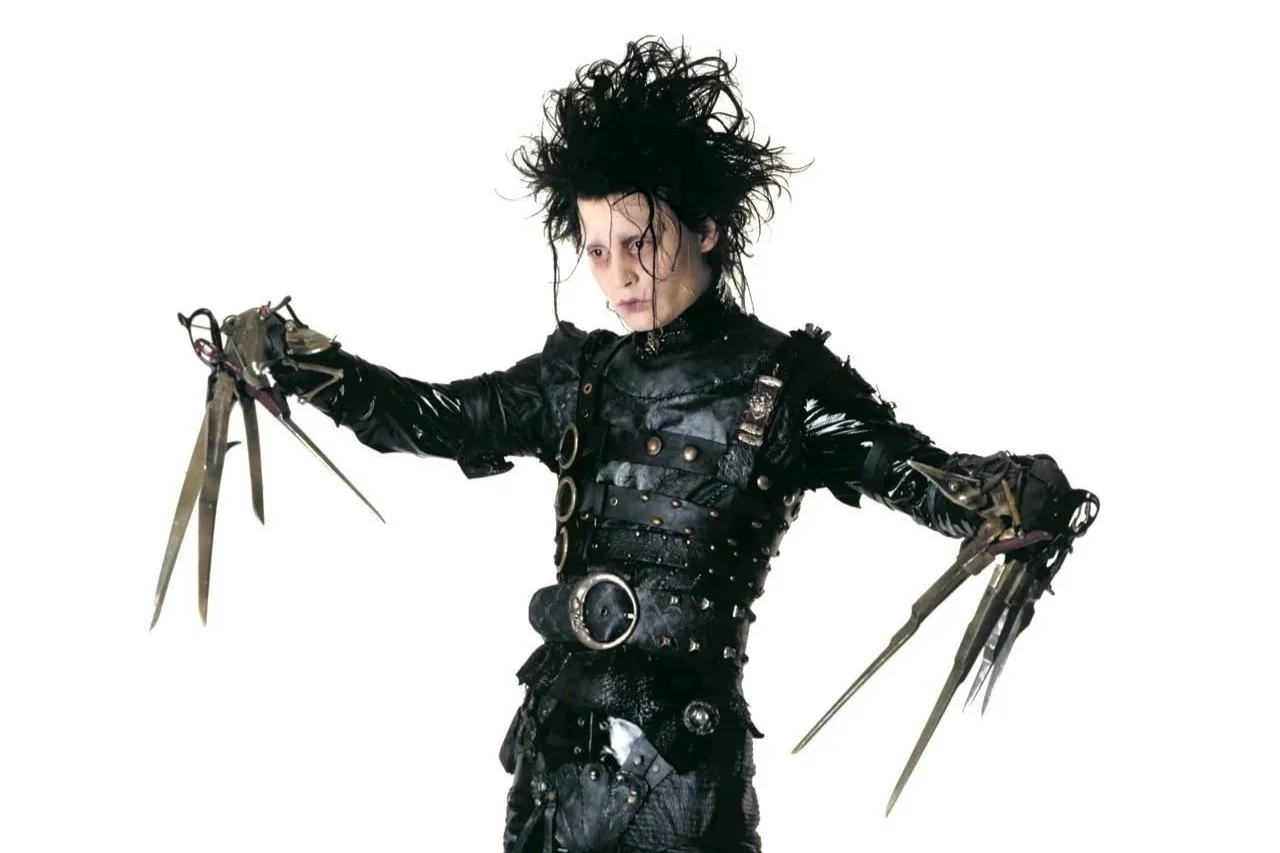
Batman’s box office performance finally allowed Burton to develop his own idea for a film. He hired author Caroline Thompson to write a screenplay about a boy with scissors for hands, reinventing the Frankenstein myth as a dark fairytale by way of Universal Monster movies. Burton had a first-look deal with Warner Bros. and initially presented the project to them in 1988, but the studio passed, and the film ultimately landed at 20th Century Fox. The following summer, which brought both Batman’s success and the arrival of new studio chief Joe Roth to Fox, production chief Roger Birnbaum lobbied to get Scissorhands into production, and by March 1990, filming was underway in the suburbs of Florida’s Tampa Bay Area.
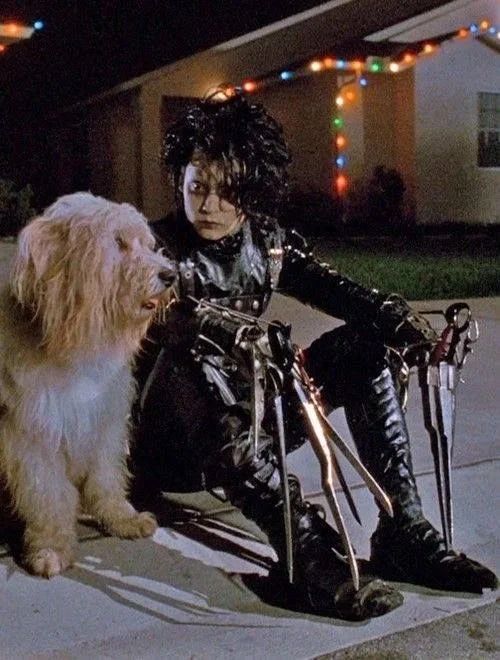
The business inner-workings bear mentioning because exactly what the very qualities that made Edward Scissorhands such a cultural touchstone were what made it a tough sell. An utterly unique film about a nearly non-verbal creature—with shears instead of fingers—who is taken in by an all-American family, Burton’s fourth feature is at once heartbreaking, dryly funny, profoundly unsettling, and a German Expressionist-tinged visual feast. Industry executives at the time speculated that Warner Bros. passed because it would be too hard to market, and it’s similarly difficult to imagine studios today taking a chance on such a film. But Joe Roth at Fox saw potential, describing it as a mix of Beauty and the Beast and Frankenstein, while their marketing chief, Tom Sherak, explained they tried to amplify the fairytale elements in their promotional campaign and ensure that no one thought it was a horror movie.
© 20th Century Studios
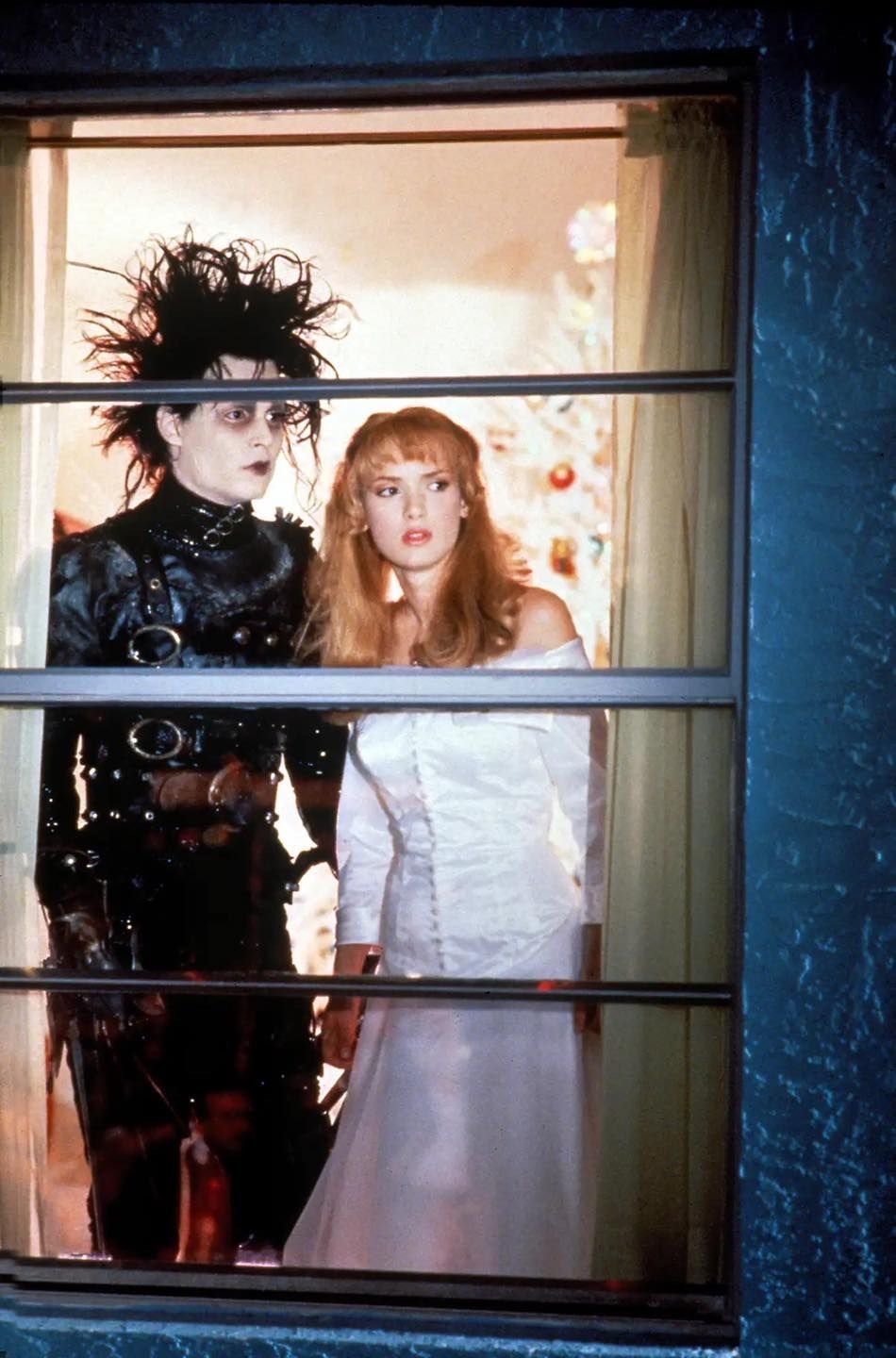
Juxtaposing the plain-wrap, pastel-coloured suburbia with the protagonist’s distinctly Gothic body, Edward Scissorhands is one of the most articulate and touching depictions of Otherness in film history. And while the outsider story has proven meaningful to all marginalised communities, perhaps even more resonant today, Edward’s attempt to blend into a small-town America which both objectifies and vilifies him has striking parallels with the queer experience. The authentic simplicity of its narrative, filtered through Burton’s signature eccentricities and visual flair, connected with audiences immediately. Test screenings were extremely encouraging, and while not a smash hit ($86 million globally against a budget around $20 million), the film clearly struck a chord when it was released in December 1990, reporting the highest per-screen average of any film playing nationwide the week of its expanded release.
© 20th Century Studios
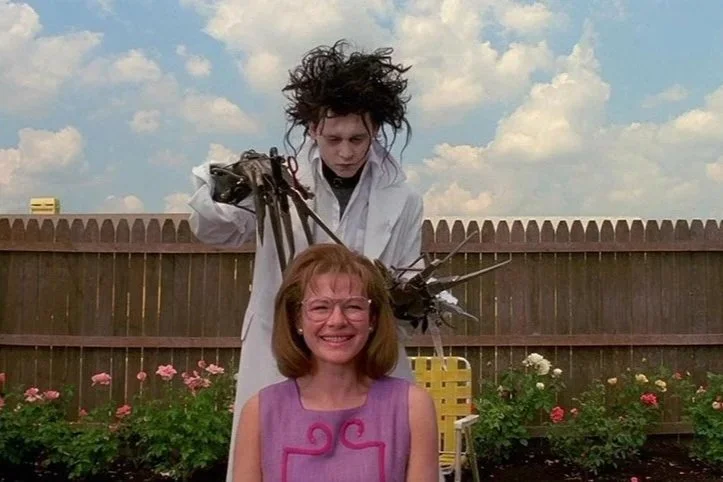
The film cemented its place in pop culture gradually. Early 90s TV shows were already referencing or parodying it. Cartoon variety show Animaniacs reimagined Edward as “Skullhead Boneyhands”, while the Seinfeld episode where Jerry “cheats” on his barber Enzo has a running gag in which Enzo dismisses the film as too implausible (“What are you going to do on the toilet?”) before becoming incredibly moved after renting it (“That Johnny Depp, he make-a me cry”). The character’s memorable iconography led to similar jokes on television over the following decades, particularly in animated series (Bob's Burgers, Family Guy, Robot Chicken, The Simpsons)
© 20th Century Studios
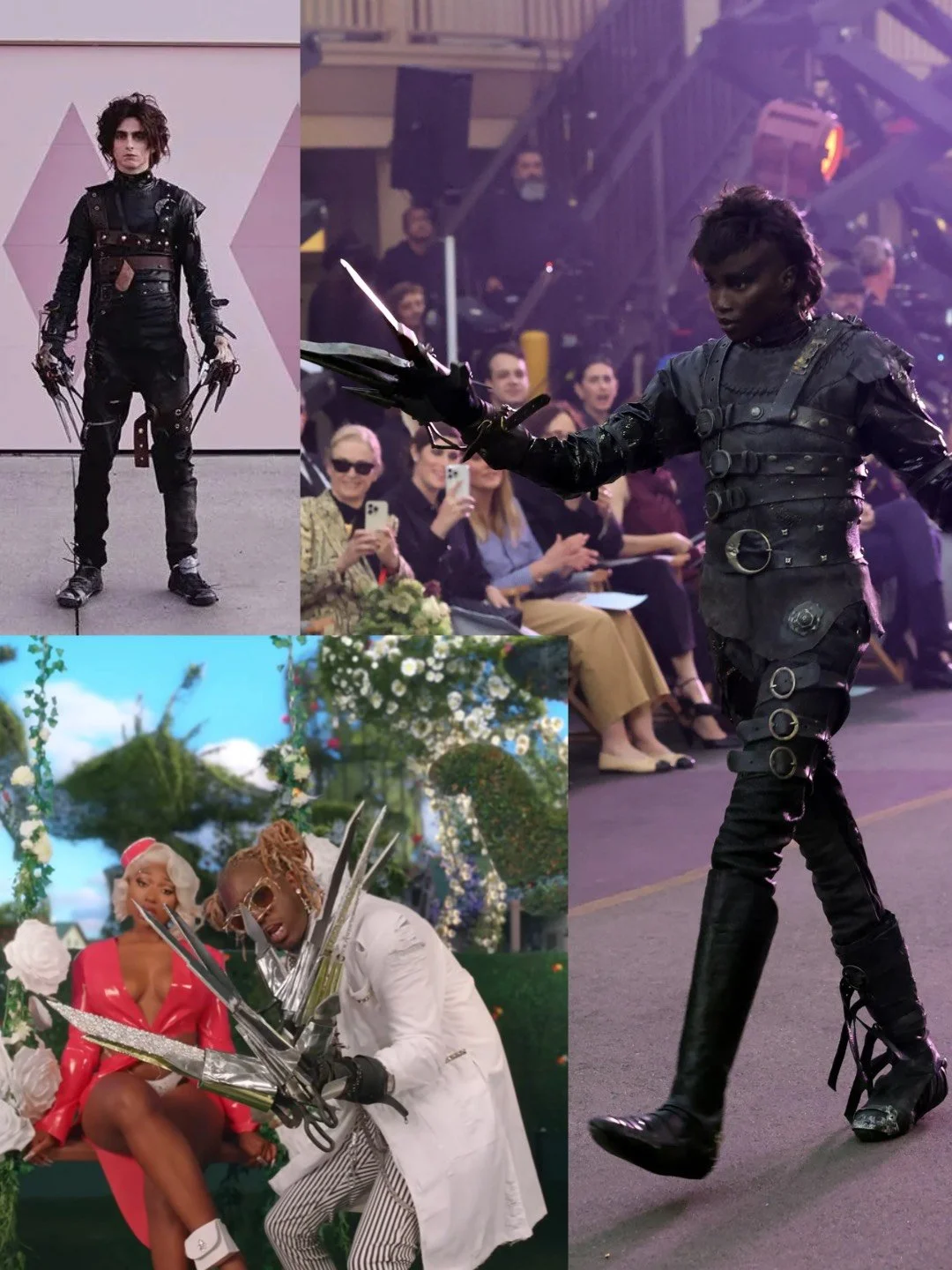
Referenced in this year’s Vogue World and in music videos by the likes of Travis Scott and Megan Thee Stallion, Edward’s arresting character design and the singular aesthetic of his world make him a compelling subject for artists to playfully pay homage to. In Vogue World 2025, which set “Hollywood” as its theme, McQueen’s Seán McGirr reinvented Edward’s outfit (“bondage-meets-practicality, and slightly Victorian,” as original costume designer Colleen Atwood puts it) for model Anok Yai. Scott donned the scissors in the music video for “Antisocial”, his 2019 collaboration with Ed Sheeran, when he plays a dangerous dentist, while Young Thug plays a swagged-out Edward in Megan Thee Stallion’s 2020 video for “Don’t Stop”, a sex-positive, Burton-inspired romp with nods to Scissorhands and Alice in Wonderland (the Cheshire Cat slaps Megan’s butt as she twerks). As far as the film’s original music, “Ice Dance”, a highlight from Danny Elfman’s haunting Tchaikovsky-inspired score, is a consistently “popular” sound on TikTok for conveying natural beauty wonder.
The closest thing the film has to a sequel, Cadillac’s 2021 Super Bowl ad for their “hands-free” driver assistance feature enlisted Timothée Chalamet to play “Edgar” and Winona Ryder to play his mother. In the 90-second short film, Edgar is a college student who accidentally deflates footballs and makes beautifully elaborate salads at his job instead of topiary and haircuts (also, his phone is clearly a wreck). Updating the comedy for the 2020s, the original’s fish-out-of-water premise remains equal parts endearing and amusing. A thoroughly operatic film, Edward Scissorhands has also been adapted for the stage on multiple occasions: by Matthew Bourne in a dance production premiering in 2005, and more recently in Scissorhandz, a queer jukebox musical reimagining soundtracked to 90s and 2000s pop hits.
While Burton thankfully recoils at the idea of a sequel (“I think things like that are nightmares,” he told Entertainment Weekly in 2020), Edward Scissorhands remains an indelible part of the zeitgeist and a distinctively sensitive take on the Frankenstein myth—sure to be subject to reinventions, parodies, and homages for years to come.