Victoria Linares Villegas on Her Sapphic Argento-Inspired Coming-of-Age Horror Film, No Salgas
At the Berlin Film Festival, the Dominican writer-director discusses her harrowing queer horror allegory
by Dan Theophanous 4 March 2026
Courtesy of Berlinale
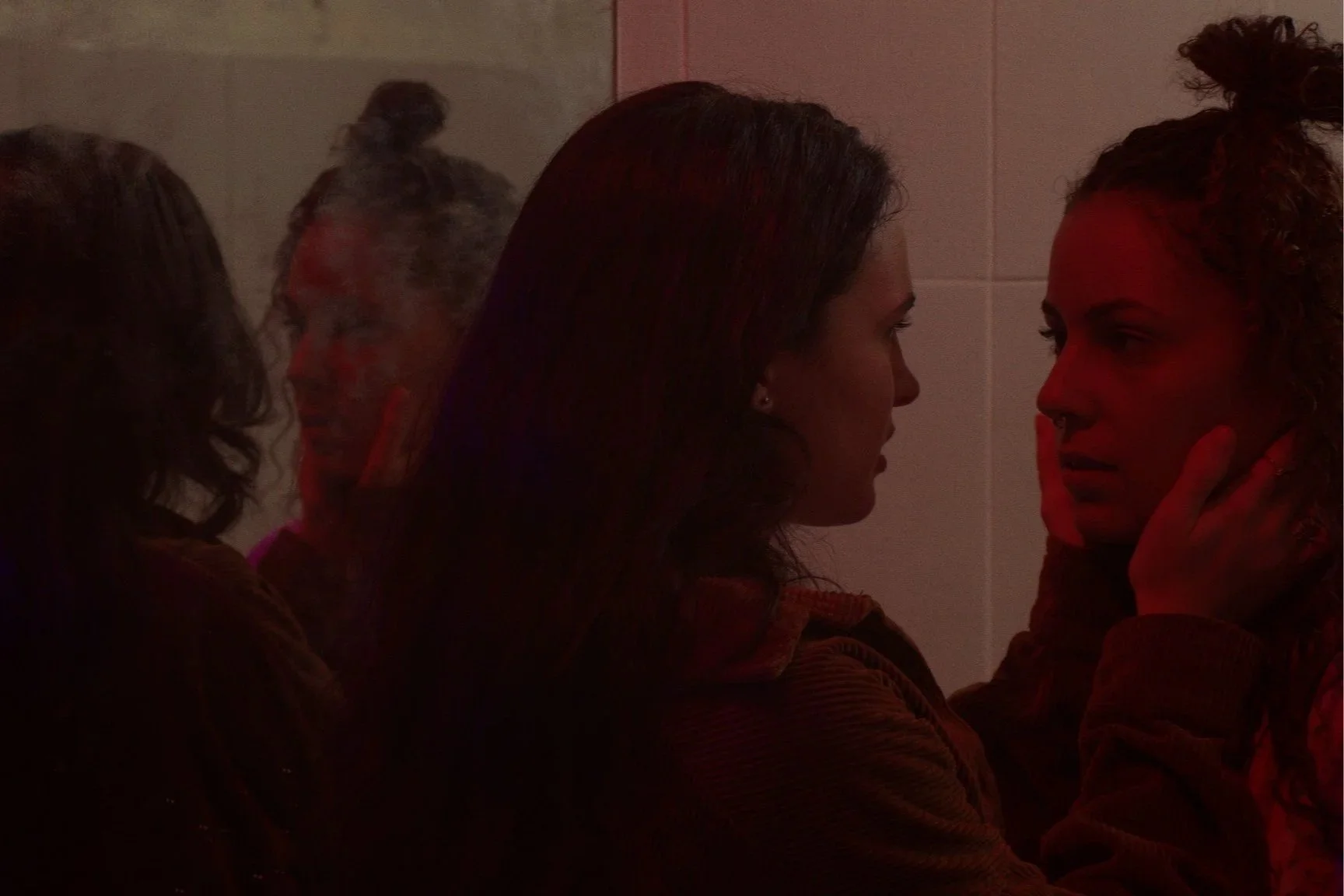
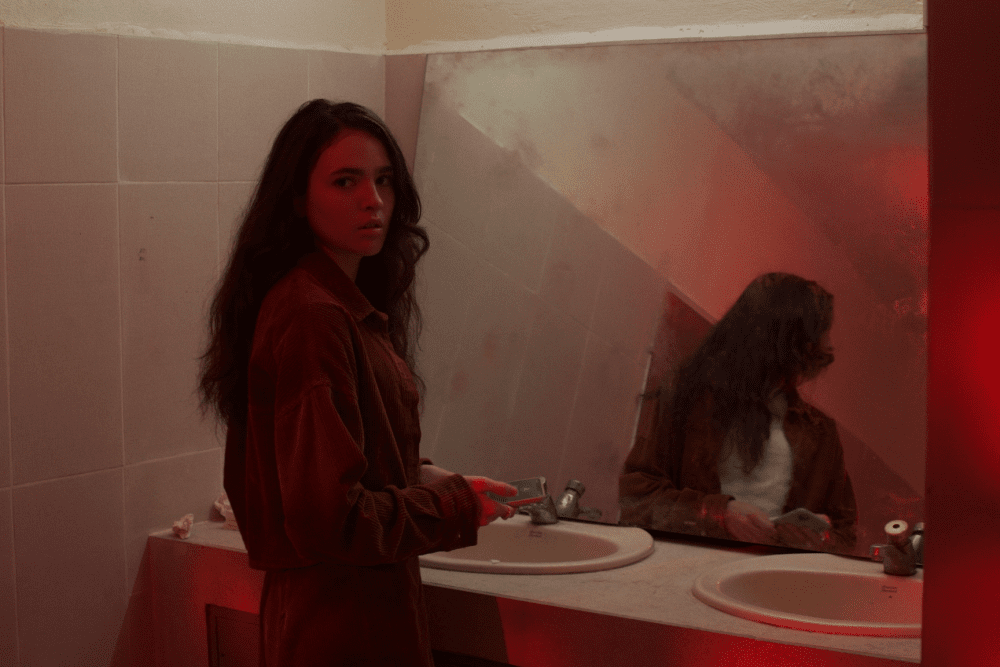
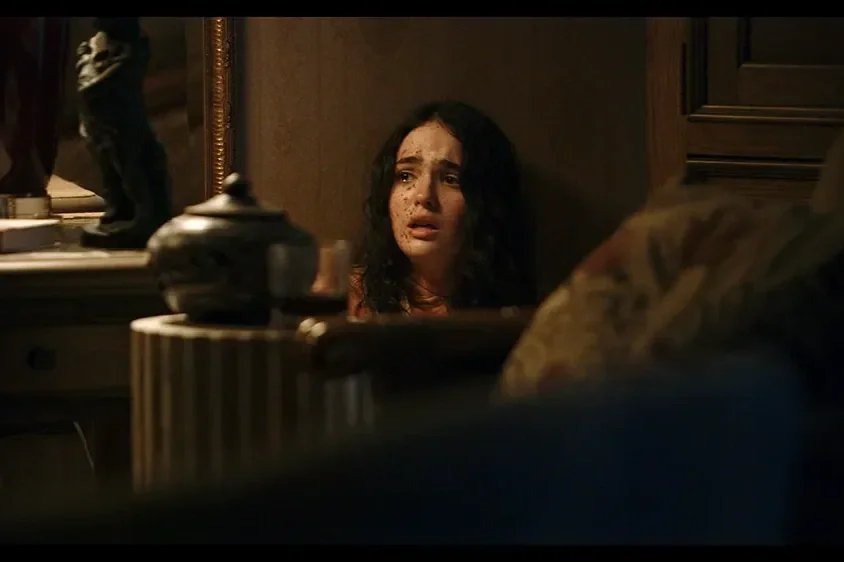
The literal translation of No Salgas is “Don’t Come Out”, a fitting encapsulation of the new Dominican queer horror film with a wicked premise: young med student Liz’s (Cecile van Welie) fears of being outed manifest themselves into a parasitic demon hellbent on killing her.
No Salgas is the debut feature-length fiction film from Victoria Linares Villegas, who previously directed It Runs in the Family and Ramona—documentaries on queer artist Oscar Torres and teenage pregnancy in the Dominican Republic, respectively. Premiering at the 76th Berlin Film Festival, Linares Villegas’ film stood out as an indie gem. No Salgas exemplifies the genre’s symbiotic relationship with coming-out stories, serving as a sad reminder that we still live in a world where such personal revelations still bear severe consequences. We sat down with Linares Villegas at the festival, who told us about her giallo influences, depicting the tension of a closeted relationship, and why the horror genre was the perfect place to explore the tender subject matter.
Courtesy of Berlinale
Phantasmag: What was the impetus behind No Salgas?
Victoria Linares Villegas: The seed of the idea came from Carlos [Marranzini], my co-writer. We went to film school together in New York. At one point, he told me about an image he had in his head of four girls in a car, driving on a highway in the middle of the night, all covered in blood. He knew that something had happened, but didn’t know what. That image stayed with me for days. Feeling there was something there, we decided to flesh it out into a story. This was around 2016, when films like It Follows, Raw, Revenge, and, of course, Get Out were coming out. It was exciting as they all felt very political. The homophobia and the whole thing of being in the closet slipped into the story from my own experience, but I was conscious of it not being cliché. I thought the best way to portray that was in the context of the Dominican Republic because it’s so religious and very Catholic. There’s a lot of friction there.
P: The film literally translates to “Don’t Come Out”. Horror appears to be a go-to genre for coming-out stories.
VLV: After making two niche films, I felt it was time to reach a broader audience, and I felt I could do that with No Salgas being a horror story. Horror is absurd. It’s a space you can exaggerate. You can punctuate the fear of coming out. Carlos and I both love horror. We loved seeing all these horror films doing great stuff and inserting subtle critique. I truly hope that when some straight people see No Salgas, they see a reflection of themselves in the demonic entity and maybe think, ‘Shit, I didn’t know I was doing that.’
P: You capture this self-hate that many queers take on very concisely. Watching Liz navigate her day-to-day reality is truly a stressful experience.
VLV: It reflects my own experiences. I came out when I was 17, and my mum didn’t take it well. She sent me to a psychiatrist and then to a priest. It was ridiculous. It was an intense period. She would drive me to college and then pick me up. I wasn’t allowed a phone. I had a girlfriend, but, of course, that ended. I started reverting into the closet myself. I started to have boyfriends, just so I could be allowed to go out. Literally all the events you see Liz go through, I went through. That dinner scene with the parents and the boyfriend, with Liz in make-up and straight hair. The tone is very sarcastic because you can see she’s being fake. It highlights the absurd things queer people end up doing out of fear of being exposed.
Courtesy of Berlinale
P: I found myself sympathising with Liz’s struggle, but didn’t warm to her.
VLV: Yeah, well, she’s gnarly! The thing is, when you are so afraid, you don’t think about other people. That scene when she breaks up with Wendy, because she’s scared her mum will find out, I felt very connected to that scene. We all want the approval of our parents, and seeking that approval can put us in precarious situations and make us behave in awful ways.
P: I found that sensation enhanced by the fact that you mostly film from a distance. Keeping the viewer at an emotional distance. The gaze is impartial and observational.
VLV: Carlos and I had previously made documentaries, where you keep the camera in one place and just shoot. I don’t like cutting. I like things to be organic. When you break to a close-up and then to another close-up, it becomes more conventional. I don’t want audiences to feel that I’m pushing them to feel something. There is, of course, some blocking and mis-en-scene. But generally, we kept the camera filming and let the actors improvise. Most of the scenes you see are improvised scenes—stuff that happened after we were supposed to cut.
P: You subvert genre tropes. The pace is relaxed, the demonic entity is ambiguous, and all the scary moments are low-key. Can you tell us about these directorial choices?
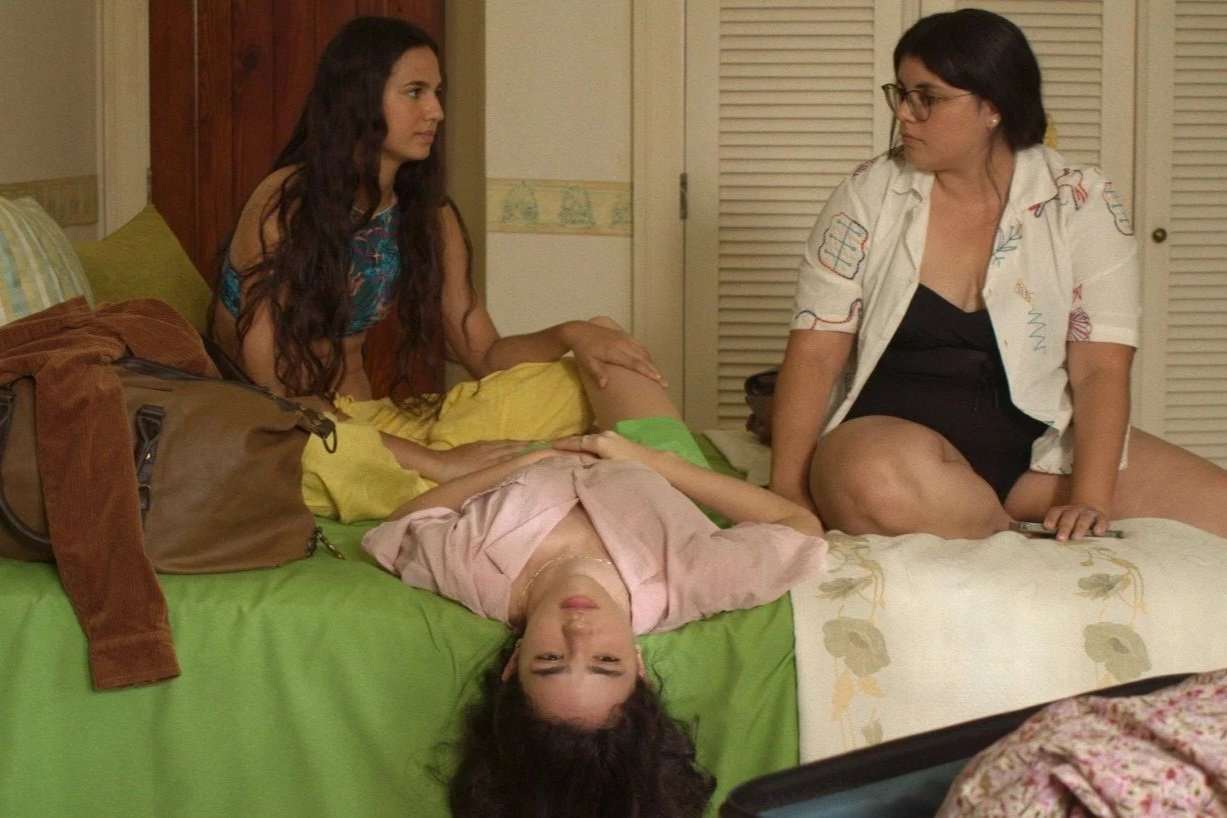
VLV: In horror, the focus is always on the evil. We wanted to focus on the character. The fear becomes something like an internalised tool that creates tension rather than something to scare the audience with. I’m not keen on things being explained to me. Like in Halloween, if we didn’t have Dr Loomis explain who Michael Myers is, you would go home and think who this character is for yourself—it’s more mysterious. Carlos and I viewed the film in two parts: part coming-of-age, part horror, and I was drawn to the coming-of-age. We weren’t so keen on jump scares. The primary focus was on making people feel Liz’s journey. We did have a scene, which gave some context to the entity, but we decided to cut it out. It felt like we were spoon-feeding people. You could say there is some genre convention, like the focus on young people and them going to a beach house and the violence that ensues. Even though for us, it was a way of showing them hanging out, getting to know each other, and hooking up.
Courtesy of Berlinale
P: The chemistry between Liz and love interest, Jessie (Camila Santana), is visceral. The way it’s kept under wraps from the rest of the group makes it even more sexy.
VLV: When you’re queer and not out, it becomes a game of seduction. It gives an edge to a group situation like this. Like, ‘Am I going to get caught?’ A reference point was Todd Haynes’ Carol. It captures the power of just looking at someone and conveying everything. In Carol, it’s crazy and disarming. I wanted to do something like that and show all the mind games. Their chemistry is undeniable. When I was thinking of how to introduce Jessie’s character, I researched quite a few films that portray love interests. It was a scene from Twilight that piqued my interest, where Robert Pattinson meets Kristen Stewart and gets grossed out by her smell. I liked the subversiveness of that. When we started filming the scene where Jessie first meets Liz at the beach house, at that exact moment, a gust of wind randomly blew through Liz’s hair. It was hilarious, like we were shooting a rom-com. I decided to keep it.
P: The shoegaze gig scene at the beginning felt very 90s. It reminded me of Gregg Araki’s films, like Nowhere.
VLV: I used to be in bands. I was into the alternative scene in the Dominican Republic: punk, shoegaze, indie pop, and all that stuff. I also wanted to show the Dominican alternative scene nostalgically, as it barely exists anymore. The Araki vibe, I would say, is because of the focus on queerness and youth. Most of my references come from Lucrecia Martel’s films, The Texas Chain Saw Massacre, Halloween, obviously, giallo films—specifically Dario Argento. Some of the ways characters are killed in the film are inspired by him.
P: Liz’s friends know about her sexual orientation but never engage with it. And then there are her oblivious parents. All people who supposedly love her but appear to alienate her. It’s very sad.
VLV: Sadly, again, it’s from my own life experiences. At some point, I found it very lonely with my straight friends. Their friendship has its limits. When they start getting married, having kids, there comes a separation. And you’re hearing annoying things like ‘Oh but everything is fine now for gays’; ‘there’s so much visibility’; ‘There are more women working in the film industry’; ‘What are you whining about?’ It’s frustrating! I think of No Salgas as, ultimately, a sad film. When I started writing it a decade ago, because of what I was going through, I thought it was going to be more violent and rage-fuelled. But when I look at it now, I find it very melancholic. No matter how much we learn to accept and work on ourselves, there is no denying the permanent scars of a lifetime spent not fitting in.
No Salgas screened at this 76th Berlinale and will play at BFI Flare from March 19th.