How The Ugly Stepsister’s Oscar-Nominated Prosthetic Makeup Designer Crafted a Shocking Body Horror Fairytale
Thomas Foldberg unpacks his gruesome work on the satirical Norwegian horror film
by Lana Thorn 2 March 2026
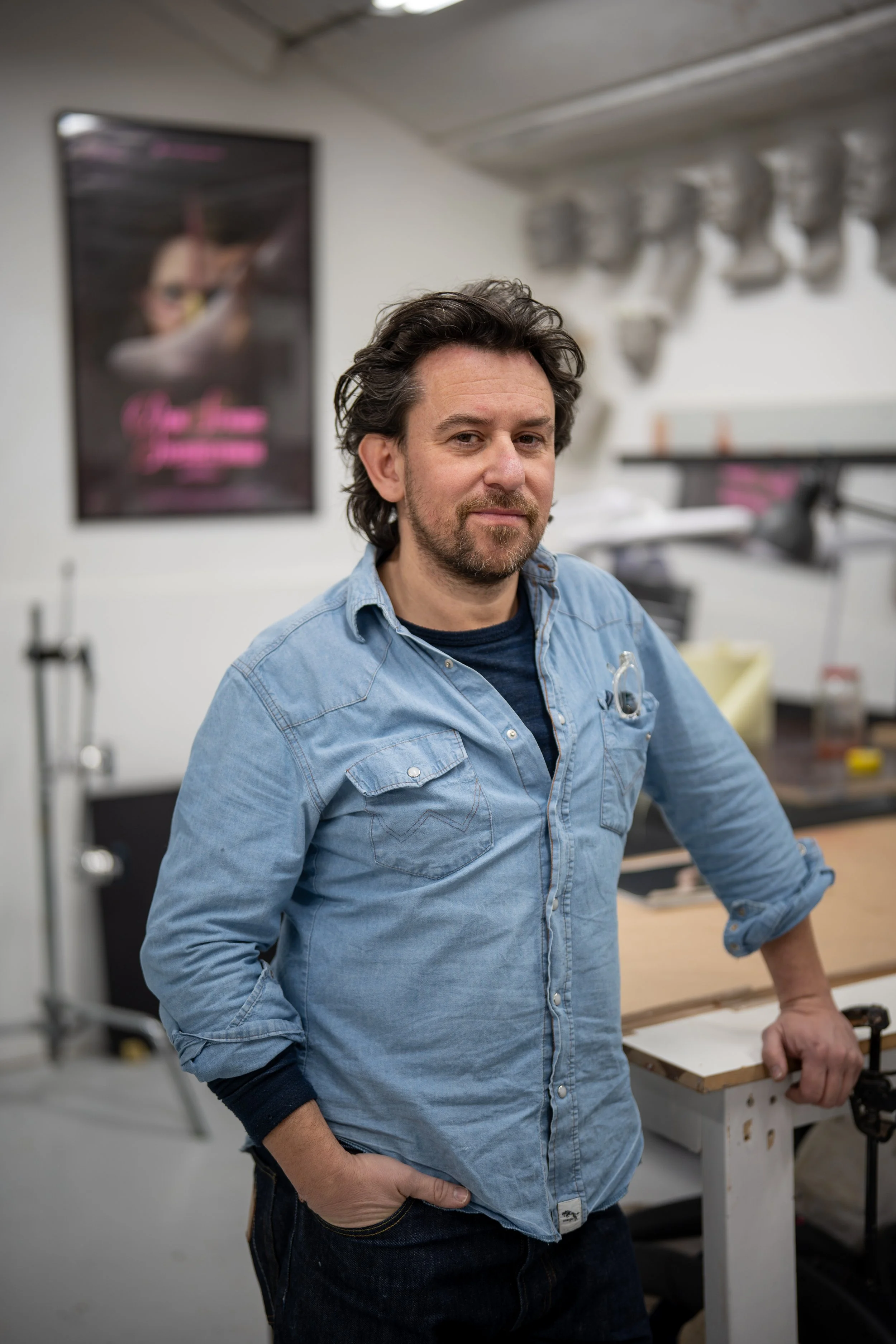
Photo by Alonso Mayo
The Substance meets The Brothers Grimm in Emilie Blichfeldt’s The Ugly Stepsister, an acclaimed body horror reimagining of the Cinderella story. Following his Oscar nomination for Best Makeup and Hairstyling alongside hair & makeup artist Anne Cathrine Sauerberg, we sat down with Thomas Foldberg (Alien: Romulus, Antichrist), the prosthetic makeup designer behind the film’s show-stopping effects—from the graphic expulsion of a tapeworm to the subtle transformation of lead actor Lea Myren into the titular teenage protagonist, Elvira.
Blichfeldt’s version of the fairytale works backwards from the grisly Brothers Grimm ending—in which an ugly stepsister cuts off her toes to fit the fabled slipper. Consequently, the writer-director doesn’t treat Elvira as a villain, but rather as a young woman trapped in a misogynistic world where her worth is rooted in finding a husband. To appeal to these boorish suitors, she undergoes a series of gruesome beauty procedures—and that’s where Foldberg’s expertise comes in.
After a tour of his studio in Copenhagen, the Danish SFX artist spoke with us about how he brought the harrowing climactic scenes to life, the film’s unique satire of the beauty industry, and the value of practical effects in an industry increasingly turning to CGI and other digital solutions.
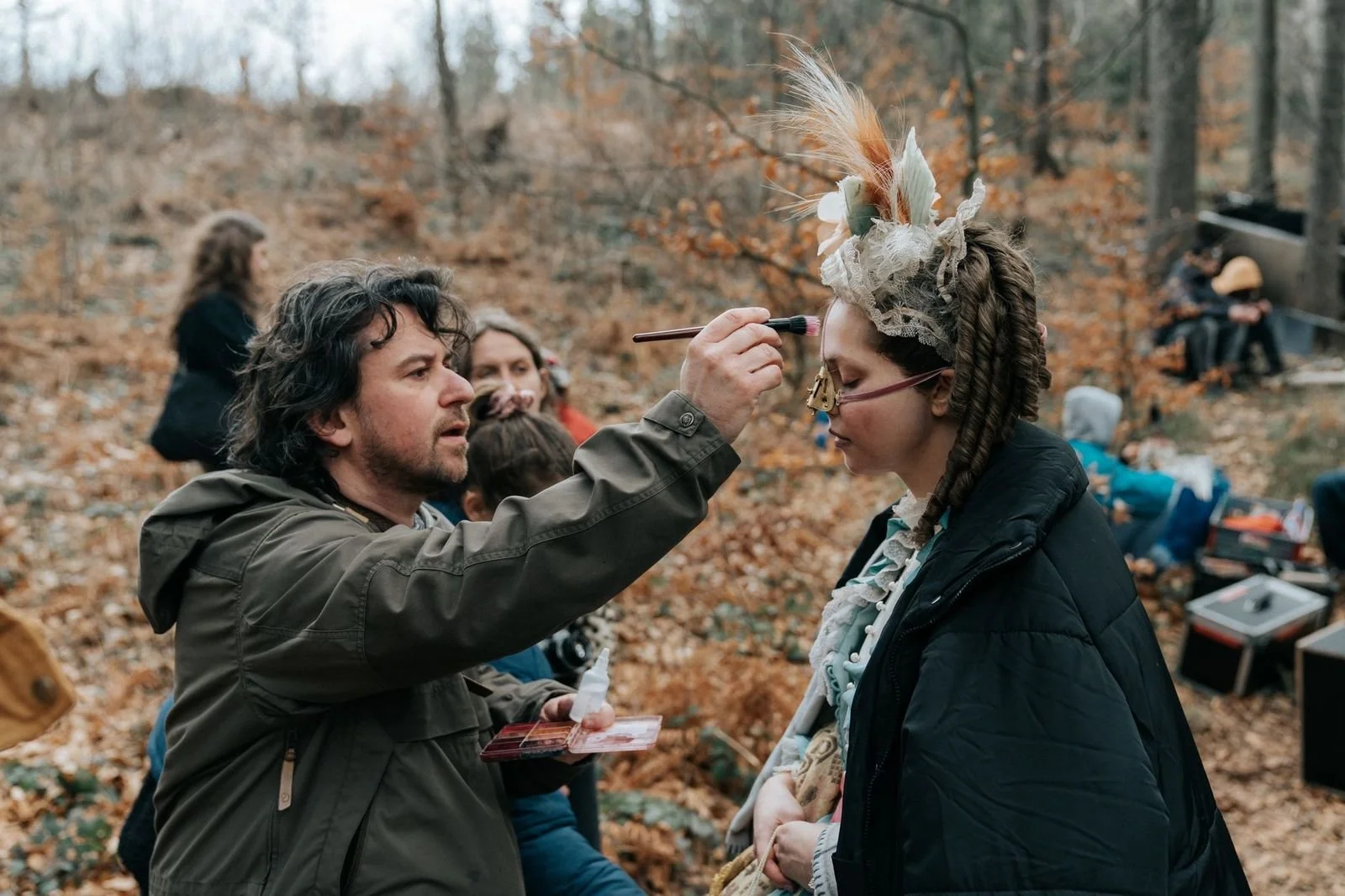
Foldberg on set. Courtesy of IFC and Shudder
Phantasmag: How did you discover that you wanted to be a prosthetic designer?
Thomas Foldberg: I think I’ve always known I was a creative person. I’ve been painting and building stuff on my own since I can’t remember—modifying Star Wars figures and LEGO. But in regard to what I do now, it came gradually. Originally, during my teen years, I thought I wanted to be a cinematographer. I was interested in both special effects and makeup effects, but those didn’t seem like realistic jobs at the time in Denmark. There were very few working in those fields, and they were on national TV. And the thought of going abroad was very abstract in a time without the internet.
So I was focused on going to film school. I started reading different magazines from the US and the UK, and I found out there was a makeup school in London. That possibility fuelled me, and I started doing experiments with makeup effects on my own. Then, I was working on film school projects, assisting on one project after another, and the funny part is that I started 35 years ago as an assistant to my wonderful colleague, Anne Cathrine Sauerberg, who I did The Ugly Stepsister with. I was 14 or 15 at the time. That showed me that it was actually a possibility to go in this direction. After high school, I was so lucky that Danish film really hit the big time. I obviously couldn't work on the whole Dogme wave because you didn't do makeup or anything on those films, but at the same time, the whole Danish movie industry experienced a huge boom. So I never left, because suddenly I had work here, which is so strange.
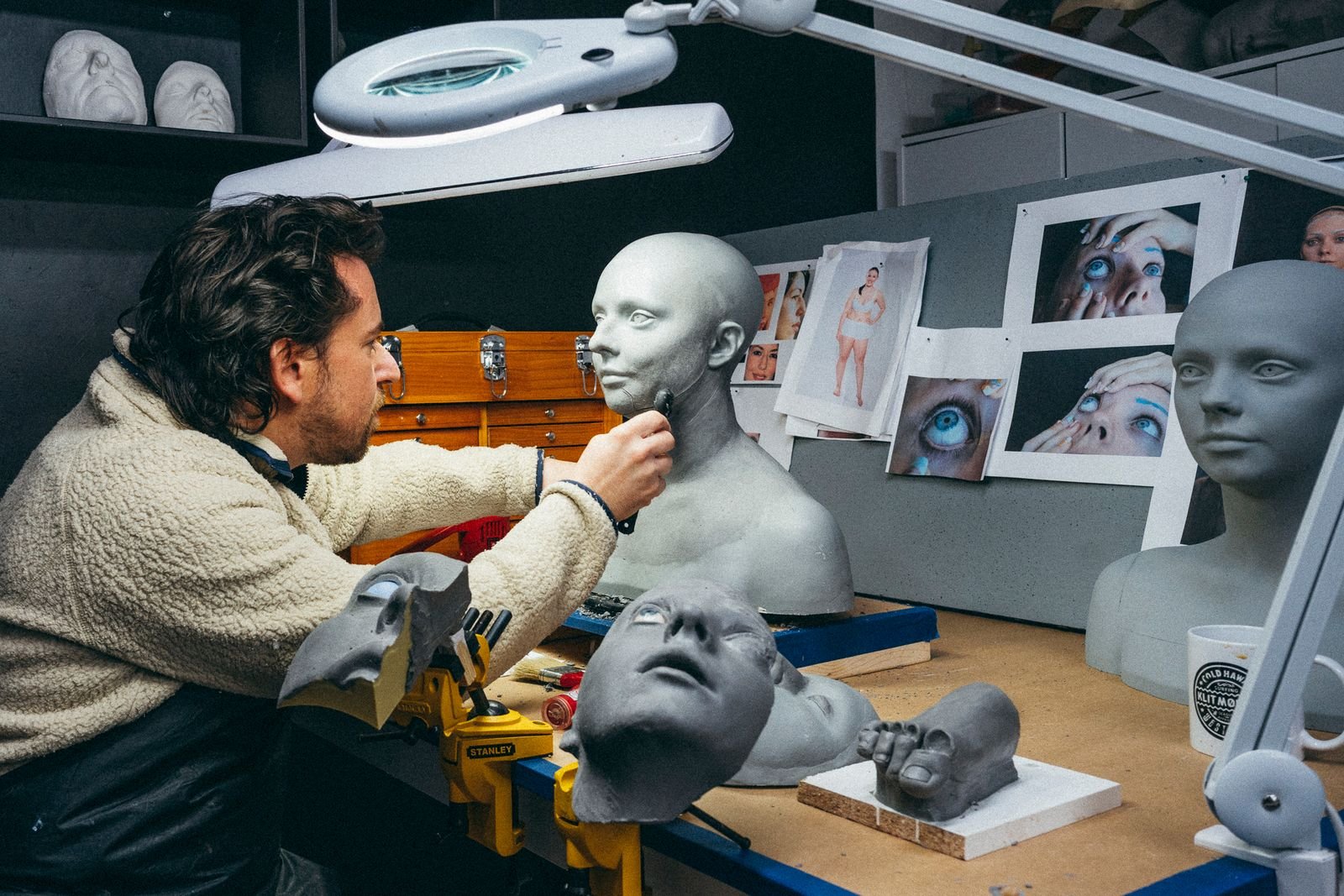
Foldberg sculpting his prosthetics. Courtesy of IFC and Shudder
P: How did you get involved in The Ugly Stepsister, and what attracted you to the project?
TF: I was contacted by the Norwegian producer, Maria [Ekerhovd], because I had done a previous project with her. She called and said, ‘I have a script; you have to read it.’ I did, and I thought, ‘Okay, this is crazy. But it’s a really, really good story—and a really relevant story. But it will never get made. At least in Denmark, it wouldn’t happen. In Norway, it’s a little more progressive for now, so it might happen, but with 50% of everything written out.’ But I had a meeting with Maria, and you could tell she was serious about it. Then I met Emilie [Blichfeldt], and she’s just this powerhouse of a director who had so many ideas. She was so well prepared, and I could see that she wouldn’t cut anything from the film—maybe some stuff will be a little less complicated than what was written, but in the long run, the whole script will be made. And that was what happened.
I was really excited about the project, because it was so interesting. I had never been approached by a project that had all the elements that I like: some character-driven stuff that has to look very naturalistic, and then some gory stuff that even has to be stylised. And it had puppet work and dummies. My concern was if [my effects were] going to work, because I think when I first read the script, I took it more seriously than Emilie intended. Then I understood that it had a comical vibe to it—because the comical part would lie in the grotesqueness of the story—but it was hard to grasp how I would realise her vision. Normally, I work with materials that have to look a lot like skin, and suddenly I’m doing a foot that doesn’t look as soft as it should in real life. But the key was that, in this wonderful world coming from Emilie, she wanted to emphasise the craziness of the beauty [element]. She had been talking a lot about how it's strange that it's called the beauty industry, because it's an appearance industry. Who’s to decide what beauty is? And we are doing something that's not completely like body horror. It has a different edge to it.
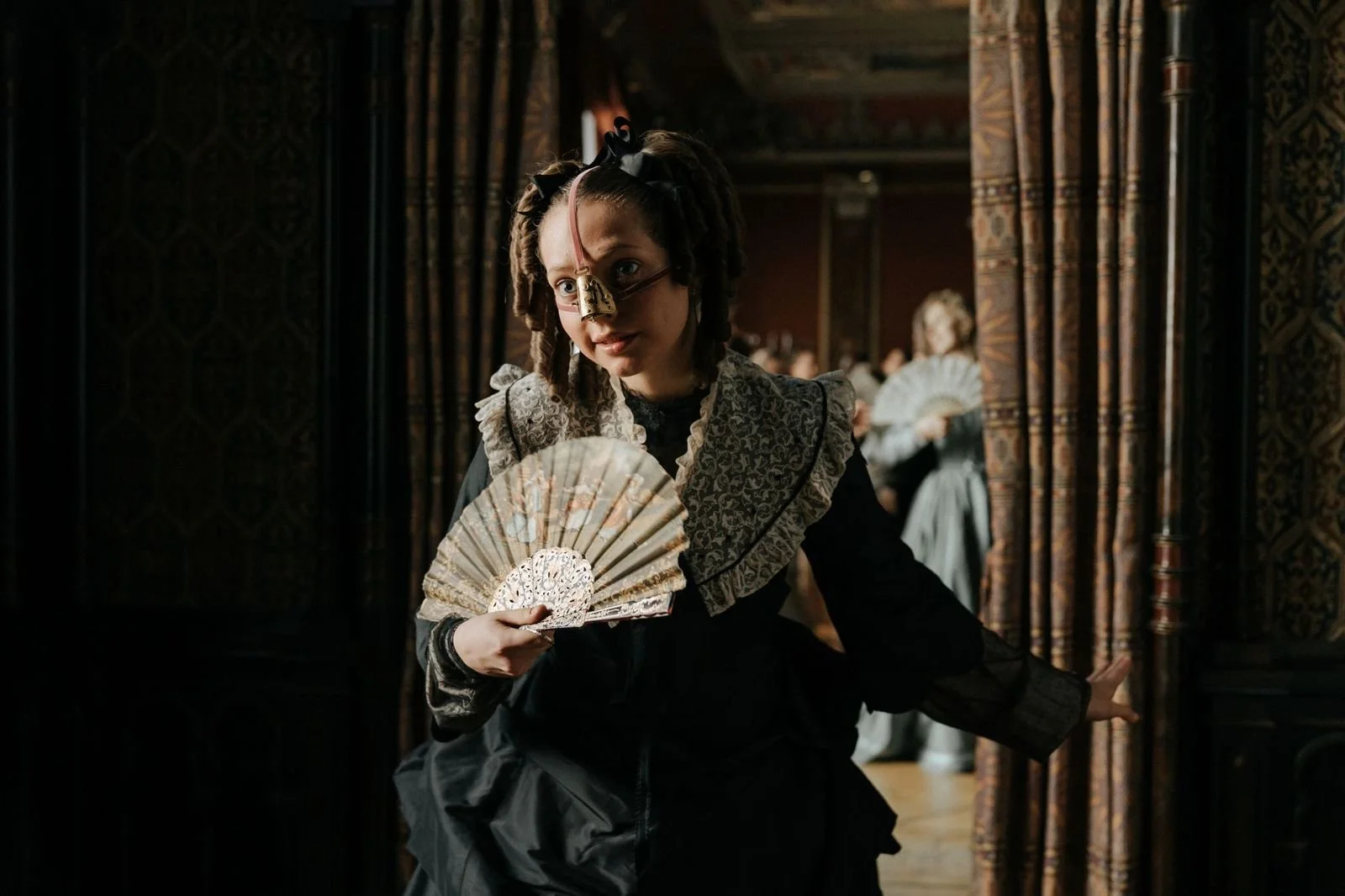
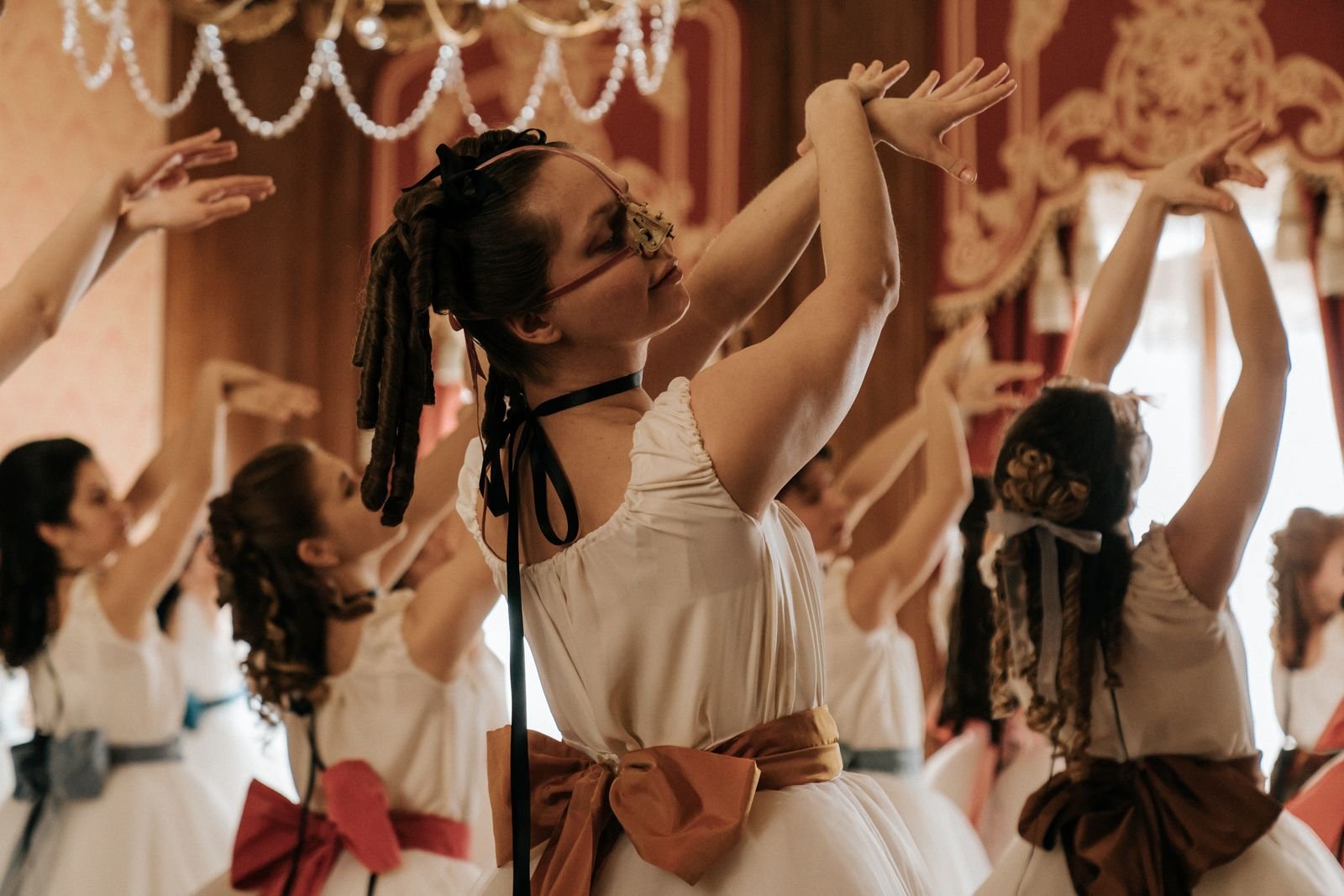
Lea Myren as Elvira. Courtesy of IFC and Shudder
P: Right from the title, we know that Elvira is supposed to be ‘ugly’—or rather, she has to be perceived that way. As a special makeup effects artist, what does the word ‘ugly’ mean to you?
TF: The main thing is that, first of all, the word ‘ugly’ refers to what her mother, especially, sees. The point is that she’s not ugly. Instead, it’s like a mirror towards the audience, who can reflect on what they think ‘ugly’ means. The fact is that people, young and old, try to fit in because they think they're ugly, or some parent said so. It can be a thousand things.
P: This was a 28-day shoot and a very SFX-heavy film. What were your greatest challenges during production?
TF: I mean, it's really fun to talk about now, but it was a really hard shoot to be in. My normal days were 14, 15 hours, and the long ones were 17. I know it’s how it is to make movies, but we prepped stuff and painted it on Saturdays. So it was basically a six-day week. And when it's that tight, you don’t have much time for all the effects shots. The one that took the longest was the vomiting of the tapeworms. That was done in three hours, when it should probably have been a day. Then we did some extra shots here in the studio with some more worms coming out of a prosthetic mouth. The toe-chopping scene was done in one hour and 45 minutes. It’s super challenging when you have to do it that fast—you have to design something that isn’t complicated to set up or take down. Luckily, I'm used to filming in Scandinavia.
The other thing was the continuity. For the first part of the film, when Lea [Myren] is wearing all the prosthetics, we also had braces and a nose clamp. So we were intercutting between no nose clamp but with teeth, no braces but with a nose clamp, now she has a prosthetic nose that has to come off after lunch… So it was close to a nightmare.
BTS Pics Courtesy of IFC and Shudder
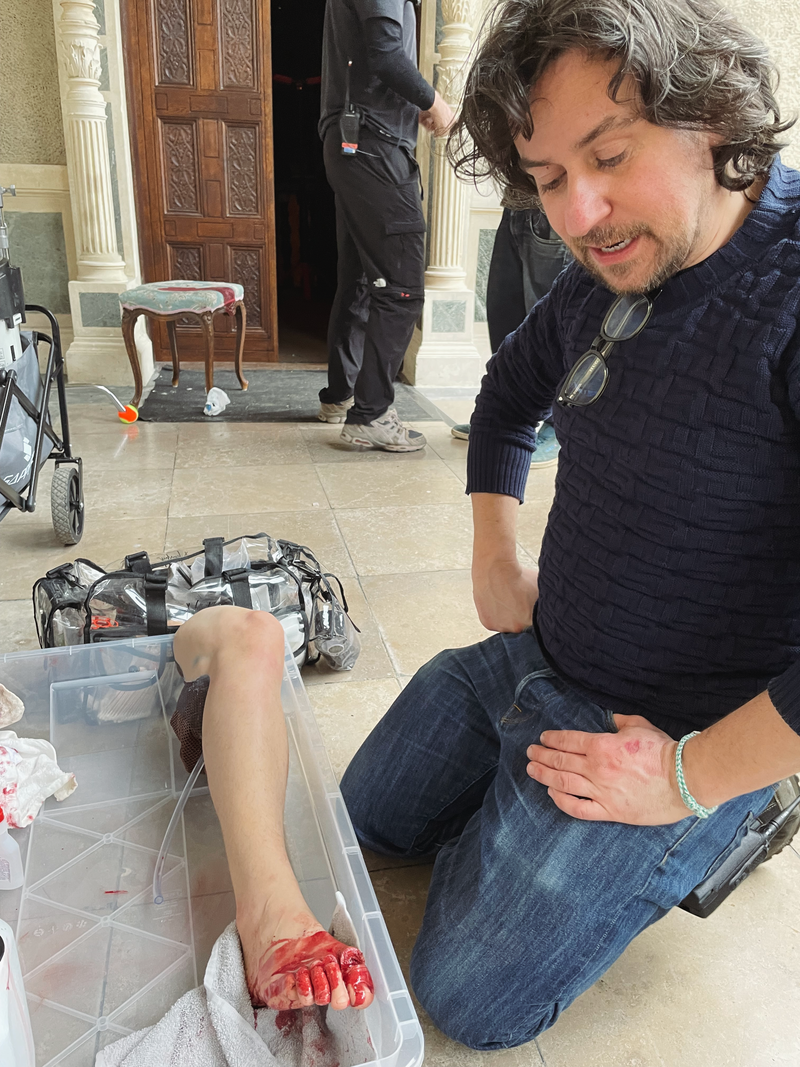
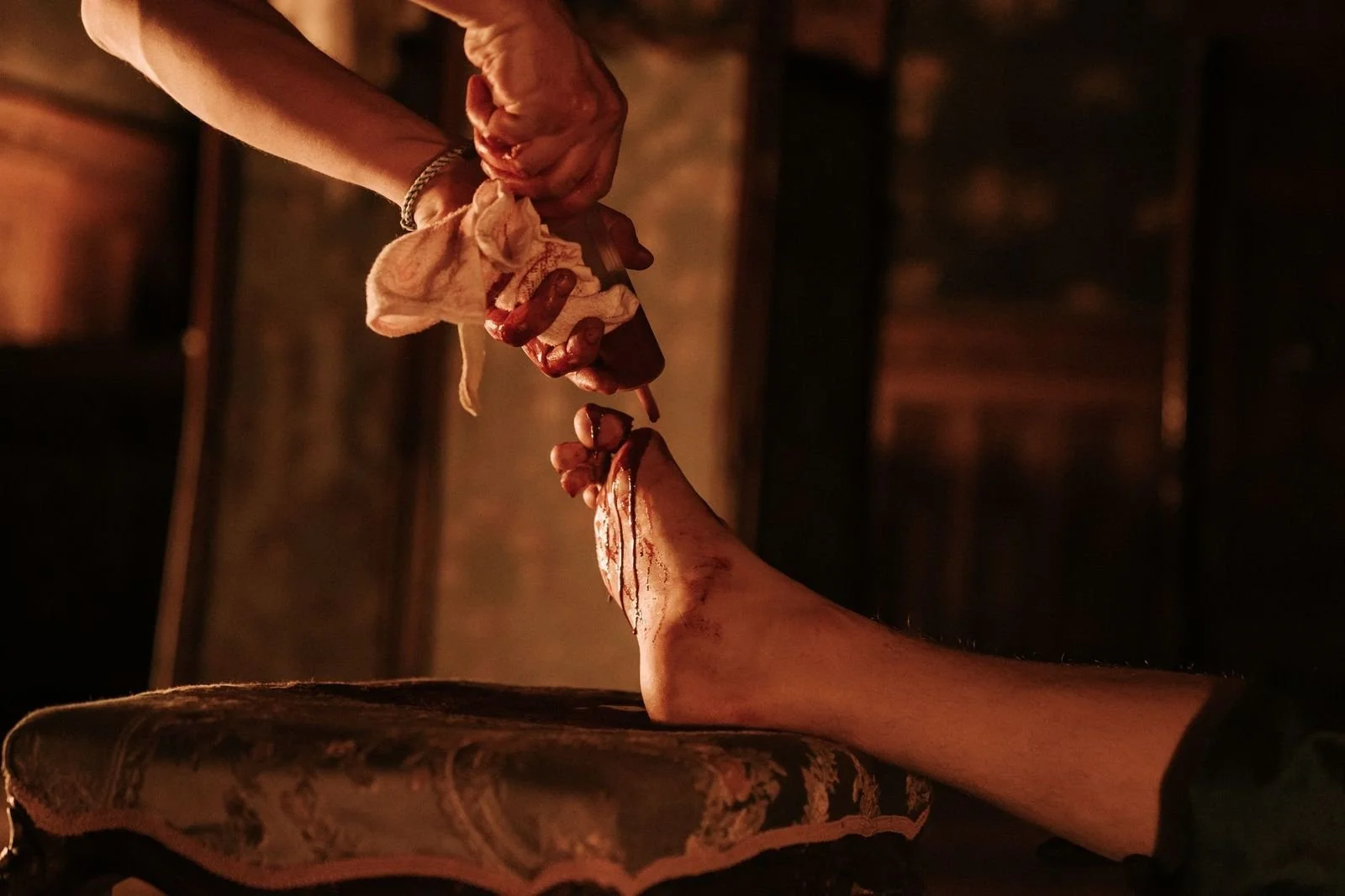
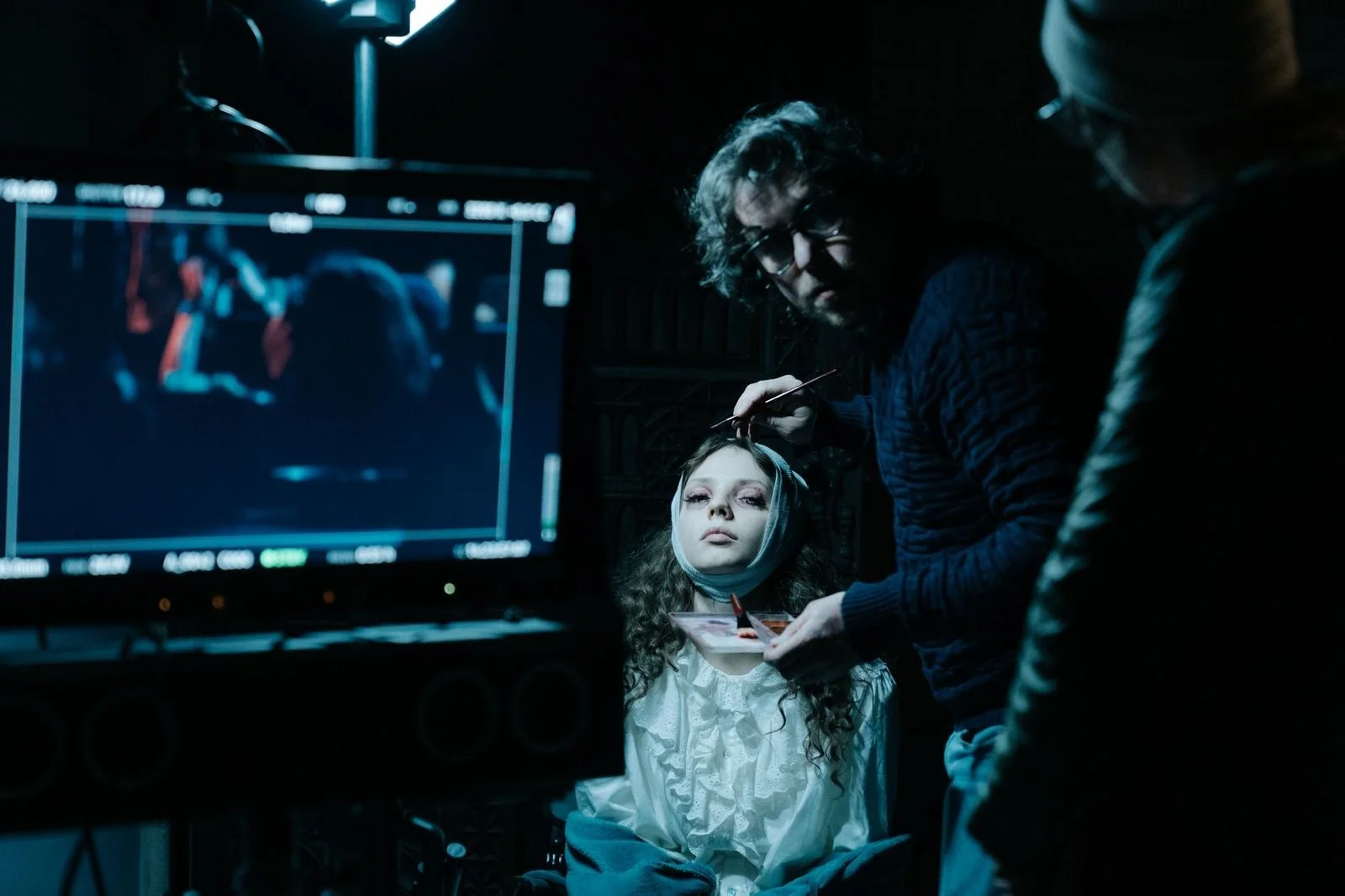
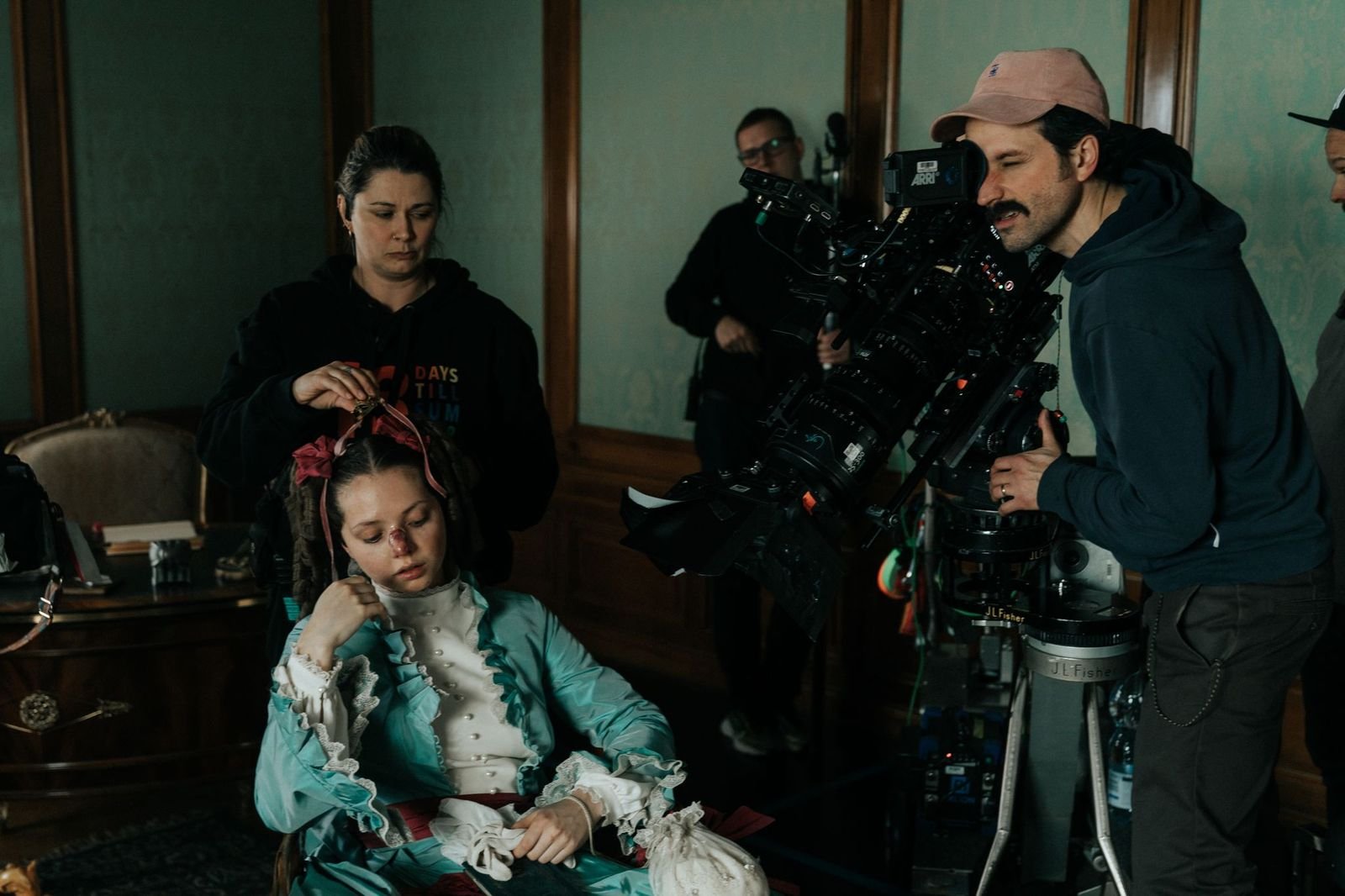
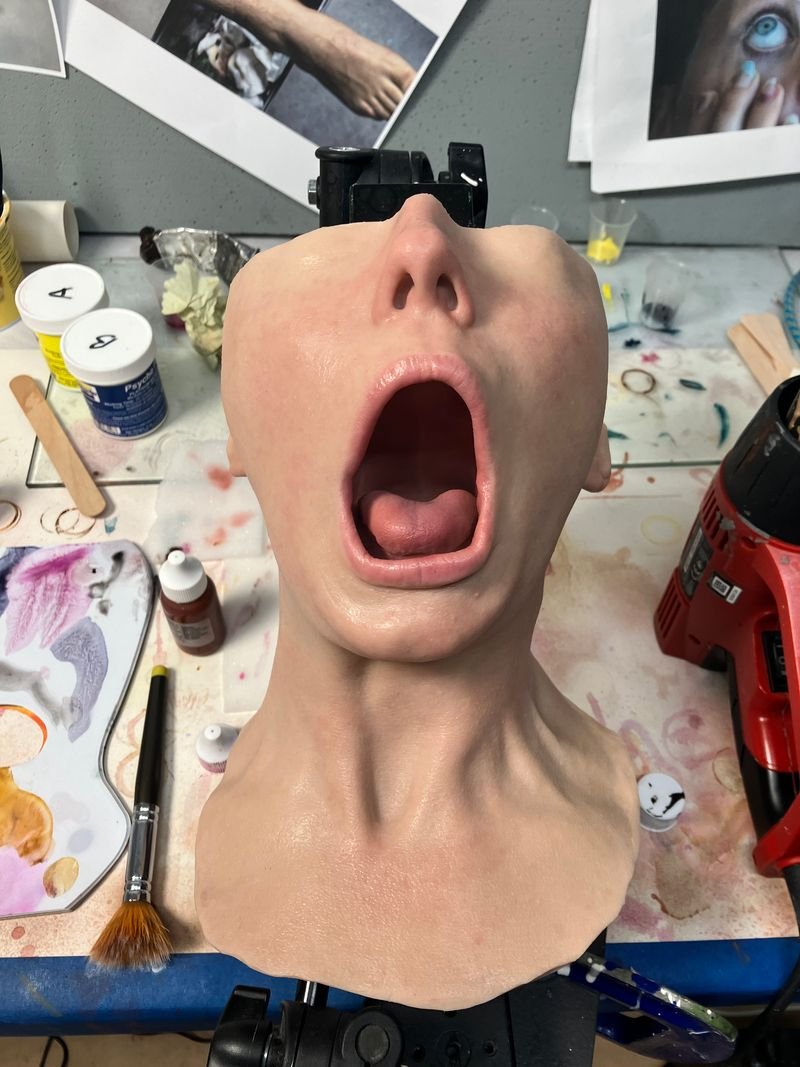
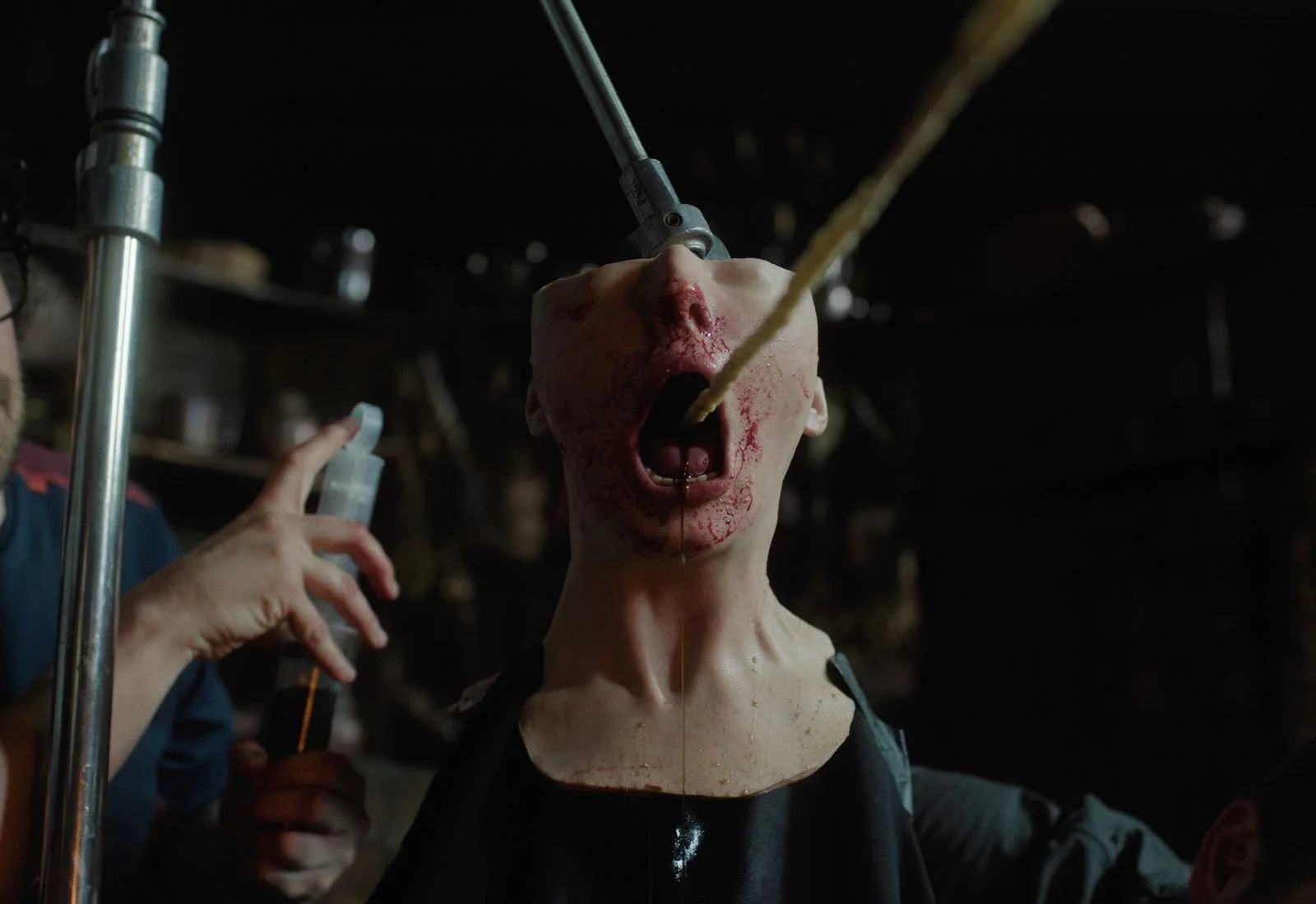
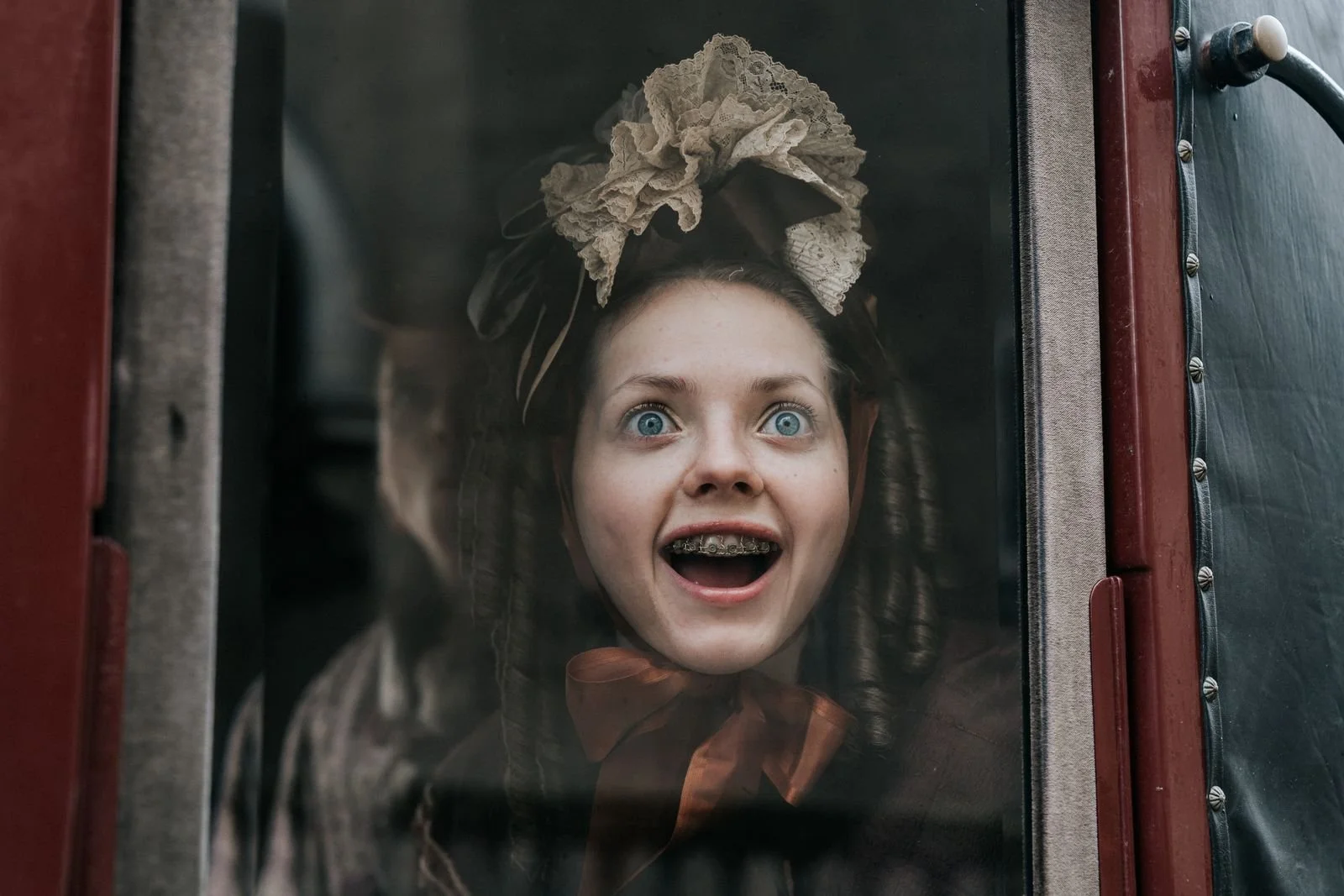
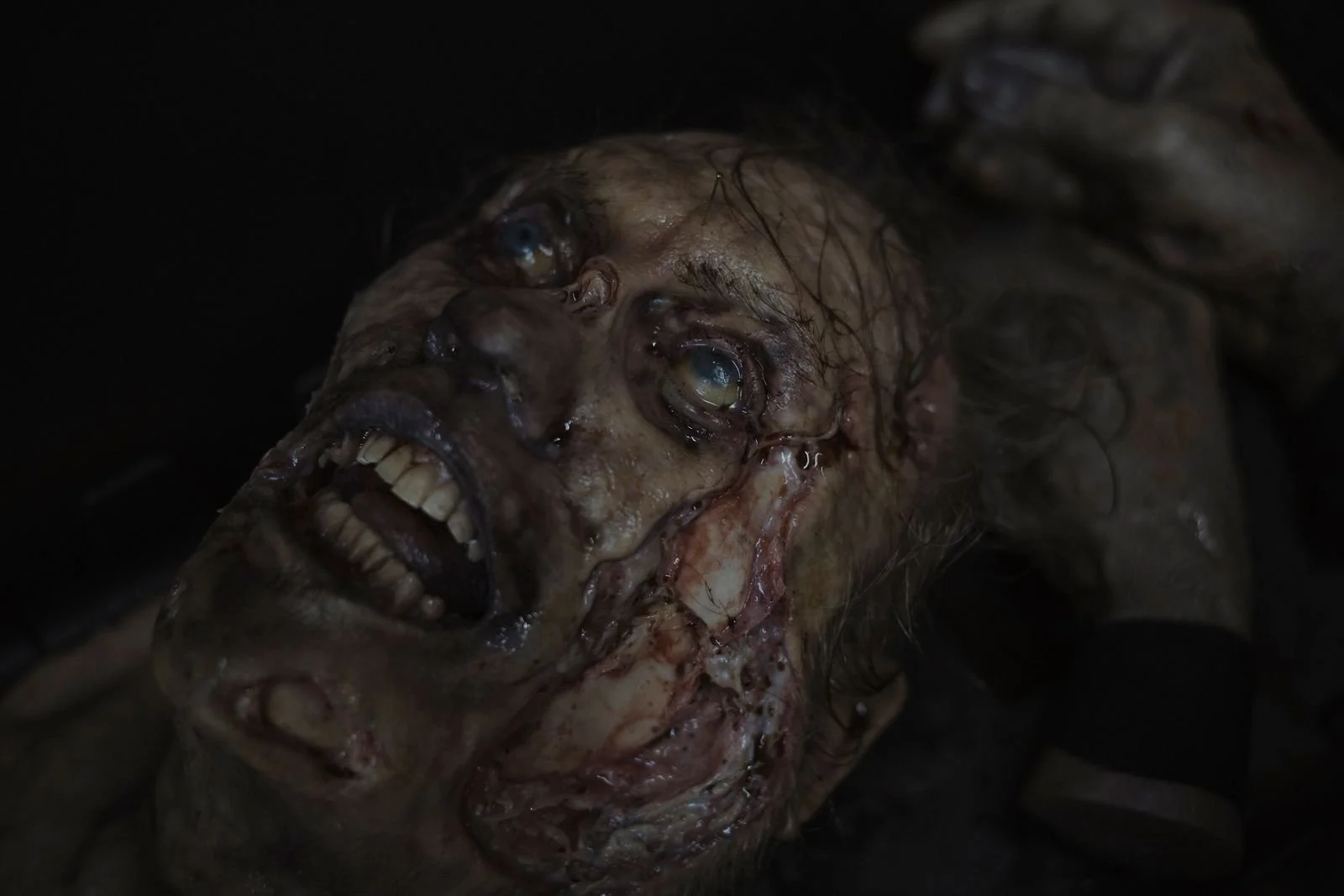
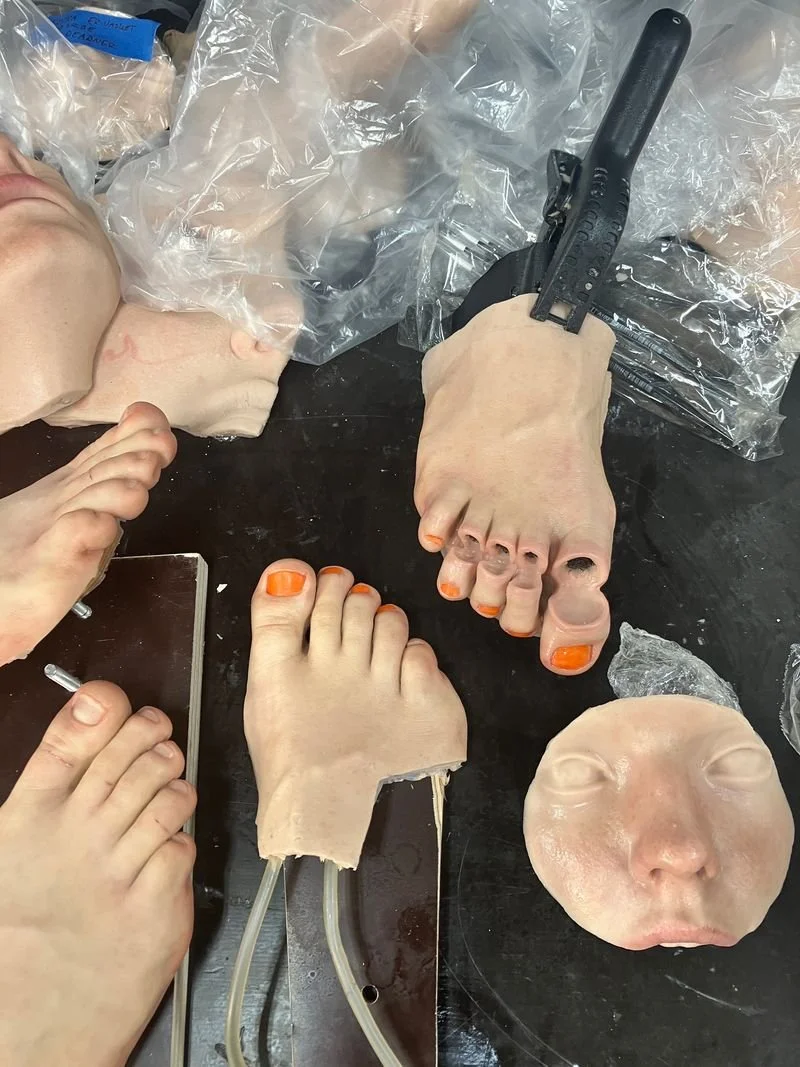
P: Speaking of the scene when Elvira chops off her toes to fit the slipper, how did you approach reimagining that iconic scene from the Cinderella fairytale?
TF: The gory effects, like the toe-cutting and the eye sequence, Emilie wanted them to look fake, but in a good way—so it had to be very stylised. The toe-chopping isn’t very realistic—I would definitely have thought to use softer silicone and make more of a mess, but she wanted this straight cut, like a marzipan foot. Which was a really good idea, but extremely hard to work with. I was afraid that it would look like I was insane, because it was so stylised and clean, but when I saw the edit, I knew that she was right.
P: Emilie has described you as the real-life ‘Dr Esthetique’ [the film’s eerie beauty surgeon], and I understand that there was a degree of historical reality for the medical interventions. How did Emilie approach you when working on these scenes, and how did you create these horrific beauty procedures like the eyelash sequence?
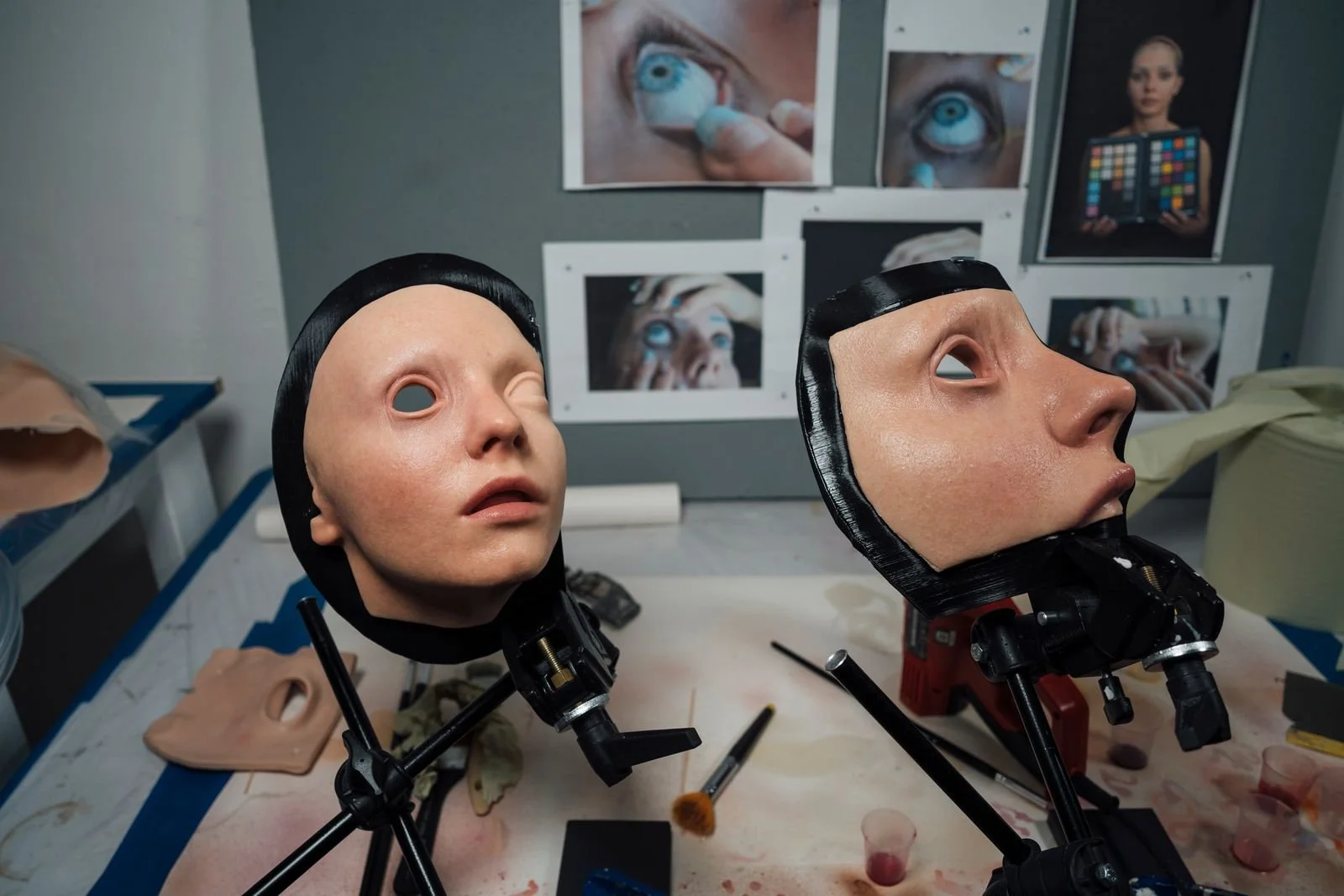
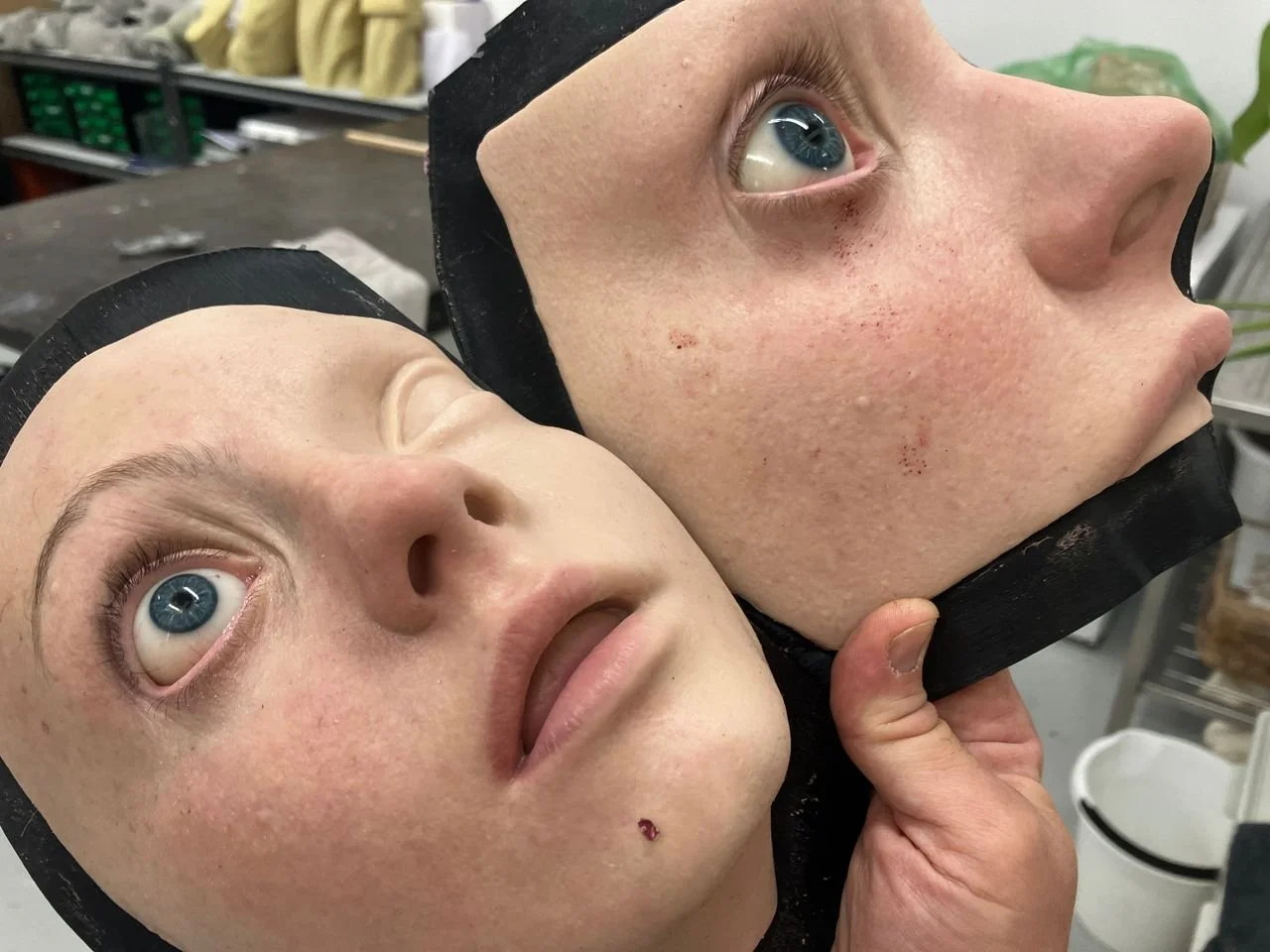
TF: Emilie actually only had a small cutout from an American newspaper from, I think, 1900, describing the latest fashion from Paris. And that was it. We only saw this little picture of something with the stitching of the eyelashes, and the rest is made up. We found a good look for the lashes, because we didn't want to make lashes that resemble what a lot of girls are having done now, because it's not about making fun of them. It's about the idea of changing yourself for beauty. So we designed one replica head in a one-to-one scale that we used for the actual stitching, and then we created a two-to-one prosthetic so we could see the edge of the eyelid and the thread going through it. Then we had a bowl of water and some blood, and that was it.
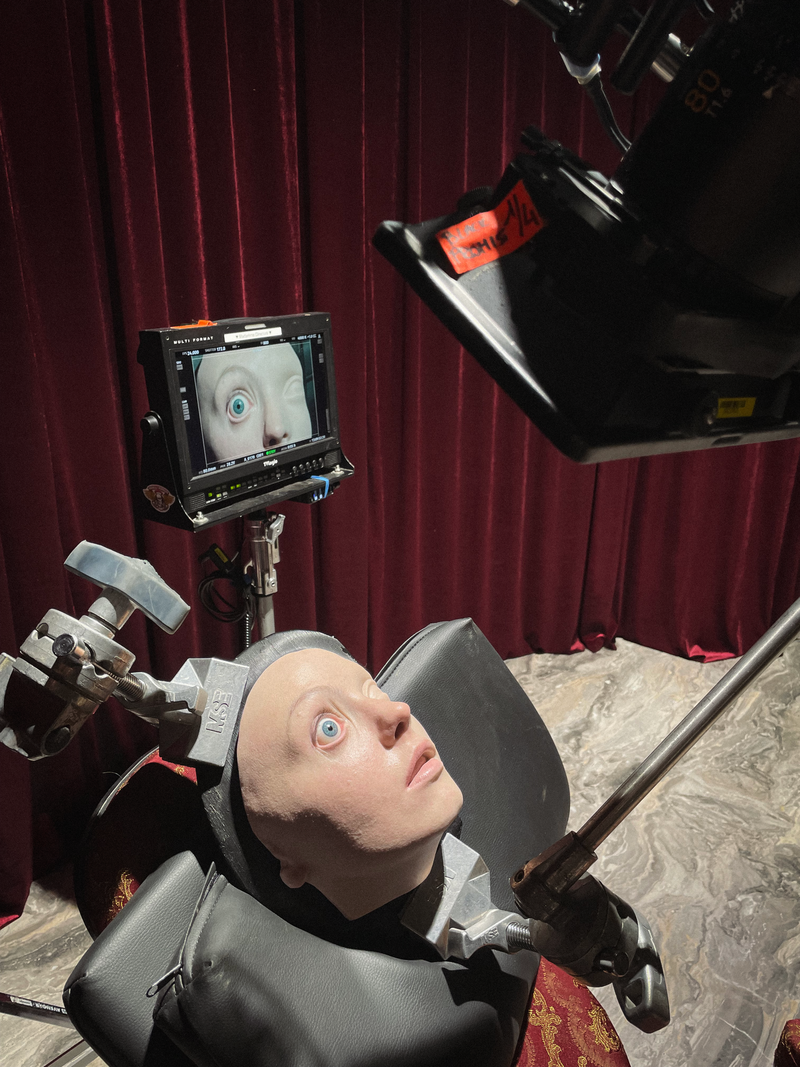
Folderg’s prosthetic for the eyelash surgery scene. Courtesy of IFC and Shudder
P: You and Emilie have spoken about how you were striving for ‘beauty horror’ rather than ‘body horror’. What was the importance of that distinction, and did you leave the project with a changed understanding of what beauty means to you?
TF: The term ‘beauty horror’ was about putting a twist specifically on the so-called ‘beauty’ industry because it’s the key element of the film. We were thinking about these gruesome beauty [procedures] and the question of ‘What will people do to fit in?’ I cannot not relate to that issue because I think we all do that, and I have daughters as well, so I think it’s a super important topic. It’s not the kind of film that you can make without thinking, because it really resonated with a lot of my thoughts on the industry.
P: Is there a prosthetic you designed that has gone unnoticed by viewers?
TF: It surprised me that a lot of people did not notice that Lea was wearing so much makeup for the first two-thirds of the film. Even colleagues around the world didn't notice at first, which is fine. I mean, that's probably good, but also a little sad [laughs].
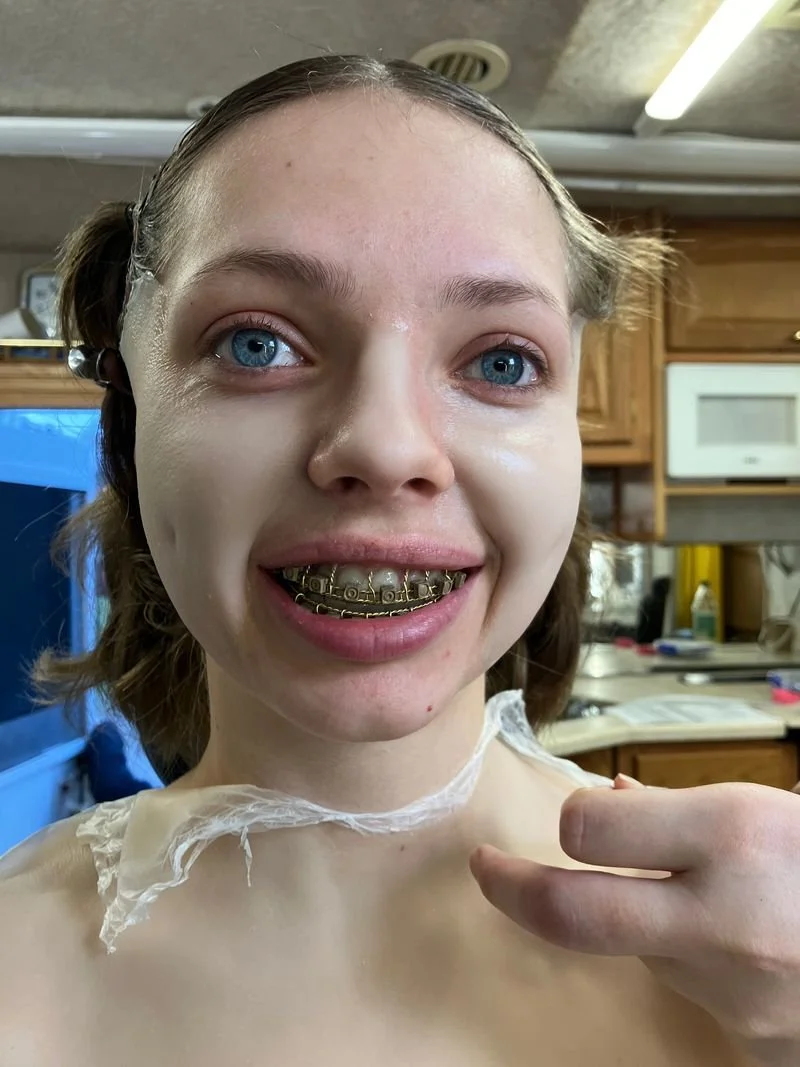
Lea Myren’s facial prosthetics for Elvira’s initial “awkward” look. Courtesy of IFC and Shudder
P: What was it like working with Lea Myren? She obviously had to give quite a visceral performance, especially towards the end.
TF: One of the first things I said to [producer] Maria [Ekerhovd] was that she had to be careful about choosing the right actor, because it can be a huge problem if they can’t take it. When I heard that it was a 22-year-old who was educated in Paris as a dance theatre actor, I said, ‘Okay, maybe that would work.’ Then I met Lea for the first time, and it was clear that we wouldn’t have a problem. And we didn’t. Even wearing all that makeup, the bodysuit, and big dresses, she was so good and made the part come alive.
P: The film builds to a show-stopping finale with the tapeworm scene. Can you walk me through the logistics of creating that effect?
TF: Lea was wearing a bald cap and a silicone forehead, and then a wig in several pieces for this patchy, strange look. Then she got a broken nose and a pair of dentures, and she was wearing contact lenses when Elvira gets sick to tone down the white part of her eye. For the worm itself, it wasn’t advanced at all: we had these long meters of tapeworm that were fed through a system—basically a tube with a hole in the middle— that Lea could hold at the back of her teeth. We had a puppeteer move a little rod, which was later digitally removed, to feed in the tapeworm so that Lea could pull it out of her own mouth. We were able to do it practically, which I was really happy about. Then we had the final moment when she vomits everything, and that was a fake head, the bottom of the face, stitched together with Lea’s face.
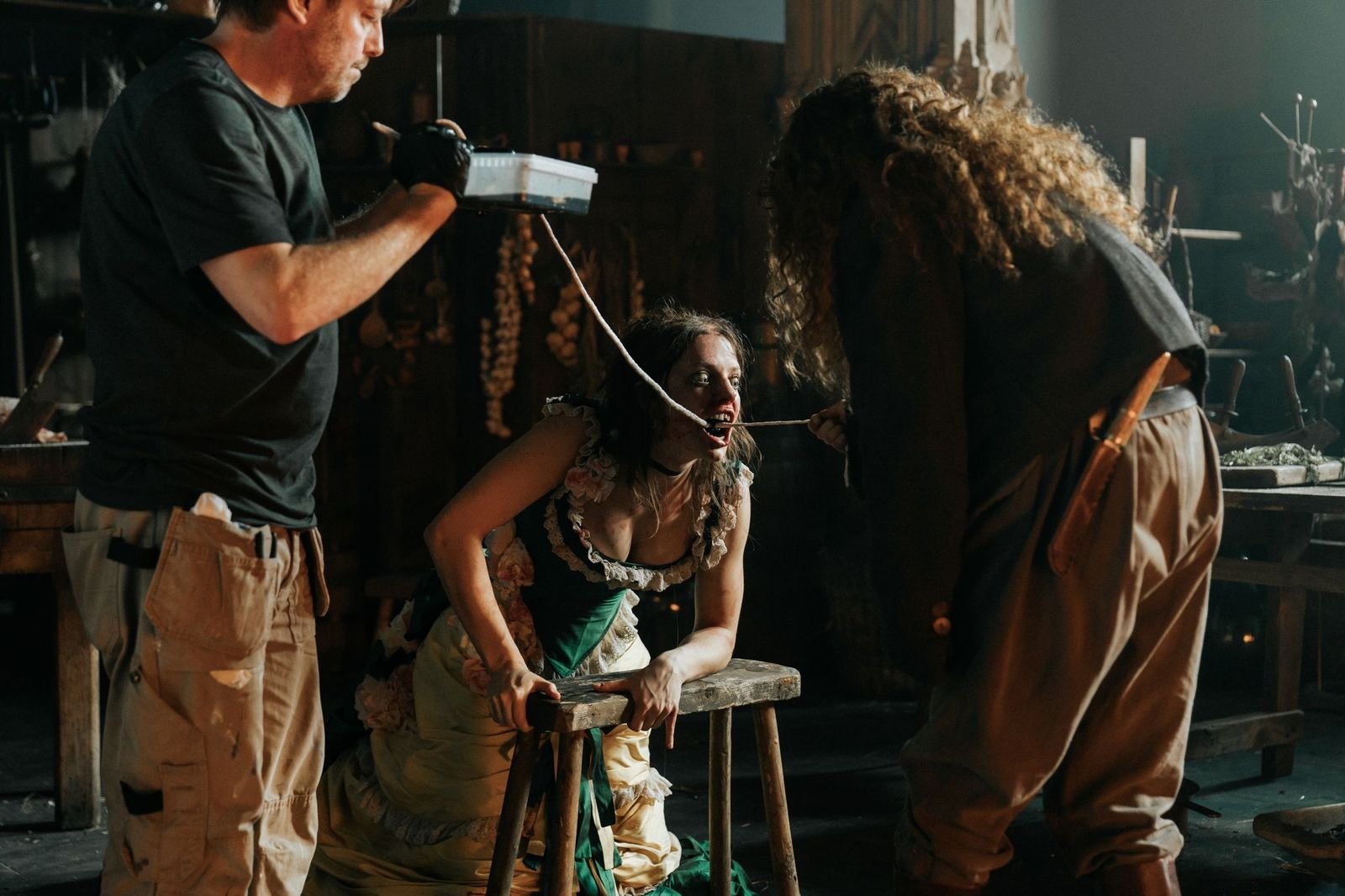
A BTS image of Foldberg’s tapeworm prosthetic. Courtesy of IFC and Shudder
P: Special makeup effects are so central to horror cinema. Are you a fan of the genre, and if so, what are some of the horror films that have inspired you across your career?
TF: I'm not much of a horror fan, actually. But there is some stuff I really like—I’m more into films like Don't Look Now. Still, of course, I like Night of the Living Dead, Dawn of the Dead, Tremors, and A Nightmare on Elm Street… As for films that have inspired have me, it's fun to talk about, something like E.T. the Extraterrestrial, because it's in some ways crude, but in other ways, it's like the wildest design ever made. It’s so much of the character that, and it holds the film together.
P: In an industry where CGI and even AI digital solutions are quickly becoming a norm, what is the value to you—and to the audience—of practical effects?
TF: I hope that the audience will still prefer it. When something is done practically, people react to it. Everyone raved about the latest Mission Impossible, and that’s not to say anything bad about CGI stunts, but you don’t hear viewers rave about it in the same way. My hope is that the more digital [technologies are] used, the more people will want something handmade. I mean, when the drum machine was invented, I think a lot of drummers were worried there would be no live drumming again. And I mean, is that 60 years ago now? So we can hope it will go in that direction.
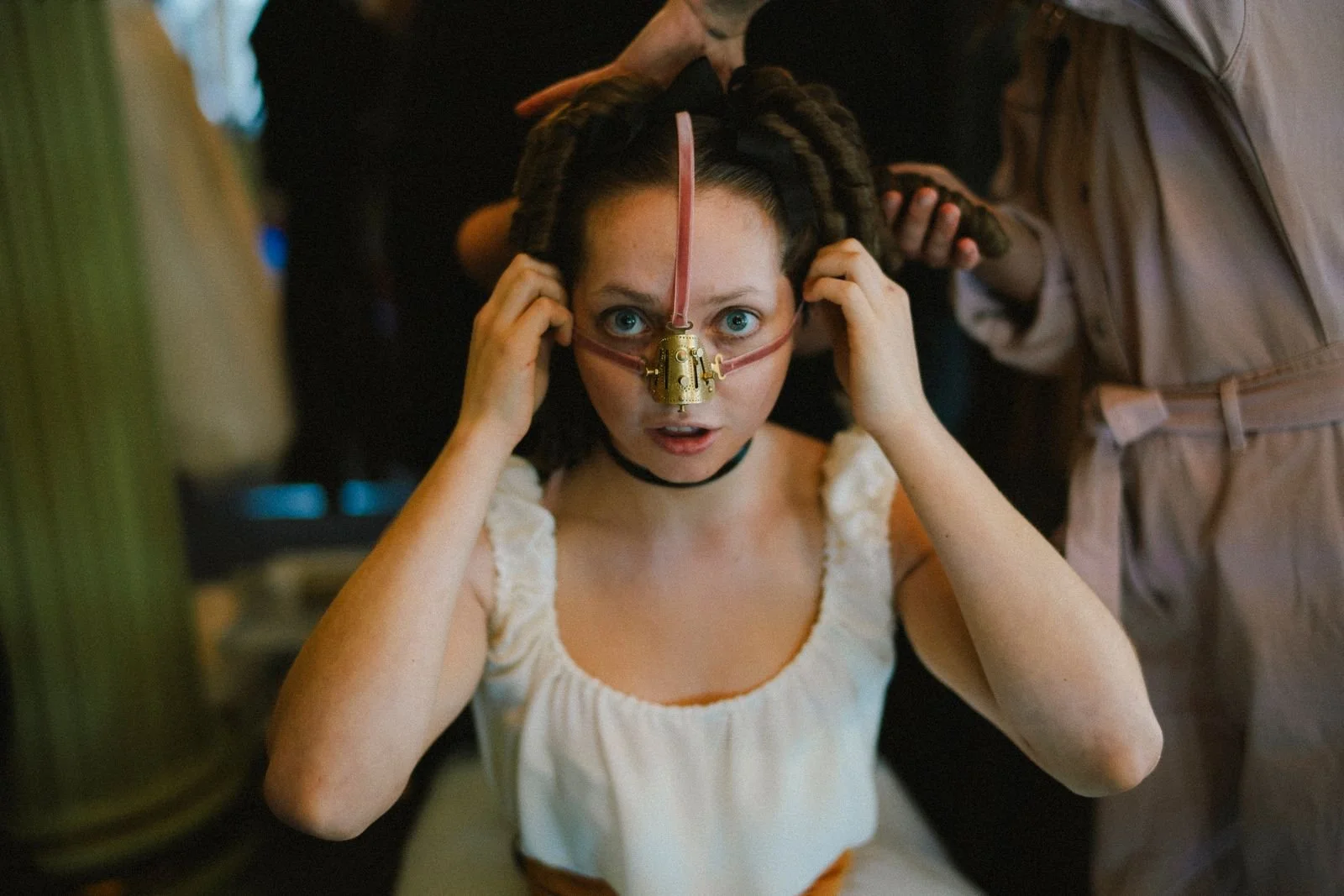
Lea Myren as Elvira. Courtesy of IFC and Shudder
P: After such an intensive shoot, what was it like to receive an Oscar nomination?
TF: It feels really good. Anything else would be a huge lie. Working hard for many years and then being acknowledged by your colleagues is fantastic, especially on a film you really like. It’s amazing, but it also feels like they’ll call in tomorrow and say [the Oscar nomination] was a mistake.
P: Beyond awards recognition, there has been a hugely positive response to the film, and audiences have embraced it across the globe. What does that mean to you as a creative on a small, independent Scandinavian horror film?
TF: It means everything. Yesterday, we found out a huge amount of fan art is being made—I got some pictures of a little doll from Mexico, and somebody had made a kind of Bratz doll of Elvira. Then there are hundreds of drawings and t-shirts… It's crazy. Anne Catherine [Sauerberg] wrote me last night, and she ended the conversation saying that it’s really touching that we have touched the hearts of both teenage girls and grown-up makeup effects geeks of my age.