The Testaments Review: Fabulous Chase Infiniti and Lucy Halliday Light Up a Sequel to The Handmaid's Tale That Surpasses the Book
In Margaret Atwood's dystopian and unforgiving world, sacrifices are meant to be made. Chase Infiniti and Lucy Halliday find that out the hard way in this ingenious and somewhat addictive adaptation of The Testaments.
by Jan Tracz 4 April 2026
© Disney
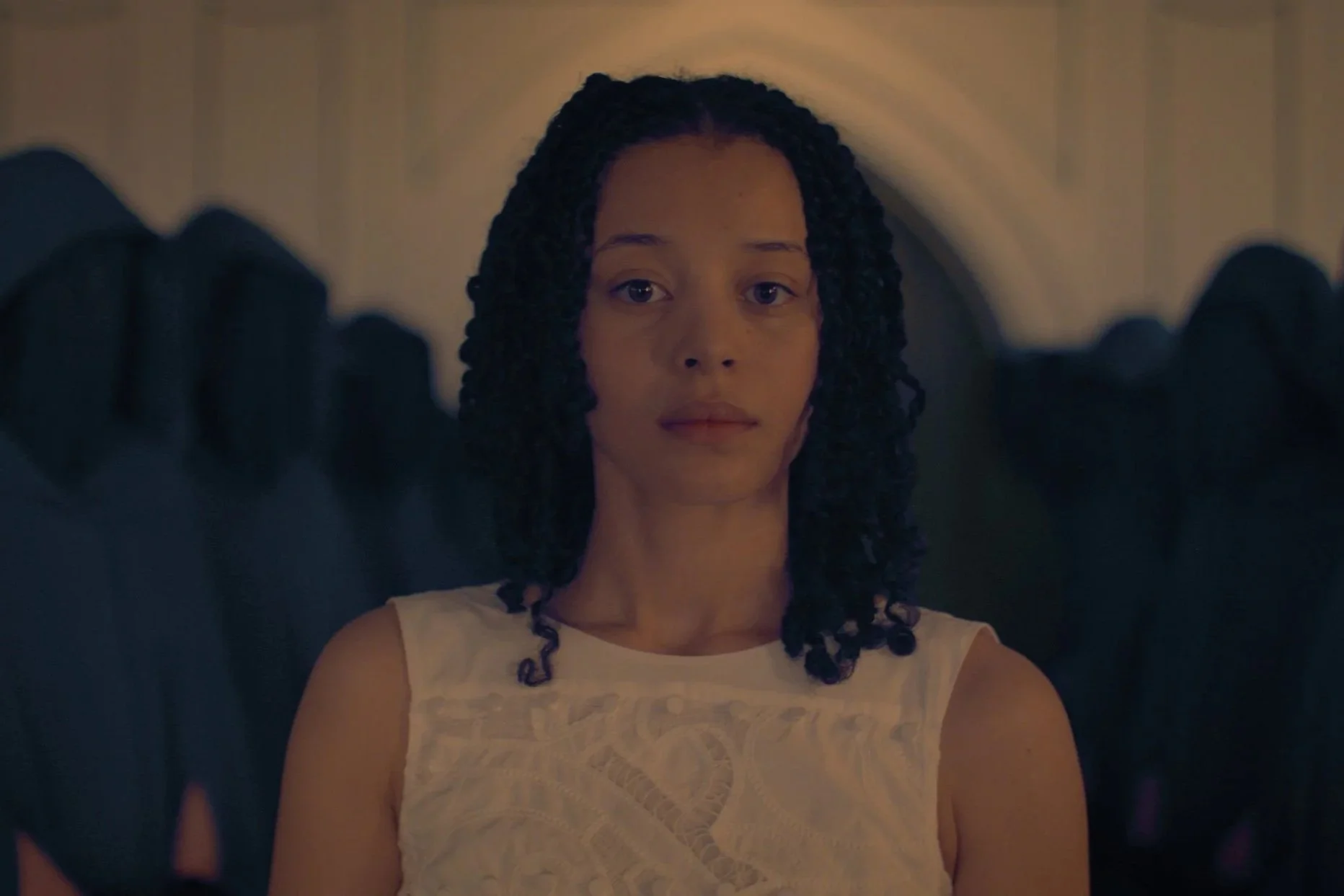
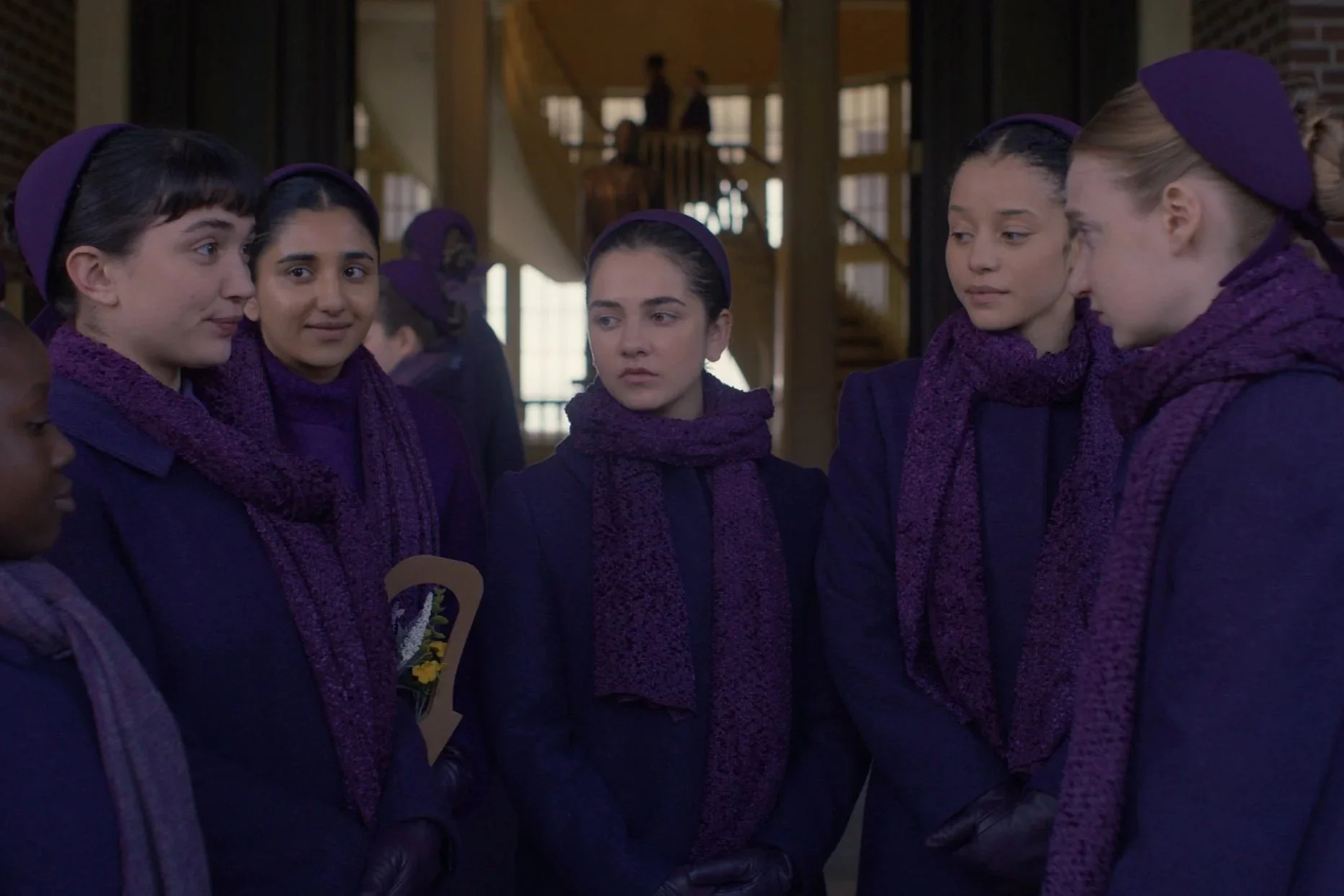
“If it's purple, someone’s gonna die,” wrote Patti Bellantoni in her book on the meanings of colours in film. All of the students in one of Gilead's converts wear purple uniforms. Even the bus taking them to school is – as you might have already guessed – purple. So, when Agnes (Chase Infiniti), a future wife-to-be in an ultra-conservative dystopian society, meets a newcomer, Daisy (Lucy Halliday), the earth trembles. In the already crumbling empire of Gilead, the union of those two special girls can only mean one thing – change. Together, they contain multitudes of possibilities, and they are ready to alter the course of history. Well, if it’s purple, some totalitarian state is going to fall.
After a couple of years from its release, The Testaments feels more like a disappointment rather than being one of the biggest publishing events of 2019. The denouement of The Handmaid's Tale's open-ending felt like a wasted opportunity. Atwood came up with the most obvious follow-up, relying on some cheap sentiments and predictable U-turns. In this sense, she wrote a novel stripped of ambiguity. One that was also simplified linguistically and bereft of the constant suspense affecting the reader.
Perhaps this is why adapting The Testaments seems to be a relatively daring venture – it’s also a sequel to a show that, at some point, became a repetitive melodrama. How to re-imagine a novel that resists its adaptation? Is that even possible? Luckily, the executives, Bruce Miller and Warren Littlefield, propose a dangerous gamble: a bold exchange of the novel's mysteries for more balanced and thrilling storytelling. Instead of following the book page by page, they play with its narrative, modify and rearrange it for our blessed (sic!) entertainment.
© Disney
All of the understatements about life in Gilead are lavishly visualised and contextualised, while many crucial moments – either ineffable or described with some reserve by Atwood – are enriched by the show's writers. Such attention to detail functions as a fine addition to both heroines’ character development. The showrunners aren’t afraid to create their own truth out of the literary predecessor. They take Atwood’s novel, reframe it, and, in doing so, offer us something more thrilling, more mature even. The proposed tale – teeming with women's fears and desires – no longer appears to be only a bland concert of greatest hits.
The chemistry between the three main actresses (and not only – Rowan Blanchard is also phenomenal) becomes a driving force of this show. This is Chase Infiniti's first project since her fierce turn in One Battle After Another, in which she was like Dorothy Dandridge in Carmen Jones (1954) – a volcano ready to explode at any moment. Here, Infiniti is more like a lost puppy, which just widens its eyes, but is still ready to bite no matter what. Lucy Halliday proudly partners with her as a more rebellious heroine, who does not really belong to Gilead and is hiding her own little secret. By relying on two different performance intensities, they complement each other like yin and yang.
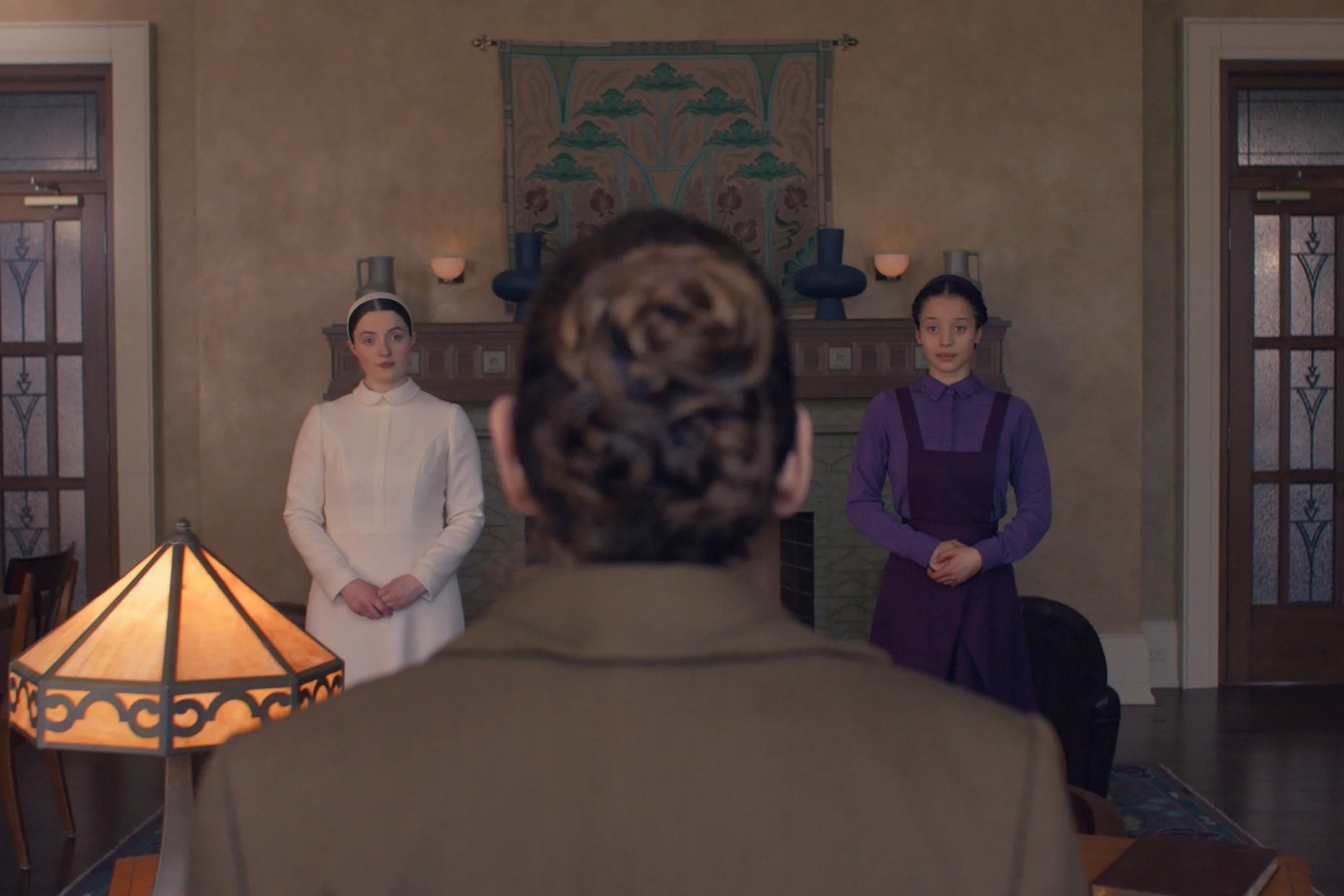
Both actresses will find themselves acting with (or to – depending on the odds) Ann Dowd, whose Aunt Lydia returns as a crucial player in this Gilead game of chess. This time, she’s also vindictive – throughout the course of ten episodes, we will learn that Dowd's antagonist is, actually, something of an anti-hero herself.
© Disney
Despite all those merits, the recurring question remains – who is this adaptation's real target, exactly? The old fanbase, which already got tired of the previous show's extended run? Or maybe the readers of a sequel who are still remembering the hype around the book's premiere? Seemingly, none of these – it is a show for anyone open-minded enough to forget about the novel and just enjoy the ride with everything that will come along the way.
Thanks to this, The Testaments does not lack identity, yet its source is, sometimes, just not strong enough. And, the whole thing is, perhaps, a few years late to the game. In 2019, we would have said it's brilliant, maybe even transgressive. Now – Disney's upcoming hit is just a well-polished thriller like many others, with a few dazzling moments and some memorable performances.
The show is really trying, yet sometimes, trying is just not enough. It still echoes real life, but so do many other works of art; still cuts to the truth about women and an abuse of power, but its blade is no longer that sharp. The blood is there, though – and that should be enough.
The Testaments releases April 8th on Hulu in the US and on Disney+ internationally.