Jennifer E. Montgomery on Her True Story Psychological Thriller This Tempting Madness Starring Simone Ashley
The writer-director breaks down her twisting debut feature
by Lana Thorn 10 June 2026
Vertical
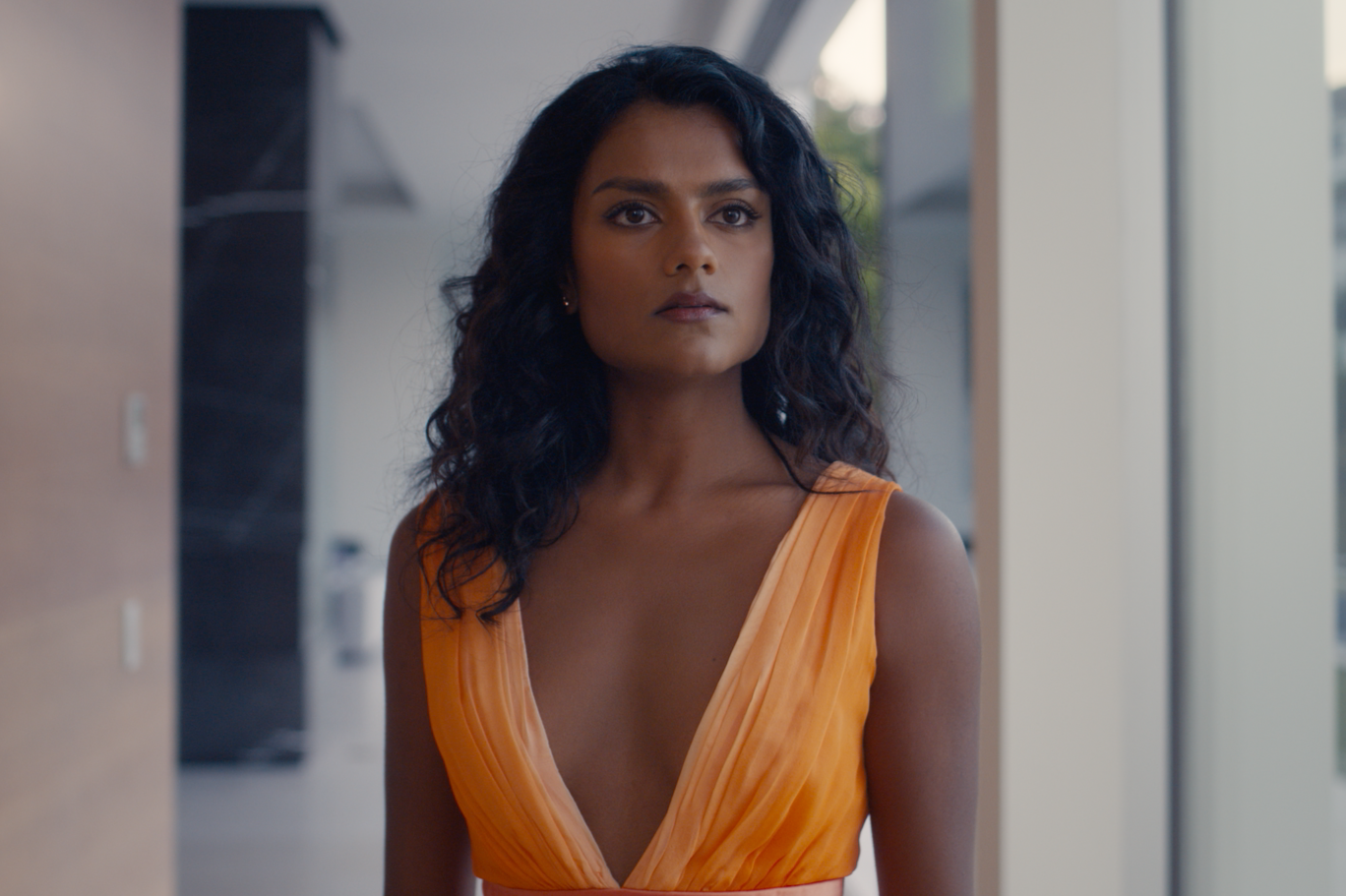
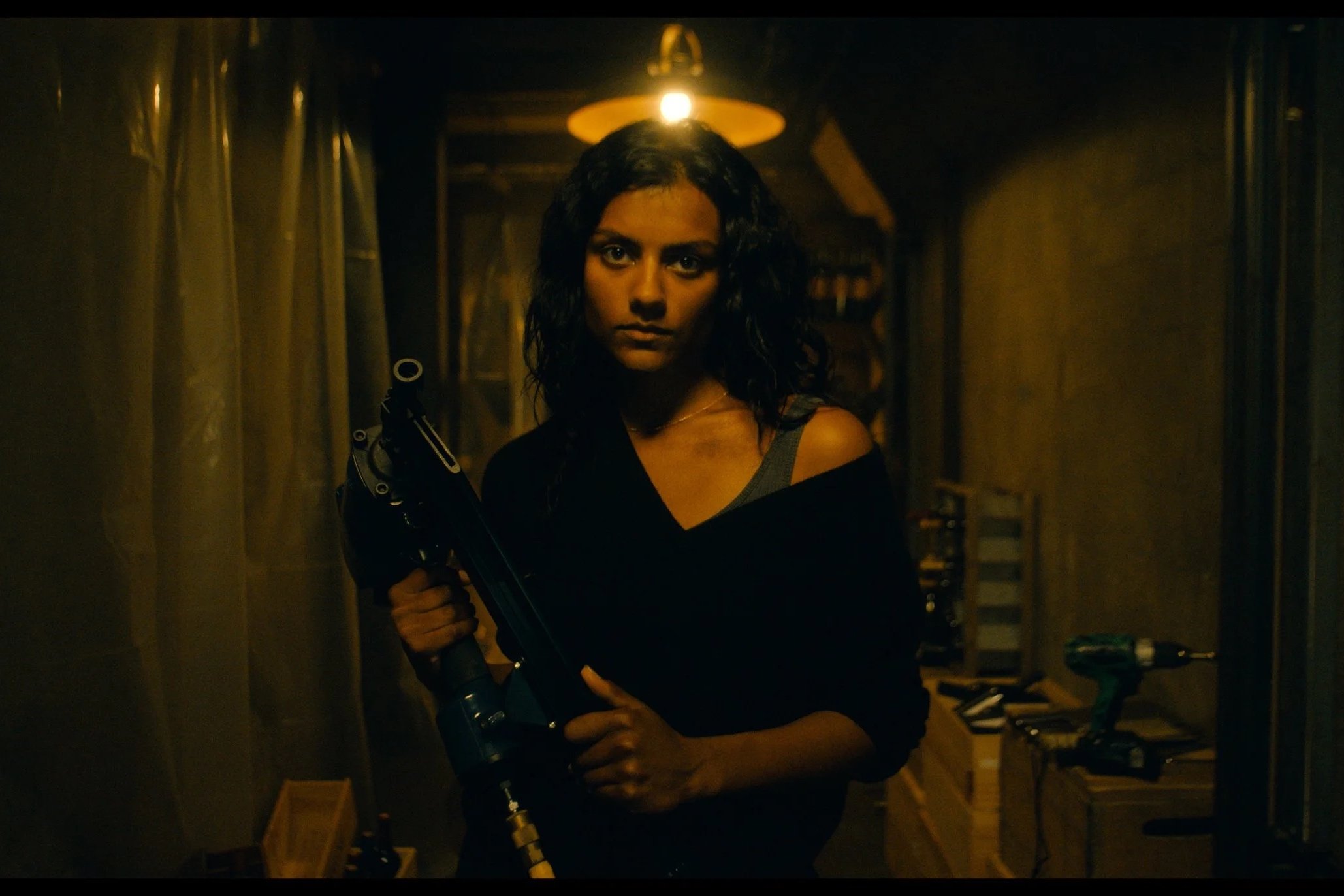
Based on true events, This Tempting Madness is a psychological thriller about a woman named Mia (Bridgerton’s Simone Ashley) who awakens from a coma after a traumatic fall to find she’s lost her short-term memory — along with the last six months of her life — and that her husband, Jake (Austin Stowell), has been imprisoned for her attempted murder. With her family, led by her brother Ajay (Suraj Sharma), trying to help rehabilitate her, Mia spirals as she pieces her memories back together, and progressively loses her grip on reality.
Speaking with Phantasmag over Zoom ahead of the film’s release, director and co-writer Jennifer E. Montgomery reflects on the challenges of dramatising a tragedy she was personally involved in, the psychological thrillers that inspired her, and how Simone Ashley’s voice became the driving force of the film’s score.
Phantasmag: I understand that This Tempting Madness was inspired by a real tragedy experienced by your best friend. What made you know that this was the right film to develop as your feature directorial debut? And when did you realise that this story could be expressed as a powerful psychological thriller?
Jennifer E. Montgomery: My friend, in going through this process, she got amnesia, and so she had trouble building short-term memory. She also had trouble accessing some of her memories from the past. She had come out of a coma, and so there would be times when I would talk to her for the first couple weeks, and she would only have a memory of sixty seconds. Over time, thankfully, she got to a point where she didn't have trouble forming new short-term memory, but she still had this gap in memory about the six months leading up to this horrible incident that happened. And so I just encouraged her to keep writing a journal to help exercise her mind. It was so funny 'cause she's such a giving, selfless person that wouldn’t normally take the time to write a journal on her own [laughs]. I said, ‘It’ll be really good for you,’ and she was like, ‘Why? Do you need it? Do you want to make a movie on it?’ And I was like, ‘Sure, yeah.’ I had no intention of making a movie about this at all — I just wanted her to keep a journal. She did that for eight or nine months, and then, when I was hanging out with her, she was like, ‘So are you going to write it? You should write it.’ It is just such an incredible story, and such a beautiful exercise of resilience and the choice to move on and really take the world by the horns, which is not an easy choice. So it became clear that I really should write the movie. And it’s been great because a lot of people have resonated in a very similar way that she did to it.
Vertical
P: How was it showing her the movie for the first time?
JEM: It was terrifying [laughs]. Absolutely terrifying. Because it's such a responsibility to tell somebody's story, and it was also difficult because I didn't want to implant my memories on her. My perception of reality is always going to be different than your perception of reality, no matter how aligned we are. We deal with that a little bit in the movie. So it was terrifying, but she ended up loving it. It’s been a powerful process for her, so I'm thankful for that.
P: Simone Ashley delivers such a raw performance as Mia. Can you tell me about why you cast her, and what were your initial conversations together when developing the character?
JEM: We met with a lot of talented actresses for this role, but something that was so special about Simone when we met with her was she really had this understanding of the strength we wanted to show in Mia. When we meet her in the movie, she is living her most vulnerable time in life, but we didn't want this to be a movie about falling. We wanted this to be a movie about rising, and that was something that I think Simone intricately understood from moment one, and was something she very purposefully took with her in all the choices that we made with the character moving forward from there.
P: The psychological thriller is such a vast genre. Did you have any specific reference points when developing the film?
JEM: There are so many talented filmmakers that have delved into this genre. Alfred Hitchcock was such a spearhead in the genre. Beyond that, it's inescapable to look at more contemporary things like Black Swan, Gone Girl by Fincher. I love Kubrick's work. We took reference in cutting styles and how we are moving through time from Arrival and Girl, Interrupted. Then, Christopher Nolan's Memento for just how you deal with amnesia and memory. I mean, that one is inescapable.
P: This film blurs the line between score and sound design, and was also based on recordings of Simone Ashley’s voice. How did you go about creating that unique soundtrack? And how did you even settle on that idea to centre it on her voice?
JEM: We always knew that we wanted it to be a soundscape where the sound and the music are, in some ways, hard to differentiate. Part of that was just because we wanted to put the audience immersively inside of Mia's head. When we were talking to our composer, [Rebekka Karijord], she told us about this voice organ that she had created. She's like, ‘Yeah, I can record the human voice, and then I can put it into this voice organ and make the voice play as notes, and I can play it like a piano so that I can play the music of their voice.’ And she was like, ‘I don't know if Simone can sing or not, 'cause it would be helpful if she can give us a scale." And we were so lucky 'cause Simone legitimately has perfect pitch. She's a classically trained singer. It was so funny because we were in ADR, and we were there recording lines that got stepped on by an airplane or whatever. And I just asked her, ‘Hey, can you sing a couple scales for us?’ She just immediately did two scales with this gorgeous, perfect tone [laughs]. Right there, take one. And then she did a couple more for me where she did hums and whispers, and we really built the sound, the voice organ, out from there. It was just the beautiful confluence of our amazing composer and Simone's incredibly talented voice.
Vertical
P: Paired with that evocative soundtrack, This Tempting Madness has a strong sense of rhythm in the way it recreates Mia’s fragile mental state. As a classically trained ballerina, how has that background informed your voice as a filmmaker?
JEM: As a dancer, you're given a piece of music, and then you are giving movement and breath to that music visually. So having that rhythm to a visual medium is so important to me, and so built into how I think. I don’t know how to do it any other way, 'cause it is just so ingrained, but you have to listen to the music and connect with it.
P: True crime is such a huge fascination for people. And with this film based on the story you're so familiar with, how did you create a different kind of entertainment out of a tragedy?
JEM: It was such a hard circumstance to go through both for my friend and for her family and for me, that I think there was this desire to just have it be a little bit more transportative. There aren't clear endings in life. There's not a clear point of: Well, it's done now. That's what can be hard often in storytelling, is finding a way to give people that catharsis and that ending that they are looking for, and that's something we wanted to do with the film, which the genre approach allowed us to do. And also allowed us to understand where Mia was at mentally more, because we wanted to be inside her head and tell the story in a subversive way, rather than just doing it as a straight docu-style.
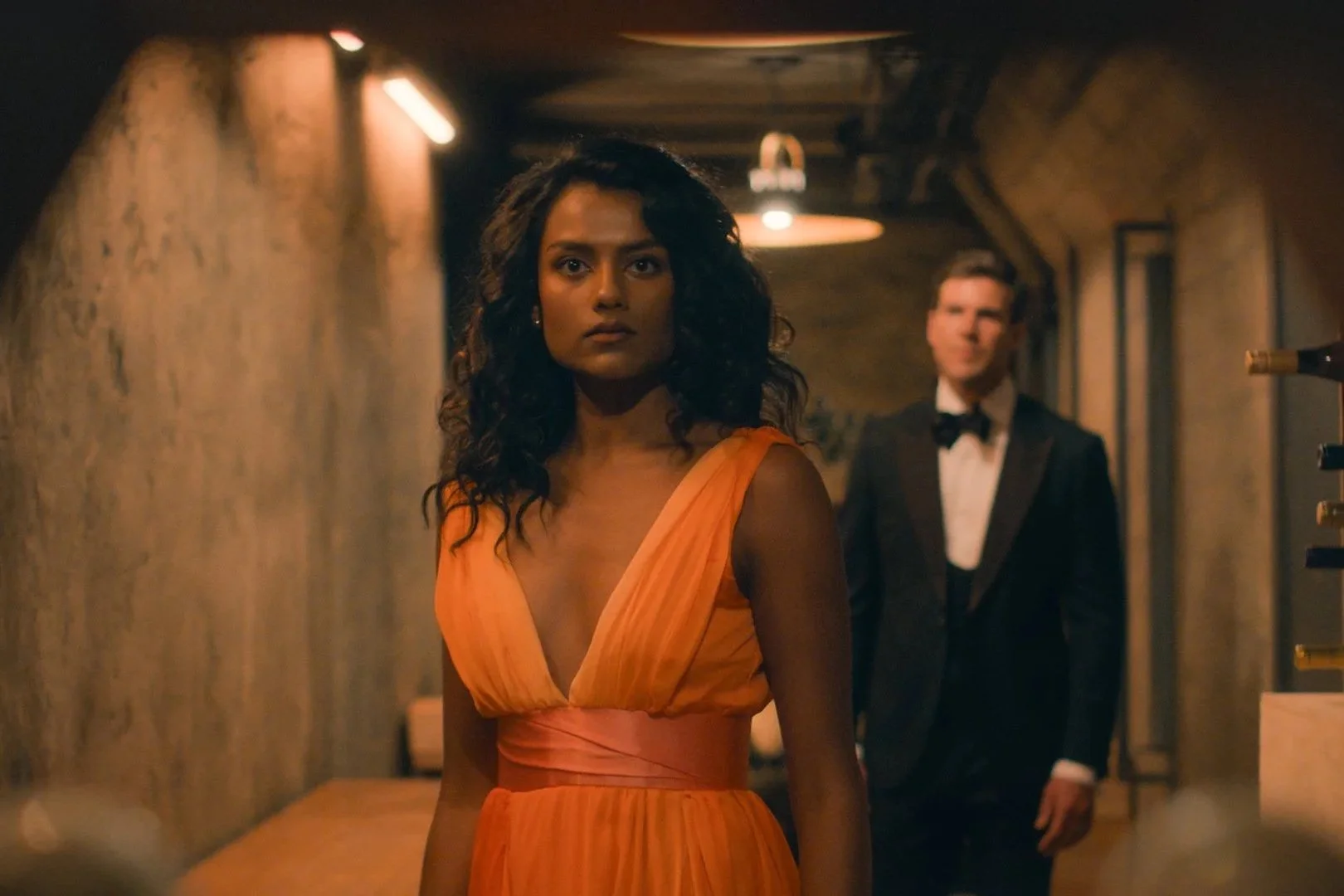
P:This Tempting Madness has such a striking colour scheme — I’m thinking of that magnetic orange dress, for example. Why was that important to you when telling this very bleak story, and how did you coordinate from production design to costume design in developing the colour palette?
JEM: So we always knew we wanted it to be in the orange-red spectrum. Then when we cast Simone, orange looks fantastic on her, so we could go full orange, which was so fun. But it was a very intentional choice from the beginning in the writing. So the orange plume of the dress coming up like wings was very intentional. In designing that dress, I was specific about wanting it to be a silk chiffon that was cut a certain way, so it would have movement for that plume. Going back to my ballet background, I'm aware of how fabrics move on the body and the motion, and so that was important for that image, when we wanted her to be a phoenix rising from the ashes. That colour, then, is so important in creating that imagery, and throughout the film we have her in that colour palette — not always in orange, but it'll be gold, orange, red, all to have her be different ways of the phoenix, except there are certain portions of the film where she's not, and that becomes more clear why when you've seen the film.
P: What do you hope that audiences take away from this film?
JEM: I hope they take away the ability to have a discussion. I think it deals with some tricky subject matter that people are so often tempted to, for lack of a better term, sweep under the rug. People deal with it in shame. To me, it loses its power if you're able to talk about it and people are actually able to have a space to do so. If the film can generate any conversation that way, even if it's two people arguing, I think that's great.
This Tempting Madness is in select theatres and VOD on June 12th