Nicolas Winding Refn, Sophie Thatcher, Charles Melton, and More on the Horror Opera of Her Private Hell
Thatcher, Melton, Kristine Froseth, and Havana Rose Liu unpack Refn’s first feature since 2016’s The Neon Demon
by Lana Thorn 22 July 2026 - Originally published in Issue 005
Neon
Nicolas Winding Refn is back from the dead. While the Danish auteur, known for the gritty Pusher crime thriller trilogy and a 2010s trio of hyper-stylised genre films (Drive, Only God Forgives, The Neon Demon), has a well-recognised flair for the dramatic in his work, he is unreservedly serious as he introduces my Cannes press screening by reflecting on how he clinically died for 25 minutes during surgery on a leaky heart valve in 2023. Well, almost unreservedly serious — he does compare the experience to Frankenstein’s monster being reanimated. To Refn, who had been making streaming series like Too Old to Die Young and thought himself at the end of his film career, the experience presented him with a second chance. Reinvigorated, he suddenly had an abundantly clear goal in mind: he was going to make his first film in a decade.
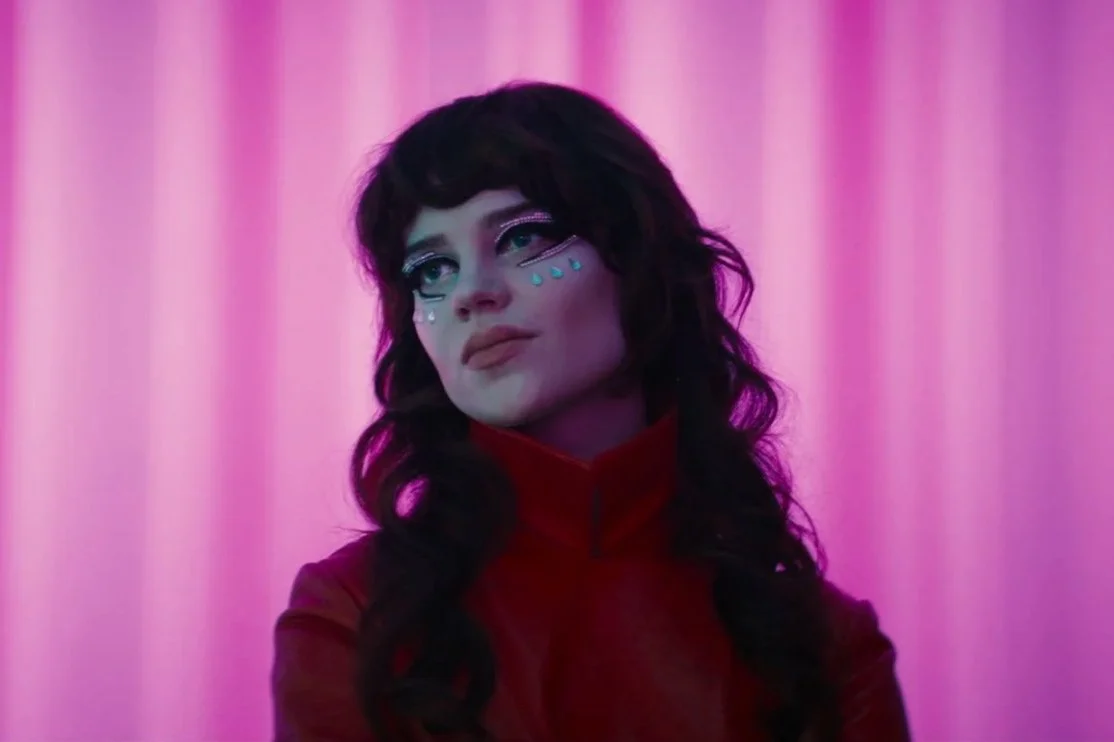
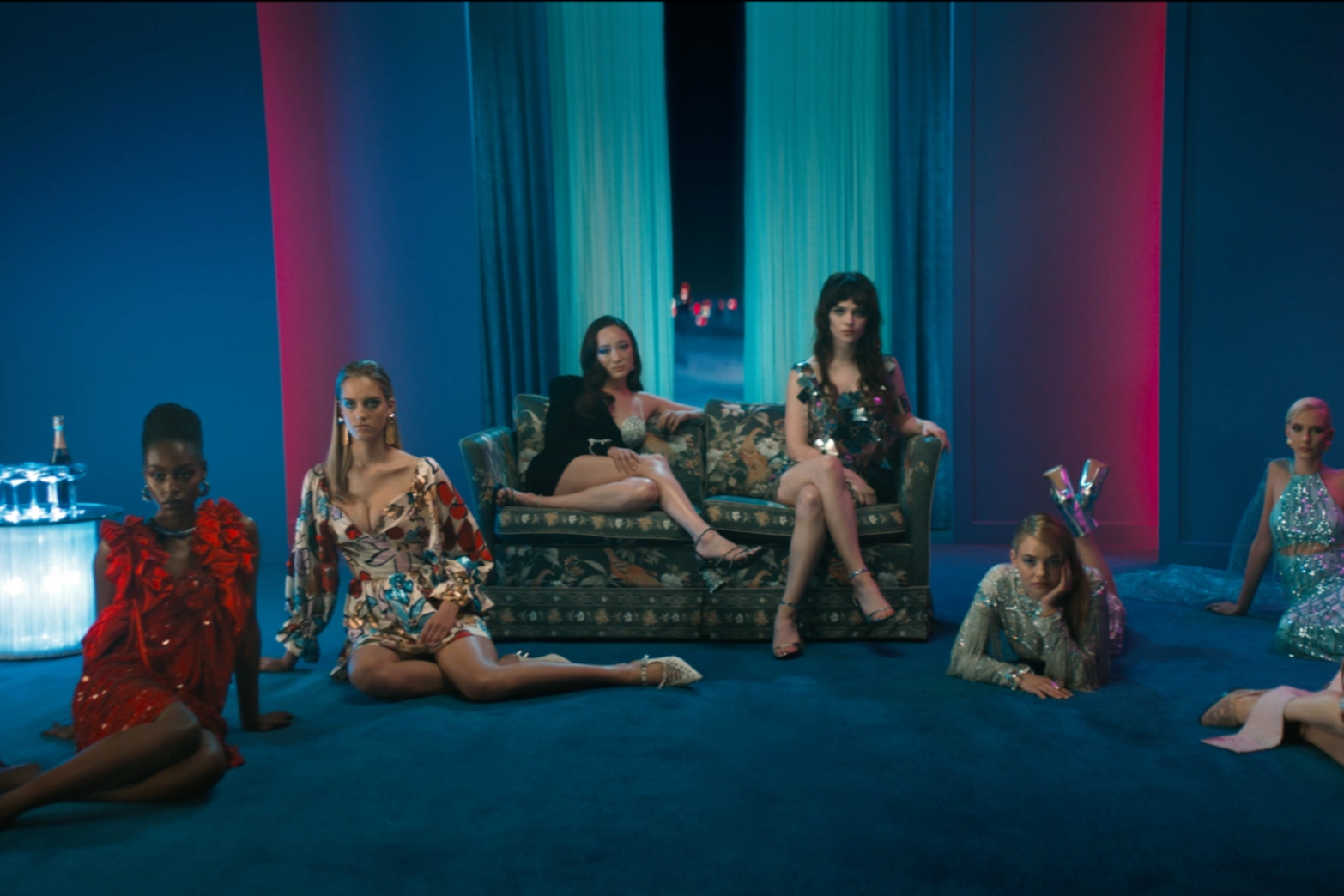
That film is Her Private Hell, a dreamy, neon-drenched action-horror melodrama that approaches slow cinema far more than any genre film in recent memory. Defined by sparse dialogue and heightened atmosphere, it follows three glamorous movie stars (Sophie Thatcher, Kristine Froseth, Havana Rose Liu) filming a Barbarella-esque sci-fi flick and a vengeful American GI (Charles Melton) searching for his daughter. The parallel plotlines are united by a hulking leather-clad villain known as the Leatherman, who haunts their futuristic metropolis whenever a thick fog engulfs the city. Defying categorisation, it’s a film charged with both the ultra-violent machismo of Drive and the campy charm of a soap opera, evident in a stepmother-stepdaughter relationship defined by twisted romantic tension.
Neon
To confidently assert what the film is definitively about is a difficult endeavour — something which attracted its lead. “I see Her Private Hell as an avant-garde art piece,” Thatcher tells me at the Carlton Hotel on the sunny Croisette, the day before the film’s world premiere. Flanked by Liu and Froseth, with whom she shares a bubbling, warm chemistry that sharply contrasts their icy friendship triangle onscreen, the burgeoning scream queen describes the film as markedly different to her previous horror roles in projects like Yellowjackets and Companion. “I think it’s so incredibly open for interpretation. It doesn’t spell things out for you. It forces you to engage and be immersed in the movie for the full experience, and that’s rare. We don’t get that singular kind of movie anymore. It’s so hyper-specific, but also such a beautiful blend of so many different genres.”
Refn’s previous film, gory fashion industry thriller The Neon Demon, premiered at Cannes 10 years ago to a mixture of applause, boos, and walkouts (a characteristically divisive reaction). Sitting beside his leading man in another room at the Carlton, the ever-cool, curt director explains in his naturally calm tone why he’s returned to the festival with another polarising arthouse horror film “I’ve always liked genre, and I’ve always liked horror, especially ‘cause I think it’s all about what you don’t see, like the subconscious,” he says with a smile. “As a filmmaker, horror is very much a visual language, especially in cinema. [Growing up] it always just spoke to me, and it was a way to make my mother very angry.” More specifically, Refn wanted to make a horror “opera”, complete with lush orchestral music by Italian maestro Pino Donaggio that recalls his scores for Carrie and Blow Out. Comparing the film to Only God Forgives, with its thorny mother-son relationship, he sees Her Private Hell as an operatic exploration of “father-daughter dilemmas”.
Neon
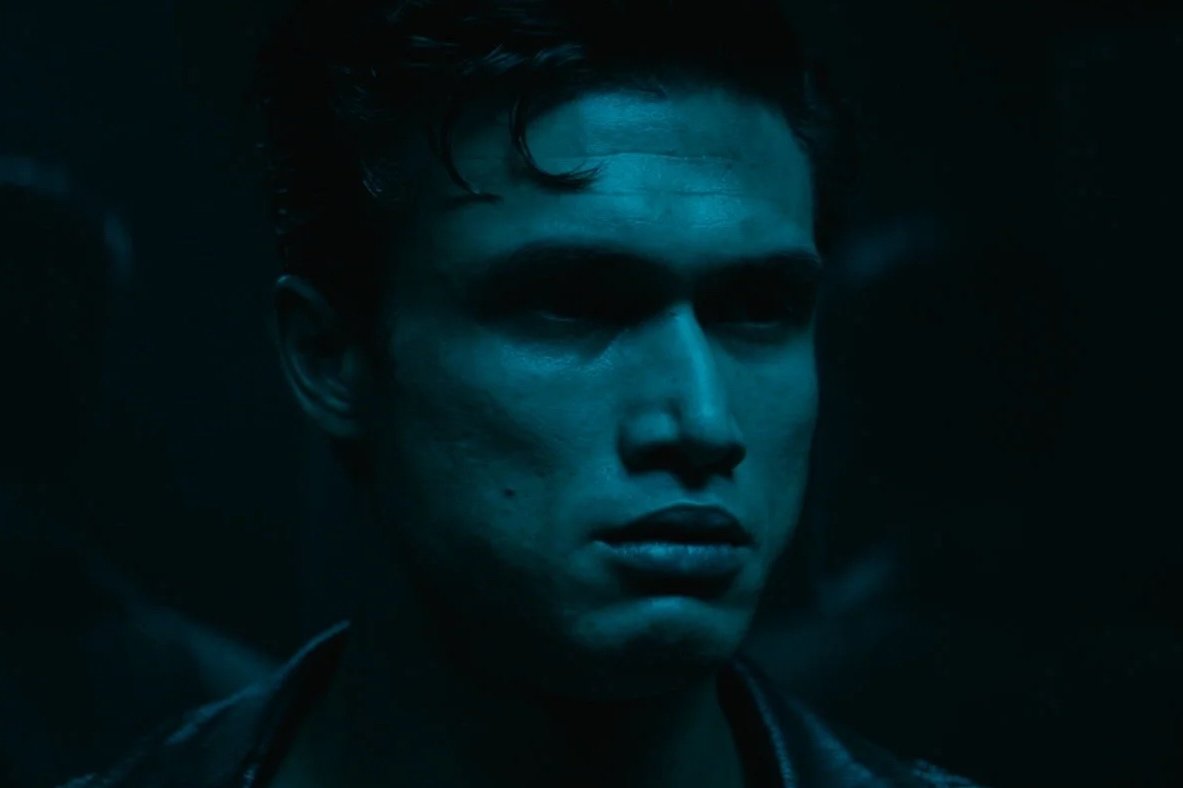
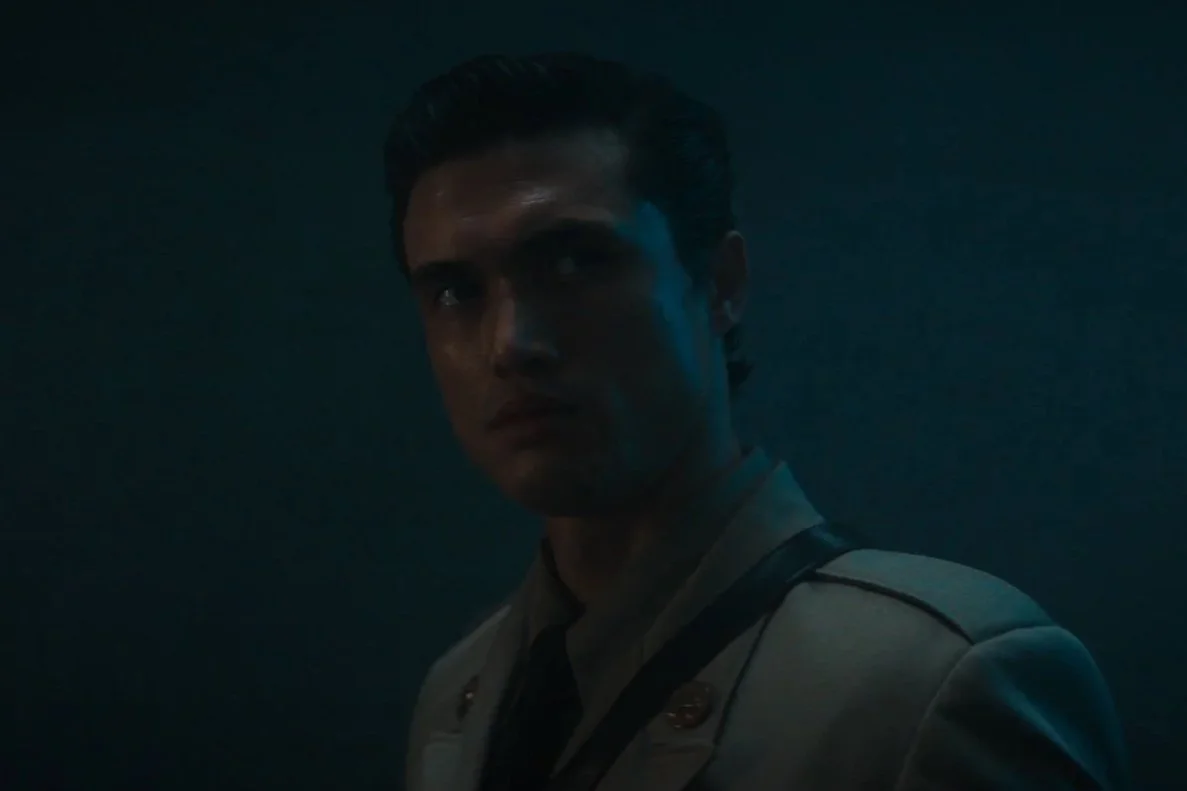
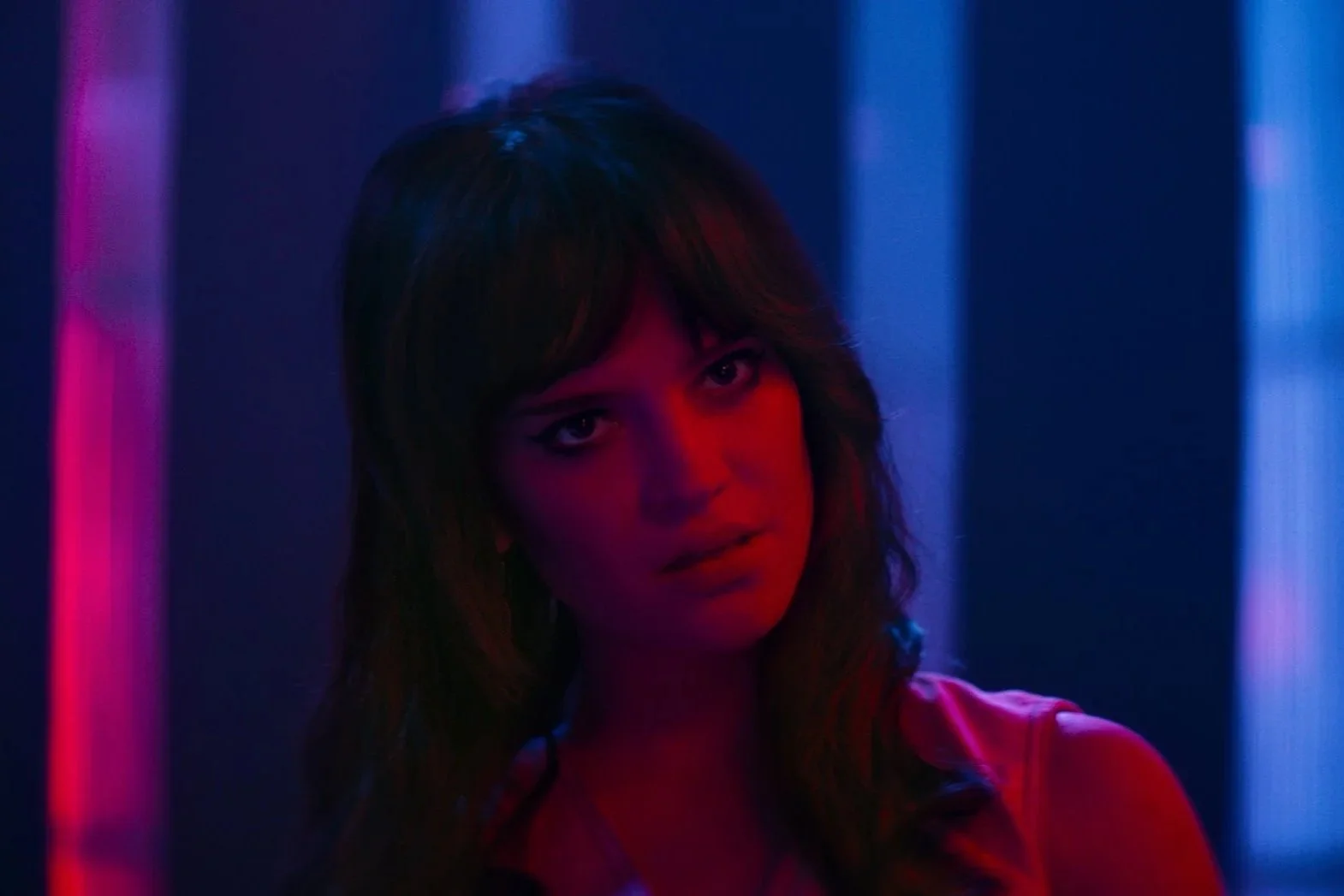
In one of the film’s twin storylines, that dynamic unfolds in the bloodied, muscular form of Private K. Charles Melton plays a brooding American soldier on a journey to find his daughter after she was taken by the Leatherman, stopping on the way to kill some predatory members of the yakuza. Refn describes the character as an alter ego — at the time of his surgery, he felt a strong desire to return healthy to his youngest daughter, Lizzielou, whom he felt, in particular, wasn’t ready for him to die. Fittingly, she played a significant role in Private K’s casting. “[Lizzielou] is a huge fan of Riverdale and was raving about it over and over again,” Refn says. “So we made an exchange: I’ll watch some of Riverdale, and then we’ll watch something that I get to choose.”
Lizzielou ended up loving her father’s choice of the 1970 Czech Gothic horror film Valerie and Her Week of Wonders, and Refn was likewise charmed by the CW teen series that gave Melton his breakout role. “It happened to be a season in the 50s, and I was looking for an actor to play Private K. Charles came on screen, and he had great hair and a leather jacket, and I was like, There’s something about the masculinity right there that speaks to me. Right away, I knew it was him.” Melton, who spends a good section of the film fighting shirtless with only a leather jacket on his top half, quips that it was his abs that got him the job.
Neon
For his part, the Riverdale and Beef star has a concise answer to what attracted him to the project. “Nic Winding Refn — that’s a full stop right there,” he beams, gesturing to his left as the Dane chuckles. He then graciously elaborates: “The lineage of actors that have come under him: Mads Mikkelsen, Tom Hardy, and — my favourite — Ryan Gosling, it was a privilege to have the opportunity to be in that line. The first conversation I had with Nic, he said, ‘Cinema needs heroes.’ And as an actor, when you’re on the other end hearing that, you don’t quite know what that means. But you’re like, ‘Yes, they do.’ He is such a visionary, and he brings you along into this space that is an actor’s dream.”
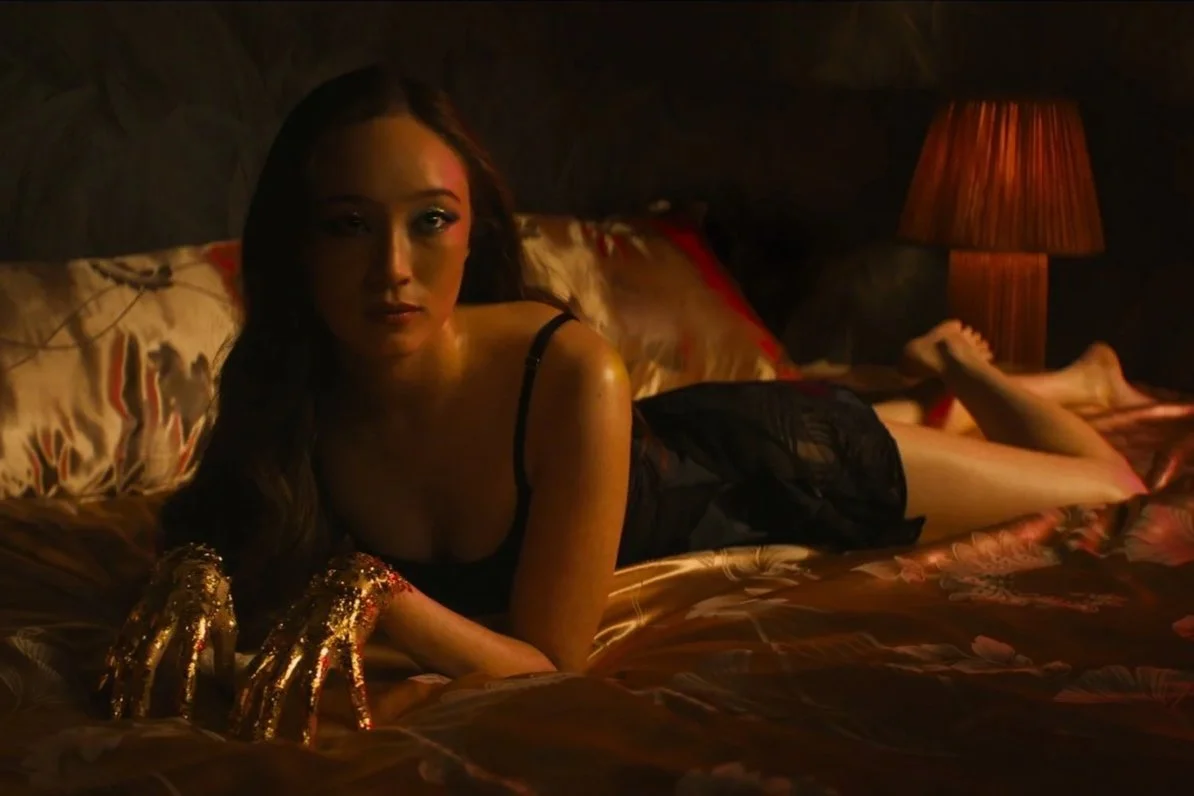
On the other side of the father-daughter horror melodrama is Thatcher’s troubled Elle (named after Neon Demon lead, Elle Fanning), a cold-hearted, elegant actress pining for the affection of her charismatic father, Johnny Thunders (Dougray Scott). To make things much worse, he’s now married to her former best friend, Dominique (Havana Rose Liu), for whom Elle still harbours romantic feelings.
As the slinky best-friend-turned-stepmom, Liu relished the chance to play a layered role. “She’s such a morally complex character,” the Bottoms actress says with a smile while Thatcher nods in agreement (“It’s very complicated,” she interjects). “The film is nuancing good and evil, victim and hero, and masculine and feminine. Dom slithers in between those things in a very interesting way. Nicolas and I talked about fables and fairytales and evil stepmothers and how, if you are someone’s mother, best friend, and lover, there’s this weird thing where you don’t know how to place the love you have for them.”
Neon
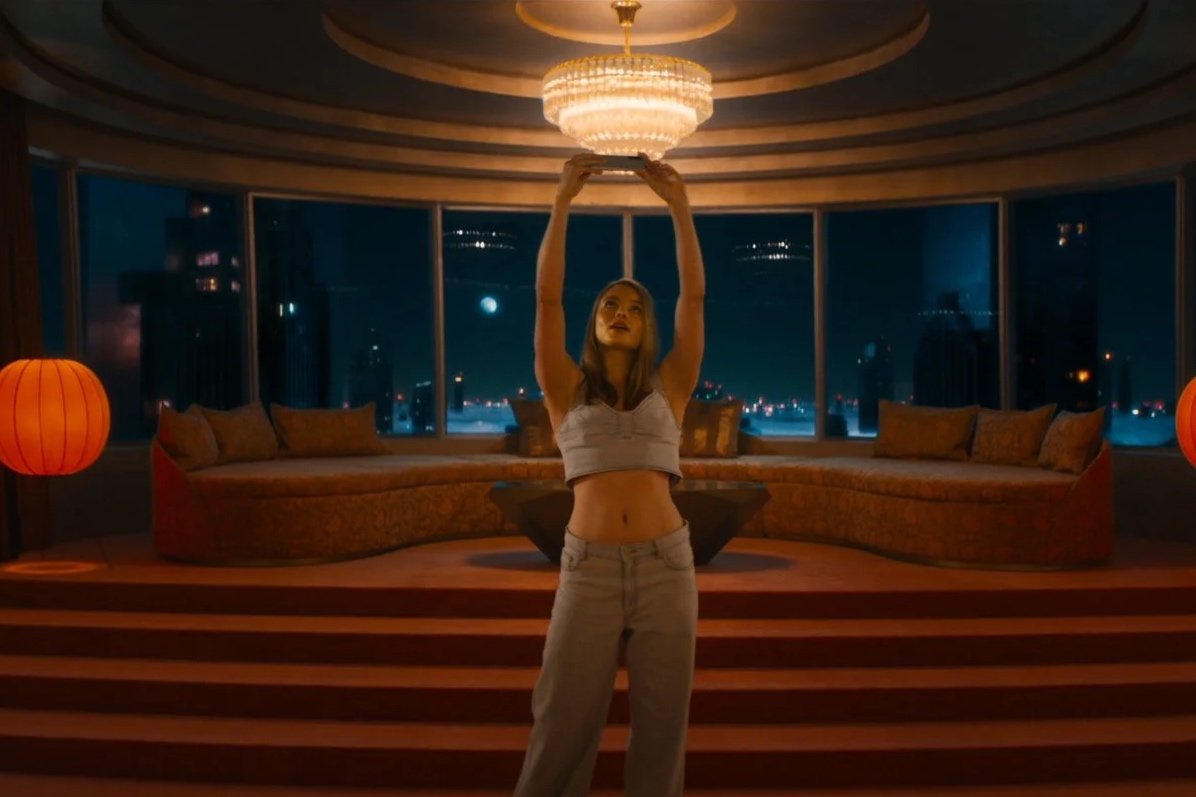
Completing the central trio is Kristine Froseth’s Hunter, a fame-hungry starlet whose sunny disposition and concern for her social media following seriously annoy Elle and Dominique. As Elle cruelly puts it, she’s sexy but “unfuckable”. Hunter starts off a fan of Elle’s work and gradually integrates herself into her luxurious life — Refn made Froseth watch All About Eve — but she also develops a morbid fascination with the Leatherman. “My initial conversation was mostly about trauma,” The Buccaneers star recalls excitedly. “Hunter is obsessed with trauma in a very different way than I am. The first time I met Nicolas was on a Zoom, and I luckily had all my trauma books right behind me, which wasn’t planned. He was like, ‘What is that?’ and we started talking about philosophy. It felt like a personality quiz.”
As I look at the three women sitting together, I can’t help but ask about a standout scene in which their characters communicate entirely by barking. Froseth bursts into laughter, while Liu responds, as if on cue, with a demure ruff. “Okay, this came from me,” Thatcher admits. “We were talking at dinner one time, and I was telling Nicolas how me and my twin would communicate in barking before speaking. And I think he just thought that was funny and strange.” To her initial dismay, Refn embedded it into the film without hesitation. “It was definitely maybe the scariest day on set for me ‘cause I was like, I’m not gonna be able to sell this. Oh, this is all my fault. But it actually worked,” she laughs. “It built our innate connection. You get to see a glimmer of warmth.”
“It’s the most distilled way to say they have a shared language,” Liu adds. “I used to howl at the moon with my best friends when we lived together, do you know what I mean? It’s these little things that make your friendship specific, so it was really helpful for us.” When I express my excitement for the Cannes crowd to see the scene at the next day’s premiere, Thatcher facepalms and lets out a nervous laugh, before her expression turns to mild terror as I explain the moment already provoked heated reactions at my screening. Froseth proposes that viewers could join in, comparing it to the spoon-throwing tradition at showings of Tommy Wiseau’s cult classic The Room.
Neon
Her Private Hell was shot chronologically for two months in Refn’s native Copenhagen, with the director creating a collaborative environment where new ideas, like the barking scene, could be fluidly integrated as they went along. “I loved in the mornings that you just didn’t know what was gonna happen,” Froseth beams. “He would come in while we were making our sandwiches, very Danish hygge style, and then he’d be like, ‘I had this dream, and we’re gonna do this today.’ You couldn’t even plan ahead.”
That lack of planning relaxed Thatcher particularly, who usually fixates on scenes later in the shooting schedule and wonders how to map out her day-to-day performances accordingly. “We were able to remain present, and because the style of this movie is so incredibly specific — and still — you need that. If you’re thinking about other scenes or something, you see it all in the eyes because it’s so stripped bare,” she stresses. “That was a blessing, to be open and explorative on the day. It felt like it was an open playground and we had control in the worldbuilding.” Liu agrees, comparing the added agency in their acting to an open-world video game. “Every single thing we did had a domino effect on the film. If I move this here, if I hit you here, if we kiss here, what does that mean for the next scene? You’re having to plot for yourself as if you’re a person moving through this dream world.”
If the three women’s story is driven by stillness and psychological tension, Melton’s experience was far more kinetic. “It was the most physically demanding thing I’ve ever done,” he says with an exhale. “And the most rewarding. Nic doesn’t cheat. In fight sequences, you see a punch, and usually there’s a quick cut to the reaction. He wanted to see all of it from beginning to end.” Working with stunt choreographer Tatsuro Koike, he similarly had a degree of agency in the evolving fight sequences, where he also collaborated with some ultra-tough, “gnarly” stuntmen from Japan. “We were all so excited. There was just this energy when we would film. I had never done action before, and I come from a martial arts background, so I was truly living my dream,” he earnestly reveals as he turns to his director. “I wanted to be in an action film with Nic Winding Refn, and guess what? I got to do that in Copenhagen.”
Neon
A “dream” is perhaps the most effective and eloquent way to describe Her Private Hell, a meandering, poetic film that demands you submit to its operatic world. Of course, not all viewers will do so — following in the tradition of The Neon Demon, there were walkouts both in the early private showing and the world premiere at the Grand Théâtre Lumière. But that latter screening also earned a seven-minute standing ovation, and as Refn makes clear, he’s only happy if audiences viscerally connect with the film, and that means some will love it and some will hate it.
When I ask the female stars what they hope audiences take away from the film, the trio giggle as they decide who to respond before Thatcher and Froseth egg on Liu. “More than anything, I hope this film reminds us to make very unique and specific art,” she says. “We’re in an era where IP is repeating a lot, and there’s such a wonderful space for that — and I love those films — but I also hope that this area of filmmaking never constricts. It’s so important to have singular voices that are experimenting, trying new things, and breaking the mould. Even if that takes people a second to get their head around or doesn’t quote-unquote ‘sell’ as easily, it’s part of what makes us the most interesting and human — and makes filmmaking one of the highest art forms. I really hope that it reminds us of this space in filmmaking and that we see more films like it. Or unlike it.”
Her Private Hell is in US cinemas from July 24th and in UK cinemas from September 25th.
This story was originally published in Phantasmag Issue 005