Zohie Castellano on Costuming Demons and Shaping the Gothic Look of Queer Horror Romance Leviticus
The Australian costume designer reflects on taking inspiration from Goya paintings, frog’s skin, and Heath Ledger for her work on the acclaimed indie queer horror film
by Lana Thorn 29 July 2026
Neon
One of the biggest hits at Sundance this year, Leviticus has touched audiences around the world with its story of a tender queer teenage romance wrapped up in a supernatural horror thriller. Hailing from Causeway Films, the production company behind Talk to Me, Bring Her Back, and The Babadook, the Australian indie follows two star-crossed teenage boys, Naim (Talk to Me star Joe Bird) and Ryan (Stacy Clausen from Thrash). After being subjected to a horrific curse by their conservative, deeply religious small town, Naim and Ryan suddenly find themselves stalked by a mysterious shape-shifting entity which takes the form of the person they desire most: each other.
Returning to work with Causeway Films after another queer love story, 2022’s Of An Age, and the Guy Pearce-led prison drama Inside (2024), Zohie Castellano designed and selected costumes that both reflected the passion of Ryan and Naim’s adolescent romance and the threat of the homophobia they have to face. Speaking to Phantasmag from Melbourne, the Australian costume designer discussed the religious influences behind her work on the film, using subtle details to tell a hidden backstory with Mia Wasikowska’s character, and collaborating with stars Joe Bird and Stacy Clausen.
Neon
Phantasmag: What initially attracted you to this script?
Zohie Castellano: I was really excited to work on something with supernatural themes, and it was just an incredible script. Anytime [Causeway Films] wants to share something with me, I love to do it. They're amazing producers. They have such good taste, and they really support directors. They make a huge difference in the industry in Australia.
P: When you got attached and started reading the script, what were the initial conversations you had with your director, Adrian Chiarella? What first steps did you take in designing the costumes?
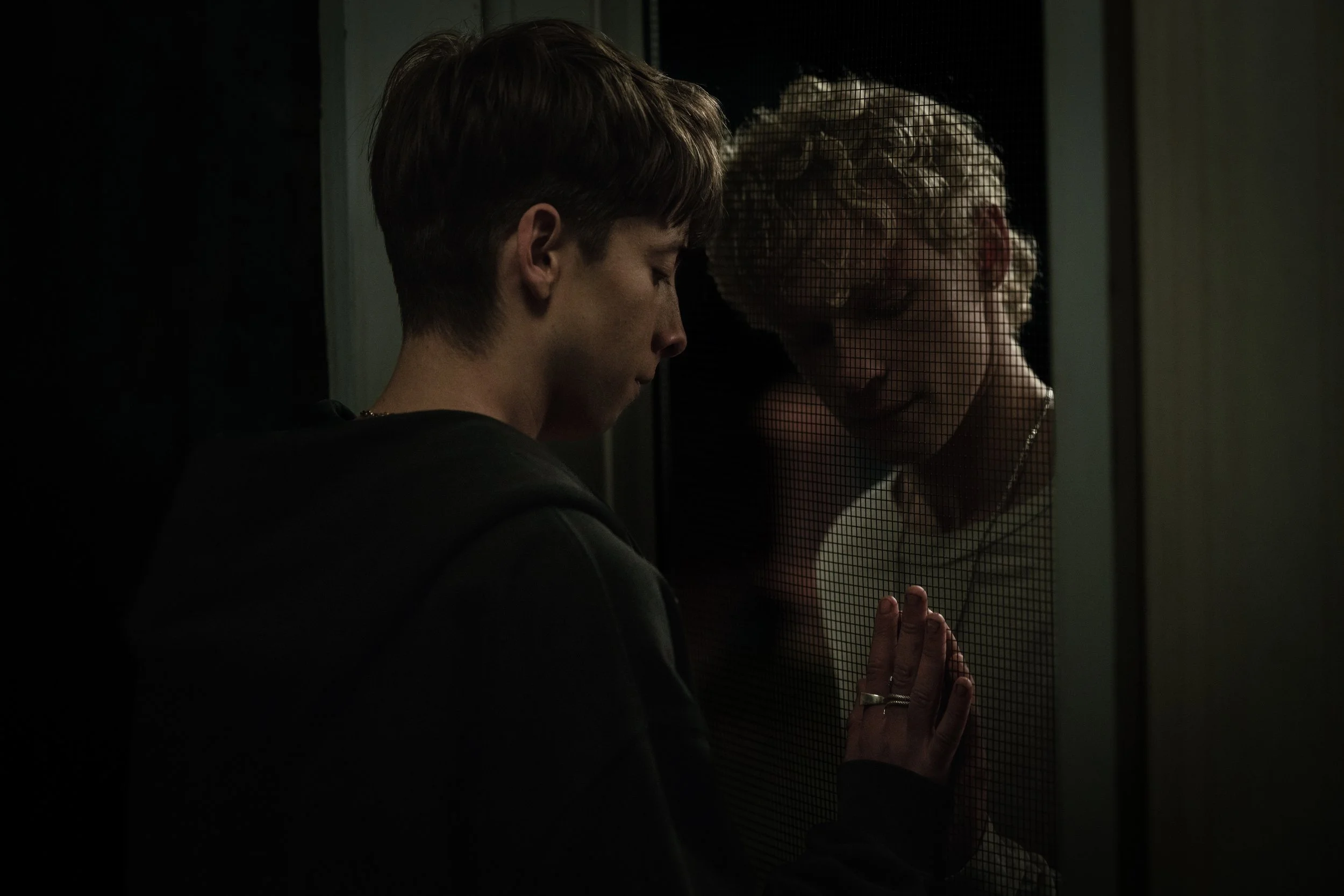
ZC: I interviewed, and we talked about a Gothic approach. We discussed this sense of isolation as well — the boys are in a small town — and with Australia, it’s part of our psyche. We feel isolated because we are so far away from the rest of the world. Then, because of the supernatural and religious themes, I started looking at religious iconography: Goya paintings and demons. It was about finding ways to evoke the unseen. I was looking at all kinds of references in the beginning.
P: Was there any specific instruction that Adrian brought to the table?
ZC: The main thing was we didn't want too much colour. It felt important to the longing between these two boys to not have any passionate colour on display because they’re trapped in their small town.
P: The cinematography and the settings really reflect that grey colour palette and oppressive feeling. When discussing colours amongst other things, what was your collaboration like across the departments?
ZC: Beth [Ryan ], the production designer, Tyson [Perkins], the DOP, Adrian, and I all got together early to talk about these things. We were originally going to shoot in a remote town, but logistically that wasn’t possible. A lot of the locations were actually in Melbourne, and Beth has an amazing eye. We were going for a toxic beauty, and when I watch the film, I feel there’s something quite gentle and beautiful it does to the eye because it has this melting quality to it. The costumes melt into the environment and the cinematography. And then on set, it was lovely for us to see the work come together on the monitor.
Neon
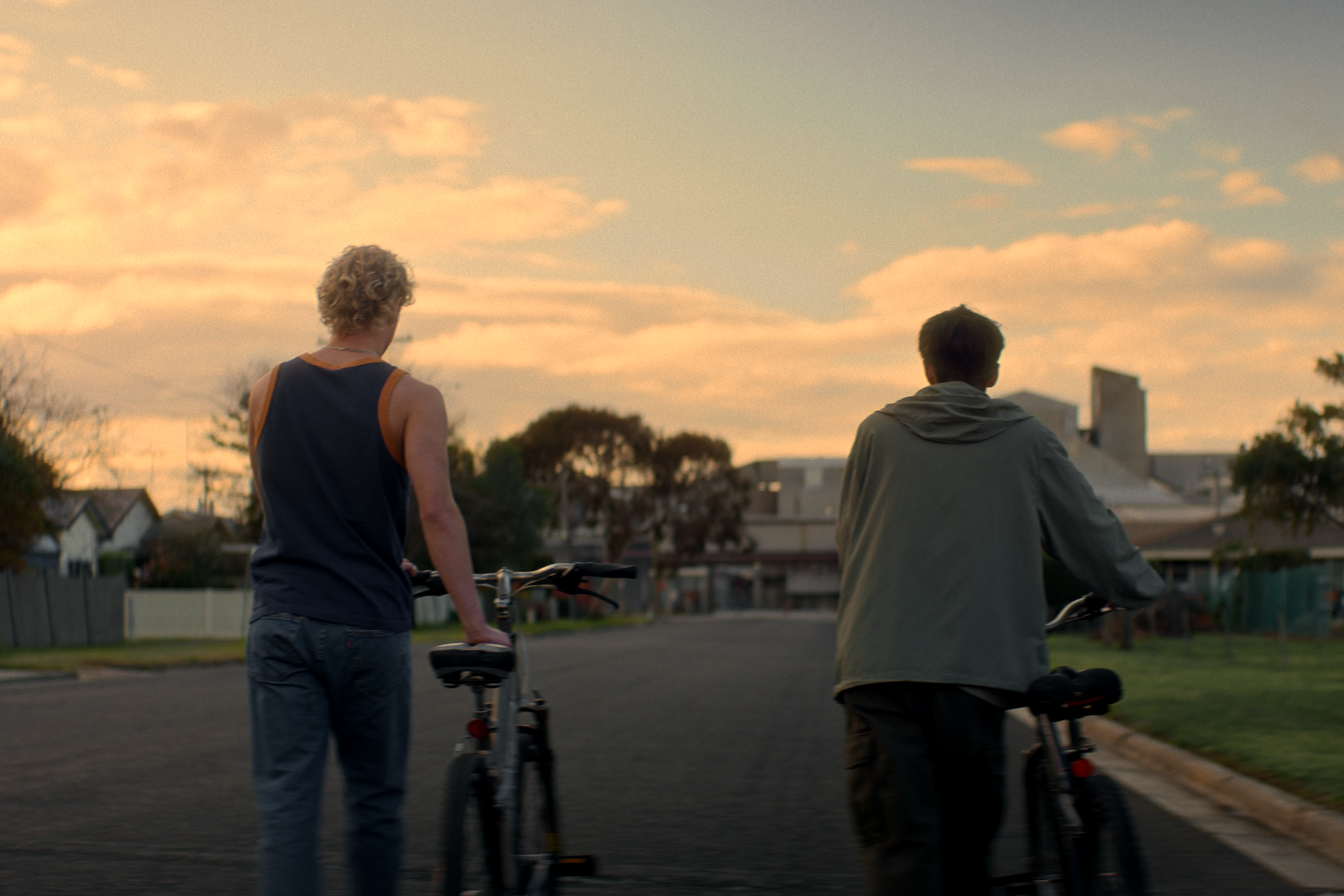
P: In the opening scene when we first meet the boys, Ryan is wearing a blue tank top with orange lining and a prominent bird graphic on the front. Why was that the right choice to introduce the character?
ZC: People keep commenting on that specific look, which is so nice. We called that the look of ‘first desire’. It’s the first time we meet the boys, and those colours were chosen because they’re the same colour as their eyes, and they’re stealing glances at each other. It was to enhance the eye contact between them. And then looking at religious iconography, the banding around Ryan’s singlet almost gives him this halo, which is the opposite of the banding around Naim’s singlet in the end when he’s processing his demons. It’s super subtle, and I wouldn’t expect anyone to notice that, but I wanted to put these little details in there to enhance the story.
P: When we first meet Naim, he's wearing quite baggy clothes, and as you mentioned, by the end of it, he's also wearing a tank top. You can see a progression where he’s maybe more comfortable in his skin.
ZC: We discussed that during the fitting with Joe Bird as well. We were having discussions to map out the character. And Joe was so funny in the fittings. He loves to chat, and it’s like, ‘Okay, you can chat, but please keep getting changed’ [laughs]. I loved fitting him because he responds to everything so well, so you can see where the character's going really quickly. We shot more than what ended up in the film about this storyline, but Naim was also getting bullied, so he was hiding, as you would when you’re alone. His relationship with Ryan inspires him to step more into himself and embody himself. And you see with gay men that they often like to have their arms out because they have beautiful arms, and they wanna show them off, you know? [laughs]
Neon
P: One of the references you’ve mentioned for Ryan was Heath Ledger in Brokeback Mountain. What were your other references for the main characters? What were the kind of things you had on your mood board?
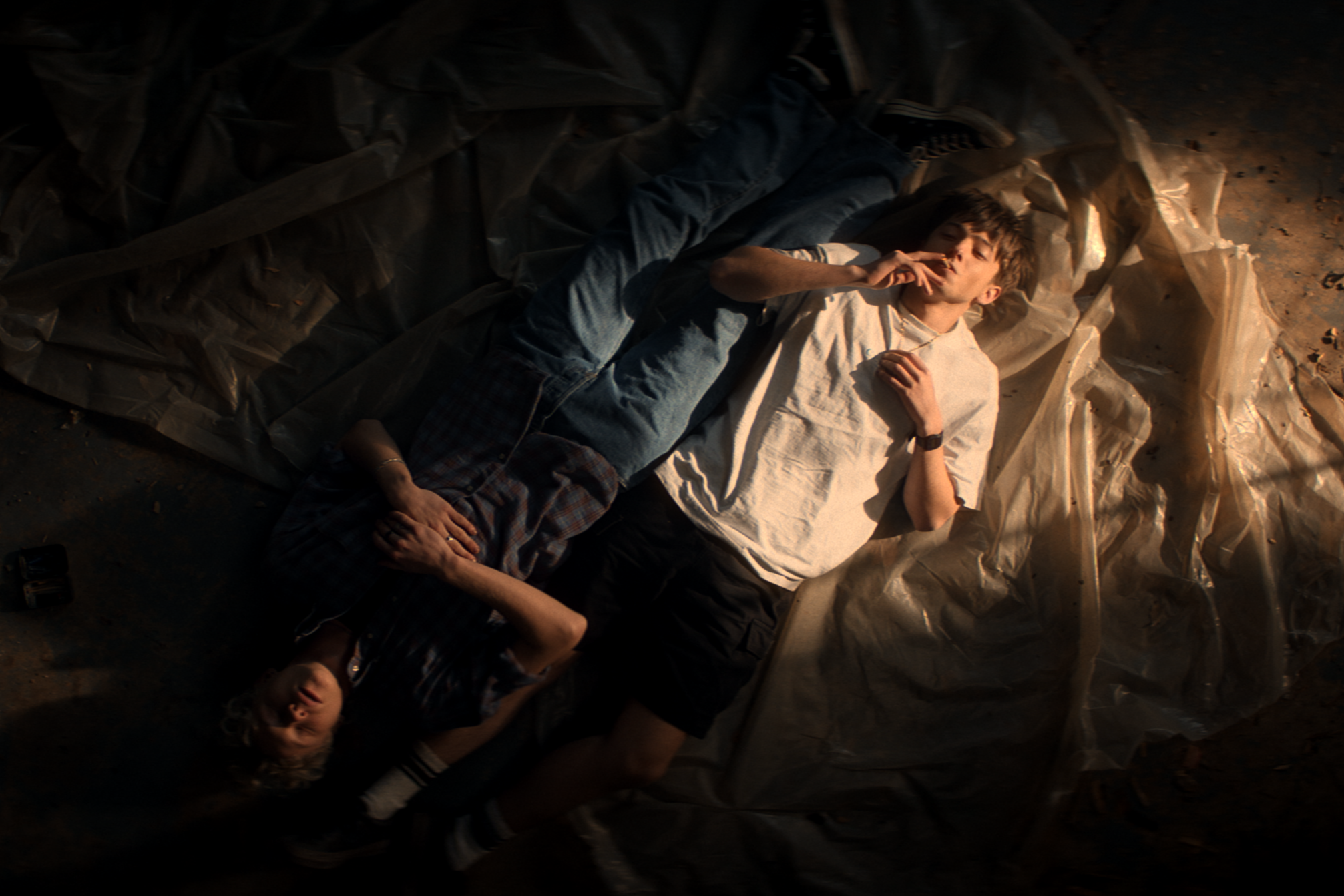
ZC: All kinds of things. I was looking at Billy Elliot, actually. Obviously, it’s a different era, but there was something interesting about him because he has school clothes as well. You wouldn't necessarily know this, but brown uniforms aren’t a thing in Australia. That was something I just introduced because I thought it felt right to our world. Something Beth and I talked about was having more colour in the set than in the costume. It’s often the other way around. When you see the scene at the roller skating rink, for example, that amazing royal blue colour that looks like an ocean wouldn’t have worked if we had a lot of [authentic] Australian school uniforms, which are blue and grey. I liked the idea of having that brown colour in the environment more, and for the white shirts to be more ghostly as well. So I guess you could say Billy Elliot helped, which is maybe an unexpected reference, but you do look all over the place.
P: Was the Heath Ledger-esque jacket just something you wanted to put into the movie?
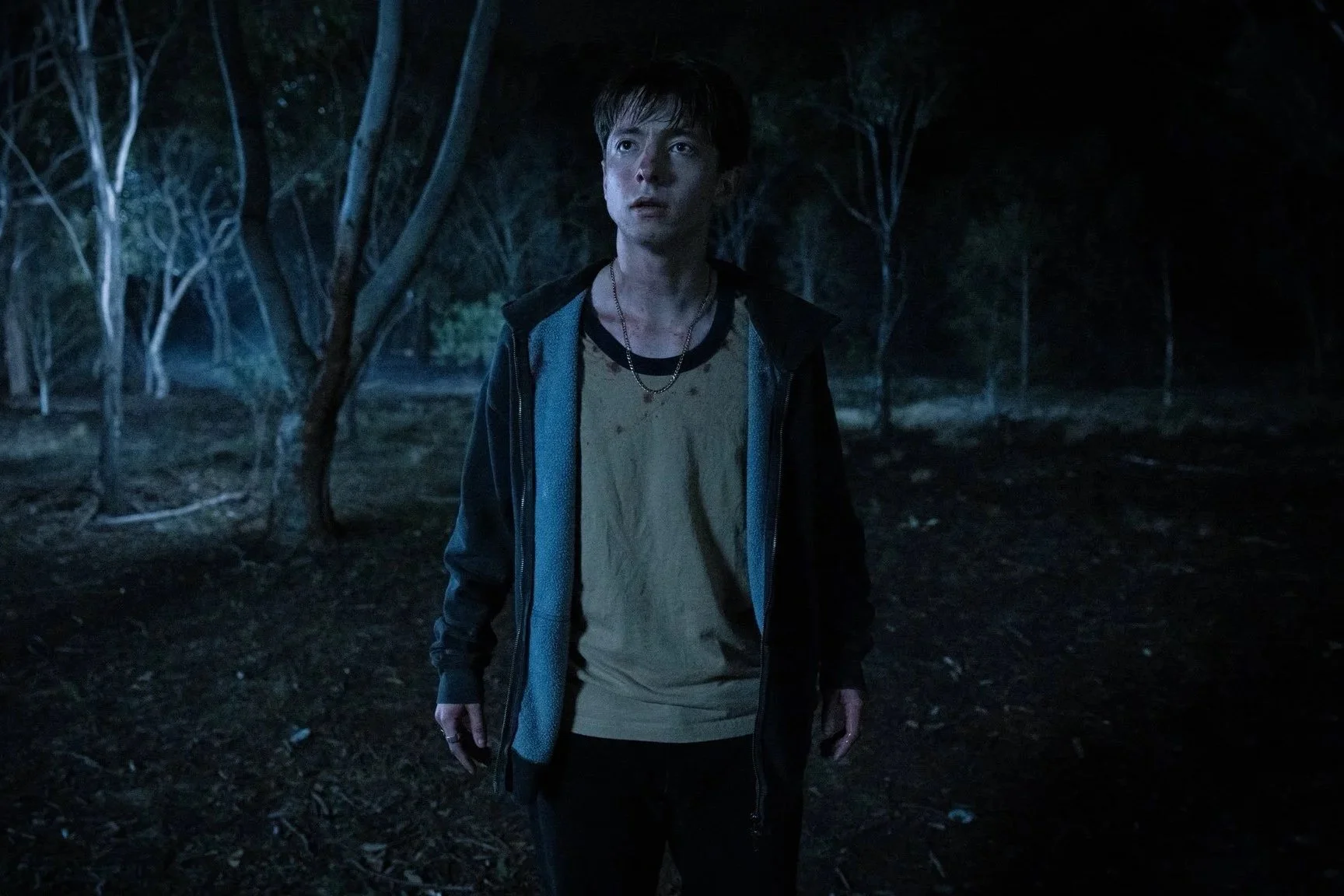
ZC: Actually, people are saying that, and I did have Heath Ledger on the moodboard, but not from Brokeback Mountain. When he was younger, he was in an Australian film called Two Hands, and he's wearing a singlet in that. That inspired the singlet for Ryan.
Neon
P: What are your collaborations like with your actors?
ZC: [Joe and Stacy] were actually pretty easy. Every actor's different, and it pays to have thought about the character’s journey so then you can discuss those things with them as you’re trying different clothes on. It's often a lovely collaborative process because they're out doing their rehearsals, and then when they come to a costume fitting, it helps them discover the character more. So yeah, I found those boys to be pretty relaxed — and Stacy really loved that jacket [laughs]. You can see it in how he acts in it, and that’s another thing: I want the actors to feel good and perform well, obviously. And the jacket brought out a certain masculinity.
P: What was your approach like for Mia Wasikowska’s character, Arlene?
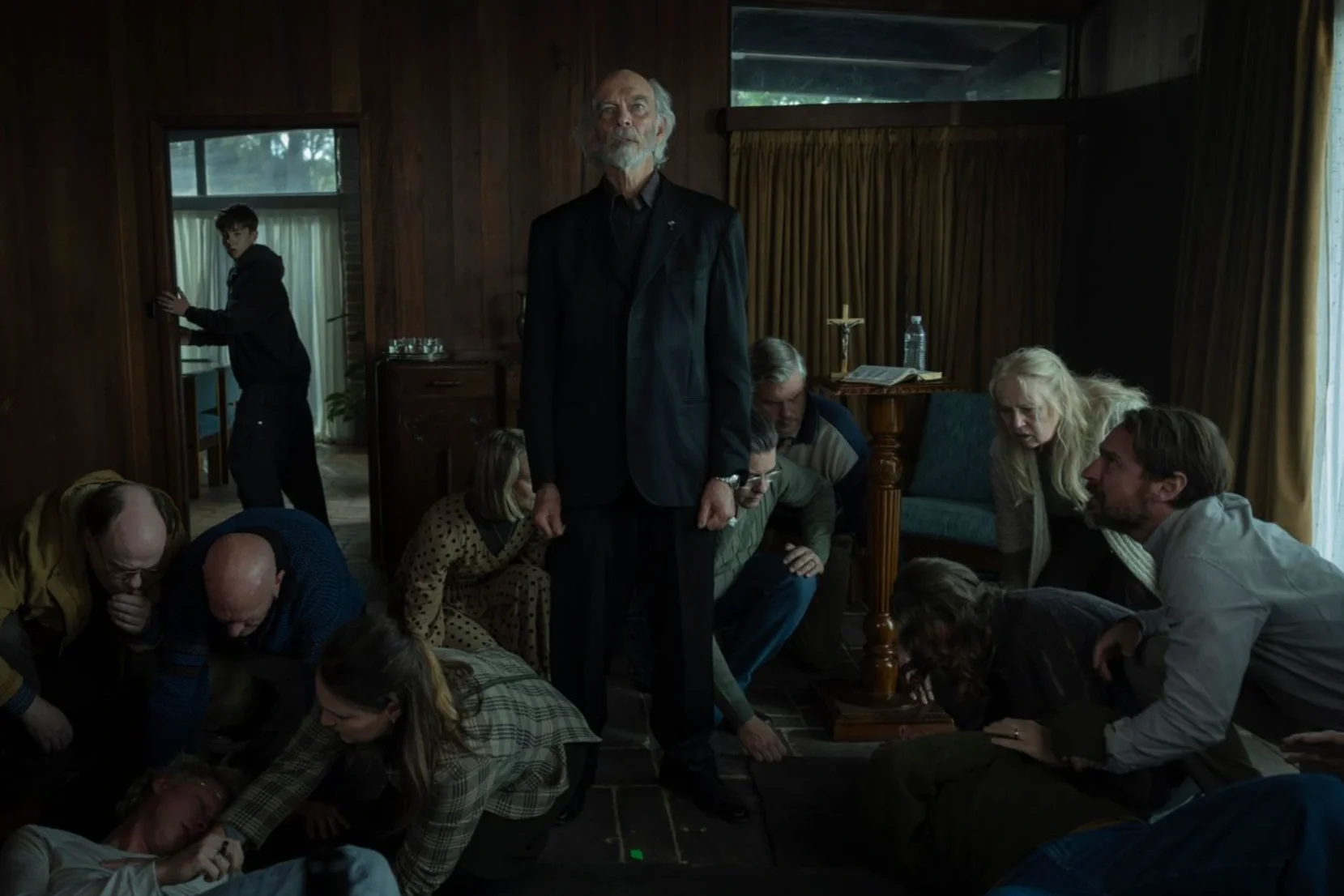
ZC: Arlene was difficult because we initially didn't know who it was. She felt very in the shadows, and then Mia appeared in the role, and it was just amazing. I hadn’t seen her play a mother before, and that created a really interesting backstory. Arlene probably got pregnant and got married quite young, so she didn’t really have the opportunity to discover herself or self-actualise. She’s followed this very predetermined path, and we thought maybe her mother was very religious. That’s why we have her in this lace blouse over the shirt she wears during the confession. The idea was that she inherited it from her mother, and it doesn’t fit her. It’s too big because she’s not really herself. As I was talking about earlier with a lot of the church folk, looking at Goya paintings, it’s like, Who is the demon in this film? And it's the people who would be so cruel to someone as to subject them to this conversion therapy, this torture or humiliation ritual. The church community slowly gets more demonic, and Arlene’s got that cardigan that I had knitted up and custom-made for her because it has this almost gross texture to it.
Neon
P: Speaking of demons, aside from the entity, the deliverance healer is very much the villain of this movie. We see him first in a black suit and then in a leather jacket. How did you go about reflecting his villainy and the theme of religious violence in the clothing?
ZC: We pulled out images from the script to inform the texture. The school boys are dissecting this frog and throwing it at Ryan or Naim, and that frog’s skin inspired the shiny, demonic texture of the deliverance healer’s suit and leather jacket. Adrian and I talked about him as almost like a travelling salesman, and when you don’t press a suit correctly, it makes a shine that’s not meant to be there.
P: As for the entity itself, it has a distinct look for both of the boys, and Ryan’s doppelganger is wearing a sheer white shirt. Why did you choose that specific outfit to represent that version of the character?
ZC: Especially with his beautiful hair, that blonde mullet, Ryan just looked more ethereal. Naim is afraid of this monster, but he’s beautiful. I wanted this ghostliness for the character, and I was very specific about finding the right translucent material so that [Ryan] had an angelic, ethereal quality — and the blood looked really good on it, too [laughs].
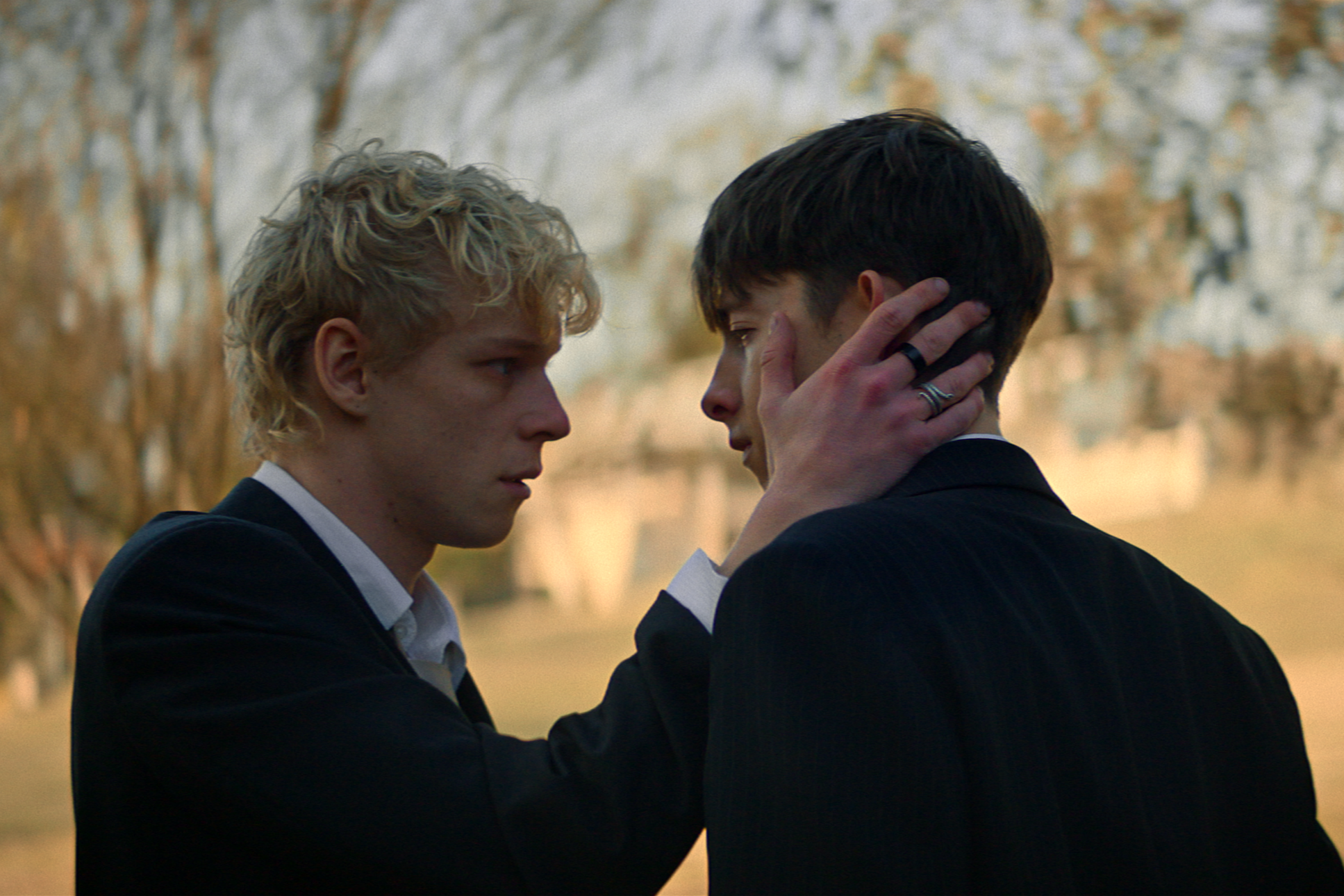
P: Turning to the accessories, there is a snake ring which Ryan wears initially before Naim later puts it on. Why did you decide to have Naim subtly take Ryan’s ring?
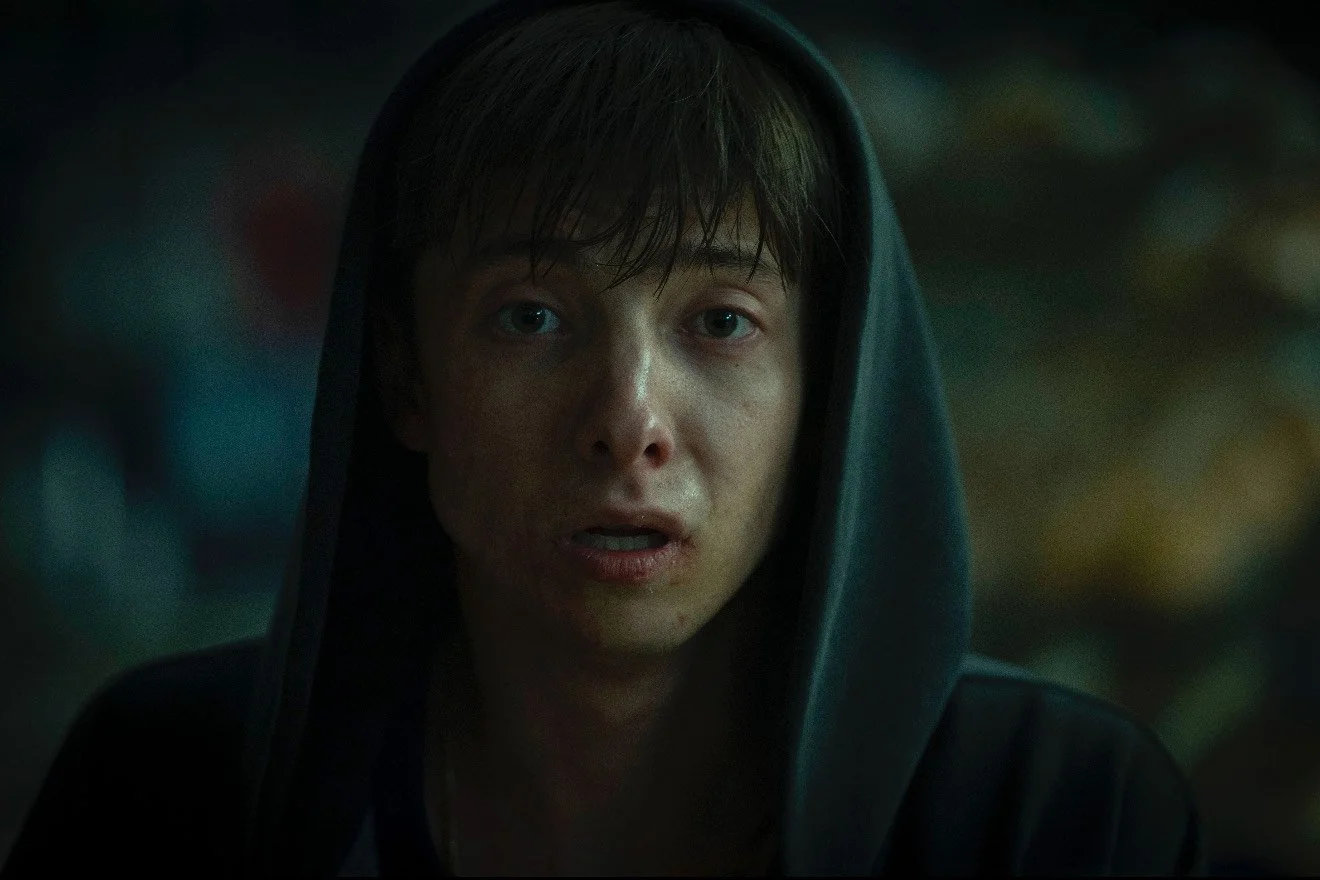
ZC: It’s so amazing because you’re not sure if people are gonna notice they’re switching rings. It was like a promise ring, and it felt right to do the switch when they go on the bus because they’re choosing to team up and be together. I chose the snake because we had these script images of snakes, frogs, and funnel-web spiders. I had already wanted to include the snake ring, and then [Bird and Clausen] went out and bought each other rings.
Neon
P: What about the ring that Naim wears on his necklace — is that meant to be his late father’s?
ZC: Yeah, exactly. I thought that Naim could grab it when he needed some support. And then he puts it on, also because I think maybe he wants to look a bit more like Ryan, with all of his rings.
P: Is there anything you can tease about what you’re working on next?
ZC: I just wrapped a feature film called Murder Ballad, another spooky movie [laughs]. It’s another horror but with a completely different approach to the costumes. I’m also attached to a new film by Noora Niassari, an incredible Iranian-Australian filmmaker who I worked with on her first film, Shayda. I’m very excited.
Leviticus is now available to rent or buy on digital platforms.