Other Mommy Director Rob Savage on Jessica Chastain’s Freddy Krueger-esque Villain and Making an “Anti-Haunted House” Movie
The Boogeyman director breaks down his new Blumhouse-backed horror movie about an evil entity impersonating a seven-year-old’s mother (Jessica Chastain)
by Kyle Lemmon 9 October 2026
Universal
“In horror movies, you’re always looking for places that are safe and unperverted and then twisting them into something sinister and terrifying,” Rob Savage explains to me over a sleepy Sunday Google Meet video call in the lead-up to the worldwide release of his latest film, Other Mommy.
The prolific horror director first garnered attention at the age of 19 when he wrote, directed, produced, and edited the drama film Strings (2012). He later became better known for his horror films such as Host (2020), Dashcam (2021), and his adaptation of Stephen King’s 1973 Night Shift short story, The Boogeyman (2023).
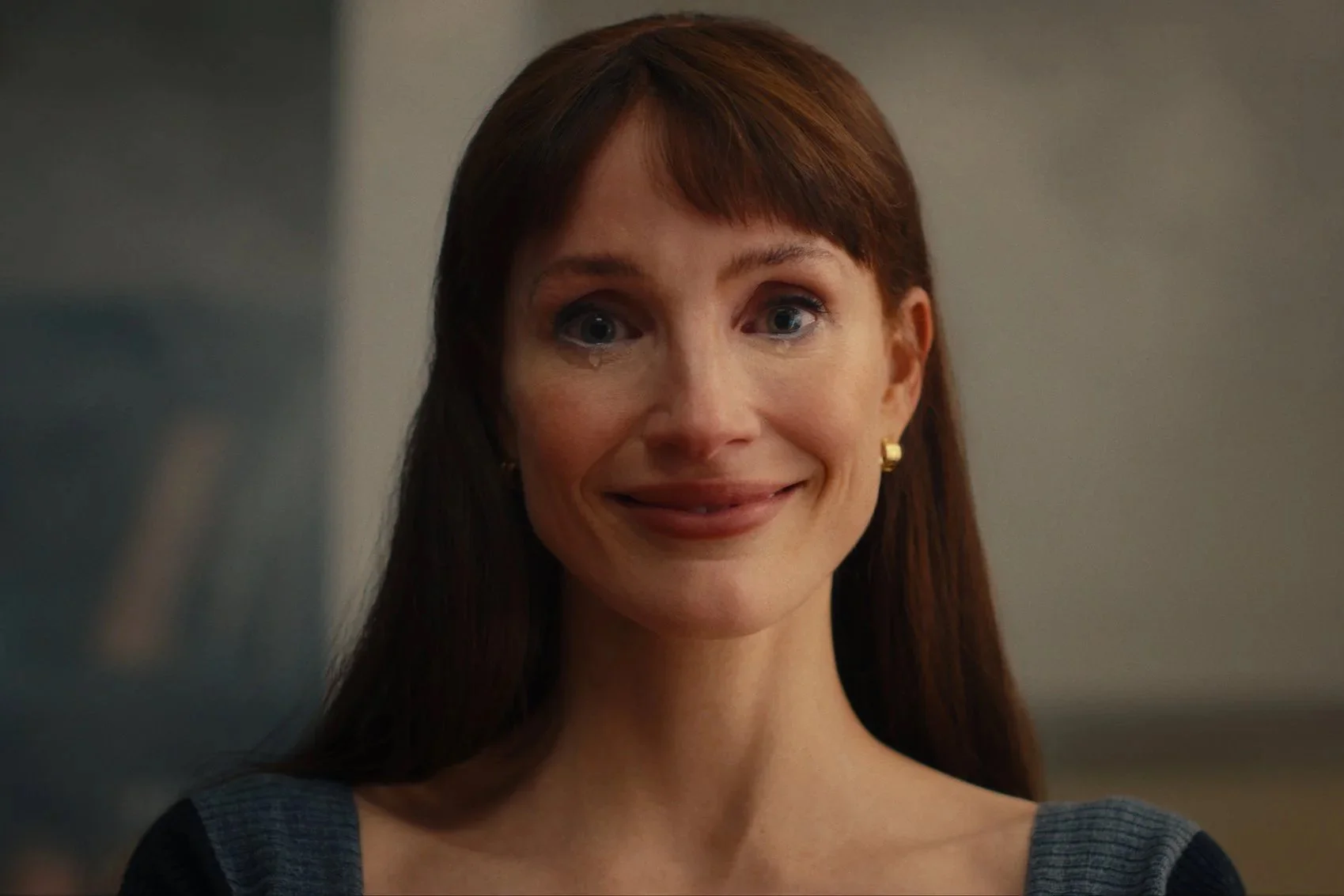
His latest psychological horror film is based on Josh Malerman’s acclaimed 2024 horror novel Incidents Around the House, which he calls an “anti-haunted house” film. Other Mommy already went viral earlier this year with its trailer playing before The Odyssey, which showcased the movie’s main draw: Jessica Chastain’s dual role as Ursula and her evil doppelgänger.
The film swirls together cosmic horror with the deeper traumas of an evil entity-meets-haunted house tale. Savage tells me he revelled in the chance to create the kind of memorable horror villain he had long been searching for, like the mythic serial killers Freddy Krueger and Michael Myers, while, like the novel, always grounding the horror by filtering each scene through the lens of seven-year-old Bela, played by Arabella Olivia Clark (The Housemaid). The “Daddo” character, as played by Jay Duplass, likewise centres the film emotionally.
Phantasmag spoke to the director about bringing Malerman’s novel to the screen, finding the right pacing for jump scares, and developing the horrifying titular character with Chastain.
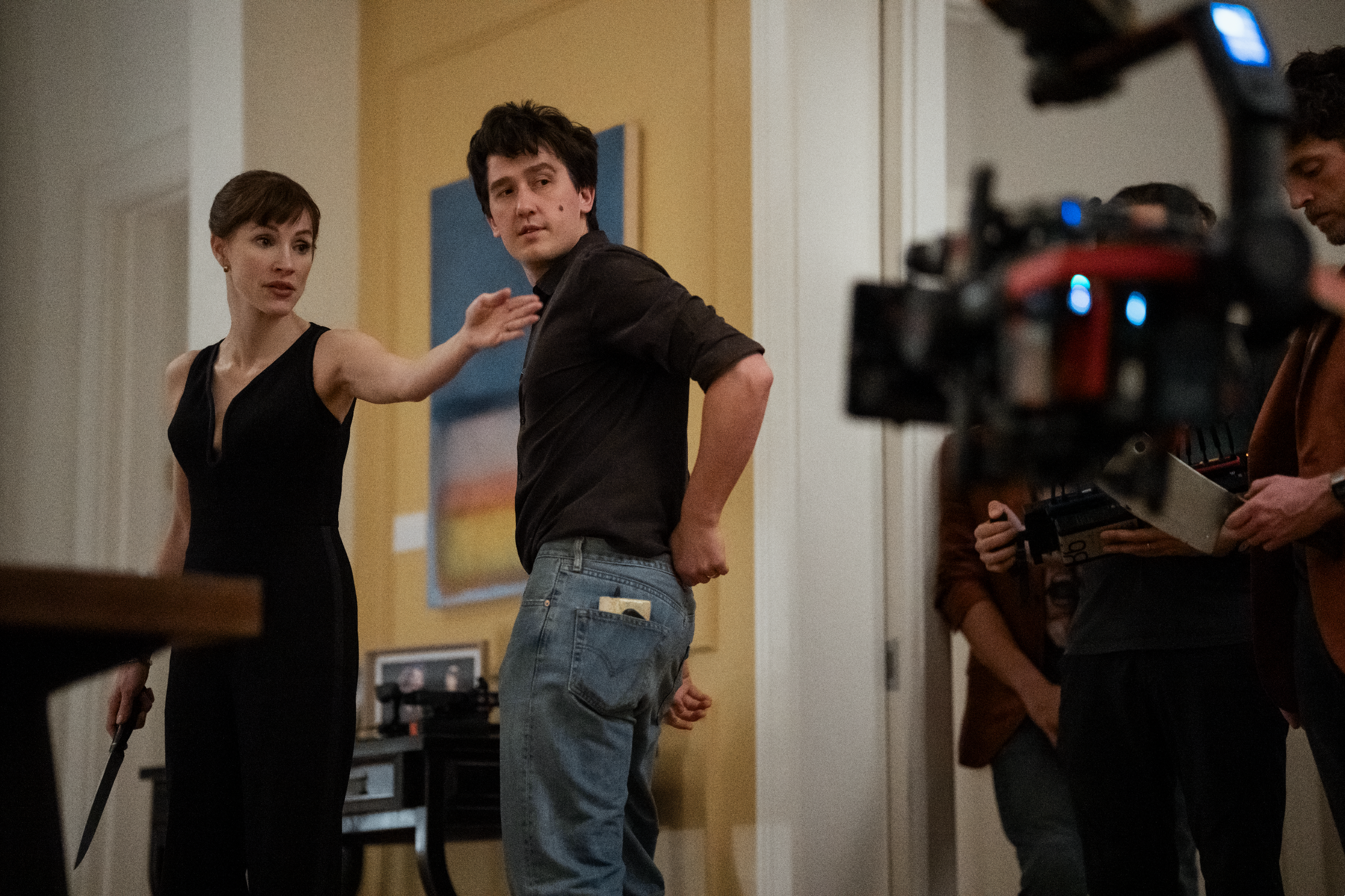
Rob Savage (right) directing Jessica Chastain (left) on the set of Other Mommy. Courtesy of Universal Pictures.
Phantasmag: You were originally interested in comic books and lived next to The Walking Dead artist Charlie Adlard. What things from comic books and anime stuck with you the most when starting work on Other Mommy?
Rob Savage: For me, the anime movies that really got me interested in filmmaking were just about telling the story through images, and they’re kind of always burned into my brain. I go back and watch Akira maybe twice a year. There wasn't an anime movie that I sat down and watched for this, but this is an incredibly colourful, vibrant, and dynamic movie. And I think every time I go back and watch Akira, I go, ‘Oh, that's where I got that from.’ And there's certainly a lot of that kind of methodology in Other Mommy. A lot of the Satoshi Kon movie, Paprika, was bleeding in clearly, watching it again. So it's always an unconscious reference.
P: I recently re-read Incidents Around the House, and you've been saying you wanted it to be like in the book where every time Other Mommy shows up, there's always going to be something a little bit different.
RS: The book's so good at making sure your understanding of Other Mommy and what she can do is changing. So we tried to do that with the movie. We tried to make it so that no two scenes are the same. And your paranoia about what Other Mommy can do and what it is that she wants is always evolving.
P: For Josh Malerman’s book, it's definitely through the POV of the daughter, Bela. What were the different things you wanted to pull from the book for that particular character, or the way that you shot it to keep that framing device from the book?
RS: I probably said this when I was talking about Boogeyman as well, but my favourite adaptations are not the ones that directly translate every scene in the book without any kind of visual interpretation. The idea always, when I'm adapting something, is: How can I take what is so successful in this form as a novel and filter that through the possibilities of cinema?
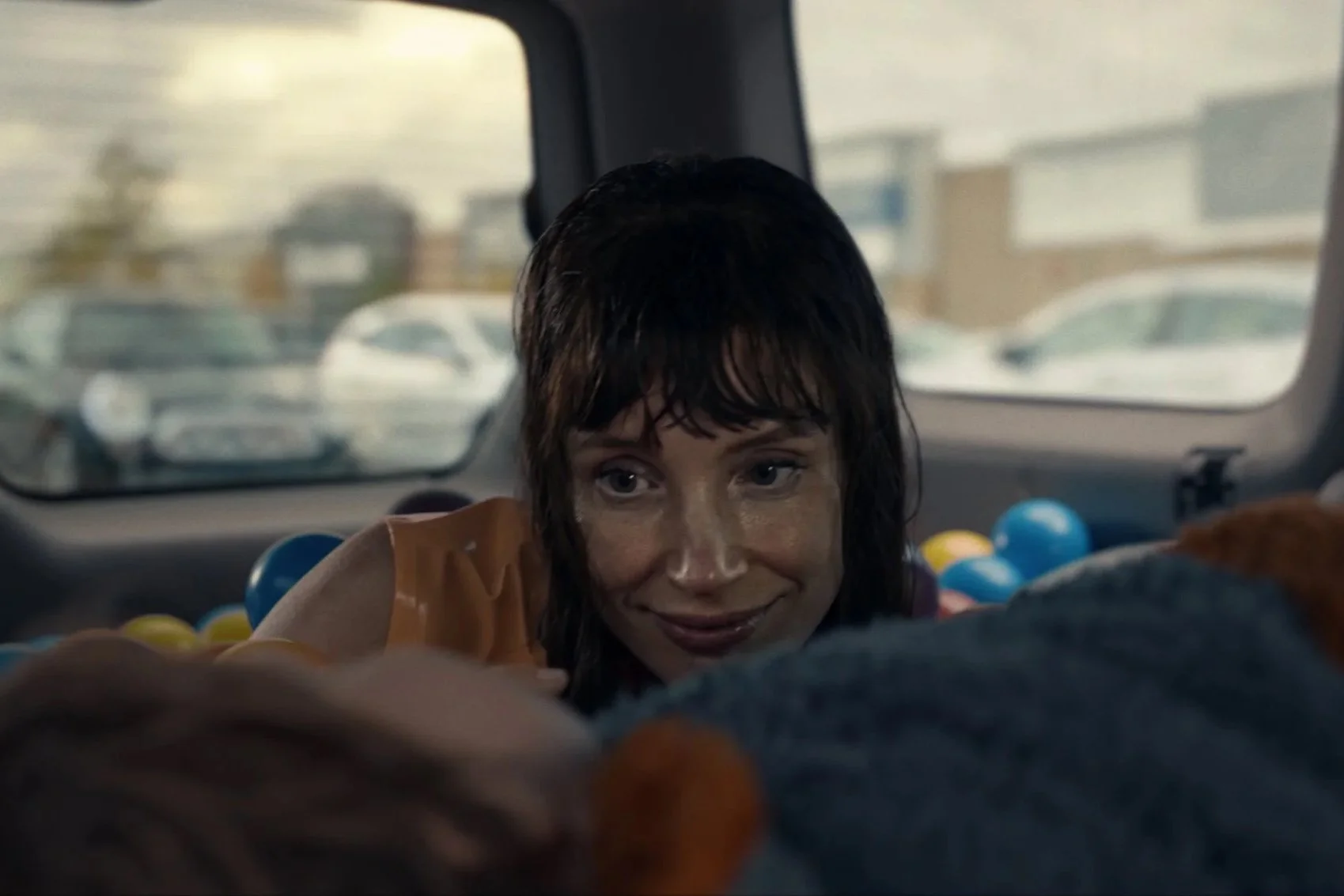
Jessica Chastain as “Other Mommy”. Courtesy of Universal Pictures.
For Bela, all of [her experience] is told through voiceover in the book. And you can't do that; you can, but it's a bit lazy. So the first challenge was creating a visual language that helped you understand and intuit moment to moment what was going through Bella's mind and make sure that every scare was always filtered through this question of “how am I filming this in a way that's unique to Bela's perspective?”
So the casting needed to be dead-on, and we needed an actor of that age who could command the screen and take the whole movie on her shoulders. And luckily we found Arabella Olivia Clark, without whom we wouldn't have been able to make the movie, and we certainly wouldn't have been able to do justice to that character.
P: Even in the scene in the trailer with the bubbles over the face, this film likes to take something that's a core memory of childhood and twist it: the ball pit, the bedroom, etc.
RS: In horror movies, you’re always looking for places that are safe and unperverted and then twisting them into something sinister and terrifying. We're trying to do that all through this movie, and obviously everything is touched by that because it's all from the perspective of a child who has a certain amount of innocence about the world.
The main one that I'm incredibly proud of is a scene in the kids' play place. The pit is filled with coloured balls, which was not directly in the book as we tell it, but it was inspired by a play place scare in the book. And Nathan Elston, the incredible writer who wrote the script for this, came up with this idea of the scene in the ball pit. As soon as he said it to me, I was like, I cannot believe that nobody has done this before. Or if they have, it hasn't reached popular culture to such a degree that I'm aware of it, and we may be the first people to ruin ball pits for parents. That's an incredible privilege.
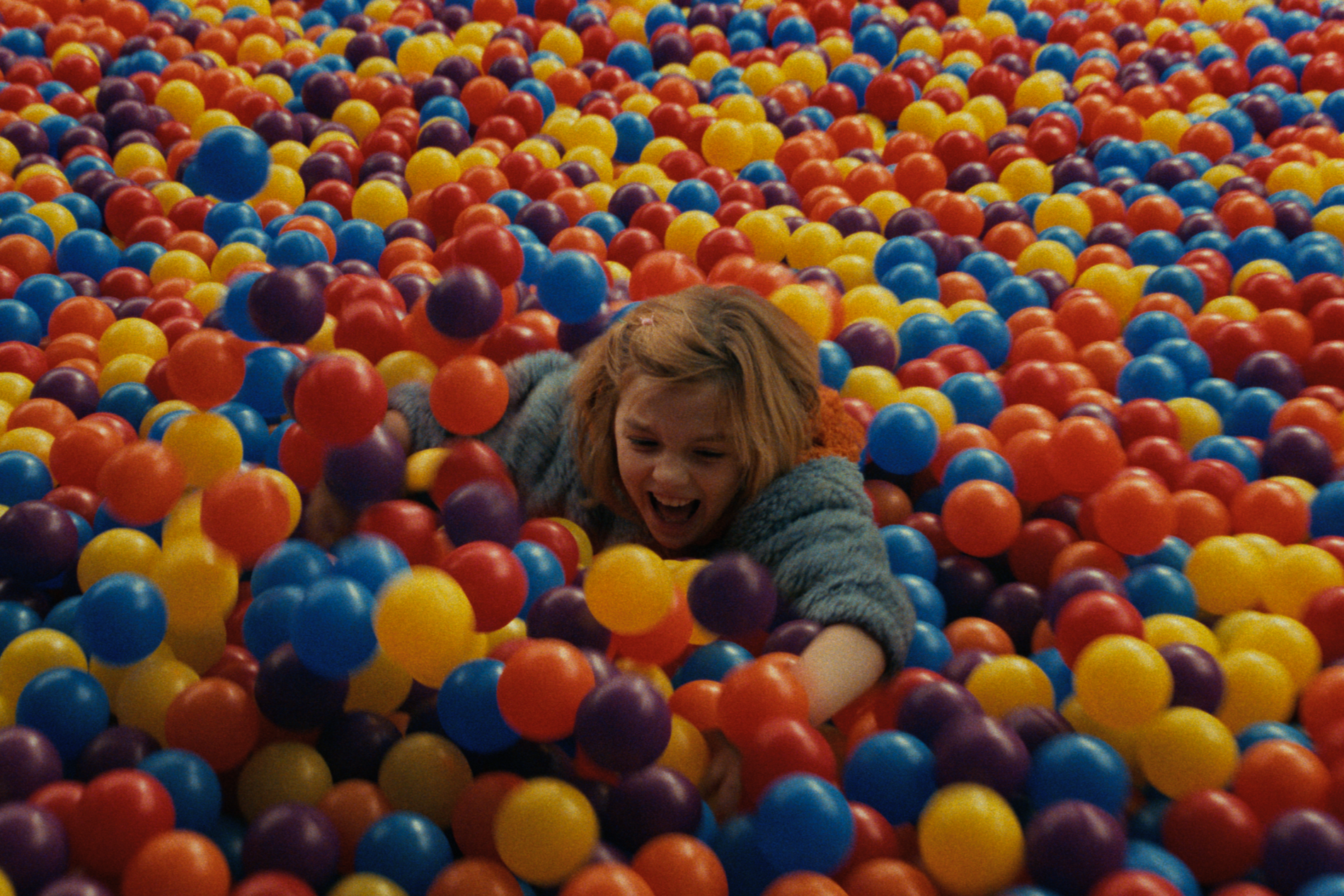
Arabella Olivia Clark as Bela. Courtesy of Universal Pictures.
P: The other part with Other Mommy, through Jessica's portrayal of her, is that you wanted to approach the on-screen presence of a Michael Myers, a Freddy Krueger. What were the things that you both were talking about as you tried to evoke those kinds of characters?
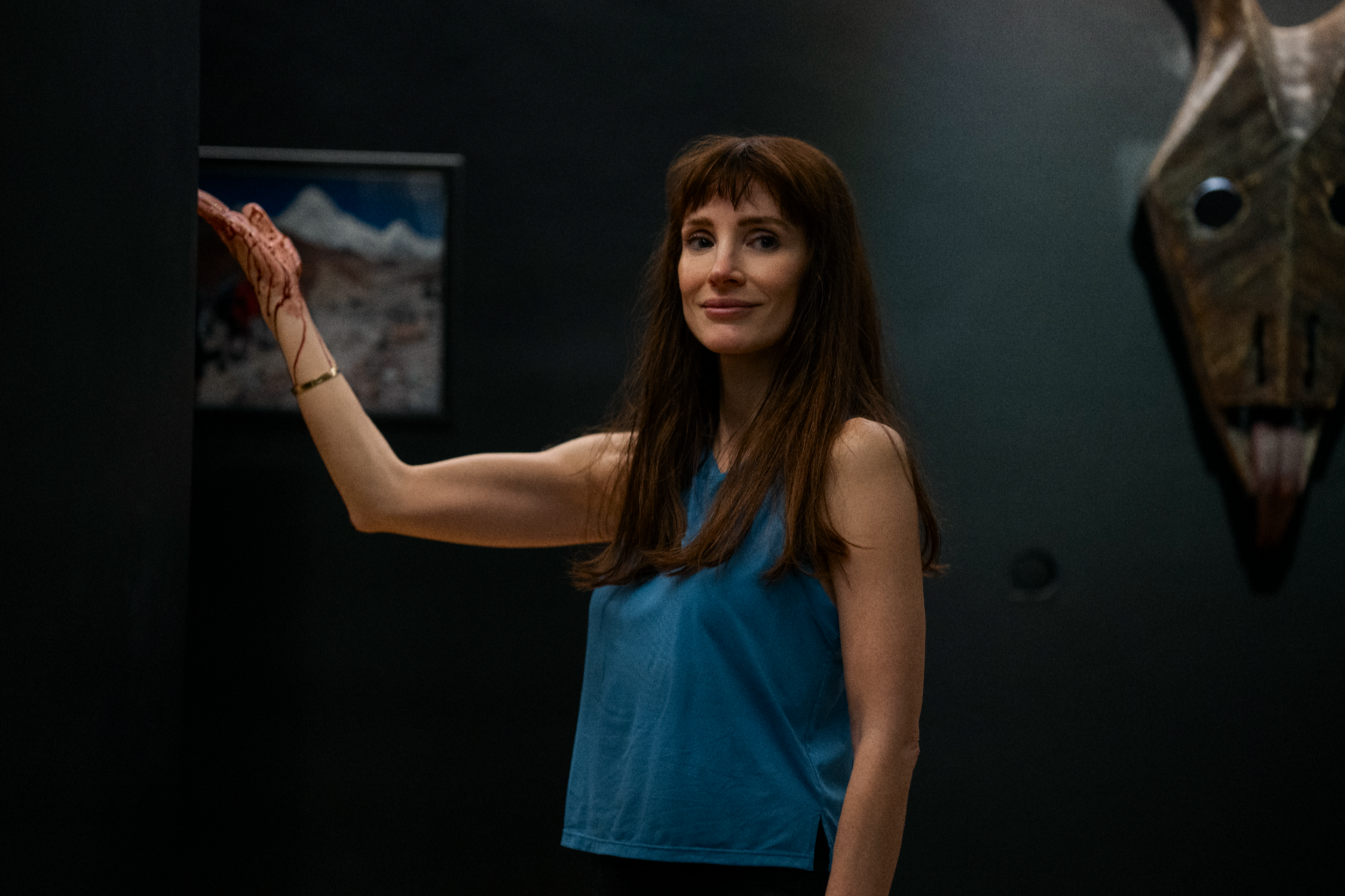
RS: It follows on a little bit from what we were talking about in that Ursula, Bela's mother, is not the form that Other Mommy naturally takes. It's a means of putting Bela at ease, making Bela more susceptible to whatever it is that Other Mommy wants. And Jessica's performance was almost informed by the things that Bela maybe feels unconsciously or otherwise she's lacking in her real home life.
So Other Mommy becomes both this thing that looks like her mother, but also a commentary on what Bela wants from her mother, what we project as the ideal of a saccharine-sweet, always-ready-to-play mother figure. There's a childlike simplicity to the way that she interacts with Bela. We talked a lot about the fact that when she's wearing Other Mommy's skin, it takes an awful lot of effort. The performance was always grounded in this muscle tension. In every scene, Jessica is playing a contrast. She’s playing a saccharine-sweet, playful mother, but she can’t hold this form for much longer, and that tension is building into rage. As soon as we had that contrast, we had the character. The rest was just where Jessica was willing to go with it, and how she wanted to play.
P: I like that even in the trailers, it's all in the face and the neck tension. It's like a snake coiled up, ready to strike. What I also really love is the beach scene: in a traditional evil entity haunting a house narrative, you're like, ‘Oh, leave the house; we're safe.’ But for this, there’s that revelation that she'll follow you anywhere.
RS: My initial pitch for this was like, ‘On page five of the book and five minutes into the movie, the parents see Other Mommy and know she's real.’ The rest of the movie becomes, If this was really happening in your house, what would you do about it? You go to the police; the police aren't going to help you. This isn't the kind of movie where you go to the Warrens, and they put the spirit into an evil doll. It's completely grounded in what recourse you would have in real life. And that is filtered through this idea of a child watching their parents not know what to do.
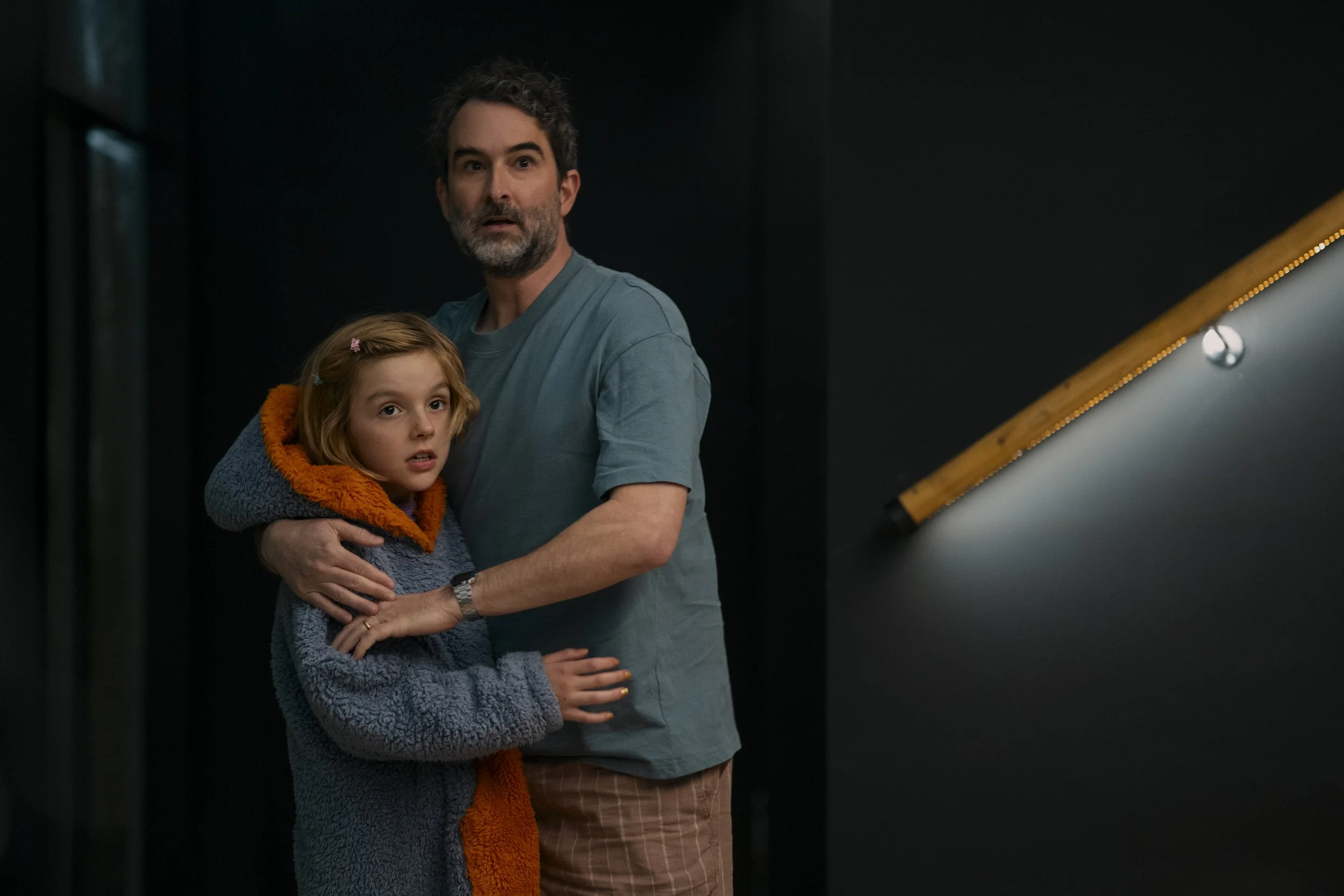
“Daddo” (Jay Duplass) protecting Bela (Arabella Olivia Clark)
The book is more episodic, I would say, than the movie, but the book is very much about trying different tactics against the entity. And it's almost like an anti-haunted house movie because it plays every scene that you would expect from that kind of story, and it flips it on its head. We wanted to have that as a guiding principle of the movie being grounded.
P: I’m curious about the Daddo character. Obviously there's a little bit of the comedic release valve there, which is helpful for a lot of horror, but what were some of the discussions that you had about his place within that family that's slowly disintegrating as he tries to put a plan into action?
RS: He's really the beating heart of the film and, in his relationship with Bela, becomes one of the most heartbreaking characters. The thing that I knew when casting that part is that you wanted to cast somebody who has ‘Daddo energy’ immediately. It has to be a warm, caring, empathetic person, and I'd always wanted to work with Jay Duplass. I've been a huge fan of the Duplass brothers' movies since I started making movies. It was their films that really encouraged me that I would be able to pull off making features and making short films.
So in a weird way, as humbled and lucky as I was to be working with Jessica, I was equally humbled as somebody who grew up on the Duplass’ movies, and was really so excited to work with Jay Duplass. And he, as a director and an actor, was able to come to this and understand what I needed from him, from the character in terms of the mechanics of the movie, but also behind the scenes, with the kind of support that he needed to give to Arabella, because he bonded with Arabella behind the scenes so that you could feel it on screen. It's an incredible performance in a film that's made up of exclusively incredible performances.
P: I listen to a lot of comedy podcasts discussing the craft of putting together a full stand-up routine and the pacing of it, which reminds me of plotting out jump scares in a horror movie. How do you go about sequencing those moments?
RS: I'm sure it's very much like doing a comedy routine in that you've got to keep an eye on the rhythm joke by joke, but you've also got to track the overall structure and journey of the movie. What you want to land on is something that delivers on what you set up overall, but also feels subversive and surprising. So you're constantly looking to upset the rhythm of a scare: to surprise an audience by playing a scare early or late, or leaving them hanging when they expect a jump scare.
There's a James Wan quote that I'm going to butcher where he says, ‘A lot of horror directors will put the jump scare on three. One, two, three is the jump scare. I've made my career by putting the jump scare on one, on two, on 10, and playing off the rhythm of other horror movies.’ It's really about lulling an audience into thinking you're going to hit the jump scare on three and then playing the offbeat. You're constantly in this dialogue with the audience, and it's a game of wrong-footing them.
Universal
P: That reminds me of Zach Cregger’s new Resident Evil movie. I loved this scene where there’s half of a body that keeps getting pulled into the dark, but they don't actually show what’s on the other side. I love that tension.
RS: Cregger is an absolute master at this because one of the other things that can be incredibly effective in staging a scare scene is humour. I made this movie called Host a few years ago, and the thing that I found is that the first half of that movie is very funny — the actors are riffing, and we did a lot of improv. The moment that the jokes stop and the funny character becomes serious, you can use that as a tool to make the audience hold their breath and suddenly sit up in their seats. You're always looking to find different techniques to get to that same result, which is to make the audience take home a bit of that tension and a bit of the terror.
P: I wanted to get your thoughts on the effects of this movie, whether practical or beyond practical.
RS: I'm often asked about practical effects versus visual effects. I hope that audiences are ready for a more nuanced conversation than that because normally you're working with a little bit of both. I would actually add a third point to that triangle, which is the performance. A lot of the time, what you're seeing is all three of these elements. That makes it feel real no matter what methodology we use to get it to its final result. It's also something that the actors respond to, so you feel that presence; the camera operator can frame it so you feel the human behind the camera, which is super important.
Oftentimes that will be the basis for something that gets carried on with VFX. There will be things that give away the effect as being practical, and VFX can often help hide the seams there. So as you're watching it, you're going, Well, this feels practical, but I know that a practical effect wouldn't be able to achieve this part. Then the third point on that triangle is performance. We always try to root this in either Jessica's performance or the performance of one of our creature contortionists who were playing Other Mommy in her various forms. So there's always that human performance that everyone is working from, be it practical effects, be it VFX.
P: What are you working on next?
RS: The movie I'm working on right now is a bit of a gear shift from Other Mommy. It's an equally terrifying horror movie, and I don't want to say something arrogant now and fall flat on my face, but if we pull it off, it follows a lineage of The Texas Chain Saw Massacre and The Hills Have Eyes- these truly nightmarish, disturbing, visceral horror movies that we don't see very much of these days.
So it's a bit of a different approach from Other Mommy, which isn't an incredibly violent movie. I've been wanting to make it for many years, and it looks like we're finally getting to do it with an incredible cast.
Other Mommy is now playing in US and UK theatres.